

Outdoor Upgrades That Are Worth The Splurge
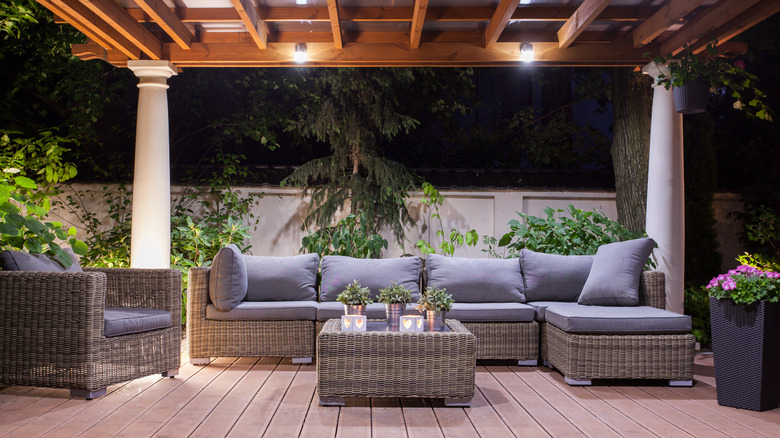
If your home improvement budget is burning a hole in your pocket and you're looking for the most worthwhile way to spend it, this guide has you covered. It could be that you're hoping to give yourself a more interesting place to relax. Alternatively, perhaps you need a functional outdoor area in which to entertain, or you want to level up a drab-looking lawn that stretches with little luster between your fence lines. It could even be that you're looking to improve your home's marketability and resale value.
In reality (as well as in realty), the most worthwhile upgrades serve more than a single purpose. Many updates, like adding a deck, a gazebo, or a pergola, help to extend your living space and improve your quality of life at home, while also elevating your property's appeal to prospective buyers. Similarly, a fire pit and quality outdoor lighting will appeal to owners present and future who like socializing after sundown, while foodies are sure to relish the endless opportunities that a sturdy, well-equipped outdoor kitchen presents.
Planting trees and shrubs
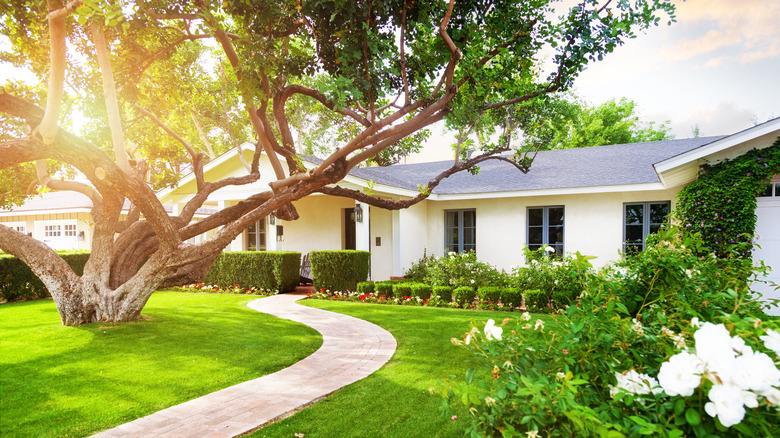
Putting some love into your lawn and garden landscape is well worth the splurge (more on the various ways you can do this later), but one way to really boost your home is to plant trees and shrubs. There are two reasons for this. The trees alone, depending on which you choose to incorporate into your landscaping, have the potential to accrue value as they mature. For example, Japanese maples, while generally costing tens of dollars at their sapling stage, can eventually be worth hundreds of dollars when they reach maturity. In fact, one particular specimen, which was first planted in the 1960s, was featured in an online auction back in 2015 with sale-value estimations of between $22,500 and over $27,000.
The other reason to add trees to your yard is that it could well add value to your property as a whole. In fact, some studies have cited a potential 6% increase in value based on good tree cover alone. As for which species to plant, you'll need to choose carefully between deciduous and coniferous trees. If you're a busy homeowner who's limited on the time you can spend maintaining your yard, then the necessary fall clean-up is likely to be a dealbreaker with deciduous types, like oak or Japanese maples. Coniferous trees, meanwhile, like cypress trees, come without the intensive clean-up. They also tend to grow quite densely, making them superb solutions for providing natural privacy and protection from the elements.
Adding a deck
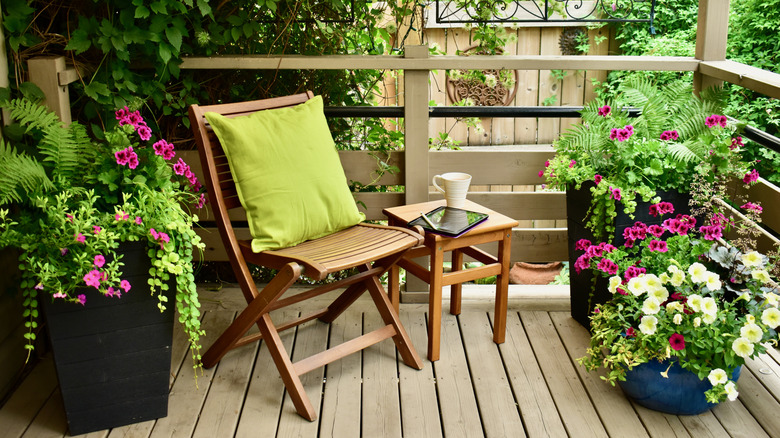
The benefits of installing a deck are many. Such a structure allows you to expand your entertaining space while providing you and your family with additional space to relax outdoors. The natural appearance of materials like wood can also help to enhance the overall appeal of your backyard. It's the kind of functional upgrade that's really quite hard to regret once paid for, and it comes with the added benefit that, if you do eventually decide to sell, it'll add value to your home. In fact, some suggest that you could recoup 50% or more of your installation's value at the point of sale. It's no wonder that the Property Brothers believe that every yard needs a deck.
If you're inclined to agree, then take some time to consider how you'll design your deck and what you'll build it with. The best deck material for a rainy environment is one that can withstand the rigors of poor weather. Tropical wood and pressure-treated lumber are usually good options, though the former comes with steep upfront costs, and the latter is likely to require frequent maintenance. Composite decking is another solution, and while it's pricier than many wood products, it's also likely to last much longer and require less upkeep.
Before you start building, you should also consider how to keep yourself and your family safe while using the deck. The Property Brothers recommend deck railings as must-have safety features, particularly near steps and on highly raised areas. After all, the last thing you want is to slip after a rain shower and tumble over the edge.
Building a privacy fence
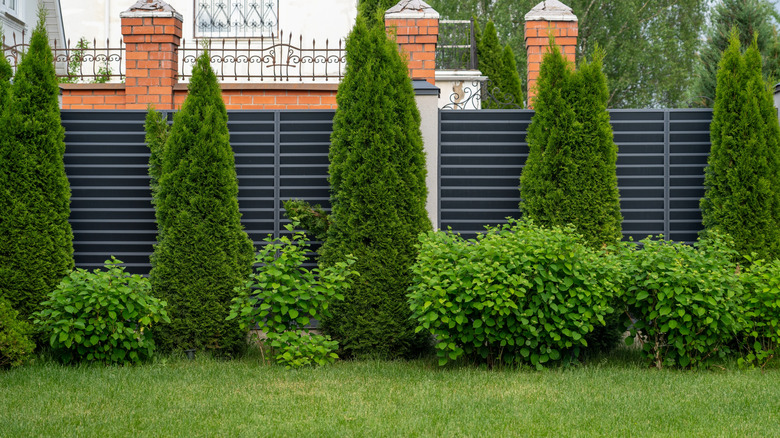
Whether or not this is "worth it" largely depends on how much your space is in need of privacy and how much you value seclusion from the wider world. If you have neighbors who are more interested in your activity than you're comfortable with, then a privacy fence could well be worth it, blocking out their prying eyes and providing your family and friends with a private space in which to relax. Prospective buyers of your home are sure to value this consideration, too, with some appraisers suggesting that a quality, well-maintained fence could increase sale value while encouraging buyers (especially those with kids or pets) to pull the trigger. Even if you don't intend to sell, a privacy fence will also keep the unwelcome eyes of potential trespassers out of your yard.
Like a deck, materials are key to ensuring easy maintenance and longevity with your privacy fence. Wood is the material that often springs to mind when people think of a fence; however, while the cost of a wooden privacy fence is generally cheaper than that of a structure made with other materials like metal or composite, the latter is likely to require less maintenance and last longer. And don't forget, there are plenty of coniferous trees that can be used to create a custom natural privacy fence without spending big on dedicated fence panels.
Incorporating built-in seating
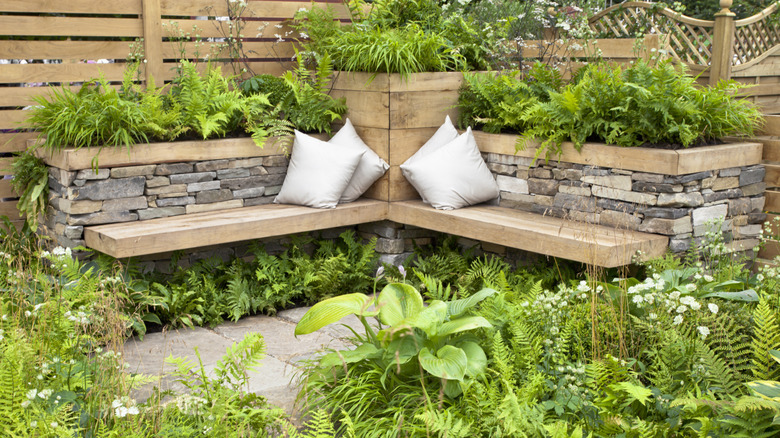
Built-in seating makes your outdoor space feel much more intentional, becoming a part of your garden's "structure" and blending into your yard's overall aesthetic. Benches built into walls or raised planting beds create versatility, providing additional resting spots for when your yard gets busy during your summer cookouts. More than that, they take up no more room than the wall or raised bed would without the inclusion of seating, since they are part of an already-existing feature. Alternatively, you could take a leaf out of garden designer Yvonne Mathews' book. As she tells the Independent, "If you have steps, you can make them very wide and then scatter cushions on them."
While this may feel like a left-field approach to seating compared to more traditional patio sets, it's really just a matter of thoughtful design. In other words, it simply means maximizing the functionality of every inch of your yard, capitalizing on the features you already have, and making them work harder for you and those you love spending time with. It's an especially useful approach in smaller spaces, where dedicated furniture sets risk soaking up all of the available floor space.
Of course, unless you're something of a DIY guru, you may need to hire professional help to get the look you're shooting for. However, given that a considered landscape, including in-built seating, can help to increase your home's sale value, you're unlikely to regret the cost of hiring an expert.
Getting creative with lighting
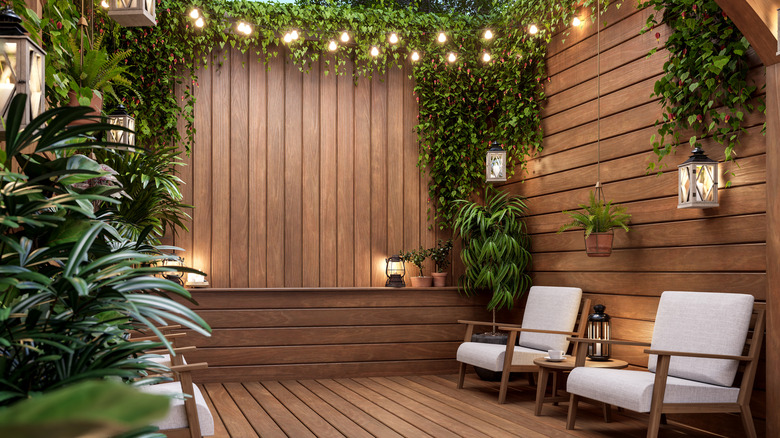
There are plenty of creative ways to light up your patio and garden. The trick is to layer your scheme, incorporating ambient, task, and accent lighting. Ambient lighting sets the mood, task lighting helps you to work safely (for example, in an outdoor kitchen), and accent lighting works to highlight your garden's most unique and quirky features, lending it a distinct after-dark character.
So, what makes quality outdoor lighting worth the splurge? Well, for one, it'll enable you to get more enjoyment out of your yard, as your cookouts and summer parties will no longer be limited to the hours of daylight. What's more, for those planning to sell their home, some experts hold that the inclusion of "outdoor lighting" in your property description can help you to sell it faster and for more money.
If you're planning to upgrade your outdoor lighting, then try not to overdo it. Christian Hersey, head designer at Garden Lighting London, offers some tips to avoid outdoor light pollution by adopting a more minimalist approach, saying, "Less is more! Extremely bright garden lighting often has a garish, theatrical look." He recommends experimenting with backlighting on trees, which will help to accentuate these beautiful natural features when the sun goes down. He also stresses the importance of considering where people are likely to sit and avoiding glare in those areas. As for safety, many experts suggest using outdoor lighting to highlight potential after-dark hazards, like steps and ponds. You can also help guests who are unfamiliar with your yard by lighting up your pathways.
Finding a place for fire
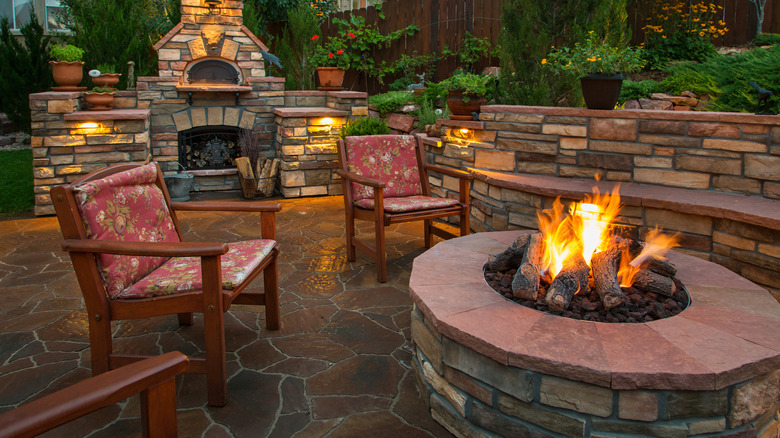
Adding a fire pit to match your yard's aesthetic is absolutely worth the splurge for a multitude of reasons. Firstly, be they family members or friends, you'll be hard-pressed to find somebody in your group who doesn't enjoy the charm of a glowing fire when the sun goes down. Even during the shoulder seasons of spring and fall, a fire pit can help to keep things cozy. You can cook directly over it, meaning you needn't miss out on fireside conversations, and when the main course has been cleared, you'll need no more than a bag of marshmallows to extract cries of glee from your most foodie friends.
Investing in a fire pit does more than enhance your own outdoor experience. It also has the potential to increase your home's resale value. In fact, while you're unlikely to make money on the feature, experts cite returns on fire pit investments of up to 67%. Putting aside the potential increase in value, a well-made pit can also make your property even more marketable, and the best part is that it need not cost you a fortune to build. And if you're a dab hand at DIY projects, you can easily create a fireproof base for your fire pit and achieve a professional finish with materials like pavers and bricks.
Investing in high-quality furniture
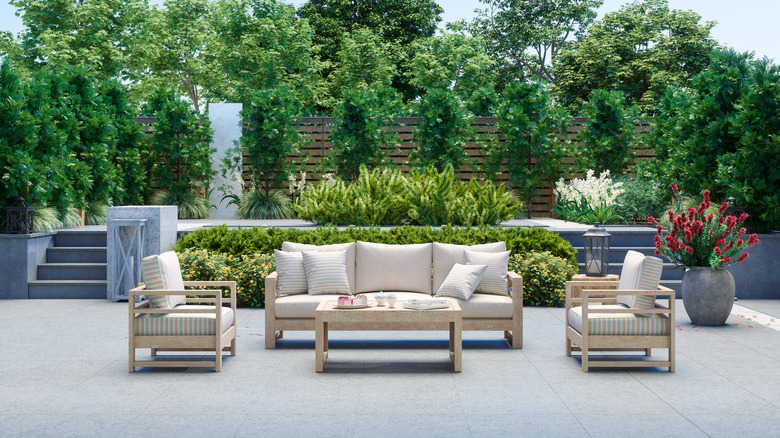
The cost of expensive, high-quality furniture may seem like an unnecessary dent in your budget given that there are often plenty of cheaper options on the market. However, depending on your choice, skimping on your furniture could mean sacrificing comfort and durability. This doesn't mean that you have to spend a fortune. But if you opt for extremely weather-resistant materials like teak, then it's unlikely to come as cheap as other less durable products.
Regardless of the price tag, the key to securing comfortable outdoor furniture is to actually try out your intended purchase before handing over your hard-earned money. It should also match your style and blend nicely into your wider garden aesthetic. As for choosing the right material, while teak is generally considered a good choice for an array of outdoor seating ideas, the best way to decide which is right for you is to assess your local climate. Things like rain, humidity, sun exposure, and high winds are all likely to attrit outdoor furniture, and ensuring your seating is able to cope with local conditions will help you achieve the low-maintenance backyard you've been dreaming of.
If you can't justify a teak table and matching chairs, then rattan could be worth considering. Just note that while rattan is excellent at withstanding hot or wet weather, it's also lightweight and may, therefore, not be the best material in areas that experience high winds. Aluminum is another great choice, although caution is advised in hot climates. Not only does aluminum furniture tend to get quite hot in sunny weather, but it's also prone to corrosion if not maintained properly.
Installing an outdoor kitchen
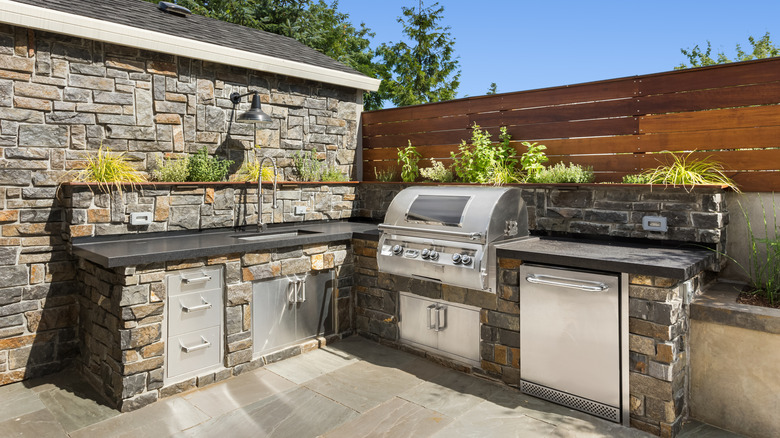
An outdoor kitchen is the stuff of dreams for gourmands around the world, offering a chance to soak up the sunshine and enjoy time outdoors with friends and family, all while indulging their love for al fresco cooking. In other words, this particular outdoor upgrade is widely considered to be worth it. Such an installation promises to elevate your ability to entertain, and if you ever decide to sell your home, you might get back anywhere between 55% and 200% of your total investment.
It's hard to say with precision what an outdoor kitchen will cost, since it depends on both the kitchen's size and your desired appliances. Other things to consider before building an outdoor kitchen include whether you'll need to erect a shelter to protect it from the weather, as well as the materials you'll use to make it. Concrete blocks can be used for the outer shell, and while it can be tempting to use wood for your cabinetry, it's recommended that you opt for something more weather-resistant, like stainless steel. To create your work surfaces, consider making countertops with microcement. Stainless steel is another option, and if you need a countertop material that can handle rainy weather, then granite could well be the best solution.
Adding a bar for entertaining

The first thing to say here is that you don't actually need to invest an awful lot of money to bring your dreams of a garden bar to life. In fact, it's relatively easy to build a bar with recycled wood pallets and pavers. Even if you'd prefer to buy an "out of the box" solution, the investment is generally agreed to be worth it. Whichever style of bar you go for, be it custom or store-bought, incorporating one into your yard is a great way to expand your outdoor social space. More than that, it's likely to increase your property's marketability, and it may even help to bump up the sale price should you ever decide to sell.
If you'd like to create a custom outdoor bar, then you'll probably need to hire a professional to assist with the build. Alternatively, there are lots of pre-built options to choose from, including the Cantina Gazebo from Yardistry that's available at Costco. This particular option has everything you're likely to need to entertain a few friends, including storage, an in-built bar top, shelter for the designated barkeeper, plus a couple of high-quality stools for people to sit on. You can even mount a TV on the gazebo's back wall and invite your pals to come and watch the game.
Creating shelter with a pergola or gazebo
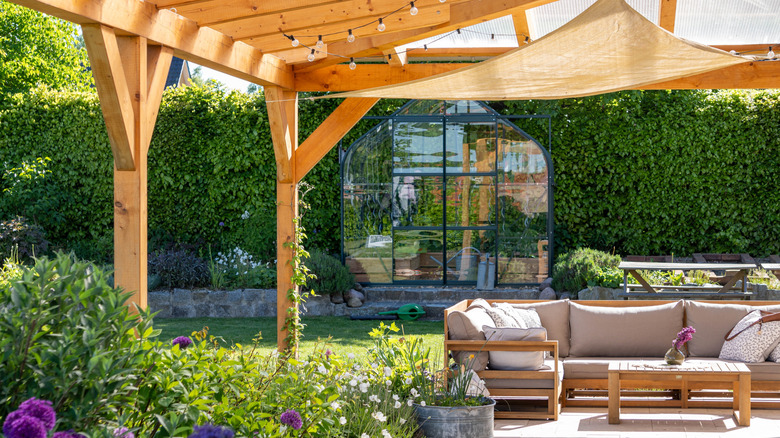
First impressions count, especially in property marketing, where enormous weight is given to a home's curb appeal. When it comes to your backyard, one of the most effective ways to achieve a solid first impression is with the installation of a shelter like a gazebo or pergola. And even if you're not quite ready to sell yet, you'll get to reap all of the benefits that such a structure affords until the day you decide to go to market.
Whether you struggle with unpredictable weather or live in a very hot climate, a dedicated shelter can be the difference between making the most of your garden and merely looking at it from your kitchen window. Open-sided (and usually open-roofed), pergolas won't always keep out the worst of the rain. However, it's possible to buy or even make pergola shades, adding color, style, and crucially, more shelter than they come with "out of the box." Adding a pergola is also one of several nifty ways to transform a narrow yard, providing architectural interest and a semblance of shelter without closing the space off permanently with a solid roof.
The key differences between pergolas and gazebos are the "built-in" shelter that they provide and the amount that they usually cost. Gazebos typically come with a solid roof, meaning you won't need to worry about buying an additional shade. Many also feature either full or partial walls, which can be a boon to outdoor entertainers when the weather forecast holds no promise. However, they are often more expensive than pergolas, and while both shelter styles are worth splurging on, which one you decide to go for will, in part, depend on how far you can stretch your budget.
Put some love into your landscaping
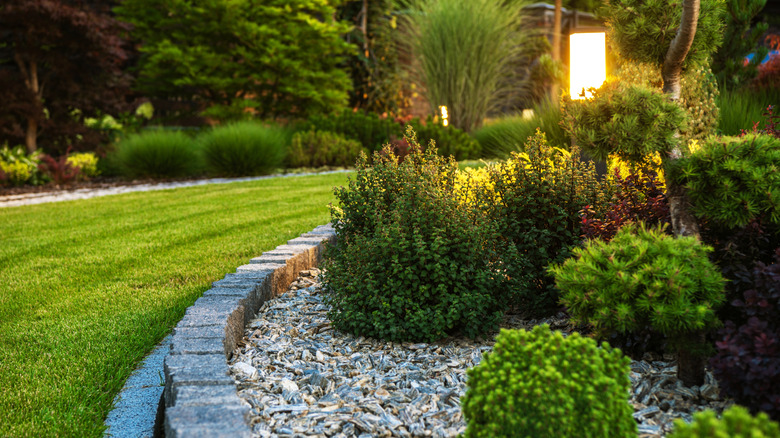
There's a lot to be said for being proud of your garden. With a little love, you can easily turn a drab, fence-to-fence lawn into a horticultural paradise that you'll love spending time in. Your guests will absolutely love visiting and spending time there, and if you ever decide to put your home on the market, your potential buyers are sure to be impressed by the love and money that you put into it.
In fact, a beautifully planned and designed landscape is one of those outdoor updates that can add serious value to your home. Of course, knowing this is one thing, but affording it is quite another, especially since the American Society of Landscape Architects (ASLA) recommends investing between 10% and 20% of your home's value in your landscape. So is it really worth it? Well, according to the ASLA, investing properly in your landscaping could yield returns of up to 200%. In other words, it's one of the most worthwhile splurges in this guide.
One top tip, again from ASLA, is to incorporate plants that are native to your area, since they'll naturally require less watering and maintenance. If you know how to determine which hardiness zone you live in, then you'll easily be able to find reliable perennial plants with which to line your borders. With your beds dug, don't be afraid to get creative with different lawn edging ideas to help define your beds from your lawn, and if you're planning a vegetable garden, make sure that you choose the right spot. An area with plenty of sunshine is best, ideally within easy reach of water, and if you want to ensure that an out-of-sight vegetable patch doesn't accidentally become "out of mind," consider digging it in an area that's visible from your house.