

How To Transform Your Yard: A Guide To Gardening For Beginners
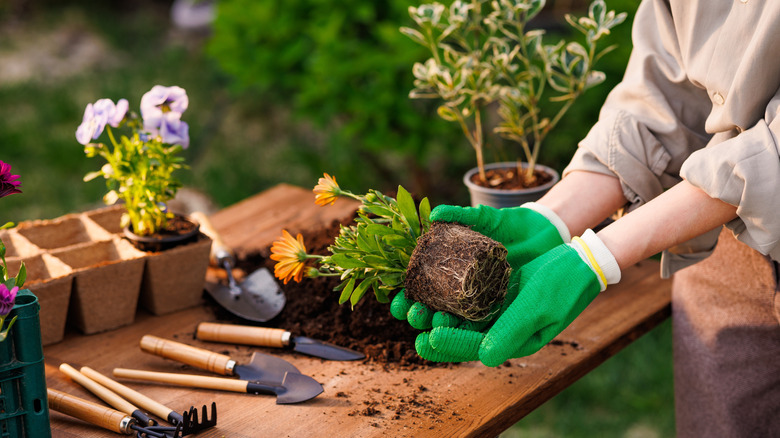
For the uninitiated, gardening can feel like an intimidating pastime, but it needn't. Gardening can make us, as humans, feel better, which means it's a pursuit well worth taking up if you have the time. It can also, depending on your approach, help your yard contribute to the biodiversity of your wider area, supporting a multitude of pollinators and local wildlife. And, if you decide to grow herbs and vegetables, it's fair to say there are few better rewards than a meal cooked with home-grown gourmet goodies.
But where to get started? If you're a beginner, there are some helpful pointers that should set you on the path to success, all of which are covered below. This guide to gardening for beginners covers everything from the equipment you need, to simple, but essential, environmental concepts that every gardener should understand, including USDA hardiness zones, which can help you cultivate the right plants for your region. It'll also delve into tips for yards big and small, how to protect your plants from pests, getting your soil ready, considerations to bear in mind before installing water features, and more. In short, this beginner's guide to gardening covers pretty much everything you need to start transforming your yard.
Equip yourself for gardening
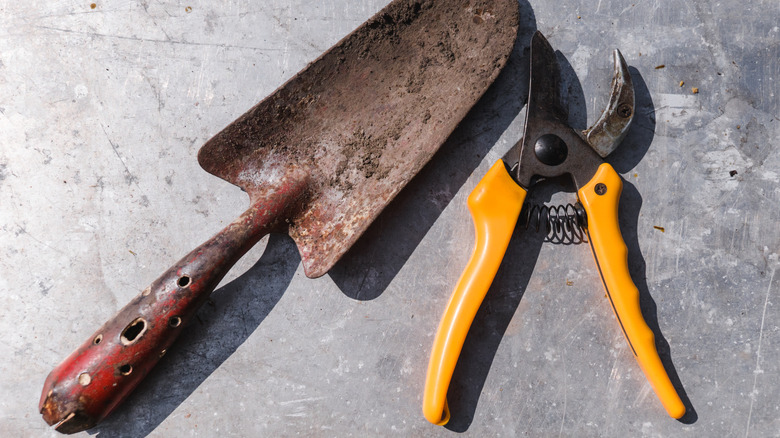
Not having the correct equipment for your gardening project can make life surprisingly difficult. By knowing which tools you need, you'll save yourself time, make the process more efficient, and be able to tackle necessary projects with precision. It's also safer to use the appropriate equipment for a given task, especially with power tools like lawn mowers and hedge trimmers. In the long run, by investing in the right equipment, you could well end up saving yourself money, by preventing damage to plants or to the wrong tools used.
Top of the list of tools for beginner gardeners is a quality pair of pruning shears, and you'll be amazed by just how much use such a tiny tool gets. Long-handled loppers or tree shears are another must-have, serving a similar purpose as pruning shears but offering extra length and leverage for those high, tricky-to-reach places. A garden fork (or pitchfork) will help you turn over your soil when preparing it for planting or folding in compost (more on this later), and a hand trowel will make life easy when making holes for your chosen plants.
Other essentials include either an electric or gas lawn mower, a rake for gathering grass clippings and leaves, a spade to help with larger digging tasks, a hoe for weeding, tilling, and shaping your soil, a garden hose (of a length to suit the size of your yard), a watering can, and a wheelbarrow. Once you have all these tools, it's vital you keep them clean and sanitized, to prevent rust and avoid spreading mildew or disease from plant to plant. Oh, and before you leave the garden store, don't forget to buy a decent pair of gloves — you'll probably use these more than anything on your shopping list!
Understand your USDA hardiness zone
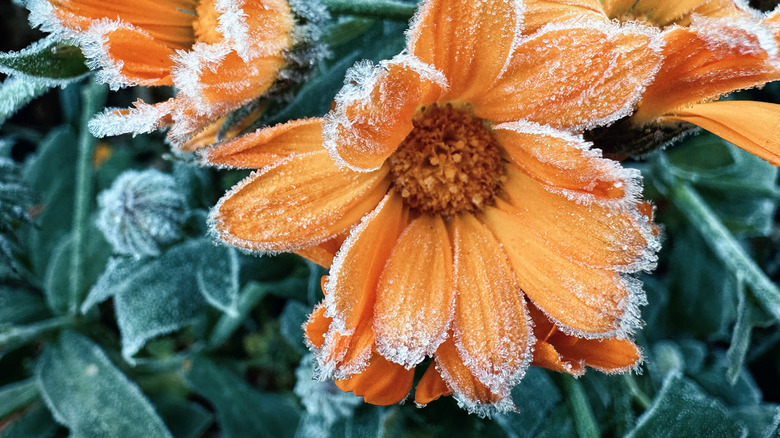
Not understanding USDA hardiness plant zones is one of the easiest mistakes for beginner gardeners to make. The concept refers to the different climatic regions in which different plants are likely to grow. Across the United States and its territories, there are 13 numbered zones, and as a rule, the higher the number, the higher the lowest winter temperature. Zone 1, for example, experiences extremely low temperatures in the winter months, often below -50°F. At the other end of the spectrum — zone 13 — winter temperatures rarely fall below 60°F.
Once you know how to understand your hardiness zone, the next step is to figure out your chosen plants' hardiness ratings. Just like the 13 hardiness zones, a plant's hardiness rating is determined by the lowest winter temperature it's able to withstand, and once you know it, you can compare it to your home hardiness zone and work out whether or not it'll grow in your garden. Extension sites, particularly the North Carolina State Extension Gardener Plant Tool Box, and the Missouri Botanical Garden are each expansive and accurate resources.
While it's true that plants can often be grown outside of their denoted hardiness zones, they usually won't do so with much enthusiasm, and it's a reasonable assumption that if you pick a hot-zone plant to grow in your cold-zone garden, your results will be rather disappointing. On the other hand, some that grow as perennials in specific zones will thrive as annuals in containers elsewhere. You can consult the USDA's hardiness zone map to determine which zone you live in, then compare that information to the attributes of your chosen plants, which are usually denoted on the seed packet or in the information provided by the seller online.
Assess your space
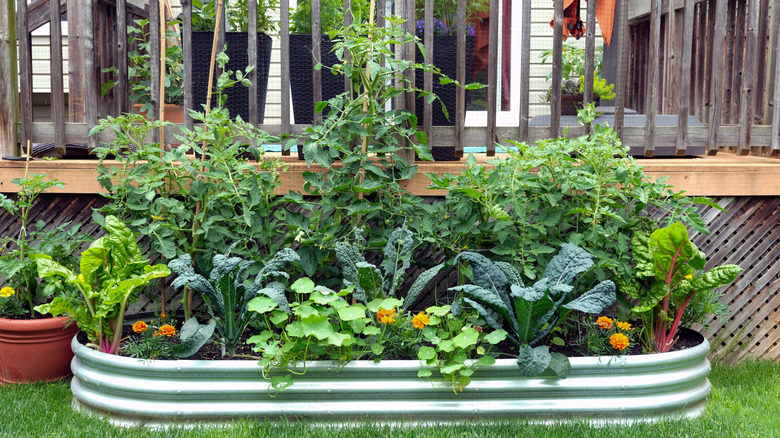
Depending on how much space you have to work with, there are a couple of different ways to go about bringing life to your garden. If you're limited on space, or have lots of hardscape areas, then container gardening can be a great approach, since it doesn't rely on arable ground. And if you have an open expanse of grass that you'd like to divide up to create in-ground zones for different types of plants, you can easily create discrete spaces with flower beds and borders. Essentially there are pros and cons to both raised and in-ground gardens. It's easy to do so in a few simple steps, but having the correct tools is essential.
If creating an in-ground flower bed or garden, then a good spade will help you dig deep and wide enough for your plant's root ball. A hoe will help you to till the soil, and a sturdy fork will allow you to pitch compost over the top and fold it in, providing lots nutrients for your new planned garden. You can also incorporate a variety border and lawn edging ideas for your backyard to establish a clear, professional-looking boundary between different outdoor spaces.
Alternatively, if you're short on space and planning a container garden, you'll need to pick the best plant pots and containers to suit your space and style. If you're unafraid of a little DIY, there are lots of creative projects you could turn your hands to, like transforming a wine box into a planter or creating a planter using an old lampshade.
Choose the right plants and placement
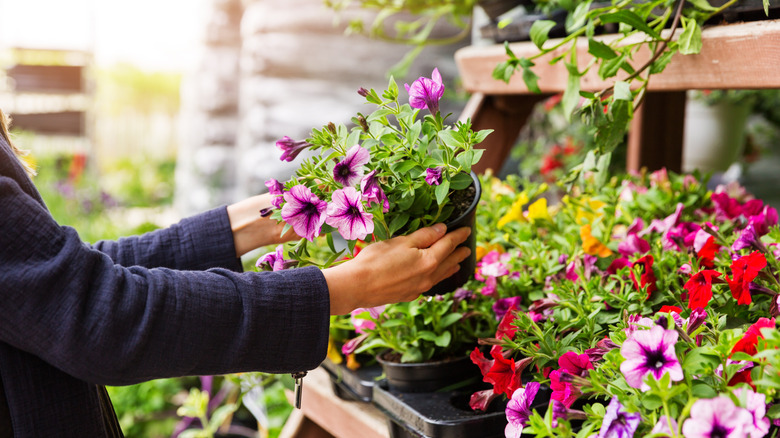
This step is much easier once you understand your area's hardiness zone. Even then, there are likely to be lots of different plants that can cope with your climate. In fact, some plants, despite being listed as perennial or hardy in specific zones, will nevertheless grow in cooler or warmer climes as annuals. For clarity, perennial plants are those that grow back each year, while annuals are those that complete their life cycle in the course of a single year.
Another consideration to make when selecting your plants is how much sun you're able to give them. While some species prefer full sun, there are other plants, especially some perennials, that love the shade. You should also keep in mind how biodiverse you'd like your garden sanctuary to be. In fact, almost any garden has the potential to provide a sanctuary for wildlife. Depending on the flowers you can grow — and the fauna likely to be frequenting your area — you could well find your yard teeming with life.
For example, if you want to attract bees into your garden, there are lots of pollen-rich plants that are sure to do the trick, Including coral bells (Heuchera). This particular perennial is especially recommended for beginners, since, not only is it easy to grow, but it's also one of the best plants for attracting hummingbirds. It also serves as a useful ground cover for shady spots, where it helps to suppress weed growth while bringing color to spaces otherwise devoid of it.
Learn to care for different plants
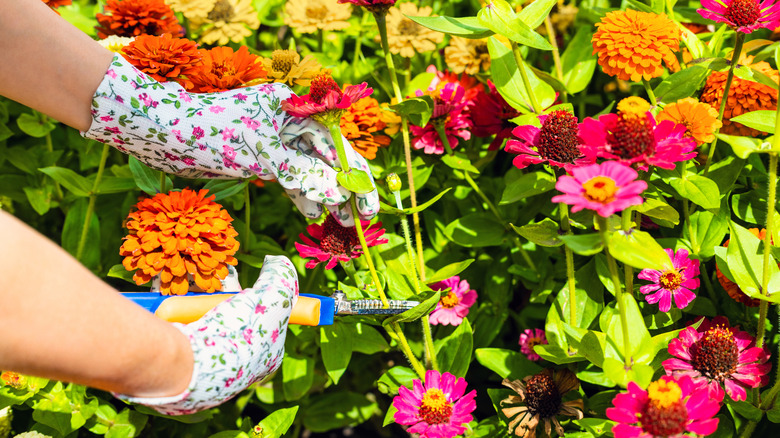
Caring for your plants largely boils down to knowing (and avoiding) many of gardening's most common pitfalls. For example, there are many common mistakes that revolve around watering your garden, whether that's over- or under-watering your plants, or adding water to the wrong parts of a plant. Feeding often trips up new gardeners as well, especially those unsure about the best time to fertilize to protect flowers in their gardens. Choosing the wrong time of day to prune your plants can cause them more harm than good, and pruning certain plants in the winter can cause untold damage.
Unfortunately, there is no one-size-fits-all approach to watering, feeding, and pruning. Instead, the best advice for beginner gardeners is to research the specific plants growing in their garden, and then plan maintenance regimens accordingly. There are plenty of gardening apps that can help with this, identifying plants, suggesting best options and maintenance techniques, even helping to lay out your dream garden. A good app will tell you whether, how often, and even how to deadhead your flowering plants to ensure bountiful blooms, and if you're keen to keep developing your garden, you'll find plenty of recommendations to help bolster your borders.
Protect your yard from pests
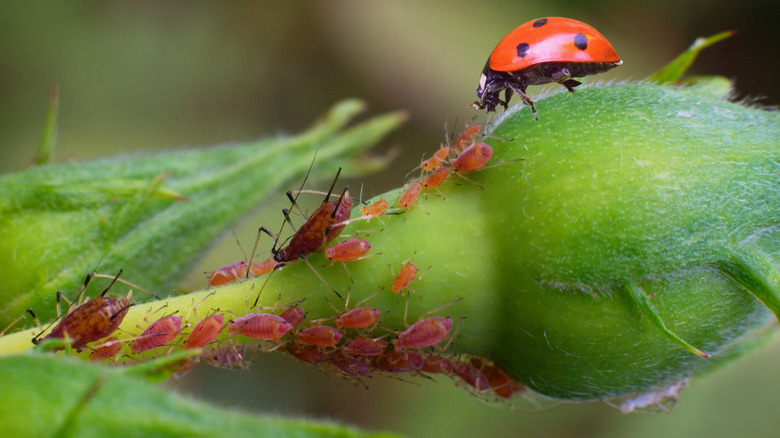
Wherever in the world you live, garden pests are likely to cause a problem. It could be deer that like munching on certain plants, or aphids that — often with the help of ants — can seriously weaken your carefully cultivated plants. Unfortunately, pests are par for the course in gardens of all types, and the best approach is usually a healthy dose of pragmatism (that is, dealing with them as they show up). That said, a little pro-activity can also go a long way.
For example, instead of waiting for signs that your garden has a pest problem, you could, from the outset, incorporate plants that naturally repel pests, such as lavender (Lavandula spp.). Alternatively, marigolds (Tagetes spp.) can attract friendly insects like ladybugs, which predate on pests like aphids. In addition, you can plant "trap crops" like nasturtiums (Tropaeolum spp.). What are trap crops, you ask? Essentially, they are the sacrificial lambs of the gardening world. Because they're so attractive to common pests like aphids, they can be planted to preoccupy these insatiable invaders, drawing them away from more precious plantings.
If there are deer in your area, then there are several deer-resistant plants you'll want to include in your garden, like bee balm and rosemary, whose pungent scents can often be enough to put them off their meal. And if you need plants on your patio to ward off mosquitoes, there are plenty that can do the trick while bringing color and nostril-nurturing fragrance to your garden, like basil (Ocimum basilicum) and lemon balm (Melissa officinalis).
Create a kitchen zone in your garden
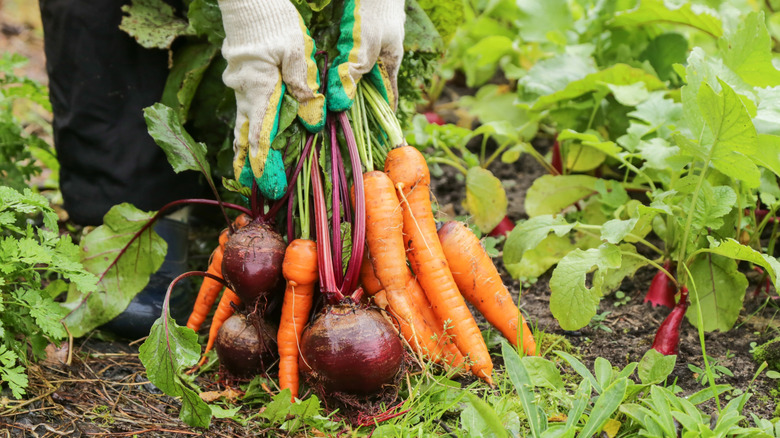
There are several ways to grow vegetables and herbs in your garden. Herbs, especially, are often easy to grow in pots, and doing so has the added benefit of versatility, allowing you to move them to different areas, or bring them indoors when the seasons start to turn. Similarly, vegetables can be grown in containers, which is ideal if you don't have anywhere to dig a patch. You can easily DIY a grow table for vegetables, and if you're not particularly crafty, you're sure to find plenty of containers available at your local garden store or online.
If you have ground space, then building a raised bed might be the best way to grow your vegetables. Raised beds promise a longer growing season, because the soil warms up quicker on cooler days. What's more, since you'll need to fill it with ready-to-grow soil, you won't be spending time fertilizing your garden's existing substrate in order to get things started.
As for choosing the best layout for your vegetable garden, it really depends on the space that's available. Generally speaking, it's best to build a vegetable patch in an area that receives plenty of sunlight. And when it comes to planting, ensuring shorter plants are situated at the south end of each row will stop taller plants from hogging all of the sunshine.
Make use of vertical garden structures
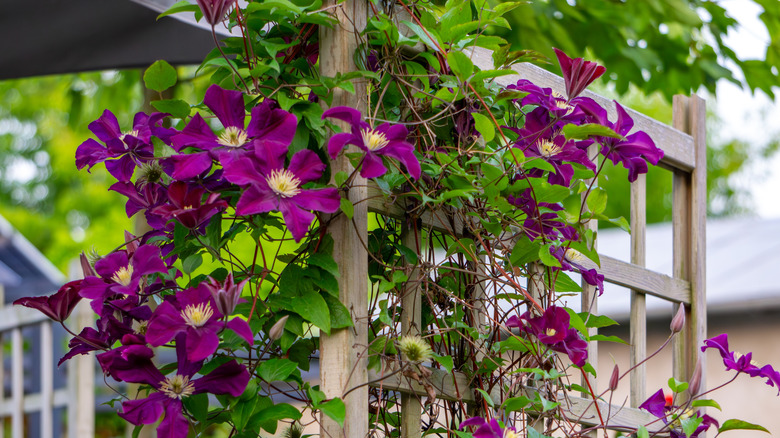
It's easy to add multi-dimensional color and texture to your garden by incorporating climbing plants. There are plenty that are willing to grow on, up, and around structures like pergolas, trellises, and gazebos, as well as the fences around your boundary. Certain plants, like yellow canary, can attract hummingbirds and other pollinators into your garden, adding to your yard's overall biodiversity.
Whatever you choose, just make sure that you do your research; certain species, like Wisteria (Wisteria spp.), have very strong, woody shoots, which are quite forceful in their efforts to weave through things like fence panels and could damage them. Instead, consider planting with a trellis. Whether you buy one or make your own DIY trellis, you'll provide your climbing plants with the support they need. By installing them alongside your fence, you'll give the appearance of a living wall, without putting undue stress on the fence itself.
Think twice before adding a water feature
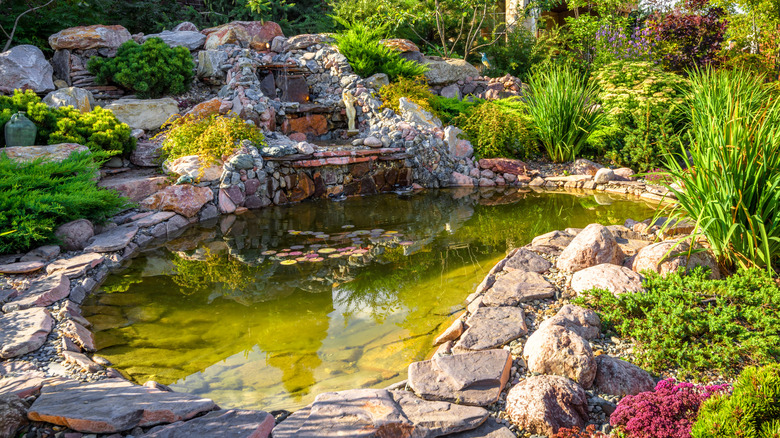
Water is naturally beautiful, and the calming, therapeutic benefits of a flowing water feature are rather difficult to dispute. What's more, whether you buy one from your local garden store or create your own DIY garden fountain on a budget, they can be surprisingly simple to incorporate into your yard.
Just know that there are several potential drawbacks of having a fountain or other water feature. One is that standing water is one of the most common causes for swarms of mosquitoes. It doesn't matter where it is — provided that the water is standing (not moving), mosquitoes will happily lay their eggs in it, thus perpetuating an already annoying problem.
Of course, this is easily remedied by using filters and pumps to keep the water moving. However, this equipment comes at a cost, as does continually running it. What's more, while moving water will deter mosquitoes, it can remain attractive to other creatures, like amphibians and rodents. And while frogs and toads aren't necessarily pests, rodents most certainly are, especially if they begin burrowing in your yard or, worse, beneath the foundations of your home. What's more, if you have snakes in your area, a sudden abundance of frogs and rodents is sure to tempt these hungry reptiles into entering your yard or garden.
Don't forget to care for your grass
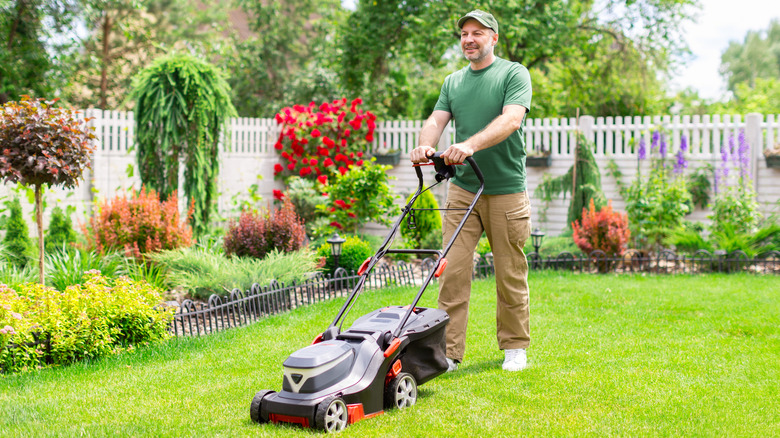
The term "gardening" often conjures up images of vibrant and verdant flower beds, and so it should. However, it's all too easy to forget about the thing that ties those multi-hued areas together, and that's your lawn. Now, if you're starting one from scratch, then you have the opportunity to get it right by ensuring you choose an appropriate type of grass for your area. There are many varieties of grasses, but they can loosely be categorized into one of two types: warm- and cool-season. Named due to the regions in which they've adapted to thrive, warm-season grasses, like Bermudagrass and zoysia, are suited to warmer regions. Cool-season grasses, like fescue and bluegrass, (you guessed it) are best for cooler climes.
Even if it's already planted, not knowing your type of grass can lead you to make several mistakes that may ruin your lawn. Applying too much water at the wrong time and not understanding the best time to fertilize your yard are mistakes that can both be avoided by knowing your garden's grass type. It will also help you figure out when your grass is most likely to become dormant, which in turn can help you discern the best time to aerate your lawn.
Whatever your grass type, arming yourself with the right equipment is key to taking good care of it. Having the right lawn mower for your garden is the most obvious example, whether that's a ride-on steed for a large lawn or a push-along rotary mower for a smaller space. The right aeration tool will help promote water and nutrient absorption by de-compacting your soil. And a decent rake will enable you to act swiftly and precisely when you see signs your lawn needs dethatching.
Prepare your garden for winter
If you've spent the warmer months mastering the above gardening tips for beginners, then the only way to ensure your hard work pays off the following spring is to prepare your garden for winter. Firstly, aim to remove any annual plants, before first frost, from your flower beds once they've started to fade. Left in place these can provide a convenient breeding ground for pests, mildew, and disease. Not only that, they look rather untidy if left to rot.
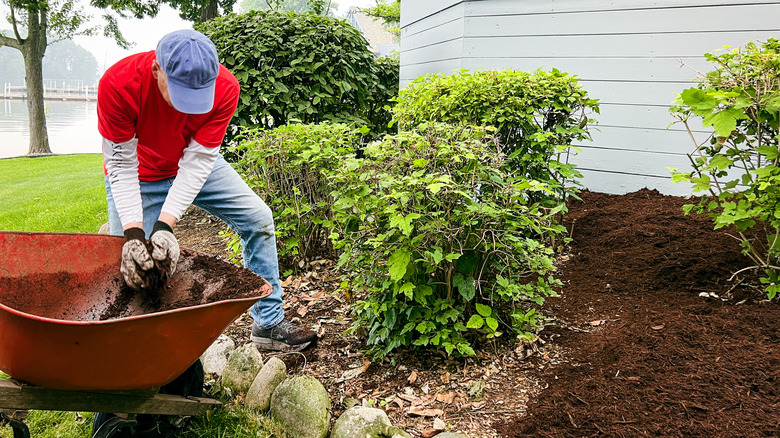
Next, it's time to mulch your beds. Mulching is important for several reasons, one of which is protection. By adding a layer of matter to the top layer of your soil, you effectively insulate the substrate beneath, protecting root systems from exposure to extreme winter weather while helping the soil retain moisture in dry conditions. There are several different types of mulch that are ideal for your garden, but generally its best to use something organic, like compost, as opposed to plastic sheeting, gravel, or other inorganic materials. The benefit of organic mulches is that, as they begin to break down, they release vital nutrients back into the soil, thus replenishing its stores over the winter, and helping your plants to thrive the following season.