

Clever Ways To Transform A Narrow Backyard Into A Useful Space
We may receive a commission on purchases made from links.
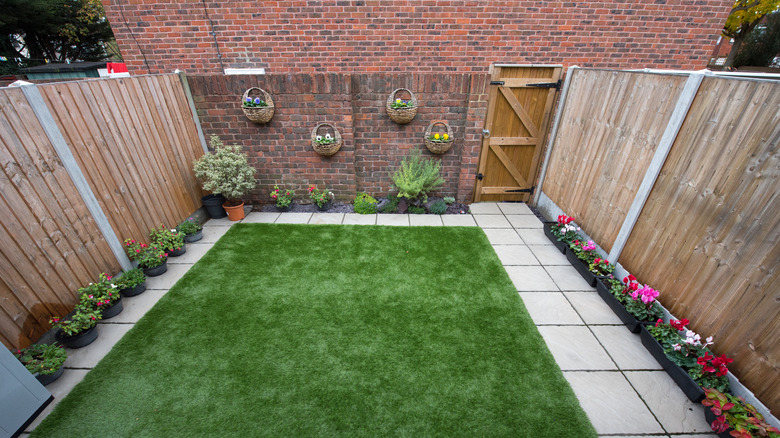
The average size of a backyard in the United States is just under half an acre. When you think about it, that's a good amount of space to host a pristine lawn, a large deck or patio, and flower or vegetable gardens. But what if you live on a small urban plot or a heavily developed suburb? Chances are you are working with a yard that's a lot smaller, and a lot narrower. As such you might be wondering, is there any way I can transform this thin backyard into a useful space?
Thankfully, the answer is a resounding: yes! With a little creativity and the right attitude you can turn even the skinniest of backyards into your own private paradise. Whether you need simple tricks to add some creative privacy, or want to create a thriving garden space, you can make things happen in a narrow backyard. Don't let the size of your yard impede your awesome ideas!
At Outdoor Guide, we want to encourage everyone to use their creativity to build amazing outdoor spaces. So we've come up with a few clever ways that can help you transform your narrow backyard into a charming and useful space. These ideas run the gamut from how to plant fruit trees along your fence line to how to build a fun play space for your kids. We hope they inspire you to take a fresh look at how you can upgrade your backyard space.
Plant vertically
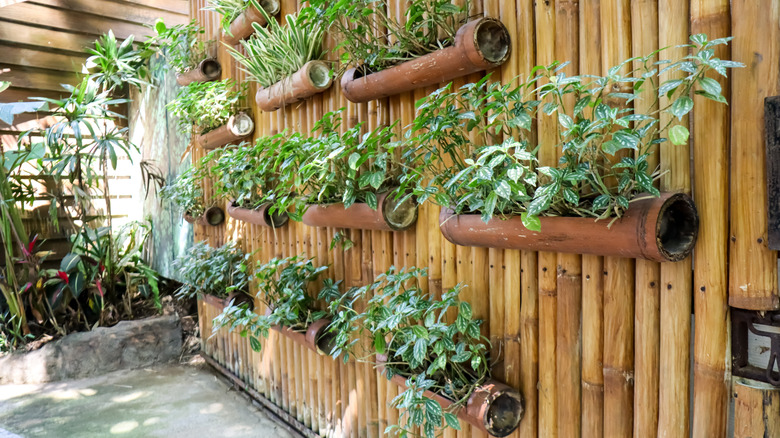
Since width is the primary issue when it comes to narrow backyards, you need to think about utilizing the two other spatial measurements you have in abundance: height and length. Tapping into the vertical space in your narrow backyard is going to be a game changer. And one of the best ways you can bring that vertical space to life is by using it for plants.
You can actually grow a lot of plants in minimal amounts of space. Take some salvaged materials, like wooden pallets, repurposed old house shutters to hold the vertical garden, or some scrap wood and create a stunning backyard plant wall filled to the brim with herbs, flowers, and other vegetables that can thrive in minimal space. You could also develop stackable boxes or purchase well-designed options, like a 5-tier Greenstalk vertical planter, that are a little bit deeper so you can grow edibles like strawberries or lettuce. Don't forget the vertical air space: Hanging baskets are also great for tomatoes and various flowers.
And, while it may not seem like you can grow trees in a narrow backyard, there is a French pruning method known as espalier that will train a fruit tree or vining plant to your fence line. Not only does it look cool, but you get the added benefit of jazzing up your wooden or metal fence with useful plants. What's not to love about that?
Design symmetrically
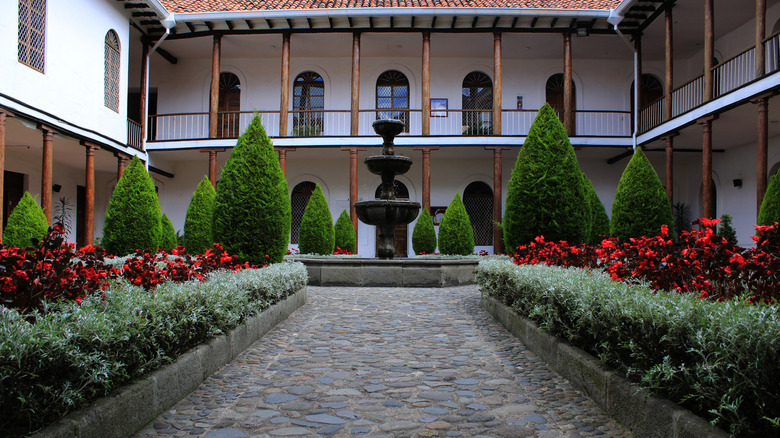
Symmetry is going to be your friend when it comes to designing your narrow backyard. This is not to say that you can't go asymmetrical if you prefer, but symmetry can add calm and order to your yard, and even help it appear to be bigger than it actually is. The key here is to utilize your yard's length. Much like vertical growing can optimize space upwards, a good symmetrical design takes advantage of your garden's length.
Take a look into French landscaping for some inspiration. While they can be incredibly opulent, French gardens rely on symmetry for their elegance. Measured paths, shaped topiary, and mirroring stone structures all play important roles. You can bring a lot of that tradition into your own backyard.
Start by measuring your yard for square footage, then draw up a plan. Create pathways, plants, and other features for an elegant, simply decorated plan. It's important not to overthink things here. Avoid adding too much to a narrow backyard, as things can easily become cluttered. Instead, embrace the mantra of less is more, and work from there.
Choose the right plants
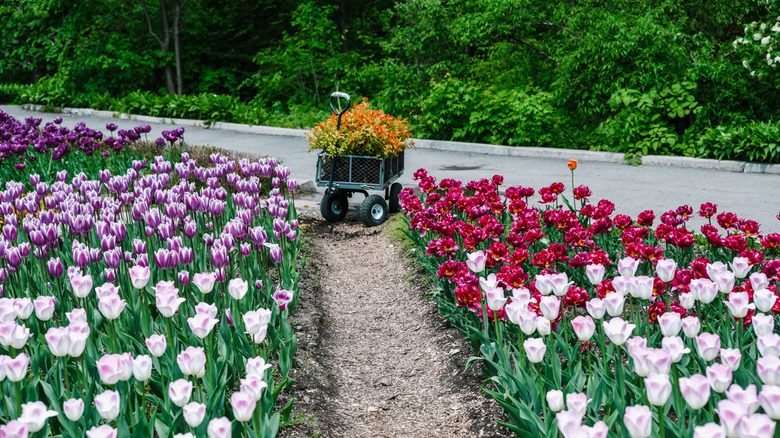
Choosing the right plants for your narrow backyard is critical to its success. Unless you're planning to do a complete hardscape, you're going to need to add a little more than grass to give your backyard the color, texture, and character it needs to stand out. That said, you must choose plants that are going to work in your backyard. Avoid over-planting, as this can lead to a cluttered and claustrophobic atmosphere.
Skinny plants like Japanese holly and rose of Sharon will be easy to squeeze into tight corners, as will shrubs like boxwood and certain hydrangea. Herbs work very well in narrow backyards as they do not take up a lot of space. Edging your pathways with low plants like fuchsia or catmint will also bring additional layering and appeal.
Another thing to note is which plants work well in your hardiness zone. The USDA classifies hardiness zones based on average temperatures and frost dates. Plants are then rated based on how well they survive in those conditions. So do your research and make sure you're choosing plants that both grow well and add some nice visual appeal without cluttering up your space.
Add a pergola
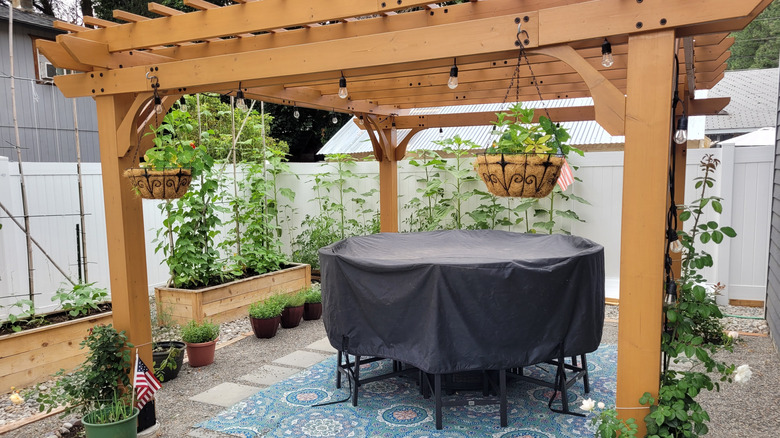
When you have a thin backyard, it's easy to choose a pergola over a gazebo as your best option. Even small gazebos take up a lot of space, potentially creating a tight, crowded feeling in your backyard. A pergola, on the other hand, is open and airy, and can easily be sized to fit your narrow backyard. Plus, they are a great way to add shade and privacy without having to sow plants that might take up too much space.
There are a few different directions you could go with your narrow pergola. There are pre-fabricated narrow pergolas specifically designed to fit into long, thin backyards. If you're handy, you could easily DIY one, or hire a carpenter to custom-build you one. We'd actually recommend the custom approach, as the measurements of these kinds of pergolas will fit your space specifically.
Another thing to consider with your pergola is where to place it. Is it going to be attached to your house as an accompaniment to your deck? Or is it going to be a stand-alone feature somewhere in the yard. This decision matters as it will not only dictate the size of your pergola, but also how it will be constructed and incorporated into the overall design.
Build a fire pit
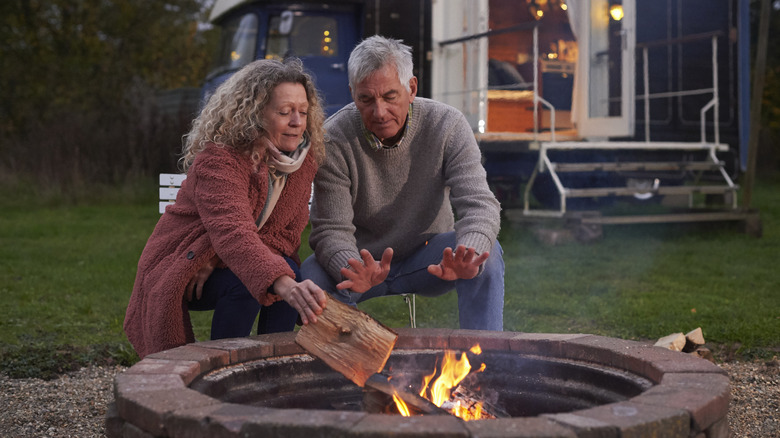
A fire pit is a great way to bring together different elements of your backyard, while also being an excellent outdoor upgrade that will increase your home's value. The fire pit can be the place where family and friends gather, or the spot where you relax for some quiet contemplation on a cool summer night. Either way, you'll never regret having one once the fire pit is installed.
There are a number of different DIY options you could consider for a fire pit. The main thing you need to consider is how much space it will be taking up in the yard. If you want a big pit that a lot of people can surround, you are going to need to sacrifice some yard space. However, you don't want to scale your fire pit so large that it dwarfs other aspects of your design. It's best to scale your fire pit to the size of your yard. That way it becomes part of the landscape rather than consuming it.
Overall, you need to do what is best with the budget you have. There are some pretty genius ways to make a fire pit budget friendly, without sacrificing quality or style. Be sure to check local ordinances regarding backyard fire pits. It may be that your municipality doesn't allow wood-burning versions, so gas or propane might be a better fit for your space.
Incorporate a deck or patio
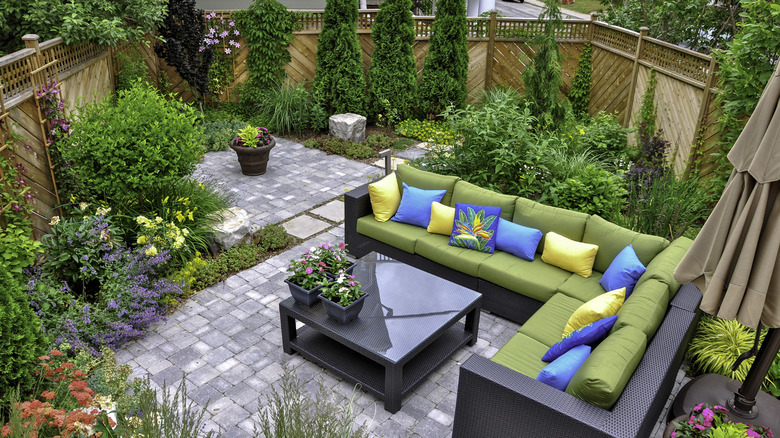
A small deck or patio is going to be a great addition to your small back yard. Not only will it create an excellent space for gathering and entertaining, but patios will provide a great hardscaping contrast to the greenery in your yard. Whether you want a deck or a patio (there is a difference), it's likely you're going to need to have it custom made for your small space. Hiring a contractor to get the job done right is a great option here, as you could end up spending more fixing mistakes or changing designs midway through a DIY project.
One of the big things that will determine whether you opt for a deck or a patio is the elevation of your yard. If your yard slopes away from the house via a hill, a deck built directly off of the house with stair access to the yard is the better option. If the ground is level to the house, a patio would be the better option. You can also consider creating a separate activity space by adding a small patio and seating area in one corner of the yard.
Whatever works best for your yard, remember once again that you don't want to make things too massive. Think about the deck or patio taking up roughly 10% to 20% of your narrow yard, unless you want it to be the defining element. Remaining areas can be dedicated to plants, grass, and other features.
Style with stone or brick
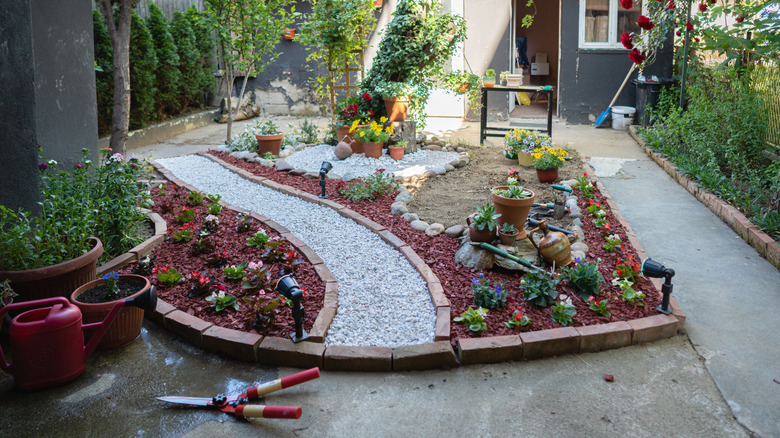
When it comes to hardscaping materials, you can't beat working with stones and bricks. Whether it's red tipple, cobblestone, granite, pea gravel, or straightforward red brick, you can use these materials to make any number of different, and useful additions to your narrow back yard. This includes larger projects like patios and walkways, or smaller additions like garden beds.
The idea here is to get creative with your stonework, and it doesn't have to be expensive. You can often find used stones or bricks for free online, and use them to make any number of beautiful DIY garden projects. Use concrete to make some awesome DIY cobblestones. Or, instead of throwing away leftover materials from a previous project, use broken bricks to create a beautiful garden walkway.
The options are really endless here. Another thing you might want to consider doing is to find one, big beautiful stone and set it as a focal point in your yard. You could also dedicate a space to make an elegant rock garden. Either way, stones and bricks create visual appeal and can be used for practical purposes as well.
Create a container garden with pots
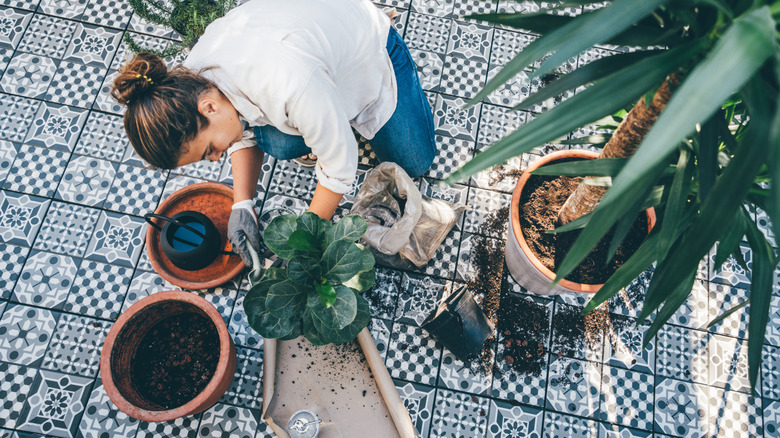
If you feel you don't have the space to add enough in-ground plants or don't want to add permanent garden beds to your backyard, planting with pots is going to be an excellent option for you. The beauty of pots and other containers is that they come in a number of different shapes, sizes, and styles. Even if you have regular terracotta pots, you can do some simple DIY upgrades, like adding shells to simple planters, that'll add great vibes to your backyard.
Pots are also excellent because they can be rearranged way easier than a garden bed. If you feel the placement of certain plants isn't working out, all you need to do is pick up your pots and rearrange them to your liking. It's also easy to add and remove pots as you wish, move plants to different spots in the yard for optimum sunshine, or bring them into a shed or greenhouse during the winter.
Another great thing about pots is that you can plant practically anything in them. Even pumpkins will grow on balconies in a container garden. Or consider dwarf potted fruit trees which can thrive in tight spaces. However, considering how heavy fruit trees are, you likely won't be moving this particular pot.
Create a play space for kids

Just because your backyard is skinny doesn't mean you can't transform it into an awesome playground for your kids. Sure, an open field might be preferable, but you need to work with what you have. You can get really inventive with the designs you come up with for your backyards. And be sure to get input from the kids, because they're going to be the ones using the space!
While you can certainly shop around for a prefabricated swing set or playground, you will run into the same potential issues as with pergolas: They might not fit in your yard. This is where creativity and DIY skills can come in handy. You can customize the play area to your backyard, but you don't need to go crazy.
Repurpose old tires to make a creative play space that works into the landscape. You can tie a tire swing to an existing tree, or get crafty with small forts or swing sets. Don't be afraid to let your imagination run wild here. Remember, the kids probably won't remember how small your backyard was. But they will remember the cool forts they played in. That's what helps create real memories.
Hang a hammock
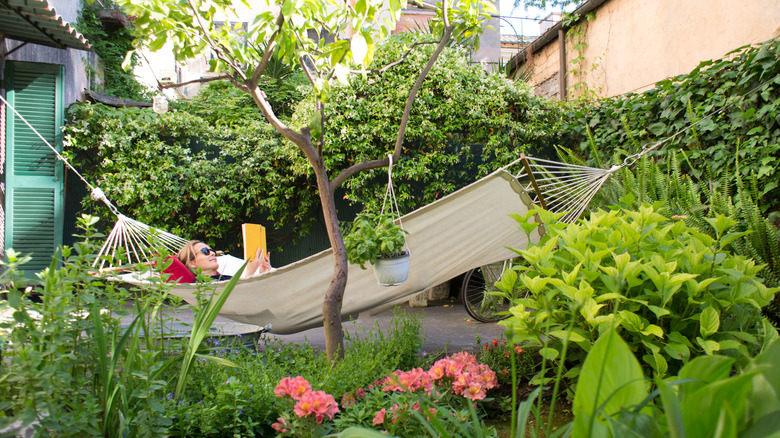
We realize that many of these suggestions for transforming your narrow backyard into usable space are going to take a lot of work. However, if you are looking for a simple way to transform your backyard into a private oasis, why not take the opportunity to string a hammock up between trees or fenceposts?
There are few things more relaxing than a snooze in a hammock. Again, the size of the hammock you purchase will depend on what fits in your yard. The average hammock is roughly 10 to 12 feet long and 4 to 6 feet wide. You can get larger or smaller ones depending on your own size, but an average hammock is likely going to fit pretty perfectly in your yard.
You can even liven up your small patio with the addition of a hammock, provided you have something like the Sunnydaze universal hammock stand. But you can also just string one up along fence or porch posts or between trees. Either way, it's an easy, non-invasive, easily movable way to make your narrow backyard a bit more usable.
Build a chicken coop or garden shed
If you really want to add some practical usability to your backyard, you'd do well to add some kind of garden storage. Sheds are an excellent way to not only store tools, but add visual appeal to the yard. They almost act as a bookend, creating a heavier component to the far end of the yard that balances the house on the other end. They are a great focal point, and you can easily find or build one to meet your specific yard dimensions. Something like Walmart's budget friendly storage shed will work in even the smallest backyard.
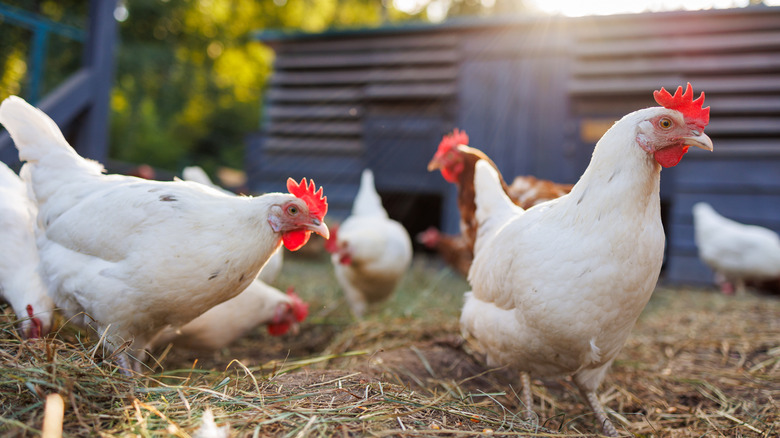
Alternatively, if your community allows for small amounts of livestock in the yard, a chicken coop would be another excellent option for your yard. Chickens don't need a lot of space to be happy, so long as they have plenty of bedding, weeds and bugs to eat, and a few toys to play with. Again, you can scale the size of your coop and run to the space you have available in your yard.
Another plus of having chickens is the fact that they will provide you with eggs for the majority of the calendar year. They're also easy for younger members of your family to take care of, and don't require much maintenance and upkeep besides occasionally cleaning out their coop and adding new bedding every few weeks.
Consider a water feature
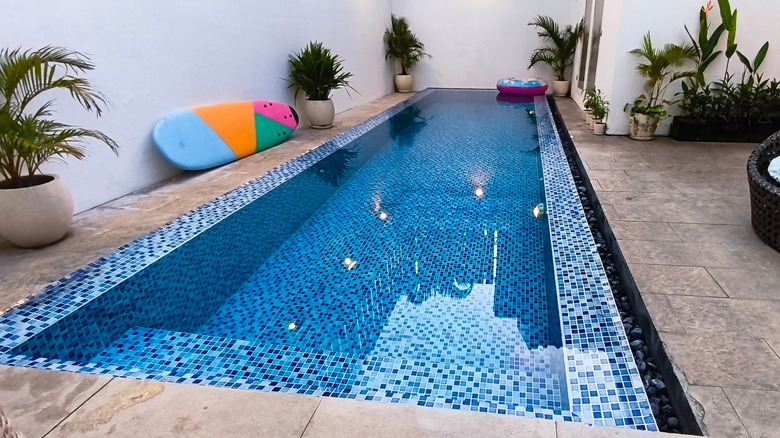
When we talk about water features in a narrow backyard, we once again need to make sure to scale them according to how much space we are working with. An enormous pond isn't going to work well in a small yard, unless you have an intricate plan to build pathways and other features work around it. Instead, smaller things like a centrally placed DIY garden fountain or smaller frog ponds integrated within the garden are going to work much better.
But what about a pool? If you have the cash and are willing to sacrifice the majority of your yard for it, installing a narrow pool into your backyard is going to be an awesome feature that really elevates your narrow space. You'll most likely need to work with an inground pool, as an above ground pool's width might contrast with your narrow backyard.