

Clever Tips That Will Make Your Deck Look Brand New
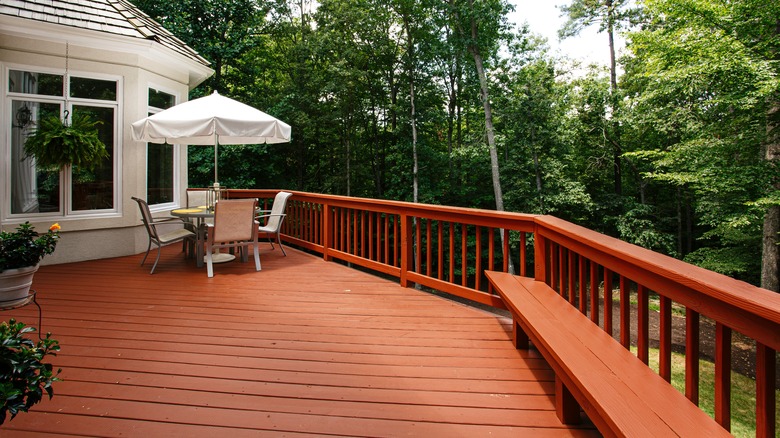
If your deck has seen better days and you're wondering how on earth you can restore it to its former glory without spending a fortune to do so, who better to help than Matt DiBara? As a 4th generation contractor and co-founder of The Contractor Consultants, DiBara draws on a long family history in the trades — 102 years, and counting.
Despite his successes in construction, his true passion lies in empowering homeowners just like you with the kind of knowledge that only a tradesmen with his experience can provide. In this case, he has offered some helpful and surprisingly simple tips and tricks to help make your deck look brand new.
From a simple clean or replacing just a few old and tired boards, to rethinking your lighting, upgrading old railings, and installing stylish new furniture, you'll be surprised how easy it can be to make your deck look like new again, and without undue stress on your bank account.
Give your deck a good clean
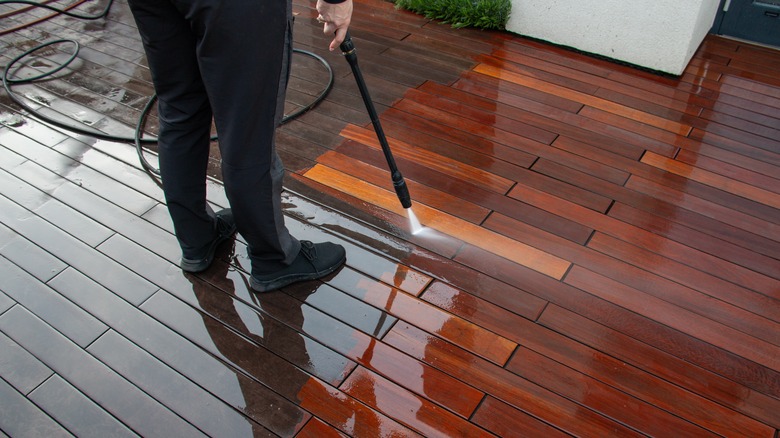
To get started, DiBara says, "First of all, it may just require a good cleaning. Something as basic as having the deck power washed to strip years of dirt, grime, and possibly even mold off its surface will instantly refresh its look."
It's important to test a small area of your decking first, ideally one that's out of the way and usually out of sight. Doing so will help you adjust the power settings of your washer appropriately, ensuring you don't exert too much force on the rest of your boards. Aim to use the lowest setting, and try to keep the washer head moving. If you keep it pointed at one spot for too long, you could risk damaging the wood. It's also not recommended to a power washer on a composite deck: They can be easily damaged at even the lowest settings.
Don't worry if you don't have a pressure washer, though. There are a couple of other solutions that you can use to clean your boards. Simple soap and water is one, and scrubbing your boards can lift up years' worth of grime. If you've got moss and green stains to deal with, mix 2 cups of warm water and three tablespoons of cornstarch. Mix this into a paste, before folding in about a 1/2 cup of baking soda. Dilute the entire mix in a gallon of water and bring to a boil. Allow it to cool to warm. This can then be worked over your deck boards with a scrubber brush. Let it soak for a few hours, much of that slippery moss will have lifted away. Then hose off the boards once you're happy the mixture has had enough time to soak.
Replace or repair damaged or decaying boards
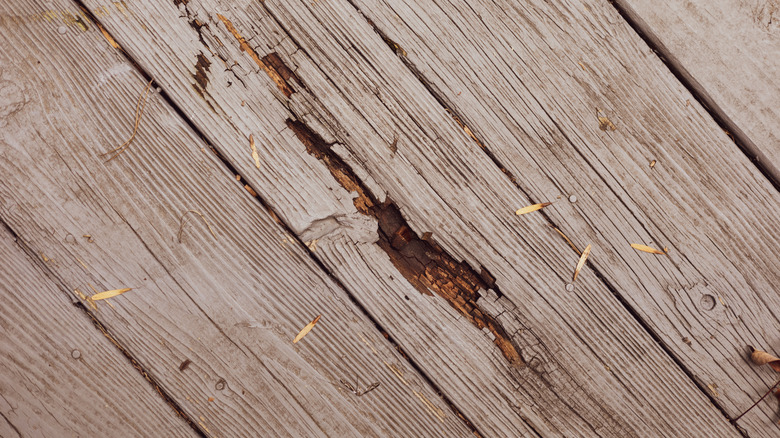
As you're washing your deck, says DiBara, "take your time and search for any damages while you clean, such as loose boards or wood that may be rotting. If you catch them in time, problems can be fixed before they become big headaches. Instead of having to replace the entire deck, for instance, you will only have to replace the damaged boards, which is much more easy on the wallet."
So, what sort of damage should you be looking for and how should you go about fixing them? "Small cracks and holes can be fixed with wood filler, sanded down, and restained for a much smoother look," explains DiBara.
As for identifying boards that are beyond repair, look out for signs of rot, areas that have either split or warmed, or damage from pests. There are a few different ways that the latter could present, including chew marks from rodents, or small exit holes from woodworm. And if you step on any boards that simply feel soft or not sturdy, there's a good chance they need replacing, too. Fortunately, if your decking is already made from wood, there's good news. Wood is generally the best material for building a decking on a budget, so it shouldn't cost you a fortune to replace a few single boards.
Refinish your deck boards with paint or stain
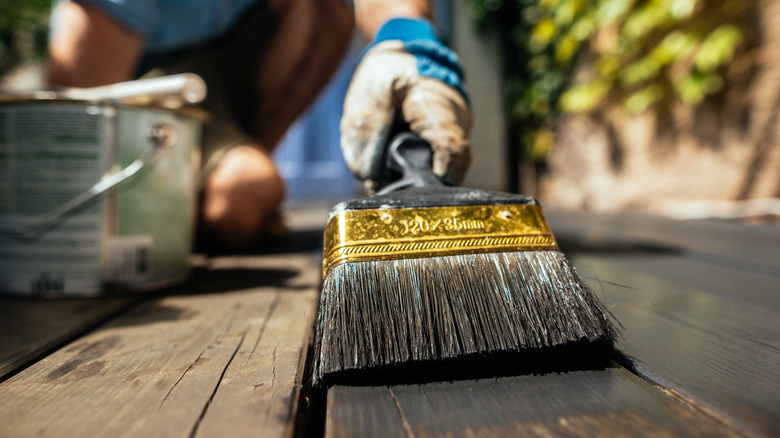
Now that your deck boards are clean, it's time to consider re-finishing them and protecting them against the weather. As Matt DiBara says, "One can really regain that new look by simply staining or painting it after that, which will also protect it from the weather." He notes that, "When everything is repaired, that new stain or painting won't just enhance the appearance of the deck; it will also protect it from further deterioration and maintain its integrity for years to come."
In other words, you definitely don't want to skip this step. In fact, you're probably not staining your deck often enough. The choice is actually fairly straightforward when it comes to wood decks, namely between oils or stains: Both approaches have different pros and cons. Oil, for example, is fantastic for retaining the natural look of your wood. However, it tends to require regular treatment, and isn't usually the best choice for older boards with lots of damage marks. Stain is better for covering these marks, and can also help slow the spread of mold and algae, but it's not the best choice if you want to retain the natural look of your deck.
Finally, if you're treating your boards in the hopes of preparing your wood patio for winter, make sure that you check which kind of wood your deck is made from. Stains and oils are great, and even necessary, for certain types of wood. But if your boards or railings are made from certain hardwood like teak, which has a naturally high oil content and is therefore already weather-resistant, stains and oils will struggle to adhere and soak in, leading to unsightly peeling and flaking. Likewise, composite decks do not need stain or oil.
Upgrade your lighting
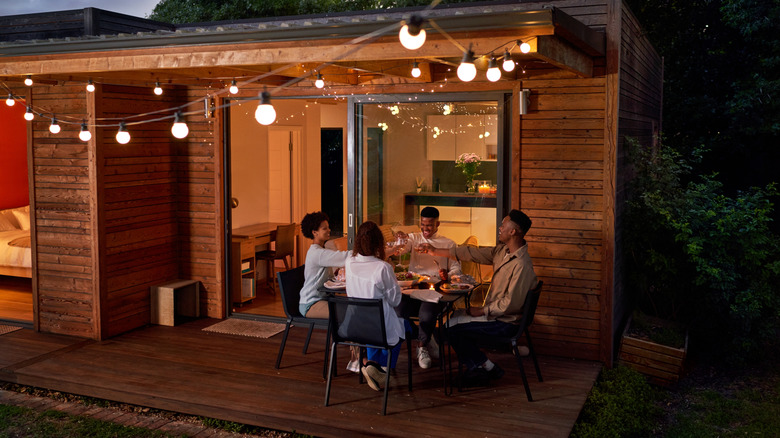
If you've yet to do so, there are many creative ways to light up a patio, the benefit of which not only includes making your space feel more welcoming, but also extending the time during which you can use it. This is especially important as summer turns to fall and the nights begin to draw in. What's more, a little attention to the way you light your newly-cleaned patio can go a long way towards making it look like a new design altogether.
As DiBara puts it, "Lighting is another sometimes overlooked deck design element. Adding low-voltage lighting, such as under-rail or stair lighting, can warmly invite use beyond daylight hours." As for specific ideas, he has a few. "Swap out bland deck lighting for new cap lights, solar-powered post caps, or string lights to add that cozy and inviting look."
Now, it's important to note that not just any old lights will do the trick. Ask any interior designer and they'll almost certainly tell you that it's important to layer your lighting with a mix of ambient, task, and accent lighting. Doing so helps create a dynamic ambience, while providing the appropriate amount of visibility for specific areas, such as spotlights in outdoor kitchens, warm lighting in cozy corners, and accent lights to add interest and highlight other features on your deck. It's also important to install fixtures that are rated at least IP65. This will ensure they're protected, and not only from the weather, but also from your annual power-washing regimen.
Replace old railings with modern fixtures
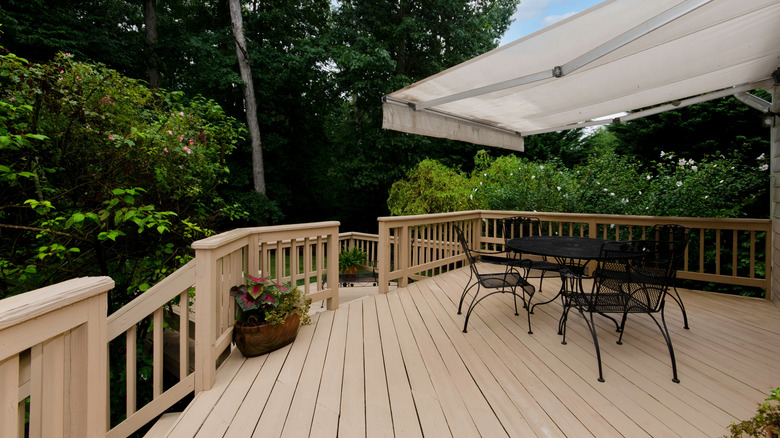
The railings and balustrade systems surrounding your deck can have an enormous impact on how loved — or unloved — the space looks to those who use it. Fortunately, says DiBara, one of the easiest ways to help make your deck look brand new is simply adding or replacing the deck's railing. "Installing a sleek and modern railing can transform the appearance of a deck dramatically and raise its face value significantly."
While you're at it, he also suggests considering built-in seating or a DIY railing planter box. These "will also turn the deck into something more functional and an even more interesting place to be. These are cosmetic, yet make the deck much more functional in basic ways."
If you are considering replacing a timber balustrade systems, then spend a moment weighing up the different available materials. While the same style wood replacements are likely to be the cheapest, other materials like marine-grade stainless steel can prove immensely cost-effective in the long run. Not only does it look sleek and contemporary, but it's are more than capable of standing up to the worst of the weather. Powder-coated aluminum is another similarly stylish and hardy option. Neither material requires much maintenance and each promises to last for a very long time. This is especially true when compared with wood, which requires frequent inspection and, depending on the type, regular treatment with stains or oils.
Replace old nails with stainless steel screws
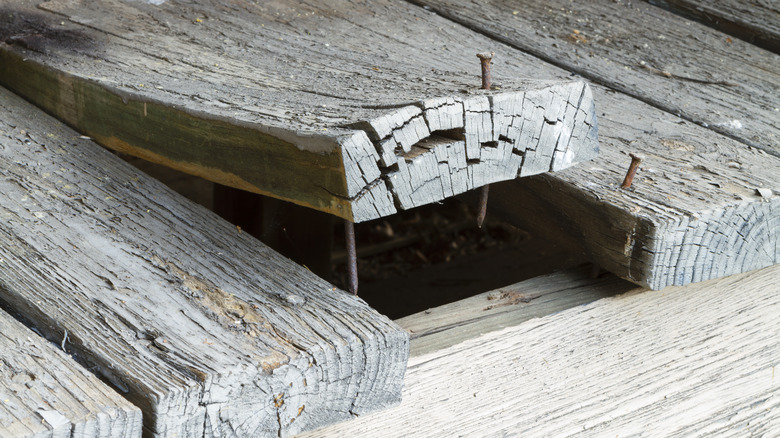
"Other small updates that fall into the simple category," says DiBara, "would be things like new stainless steel screws versus older nails, which can also make a deck look new once more, not to mention being quite cheap on the budget when looking to make thoughtful upgrades."
This is so true, and the benefits extend beyond mere looks and cost. Rusted nails, if allowed to protrude from the surface of your deck boards, can be incredibly dangerous, especially if you or your family regularly walk around without shoes (the same applies to pets, which are generally shoeless). What's more, where there is one rusted or loose nail, there are often more, which can lead to total collapsing. This loosening often happens as wood naturally expands and contracts, in turn causing the nail holes to increase in size and eventually rendering the nail redundant. Rusted nails can also contribute to the wood decaying, so getting ahead of them — and ideally replacing them with stainless steel screws — is key.
Shelter your deck with a pergola
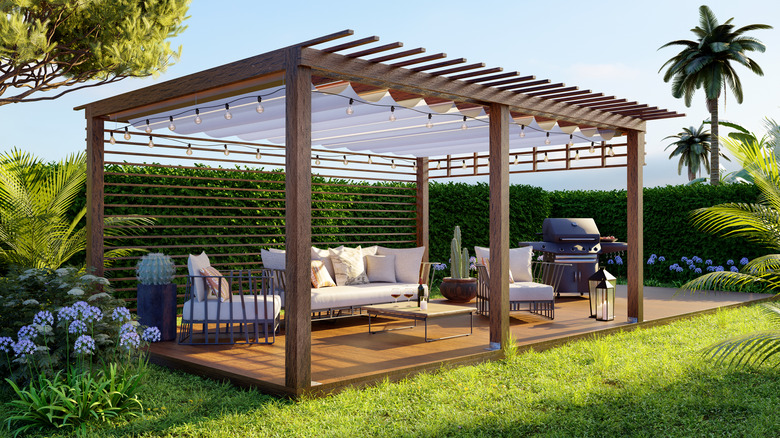
Once your deck has been repaired, repainted, and relieved of its rusty nails, another update that'll help your space retain its gorgeous new look is the addition of a pergola. This helps protect your revived outdoor area from the elements. More importantly, it provides you your guests with shelter, meaning you'll no longer be limited to the kind of weather in which you can use your deck.
As for how you install that shelter is up to you. Pergolas typically provide a framework over which to hang a cover, which can be made from various outdoor-friendly fabrics like canvas. And before you ask, don't worry — you don't have to spend a fortune on a dedicated canvas cover: It's easy to DIY your own pergola cover, and by doing so, choose the perfect color to suit your style.
Finally, with a pergola in place, there are also plenty of beautiful plants that will gladly climb over it — including clematis, honeysuckle, and bougainvillea —providing welcome shade from the sun while helping your new structure to blend more seamlessly into your garden's natural surroundings. Many of these are pollinator-friendly, too, so not only will you get to enjoy the colors of your chosen flowers, but you'll also be graced by the rainbow presence of friendly creatures like bees, butterflies, and even hummingbirds.
Get creative with floor decorations
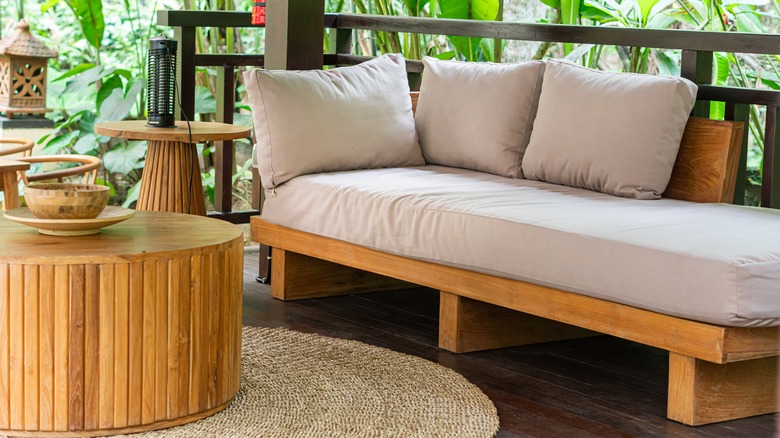
This next tip is especially handy if you have permanent stains or boards that aren't in great condition: Outdoor floor coverings can work magic. As DiBara says, "Even though some of the wood might not be in perfect condition, outdoor rugs and strategically placed cushions can make flaws disappear and create a cozy, stylish deck."
Rugs are actually one of the best furniture ideas for small patios, but they're not for everybody. For example, what if you don't have somewhere to store it in the winter, or would rather not spend the time learning the right way to clean an outdoor rug? In that case, says DiBara, "Homeowners can paint or stencil the deck floor to introduce unique patterns and colors onto the deck."
The bonus of doing this is that, once painted, your rug pattern requires next to no maintenance, other than the occasional mild cleaning. Just be sure to prepare your surface properly before you paint. Start by making sure that the area is well sanded, then prime the boards with an oil-based primer, allowing it to cure at least 48 hours. Once that's done, bring your patterns to life with your chosen colors of acrylic paint, and once dry, paint the whole thing over it with a clear varnish. This will help to protect your work from the elements and keep it looking fresh and new for longer.
Think about your furniture
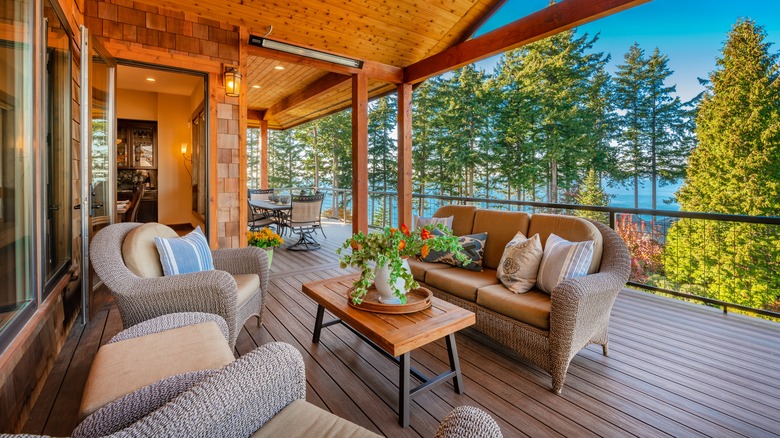
After following Matt DiBara's tips so far, you may well be wondering how to tie everything together. According to him, "stylish furniture will complement these updates." Simple, right?
It is, but it's worth noting that there are lots of unique outdoor seating ideas to choose from, and that it's therefore important to choose the right type and size for your space. One of the best tips for buying outdoor furniture is to source furnishings that suit your lifestyle. This boils down to ensuring you actually want to spend time sitting on your chairs and dining at your tables. So, look for furniture that matches your aesthetic, that complements your wider garden's surroundings, and that is, above all else, comfortable!
You should also bear in mind that function is every bit as important as form, and that your furniture's function is largely dependent on how it fits your particular deck. Smaller spaces, for example, can benefit from modular units, while decks with deep corners are maximized by placing a large corner sofa to accommodate friends and family.
Add some color to your deck
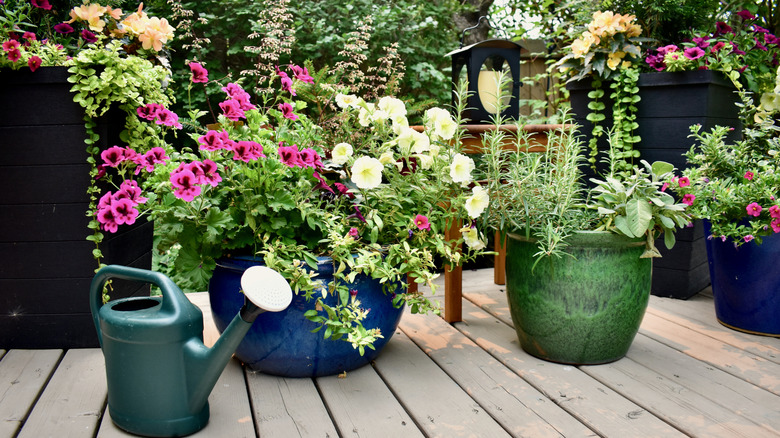
Now that you're almost there with restoring your deck to its former glory, it's time to unleash your inner designer and throw some color into the mix. On this, DiBara suggests, "Add some decorative flair with the addition of planters of colorful flowers or greenery to give the space life and color."
In fact, there is a whole horticultural world to be discovered by those who want to bring color to their deck with flowers. You could consider adding calibrachoas in hanging baskets in the summer. If you have pests you'd like to banish from your deck like mosquitoes, why not plant colorful, fragrant, and naturally repellent herbs like lavender?
And why stop with just flowers? Going back to your rugs and other furnishings, it's possible to find these items in an array of beautiful colors nowadays. And if you're feeling really creative — and you have a wall with which to work — it's also easy to personalize your patio with a unique, beautifully painted mural. The key is to know which colors are best and worst for outdoor use. While some will work wonderfully inside your home, others — especially bright, neon colors — have a tendency to jar with the more natural colors that are common in most gardens.
Install an outdoor kitchen
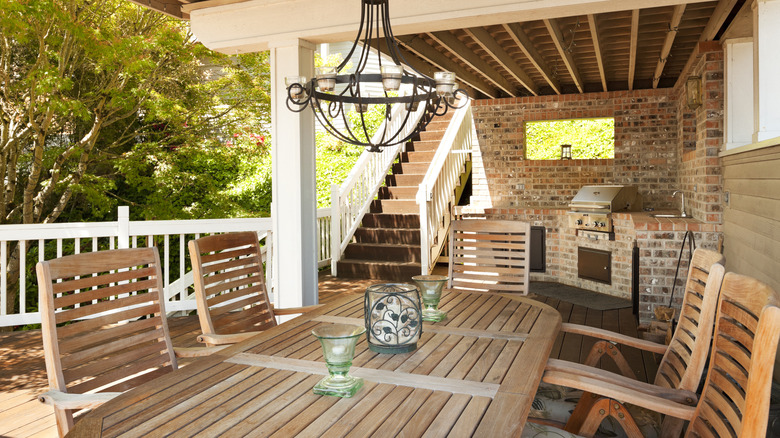
Installing an outdoor kitchen can give your deck a new lease of life. Not only that, it can give you even more reason to spend time outside, which means you're much less likely to neglect and allow the space to fall prey to the elements. While the cost of an outdoor kitchen can vary wildly depending on the materials and appliances you build it with, it's also considered one of the best updates for adding value to your home.
What makes this such a great tip for helping your deck to look brand new, however, is how it can help pull together some of the other tips that our expert has suggested. For example, when you install an outdoor kitchen, beautiful, layered lighting ceases being just an option and becomes a key requirement. You'll need to ensure that work areas in your kitchen are spotlit, and to help you and your guests enjoy whatever's on the menu, you'll want to make sure that your dining area is bathed in warm, cozy lighting. On that note, you'll also need to choose comfortable, stylish furniture for you and your guests to relax in while you dine. If you're hoping to continue using the kitchen in all weathers, a pergola will help ensure that the weather doesn't rain all over your plans. See how it all ties together and helps you create the perfect refreshed, updated deck?