

How To Prepare Your Lawn Mower For Winter Storage
We may receive a commission on purchases made from links.
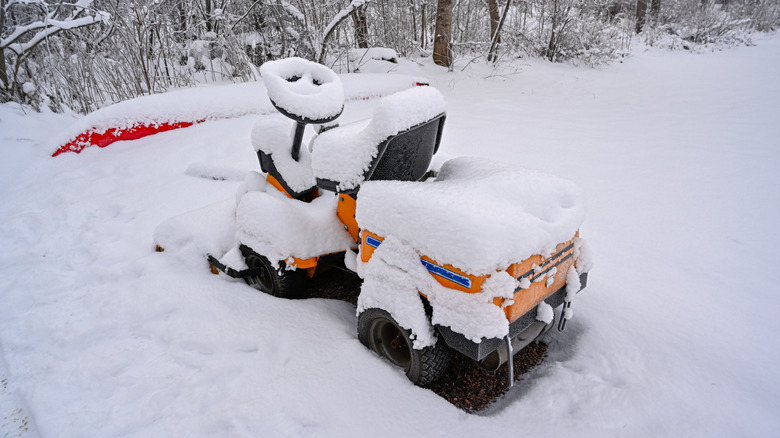
When mowing season comes to an end, most people are undoubtedly ready to put their lawn machine away for winter. However, even the most reliable lawn mowers need to be properly prepped for winter storage if you expect them to function correctly come spring. While this may seem like an extra step, it actually involves routine maintenance tasks that will also help extend the life of your mower, so it's a win-win. These include things like changing the fluids and filters, sharpening blades, and removing the power source.
However, before you even get to those chores, you first need to make sure your lawn mower is thoroughly cleaned and that you have a proper place to store it. First and foremost, this means a place that is protected from the elements.It should also be elevated to prevent damage from standing water. Even indoors, it's a good idea to cover the mower to prevent a build up of dirt and dust. Also, make sure the area is free of any rodents such as mice, which may chew wires or otherwise damage the mower.
Next comes the cleaning. Accumulated dirt and grass on your mower deck and moving parts can contribute to a variety of issues such as rust and corrosion. They can also harbor lawn disease and fungus that may be transferred to your lawn later. So, it's important to do a thorough cleaning before storing it for an extended period. Use a brush to remove the grass from above and below the deck, but be sure to disconnect the power source first. Particularly bad spots may need to be scraped with a putty knife. Any rust spots should be cleaned with a wire brush, then coated with a rust-resistant paint such as Rust-Oleum Farm & Implement Spray Paint.
Take care of fluid and filters
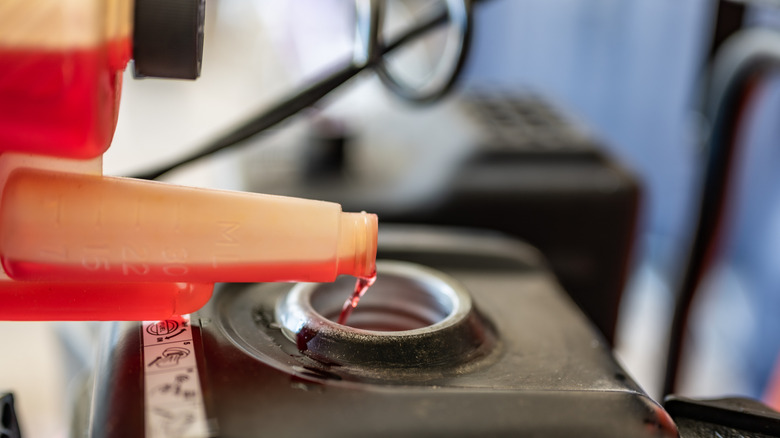
Once the mower is cleaned, it is time to take care of the fluids and filters, starting with the fluid that powers the mower — gasoline. The absolute best thing to do before storing your mower for winter is to drain the gas from your mower. However, even if you intend to drain the gas, you should first treat it with fuel stabilizer. Pour the recommended dose of the stabilizer into the gas tank, start the mower, and allow it to run for a few minutes so the stabilizer-treated gas reaches all of the mower parts. Allow the mower to cool back down before proceeding with the next steps.
Now you can move onto changing the mower's oil. Drain the old oil and replace the filter if your mower is equipped with one. As the oil drains, remove your air filter and either clean or replace it. If you have an inline fuel filter, now is the time to change it as well. After the new oil has been added and the new filters are in place, start the mower once again to allow the fresh oil to coat all the internal parts. Once the mower has cooled again, you can now siphon the gas into a storage tank; be sure to also add fuel stabilizer to any cans of stored gasoline.
Next, make sure the mower is properly greased. Use a grease gun filled with the manufacturer-recommended grease to lubricate all the moving parts of your mower, and top off any grease zerks. You should also apply grease to all the fittings, spindles, axle pivots, foot pedals, levers, and wheels.
Take out battery and perform additional maintenance
After you're done with the fluids, it's time to take care of the power and cutting components. Start by removing the battery, if your lawn mower is equipped with one. You should also prepare your lawn mower battery for long-term storage. That involves performing a load test, which measures a battery's performance — if it is already on its last leg, you will probably want to replace it before spring arrives. Next, clean the terminals and fully charge the battery before placing it in a safe, dry place for winter.
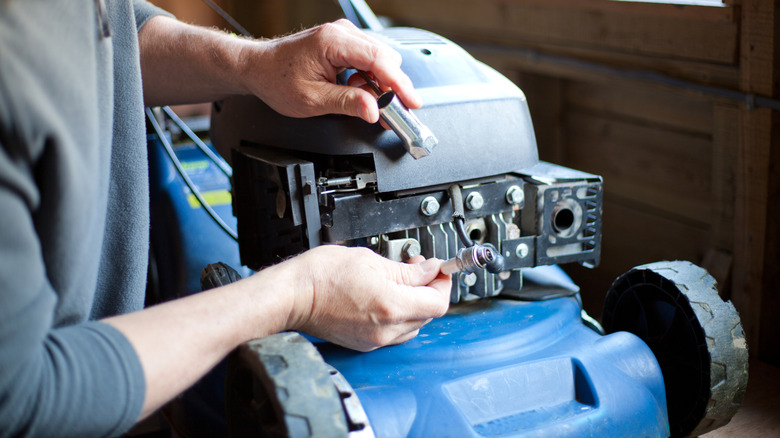
You're now ready to remove the spark plug from your mower. You have a couple of options at this point — you can either clean the spark plug contacts with a wire brush or replace it with a new one. However, given that spark plugs are relatively inexpensive, it is usually worth the money to just replace it, ensuring peak performance when the spring mowing season arrives. If you've already used your mower for a few seasons, it's also a good idea to remove the spark plug wire and clean all the contacts. If the spark plug wire itself is cracked or damaged, it is best to replace it.
Finally, you should sharpen and balance your lawn mower blades. To safely sharpen your mower blade, be sure to wear gloves and make sure the power source is disconnected before removing the blade. Then, place the blade in a bench vise and use a file or angle grinder to sharpen the blade, following the existing angle. Take care not to oversharpen the blade. After sharpening, check that the mower blades are balanced. If the blade is unbalanced, remove additional metal from the heavier side. Once the blade is balanced, reinstall it on your mower deck.