

Ranking The Nation's Best National Parks For Camping So You Don't Have To
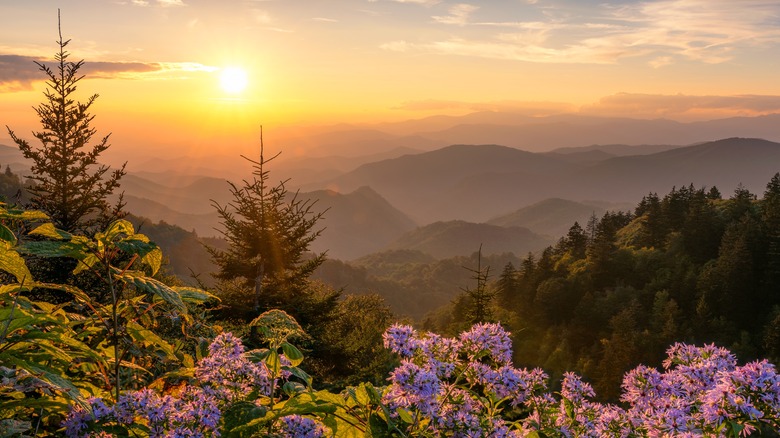
Inspired by the rich landscape across the United States, Katharine Lee Bates wrote the famous poem 'America the Beautiful' following a trip to Pike's Peak, Colorado in 1893. Despite our busy lives in this modern digital age, sleeping under the stars in one of America's national parks to enjoy the majesty of purple mountains, or to gaze across fruited plains is just as relaxing and soul-nourishing today as it was for Ms. Bates in the late 19th century.
Not every national park offers camping, but many do. Amenities may range from the most rugged backcountry spots where it's just you and your tent, to fully equipped RV parks. Some campgrounds are family and pet-friendly, while others are best for avid solo or small-group hiker-campers willing to go (literally) the extra mile. When planning a camping trip, it's important to consider that most national parks require reservations (sometimes up to a year in advance) via recreation.gov. Individual government park websites will have information on specific campground closures, amenities, and burn bans. And you'll want to stay up-to-date on how government shutdowns affect national parks.
10. Saguaro National Park

One of Arizona's most iconic national parks is known (and named for) for its iconic towering cactus. Aside from its famous fauna, it's also a great spot for a logistically smooth, affordable camping trip offering free ranger-led programs and a variety of other affordable activities. Saguaro National Park is unique in its separation into two districts on the western and eastern sides of the city of Tucson, Arizona. Camping in Saguaro National Park is available across six backcountry campsites in the Saguaro Wilderness Area, located in the eastern half of the grounds.
The beauty of Saguaro National Park is a once-in-a-lifetime experience, but as a campsite, it's ranked lower on this list because of its relatively limited access. The campsites are only accessible on foot and apart from a few with fire rings (like Juniper Basin), offer no amenities. Not only is hiking at altitude to a site where you generally need to bring in your own water (a gallon per person per day is recommended) a challenge, there are a number of dangerous animals to keep an eye out for in Saguaro National Park. On the plus side, campsites only cost $8 per night.
Because of the absence of campsites on its western side, Saguaro National Park's only RV parking is on the eastern side near trailheads and there is no vehicle or RV overnight camping anywhere in the park. Saguaro is one of the more secluded national parks, and poses a higher level of difficulty in terms of accessing its camping sites than other parks on this list.
9. Carlsbad Caverns National Park
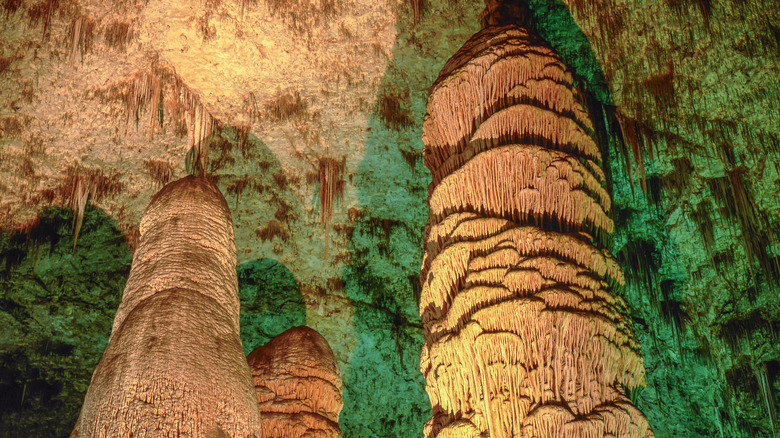
Located in an environmentally complex area of the northern end of New Mexico's Chihuahuan Desert, Carlsbad Caverns National Park is world famous for its mesmerizing stalagmites and stalactites adorning massive limestone cave like jewels. The entry fee is just $15 per person over the age of 16; anyone younger is permitted to enter free of charge. Ranger-led programs at Carlsbad Caverns National Park include a nightly immersive bat flight program and a night sky program for amateur and experienced stargazers. A plethora of hiking trails are available across the park for those seeking a breath of fresh air following a cave expedition.
While there are no designated campsites or overnight facilities for the public inside the park, backcountry camping is allowed with a free permit (pick it up at the visitors' center). Backcountry camping is only allowed in specific areas of the park. Pets and vehicle camping aren't allowed, and you can't explore any caves without the superintendent's permission, but you do have access to numerous trails within the nearly 47,000-acre park. Those looking for more formal accommodations should head towards Whites City RV Park, located just outside of the eastern end of the park, 7 miles from the visitors' center. You'll find fully equipped spots for most sizes of RVs, along with tent camping featuring grills, fire rings, picnic tables, and precious shade. Unlike the bare-bones backcountry camping, at this park you're walking distance from a cafe, shopping, and laundromat.
8. Monument Valley
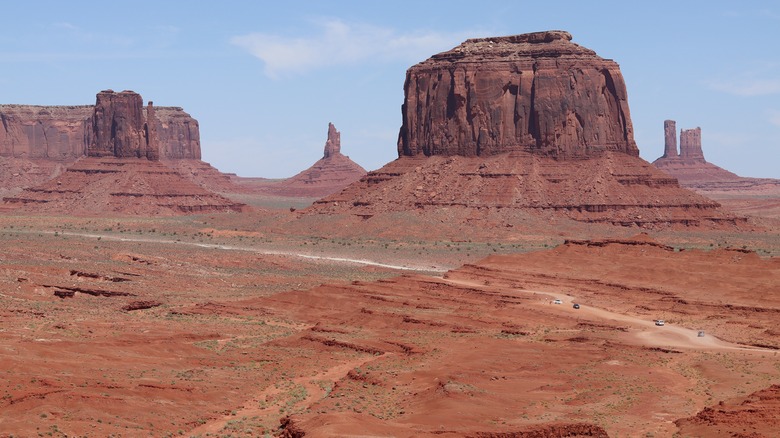
The postcards do not compare — Monument Valley Navajo Tribal Park is a different level of breathtaking camping up close. The arid desert on the Arizona-Utah border is the perfect backdrop for Monument Valley's striking rock formations that have become the unofficial poster children of the American southwest. The iconic formations are also the backdrop in a zillion movies, from old John Ford westerns to "Forrest Gump." Unlike the other parks on this list, Monument Valley's 30,000 acres belong to the Diné or Navajo Nation, and therefore, has different guidelines and rules from the U.S. national parks on this list.
Backcountry camping is available in designated areas throughout Monument Valley with a free permit, while nearby View Campground offers RV sites up to 24 feet in addition to wilderness camping experiences. All locations are subject to an $8 per person entry fee to the tribal park itself. Guided tours are available (for a fee) throughout Monument Valley, but the terrain lends itself to a choose-your-own-adventure type of experience. Drive (there are wait times during peak season), hike, or just wander (safely) into the desert. Permits are needed for commercial and wedding photography, while rock climbing, scattering cremation remains, and drones are strictly prohibited on sacred Navajo Nation lands. So making sure one knows how to properly respect the land before camping in Monument Valley is not a recommendation, it's a requirement.
7. Pinnacles National Park
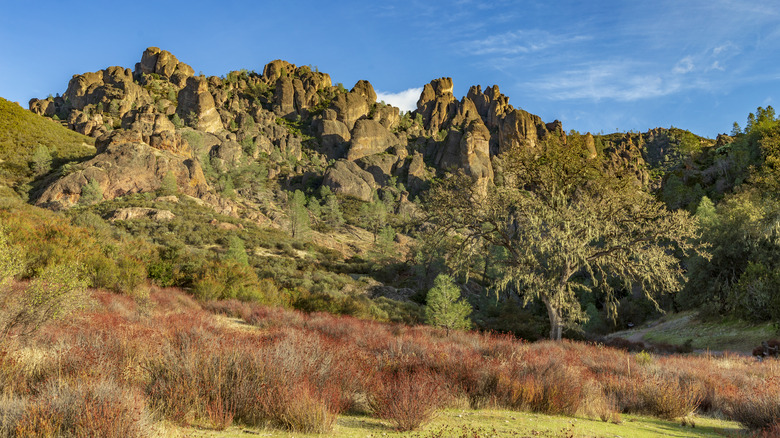
Few parks can match the diverse landscapes and plethora of activities offered by the often-overlooked Pinnacles National Park, especially considering the low, flexible entry fees that accommodate multiple types of transport and groups of all sizes. Located just east of central California's Salinas Valley, Pinnacles National Park is characterized by its series of landscape-defining rock formations created as the result of a series of volcanic eruptions 23 million years ago.
Pinnacles National Park has a lot to explore — 26,000 acres worth — but the only place to pop a tent or park an RV is Pinnacles Campground, located on the east side of the park. Reservations are highly recommended: campground has sites that can be booked six months in advance, and larger group sites that can be reserved up to 12 months in advance. All tent sites have fire rings and most RV sites are equipped with electrical hookups. Potable water is available, as are coin-operated showers and a nice swimming pool, open in the warmer months. A park store is well equipped with snacks and sundries. A dump site, community tables, and barbecue pits round out the amenities. Pets are welcome at the campground (6-foot leashes required at all times), but not on any national park trails.
Once camp is set up, Pinnacles National Park offers numerous ways to interact with its environment. Bear Gulch has its own visitor and nature center, as well as the largest set of many intriguing talus caves present throughout the park. Pinnacles National Park is also home to over 25 native wildlife species protected in the park, which notably includes the critically endangered (but recovering) California Condor.
6. Zion National Park

Zion National Park was the first national park established in the state of Utah. In the century since its establishment, it has become world-renowned for its towering rock formations, vast landscapes, and diverse wildlife, including five creatures to be aware of. Zion National Park has three entrances, with the most popular being the southern entrance near Springdale, Utah. Commonly referred to as the park's main entrance, there are shuttles available when the park is particularly congested, and Springdale is right around the corner for any trip-related needs prior to park entry. The south entrance also has one of Zion National Park's two visitor centers, as well as the largest bathrooms in the park, and ranger-led programs and shuttles up to Zion Canyon — rarely open to private vehicles — offer a view that could ease even the sorest of eyes.
There are three campgrounds in the area, however, South Campground (in the park) is closed for a long-term upgrade. Lava Point is located just north of the park, but requires a circuitous, hour-long drive to get to the park. It features six primitive campsites that generally need to be reserved in advance (cash is not accepted on site). The Watchman Campground is a quarter-mile from the south entrance visitor center of Zion National Park and features fire rings, RV hookups at some sites, and tent space for all camp spots, along with flush toilets available year-round. Six group campsites are tent-only. Reservations are required (there is no first-come, first-served camping), and are available up to six months in advance.
5. Great Basin National Park
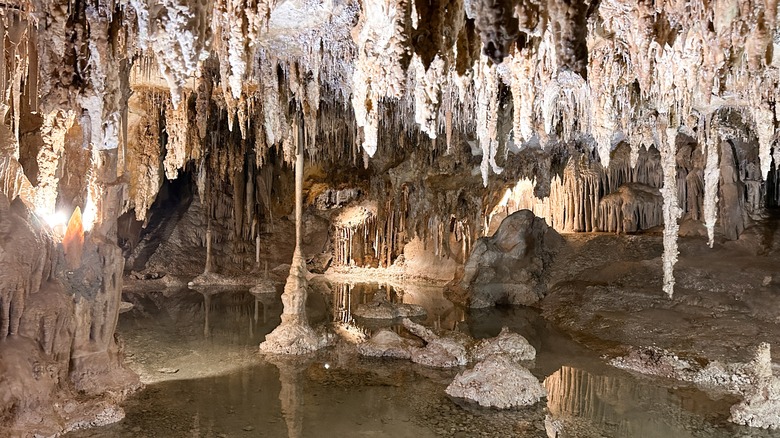
Great Basin National Park may be located in the Great Basin desert, but the park itself is hardly just desert. In fact it's considered the only cold desert in the continental U.S. At just over 13,000 feet, Wheeler Peak is the highest point in the park and is exemplary of the variety of topography present.
From snow-covered peak to desert scrub foothills, Great Basin National Park offers a variety of camping experiences. Five campgrounds are available. Grey Cliffs campground is the best choice for groups. Lower Lehman Creek campground can be reserved four days in advance or even on the day-of. And at almost 10,000 feet ASL, Wheeler Peak campground has the distinction of being the highest campground in the U.S. National Park system. Finally, Snake Creek Road has a dozen primitive campsites available. There's no running water here, but Snake Creek campsites are all first-come, first-serve and free of charge.
Aside from ranger-led programs, Great Basin National Park is a free-to-explore wonder. The stalagmites and stalactites accessible via the Lehman Caves Tour are impressive, but the caves are closed for approximately six months starting on October 20, 2025 for new lighting. A wide variety of hiking trails are available for most abilities and skill levels. Given the desert location, you might not realize that Great Basin is a also wonderful national park to visit if you like winter sports. You'll find unmaintained, but beautiful downhill and cross-country skiing options near the top of Wheeler Peak.
4. Acadia National Park
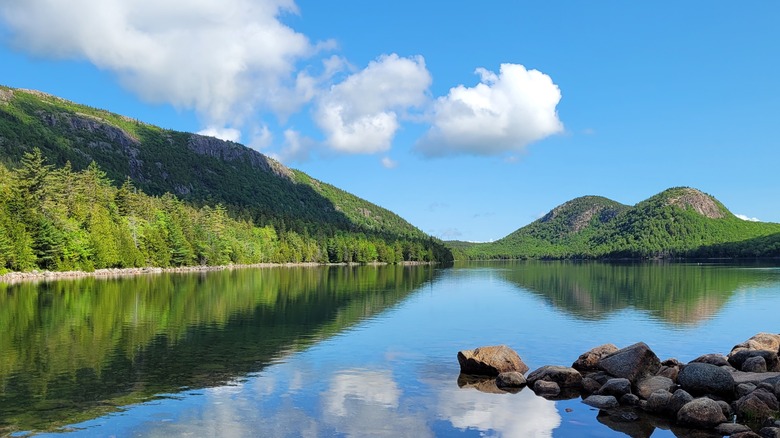
Acadia National Park is located primarily on Mount Desert Island, connected to mainline Maine in the northeast part of the state. It's arguably one of the most unique parks in the National Parks system, with jaw-dropping views of the Maine coastline. A bridge from Trenton is the sole vehicle route to Mount Desert Island, with another access route to the Schoodic Peninsula on the mainland, and a passenger-only ferry to Isle au Haut.
Four campsites are available in Acadia National Park. All require advance reservation, and backcountry camping is not permitted anywhere in the park. Seawall and Blackwoods are probably the two most convenient campgrounds, located on the west and east sides of Mount Desert Island, respectively. Seawall features walk-in tent sites, walk-up tent or RV sites, and group sites from May through mid-October, with seasonally available flush toilets. Several of the campsites are ADA compliant and the restrooms are wheelchair accessible, great for those trying to create a more accessible campsite for differing abilities. For a completely different experience, take the ferry to Isle au Haut, where you'll find five lean-to shelters at Duck Harbor campground, with compost toilets and no potable water.
In addition to its stunning biodiversity, Acadia National Park is also ripe for exploration. You'll find almost 160 miles of hiking trails, historic carriage roads, and two popular driving routes: The Park Loop Road and the Cadillac Summit Road (vehicle registration required in peak months). Also check out Bass Harbor Headlight Station, one of three historic lighthouses Acadia National Park maintains, and the only one you can get close to.
3. Mount Rainier National Park
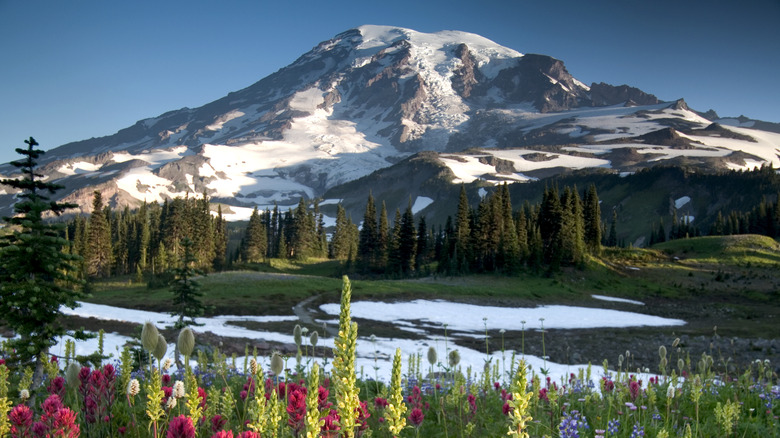
14,410 feet above sea level, Mount Rainier towers over Washington state, and the surrounding national park from foothills to peak is as vast as it is gorgeous. The icy pinnacle is one of the most iconic landmarks in the Pacific Northwest, and its beauty is among the more accessible sites in the country when it comes to finding an ideal camping destination. Mt. Rainier's standard entrance passes range from $15-$30 (no cash accepted). The Sunrise Corridor in the northeast portion of Mt. Rainier National Park requires a reservation for entry, but the rest of the park is free to explore at a moment's notice.
One of the best ways to see everything Mt. Rainier National Park has to offer is the Mt. Rainier Scenic Railroad. The train runs year-round and kids under six ride free, making it an ideal experience for family campers. Special train lines, such as the Brunch Train, Whiskey Train, and Halloween Family Train are available at various times throughout the year.
Mt. Rainier National Park offers camping as low as $20 per night, and that would likely be enough to top this list if the campgrounds themselves were less restrictive. The four campgrounds at Mt. Rainier National Park are Cougar Rock, Ohanapecosh, White River, and Mowich Lake. White River is the only campground operating on a first-come, first-serve basis, but due to the variety of weather present in Washington state, campgrounds are only seasonally available as weather permits. As you explore, remember that Mount Rainier has its share of dangerous animals, including black bears and cougars.
2. Joshua Tree National Park
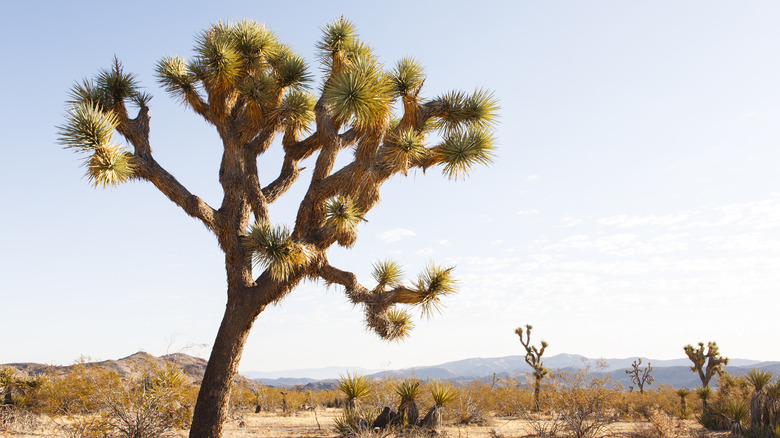
Southern California's not-so-hidden gem is a great camping destination due to its ease of access, storied cultural history, and bizarre visual attractions that are bound to leave a lasting memory. Like the town of the same name, Joshua Tree National Park is pocked with its eponymous fauna and has become a well-known respite from the hustle and bustle of greater Los Angeles for the naturally inclined and spiritually minded.
There are eight campsites in the park with 500 campsites, and five of them must be reserved in advance: Black Rock, Cottonwood, Indian Cove, Jumbo Rocks, and Ryan. Black Rock and Cottonwood are the only campsites in Joshua Tree National Park that have dump stations, flush toilets and running water. The latter three campsites have non-flush toilets. Belle, Hidden Valley, and White Tank campgrounds are smaller campgrounds available on a first-come, first-served basis, but fill up quickly in peak months. It's important to note that Hidden Valley is open year-round, but Belle and White Tank close for the summer.
Once situated, Joshua Tree National Park has plenty to offer campers. Like many national parks in the United States, ranger-led programs are available and popular with younger visitors, but the vast confines of the park lend themselves to exploration in the form of hiking, birdwatching, rock-climbing, horseback riding, and biking in designated areas during the day. At night, few skies can match the serene clarity for stargazing. Above all else, it's important to remember to make sure to respect the environment and the creatures who call Joshua Tree National Park home.
1. Great Smoky Mountains National Park
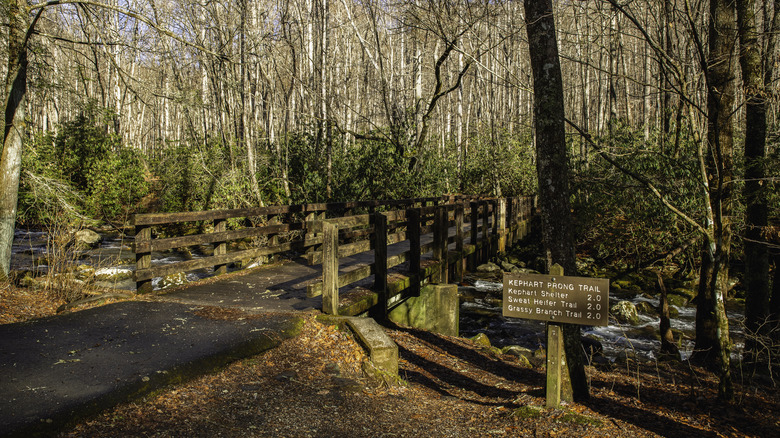
Great Smoky Mountains National Park is one of the most popular, bucket-worthy national parks in the U.S., but surprisingly, it's also one of the more affordable experiences of its kind in the country. Great Smoky Mountains is free (no, really) to drive through, an enjoyable experience in its own right given the park's immense size. The park spans over 522,000 acres, and while it's free to pass through, paid parking is available on a sliding scale. Per vehicle, it currently costs $5 to park daily, $15 for a week (full seven days) and $40 per year. Parking can be paid online at recreation.gov or at the visitor center. Some lots also have their own pay machines.
There are 10 campgrounds in Great Smoky Mountains National Park, but six are currently closed following damage from Hurricane Helene. Updates on these campsites are found online on the National Parks Service website. The four operational campgrounds are affordably priced at $30 per night and must be booked in advance, with sites available up to six months ahead of time. RV owners should look towards the Elkmont, Smokemont, and Cades Cove campgrounds. Private RV-friendly sites are available in the area surrounding Great Smoky Mountains National Park if these campsites are booked.
Great Smoky Mountains National Park is also home to many scenic hikes covering more than 800 miles, but the beauty of the Deep Creek Waterfalls Loop, Indian Creek Falls, and Chasteen Creek Cascade are breathtaking sights to behold. If you're bringing a furry, four-legged family member on your trip, make sure to keep them on the 4-mile Gatlinburg Trail and the 3-mile Oconaluftee River Trail as they are the only two pet-friendly walking trails onsite(keep pets a safe distance from elk herds that frequent the area).
Methodology
Let's not beat around the bush, traveling in this economy is a challenge. While we're focused on the overall vibe of a specific park and its camping opportunities, the logistical need of being able to afford the trip goes a long way into planning the ideal national park camping vacation. If you're bringing the brood, knowing just how much bang for the buck each park contributes to finding the best family-friendly campsites in the U.S. national parks.
There are as many kinds of campers as there are national parks. The wealth of experiences available at Saguaro or Zion more than make up for a higher entry fee, remote access, or lack of amenities. Logistics, such as proximity to airports and navigational ease, also factor into the ranking, especially when considering the fiscal demands of travel. Wherever you end up traveling, ensuring the greatest possible experience for everyone in your group is the key evaluator.