

Clever Hacks For Getting Rid Of Unwanted Grass In Your Flower Beds
We may receive a commission on purchases made from links.
While luscious, thick and spongy grass is something many strive for with their lawns, it's often the last thing they want to see in their carefully planted flower beds. When allowed to thrive in the wrong spot, grass can quickly outgrow your flowers, stifling important air flow, robbing your precious petalled pals of key nutrients, and increasing the risk of disease.
More than that, for those who have spent hours planting and arranging their flower beds, unwanted grass can spoil the clean, carefully cultivated look they're striving for. If not tackled in good time, it can quickly be too late, leaving you to mourn your carefully curated planting scheme.
Fortunately, there are a number of nifty tricks for removing unwanted grass from your flower bed. These range from manual-but-environmentally-friendly strategies like tilling and hand-pulling and mulching, to sheeting with cardboard and plastic, and employing herbicides to tackle more established patches.
Start by identifying the grass type
While a number of the following hacks will be applicable to multiple types of grass, it's always important to discern exactly which species of grass you're dealing with. This is because different types may require different approaches in order to combat them. For example, while some species like creeping bentgrass (Agrostis stolonifera) and annual bluegrass (Poa annua) both respond to the same kind of herbicide (in this case, glyphosate), the latter usually requires several years of treatment to completely eradicate it from your flower bed.
Other species, like couch grass or quackgrass (Elymus repens), grow densely-seeded flowers, which can amount to a few dozen seeds per plant. If not properly identified and treated early, this particular grass can seed itself and spread very quickly. What's more, its seeds can be viable for up to six years, and since it's a perennial, it lives and continues to spread for many years. With this in mind, a combined approach of digging, hand-pulling, and herbicide application are usually required to deal with it effectively.
If, on the other hand, your grass problem involves an annual species — that is, one with a single lifecycle of a year or less — more straight-forward and environmentally friendly approaches like mulching can be effective. In fact smothering with sheet cardboard mulch is yet another trick to know when dealing with infamous couch grass.
Remove the grass by hand
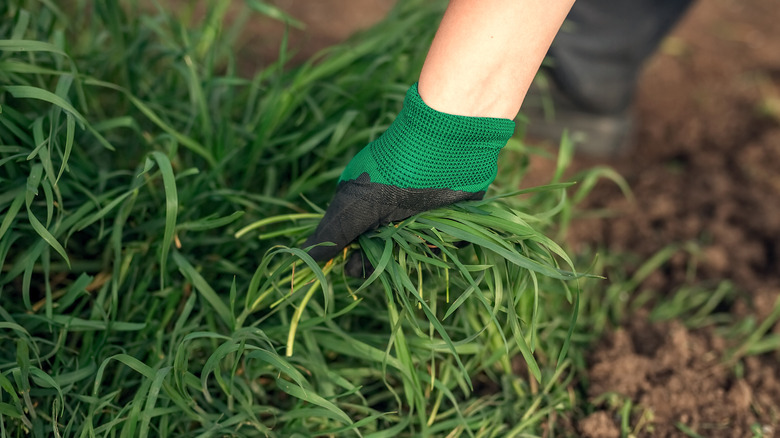
This is one of the least invasive and most environmentally friendly methods of dealing with smaller quantities of unwanted grass. Like weeds, it's best to remove problem grasses when the soil is damp, as it's much easier and less destructive than trying to heave it out of dry earth. Pulling out of damp earth also makes it easier to ensure you get all of the roots, instead of accidentally breaking them off at the stem in firmer, dry soil and potentially leaving the weed to return or spread.
As for when to pull them, it's always best to try and tackle problem grasses before they establish themselves and have a chance to set seed. Roots are most shallow and stems strongest when plants are young, so spring and early summer are usually the easiest time to hand-pull, but really all year long is the best time for pulling most grasses. This is where knowing which grasses want to grow in your flower bed comes in handy. Especially given that the Center for Invasive Species and Ecosystem Health lists a head-scratching 291 invasive and exotic species of grass and grass-like plants, spending the time to figure it out to begin with can save you months of frustration down the line.
Discourage future growth with a heavy mulch
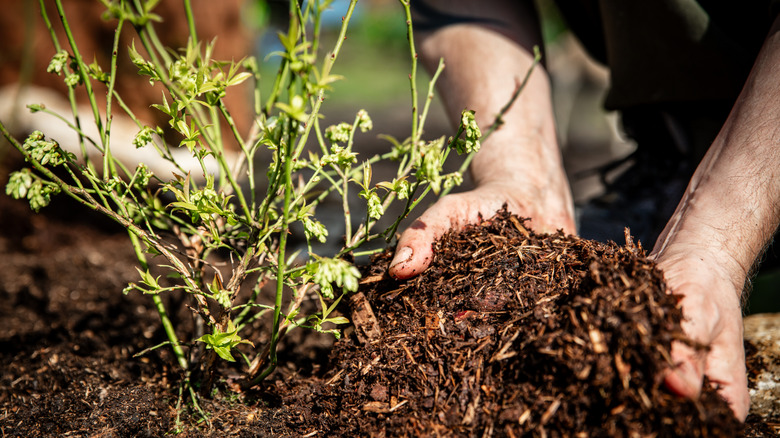
If you're dealing with small and low-growing annual weeds and grasses, a thick layer of mulch can help to suppress their growth. It works by placing a physical barrier of organic material on top of your soil, ideally at least a quarter-inch deep. This layer stops sunlight penetrating the soil and thereby helps prevent underlying grasses from growing.
Mulching is one of the most common methods to suppress weeds and unwanted grass. Not only can it prevent future unwanted growth by starving nuisance species of sunlight, but when organic, bio-degradable mulch is used, it releases nutrients into your soil as it breaks down. It also helps your soil retain moisture and can insulate your plants' roots against frost.
Mulching is most effective with annual grasses, where shallow roots are less likely survive sunlight starvation (though they may grow through, and seed on top of, organic mulches. Again, researching problem grasses and their life cycles is key to identifying whether or not mulching will be effective. While perennial plants may respond to mulching, their better-established stems and root systems means you'll usually need to combine mulching with other methods in this guide.
If you think mulching could help solve your problem, then you'll need to choose the best mulch for your garden. Organic materials like bark chips, leaf mold, and even manure are all good options. Some gardeners recommend using garden compost, however, this is only viable if your compost heap reliably exceeds 131°Fahrenheit — the required temperature to kill any seeds and roots contained within it. If you live in a cooler climate, or you have a large, dense heap that's likely to have cold spots, using garden compost for mulch risks re-sowing nuisance grasses and perpetuating your problem.
Use cardboard or plastic sheets to tackle Bermuda grass
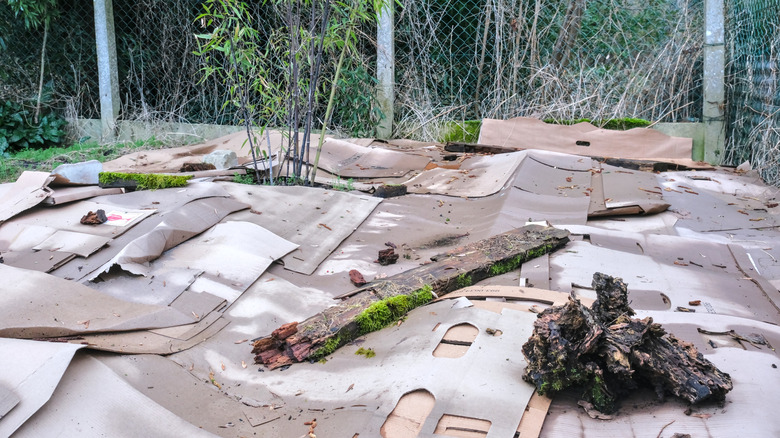
If you're attempting to get rid of aggressive species like Bermuda grass (Cynodon dactylon), you'll probably find that mulching alone is not effective. This is because this particular type of grass is highly tenacious and can actually grow through organic layers like bark and manure.
Before you reach for the herbicide, try covering the affected area with plastic, UV-resistant sheets. Known as solarization, this method effectively cooks the grass to a temperature that it can't survive and is considered an effective ways to eradicate Bermuda grass if rhizomes are close to the surface. First, cut the grass as low as you can, removing all clippings. Next, cover the entire affected area with clear, UV-protected plastic, being sure to pin it down around the edges to lock the heat in. This method is best used in the summer, and is most effective in patches that receive plenty of direct sunlight throughout the day.
Another technique involves covering the area with flattened cardboard boxes and covering them with mulch. Known as sheet mulching, this belt-and-braces method works to completely starve any seeds and roots of sunlight, thus preventing germination and photosynthesis. Ensure your boxes are stacked at least two-deep, and that they're overlapped to prevent grass from growing through. Secure the boxes in place with stakes or something like Feed Garden landscape staples, before covering it with a thick layer of bark or other mulch — at least three inches. This will need to be left in place for a few months before you disturb it, but be sure to keep an eye for any errant blades of grass and pull them up immediately.
Use a propane torch to burn annual grasses
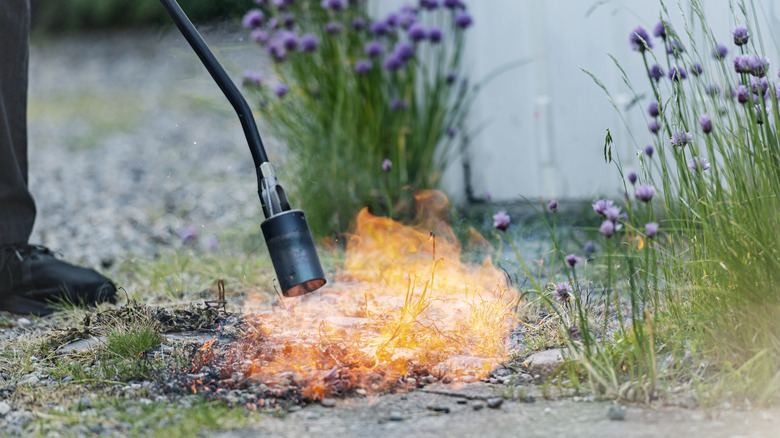
Flame-weeding is a popular way of getting rid of invasive ornamental grasses and weeds. It works by scorching the plant's leaves, which in turn heats and ruptures their cells, rendering them unable to photosynthesize. However, just as with weeds, a propane torch is usually most effective against annual and smaller, less-established perennial species of grass. Perennial grasses tend to be more resilient to flame weeding since they often have stronger, more-established roots.
In order for flame-weeding to be effective against perennials, you'll probably need to do it several times a few weeks apart, ideally in combination with other methods like tilling. And while tilling the roots exposes them from the sanctuary of the soil — and therefore makes them an easy target for your torch — it can also expose dormant grass seeds to fresh air and sunlight, thus perpetuating your problem.
If your grass issue stems from an annual species, then flame-weeding is often a viable solution. However, before you fire up the flame thrower, you should know that fire is most effective against young grasses that are around one or two-inches high — younger plants that are naturally less resilient to fire. What's more, since fire isn't selective about what it burns, you need to be careful when using a propane torch in more densely-planted areas. The same goes if your flower bed happens to be mulched with bark chips, or if your area is suffering from an especially dry spell (check local burn restrictions before you begin, particularly in summer).
Try shallow cultivation
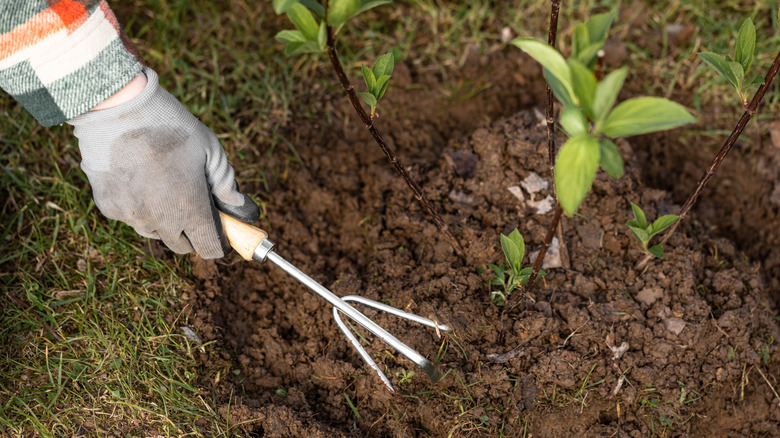
This manual method is one of the most environmentally friendly for removing certain types of grass. All you're doing is lightly dragging through the soil, going no deeper than two inches with either a garden fork or powered rotary tiller, before culling any unwanted roots, leaves, and seedlings. Used in concert with sheet mulching, it can be a particularly effective weeding technique.
This method is especially handy for flower beds planted with annual species, as you can simply wait until it's time to rotate plantings. It's still possible with perennial schemes, but you'll need to be especially careful not to till and remove roots and seedlings of the plants you want to keep.
You should also be very careful if your problem species is Bermuda grass (Cynodon dactylon). If it is, tilling is probably best avoided. Bermuda grows with delicate rhizomes — roots that extend horizontally both above and below the ground — which are easily broken. Even when broken, these rhizomes continue to grow, which means that unless you're meticulous about picking up every single piece, you will quickly exacerbate the problem, hydra style, instead of solving it.
Try post-emergent herbicides for established growth
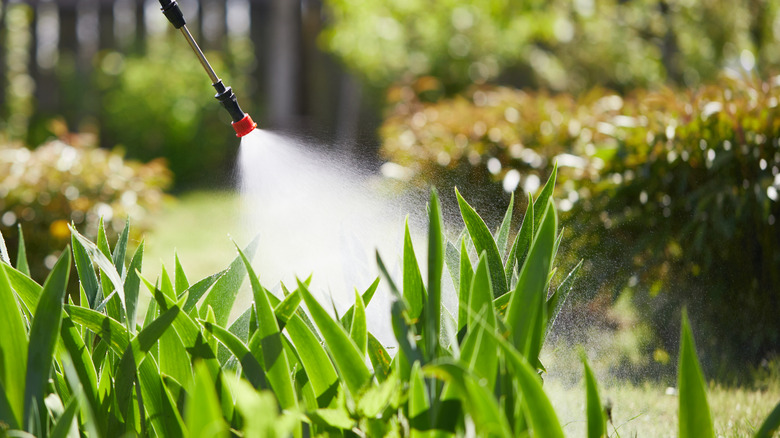
When problem grasses have already infiltrated your flower bed, and you've struggled to solve the problem with non-chemical methods, you may need to consider post-emergent herbicides. These are essentially those used on weeds and nuisance grasses that have already "emerged" as plants.
Now, before you go and buy a non-selective herbicide in the hope of an easy, one-size-fits-all fix, be wary: Different grasses respond differently to different herbicides, so it pays to do your research. Emergent crabgrass (Digitaria sanguinalis), for example, basically only responds to herbicides containing quinclorac. Annual bluegrass (Poa annua), meanwhile, requires herbicides with active ingredients like ethofumesate or glyphosate.
When researching herbicides to treat grasses that have already emerged, make sure you look for those that are labelled as post-emergent. Some herbicides are pre-emergent — meaning they're designed to prevent the growth of certain species before they germinate and emerge. Pre-emergent herbicides require specific active ingredients which are often very different to those in their post-emergent counterparts. As an example, prodiamine is an active ingredient often used in pre-emergent herbicides for crabgrass. This chemical interacts with the plant — and is only effective — during its seedling stage of growth. Herbicides containing prodiamine will, therefore, be of no use against established patches of crabgrass. It's also important to know that many chemical herbicides can affect surrounding grasses and plants you don't want to harm, so spray carefully and selectively.
Edge your beds
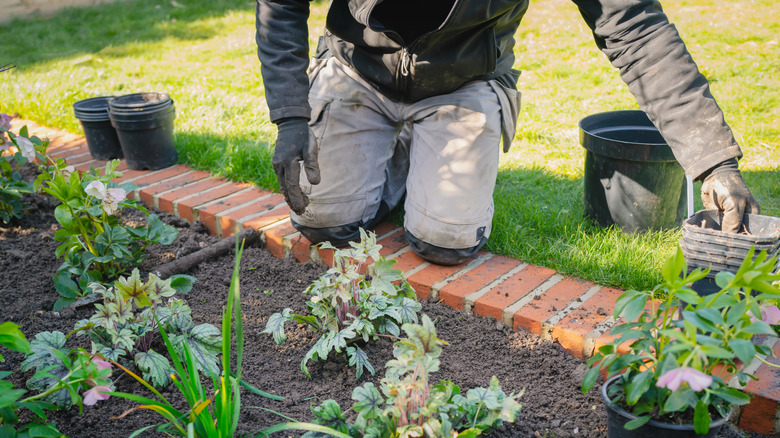
If an over-zealous lawn is creating problems, there's a simple solution that can prevent it from encroaching on your precious flower beds. By creating boundaries, or edges, you can effectively block problem grasses from spreading. There are a number of ways to edge lawns, even curved ones, one of which is by simply digging a trench between it and your flower bed to prevent grass rhizomes from shooting horizontally across. Dig it to a little over six inches — this is sufficient to stop most grasses from growing across and into your flower bed, including Bermuda grass (Cynodon dactylon), whose stems don't tend to root any deeper.
Of course, if you'd like to define the boundary between your bed and lawn with something a little more decorative, who could blame you? Other lawn edging ideas for small gardens and flower beds include digging the trench before lining it with bricks, stone, or wood. Wood is especially beautiful and can be painted in an array of striking colors. However, if you want to create a barrier between a flower bed and an especially-exuberant lawn, then solid, non-organic materials are best suited to the job, as they'll last far longer than wood.
Get ahead of growth with pre-emergent herbicides
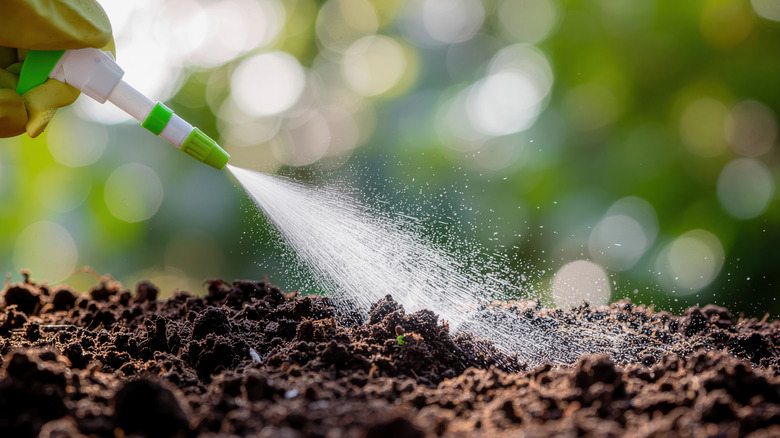
Using pre-emergent herbicides for species like crabgrass (Digitaria sanguinalis) is a secret that only professional landscapers know. These specifically formulated herbicides are designed to tackle nuisance grasses and weeds before their seeds have a chance to germinate and emerge topside.
Before you use them, you'll need to remove any perennial grass plants that are already established. A pre-emergent herbicide won't affect these at all, since it's designed to prevent growth, not to kill that which is already established. It's also important to research which particular grasses you need to prevent from growing, since different species are best treated at different times of year. Creeping bentgrass (Agrostis stolonifera), for example, is best treated with pre-emergent herbicide early on in the spring, and in early fall. Annual bluegrass (Poa annua) responds well to treatment in early summer or early fall, while crabgrass (Digitaria) is best treated with pre-emergent herbicides each spring.
For many species, you'll likely need to reapply pre-emergent herbicide every few weeks or months, depending on the product and its specific application instructions. It can also be a good idea to use pre-emergent herbicides in conjunction with mulch, especially for tougher, more aggressive species of grass that require a multi-pronged solution. Make sure that you research the ingredients of your herbicide before determining whether to apply it above or below your mulch, as certain herbicides can degrade if exposed to sunlight.
Consider a dense planting scheme
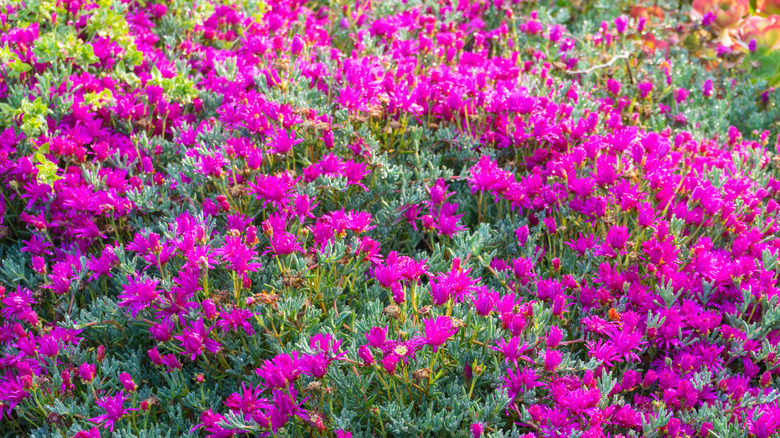
Prevention of problem grasses is one a few reasons to use ground cover plants in your flower beds, and it works by defeating the grass at its own game. Thick, even carpet-like growth of certain desirable plants works to out-compete invasive weeds and grasses, thereby starve them of sunlight and nutrients.
There are plenty of ground-cover plants to choose from, many of which can significantly enhance your garden's visual appeal. Many are perennial, too, which means that they'll continue to provide ground cover for years after you plant them. As an example, Moss phlox (Phlox subulata) smothers weeds and grasses while adding a gorgeous carpet of pink to your flower bed.
If you're looking for a ground-cover plant to attract pollinators, consider planting 'firewitch' dianthus (Dianthus gratianopolitanus). With deep-blue foliage and eye-catching pink flowers that attract bees, butterflies, and moths, firewitch dianthus has a tendency to form mats. This means it'll quickly cover areas of your flower bed, discouraging problem grasses from growing.
Another ground-cover option that provides year-round color is an evergreen, North American native called Heuchera (Heuchera sanguinea). Otherwise known as coral bells, this evergreen plant is easy to grow, produces leaves in bold and exciting colors, and since it's evergreen, adds color to your flowerbed all year round while pushing out unwanted grasses.
Guard against accidental reseeding
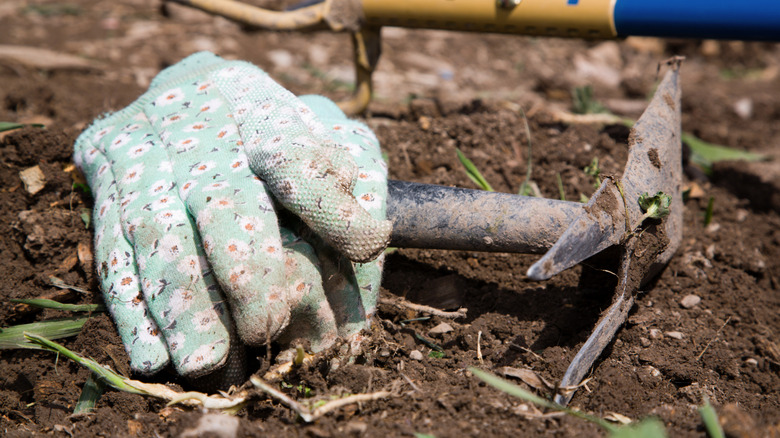
It's all too easy to accidentally reseed your garden or flower bed with unwanted grasses and weeds, and it can be done in a number of ways. A dirty lawn mower is a common cause, as any unwashed, moist debris that collects on it often contains nutrient-rich glass clippings, which in turn provide a warm and protected space for seeds to hide and spread to new areas.
Mulching with homemade garden compost is another common culprit behind the spreading of unwanted seeds and roots. This is especially the case if you grab up yard waste like leaves from curbs and near gutters, dried hay, or (yes) weeds. In cooler areas, where compost heaps are less likely to reach the temperature required to kill roots and seeds contained within your garden waste, the risk of accidental reseeding is even greater.
Finally, if you're planning to till your flower bed — even lightly — beware that grass and weed seeds can easily become caught in mud or plant debris that inevitably builds up on your equipment. These seeds can remain viable for a long time, so it's important to properly disinfect your garden tools with a household staple between uses to prevent the spread of nuisance plants.
Try organic homemade herbicides
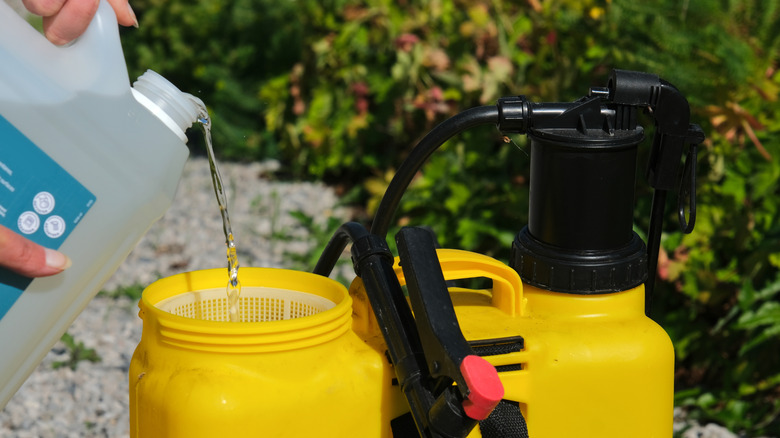
If your circumstances warrant the use of a herbicide, it can be tempting to immediately reach for the strongest chemical available, especially if you've been tearing your hair out over the course of several seasons. But before you do, there are a few organic herbicides that are worth at least trying.
One option is corn gluten, which can be especially effective against crabgrass (Digitaria). Just bear in mind that you should only use corn gluten against crabgrass at the pre-emergent stage — that is, before the grass has started to grow. If used when it's already established, this method will only serve to fertilize the problem.
Alternatively, why not mix yourself up a batch of Martha Stewart's DIY weed killer recipe? It's made with three household ingredients (white vinegar, lemon juice, and dish soap) which work as a team to do maximum damage to nuisance weeds and grasses. Vinegar by itself is an effective herbicide against certain nuisance plants, including young crabgrass. When paired with lemon juice (which behaves like acid on leaves) and dish soap (which breaks down the leaves' protective oil and wax cells), it becomes especially lethal. Now, while this may fill you with joy, it does also mean that it should be sprayed with care, especially around plants that you don't want to damage (removing the protective oils opens plants you love up to pests and pathogens). And while it can be incredibly effective, it's usually best reserved for younger grass and weeds, especially annuals that haven't yet had a chance to establish themselves.