

Forget Hydrangeas: These 5 Alternatives Bring Year-Round Color To Your Garden
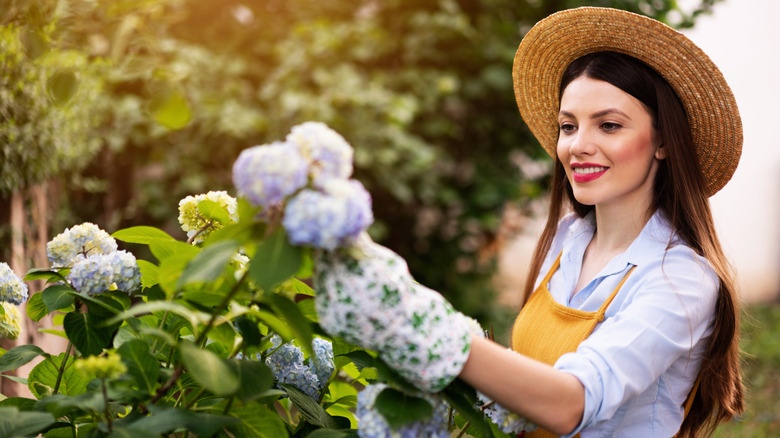
Hydrangeas are very popular throughout the United States. There are good reasons for this: Not only do they have colorful, showy blooms, they are also low maintenance and can be grown over a wide swath of the country, with various hydrangeas grown throughout USDA hardiness zones 3 through 9. But that vibrant color palette is temporary — when hydrangea plants go dormant in winter, they appear completely dead. While some varieties of hydrangea continue to add structure to your yard in winter, should the dried blooms be left in place, what they won't add is color. However, there are a number of other plants that will continue to fill your garden with color all year long.
It is worth noting that the colors stemming from these alternatives isn't in the form of year-round flowers. Although some — like camellias and mountain rosebay — produce large, colorful blooms, the key to these plants is they retain color in the form of continuous greenery, late fall or early spring blooms, or colorful winter fruits. There is no one substitute that will serve as a cure-all to add color all year throughout the hydrangea hardiness growing range. But by adding, combining, or substituting these plants, they'll provide a shot of color while your hydrangeas are dormant. Just as it's necessary to choose the right hydrangea for your yard, it is also important to pick the right alternatives based on growing zone, garden layout, and the function of the plant.
Camellias
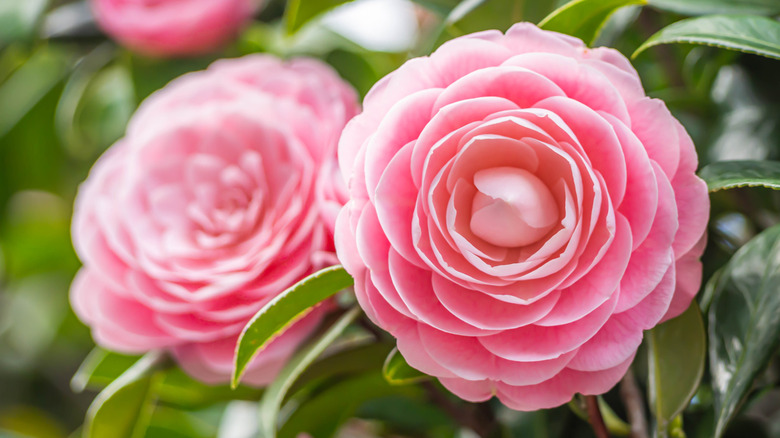
When it comes to alternatives, camellia (camellia) is one of the best substitutes for hydrangeas, at least in the portions of the country where they thrive. Like hydrangeas, camellias produce colorful blooms, albeit at different times of the year depending on the variety. They are also low-maintenance. However, unlike hydrangeas, they are evergreen. So their lush, deep-green leaves will continue to add color to your garden throughout the year. Additionally, they are among the beautiful bushes that will turn your yard into a hummingbird haven.
The one big drawback to camellias as a hydrangea alternative is they are fairly restricted in their range. Camellias are considered best suited for USDA zones 7 through 9. Essentially, this excludes many of the regions where hydrangeas grow well. However, if you happen to live in a part of the country that is suitable for camellia, this is a great choice as a substitute. Given their size and density, they are a particularly good alternative if you are looking to create a hydrangea privacy hedge. Indeed, the evergreen camellia ensures this barrier will remain effective throughout the year.
Encore® azaleas
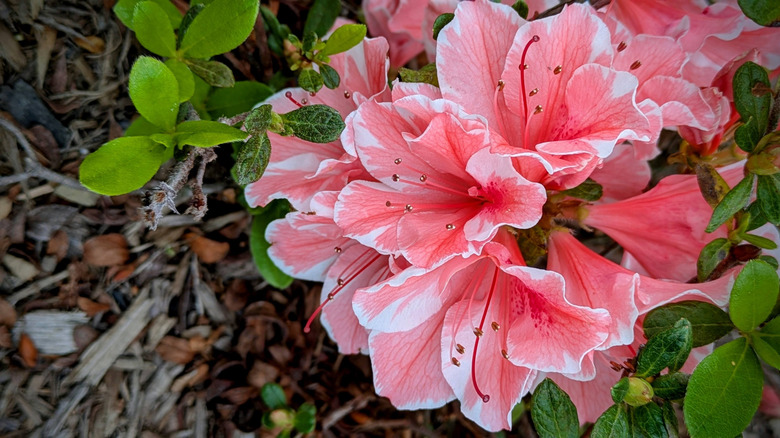
Another good choice as a hydrangea alternative are Encore® azaleas (Rhododendron), a collection of 36 (as of this writing) hybrid cultivars sold under the 'Autumn' trade name. If you are considering azaleas to add year-round color to your yard, it is important to note that not all azaleas are evergreen and not all evergreen azaleas are Encore®-branded cultivars. In fact, there are many different types of evergreen azalea hybrids. While any of these will add color throughout the year, Encore® offers varieties across a wide growing range.
Given that Encore® azaleas can be grown in USDA zones 6 to 10, it means they're available for more than half of the planting areas suitable for hydrangeas. The benefits of this type of azalea go beyond just their evergreen nature. These hybrid azaleas bloom for an extended period of time, typically spring through fall. So, beyond having lush foliage all year, these azalea cultivars will put out colorful flowers throughout much of the year as well. Additionally, most don't grow more than 3 or 4 feet tall, making them easier to manage in small spaces.
Japanese skimmia
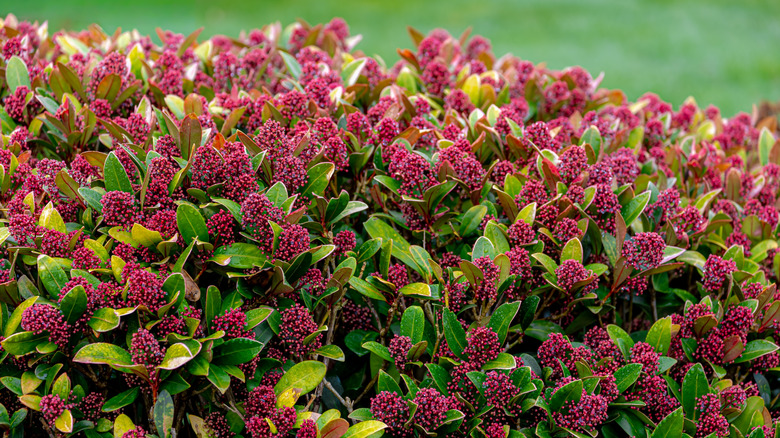
If you want a combination of textures and colors throughout the year, you should consider Japanese skimmia (Skimmia japonica) as an alternative to hydrangeas. Japanese skimmia can be grown in USDA zones 6 through 8, which is essentially the mid-range of the hydrangea growing zone. Where it grows, Japanese skimmia not only provides year-round greenery with its evergreen foliage, it also produces blooms in the spring and charming, red berry clusters in the fall and winter. As a result, this evergreen shrub will provide a rotating array of textures and colors to your garden. Be aware the berries are mildly toxic, and dangerous in large amounts, so it's best to keep curious children away from them.
This flowering plant, which, as the name implies, is native to Japan, grows to a height of around 3 or 4 feet, with equal or slightly greater width. It is a good choice for growing in beds, along borders, or as a hedge row. It is easy to grow and very low maintenance. It is also a great choice for pollinator gardens, as a wide variety of pollinators are attracted to its blooms, while many songbirds like the berries.
Mountain rosebay
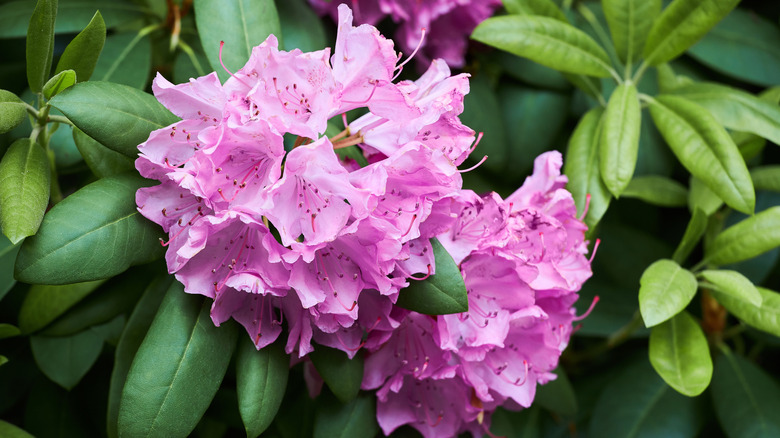
Mountain rosebay (Rhododendron catawbiense), also sometimes referred to as rose bay, can be grown throughout almost all of the same zones as hydrangea, as it thrives in zones 4 to 8. This alone makes mountain rosebay a viable, evergreen alternative to hydrangeas for many gardeners, but there are other benefits as well. For one, the flowers of most mountain rosebay can rival those of many hydrangea varieties in both size and color. These showy clusters of colorful flowers attract a wide number of pollinators, including hummingbirds, butterflies, and bees. It's a native plant, found throughout the Appalachian and Blue Ridge mountains, so if you're trying to follow the native-to-import 70/30 rule of gardening, it's a strong option.
Additionally, mountain rosebay are tall. Mature plants usually grow 6 to 10 feet or higher, although they can be pruned and maintained to be shorter. This height makes them a perfect choice for use as a natural barrier. If left unpruned, these tall limbs are also good habitat and nesting areas for various songbirds. While they are evergreen, the large leaves of the mountain rosebay will turn yellow-green, yellow, or gold in certain areas during fall and winter, transforming the color palette in your garden throughout the year.
Snowberry
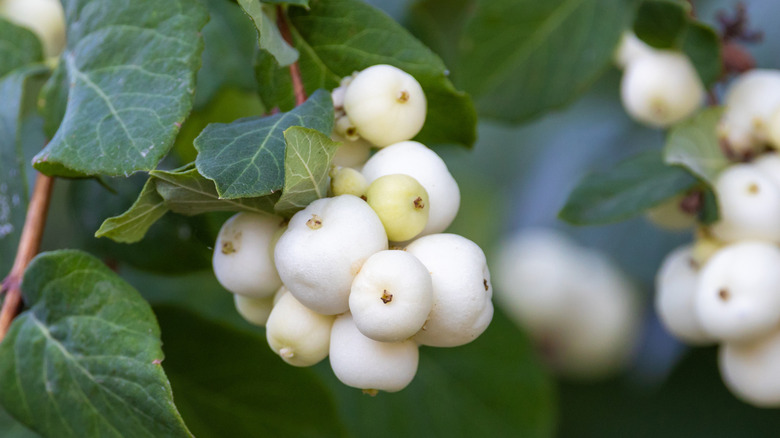
Snowberry (Symphoricarpos spp.) are both an interesting and excellent substitute for hydrangea if you are wanting to add year-round color to your garden and yard. Unlike the other plants on this list, snowberry is not evergreen. However, it continues to provide color with clusters of pink or white berries long after the plant loses its leaves in late autumn. These bright berries not only provide color during the winter months, they are also a crucial food source for animals, making snowberry one the primary plants that will attract birds to your yard in winter. While many animals, including deer and birds, will generally avoid the slightly bitter berries, they become invaluable in mid-winter, when other food sources are exhausted. The plant is also an important food source for larval sphinx moths in the Pacific Northwest.
As a bonus, snowberry can be grown almost anywhere hydrangeas grow. Various types of snowberry fair well in USDA zones 3 through 7, making it a suitable substitute in all but the southernmost zones within the hydrangea range. Snowberry grows to between 3 and 6 feet tall and equally as wide. This makes them a good choice for smaller areas. Additionally, while their berries provide color during fall and winter, they produce delicate pink and white blooms in summer as well.