

What Is The 70/30 Rule And How Will It Help Your Garden Flourish?
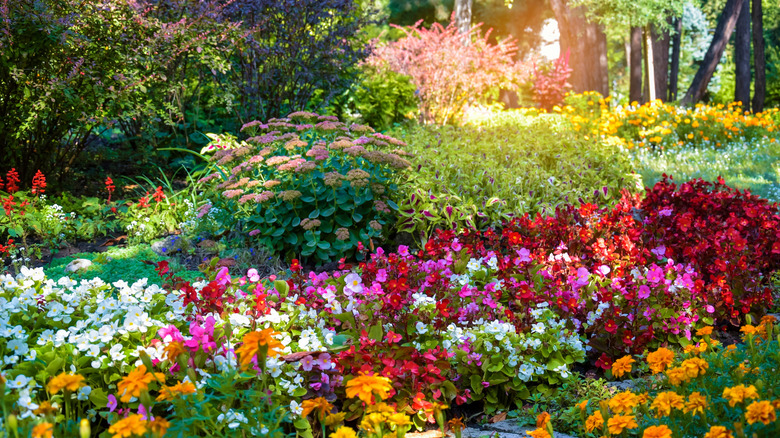
Having a yard and garden that looks good throughout the year takes an inordinate amount of time and work. At least, that's what most people believe. However, there is a method that just may reduce the time it takes to keep your garden flourishing year around. The gardeners' 70/30 rule is designed to do just that, although it can be interpreted in a couple of different ways.
The origination of the 70/30 rule is generally credited to well-known garden design expert Piet Oudolf, who designed Manhattan's High Line park among other spaces. His original directive was to use 70% of the plants as structure and 30% as filler. The role of the structural plants is to provide pleasing aesthetics through fall and, if possible, year around. By contrast, filler plants are meant to give a seasonal splash of color during spring and summer, but may need to be pulled as they fade, die, or become unsightly.
Though it makes up a smaller portion, the filler is often thought of as the fun portion of the garden. These usually add color or texture and are the focal point when in season. Although there are a myriad of plants from which to choose, if your focus is on reducing the time and work spent on gardening, consider planting perennials. All you have to do is plant them once and they will never leave your garden. Given that there are well more than 1,000 types of flowering perennials, you will also have plenty of options when choosing how to fill out that 30% of your garden. Meanwhile, if you want to put your efforts into planting new spring and summer annuals for filler, using evergreen perennials for the 70% of the garden dedicated to structure means you'll save money by not replacing the largest portion of the garden each year.
How to ensure the other 70 percent looks good year-round
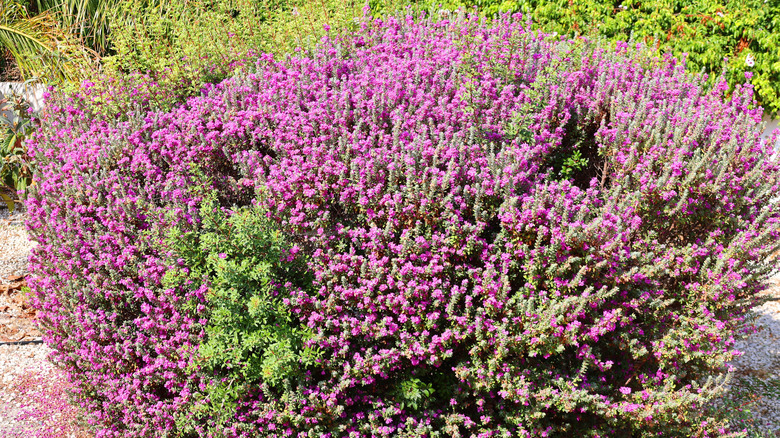
While filler plants only make up 30% of the whole garden under this design, they tend to grab a disproportionate amount of the attention while in season. But it's worth noting the structural plants are there to make your garden look good throughout the year. Given that structural plants occupy twice as much space as the fillers, they also represent the greatest chance to reduce your overall workload in the garden. To that end, it is best to choose low-maintenance plants for this purpose. One example would be to extensively utilize evergreen shrubs like mountain laurel (Kalmia latifolia) or boxwood (Buxus spp), a popular option to create backyard privacy.
There's another common variation on the 70/30 rule — one that involves filling your garden with 70% native plants. Planting invasive species is one of the biggest gardening mistakes that are harmful to the environment. While many of these plants may look nice, they aren't meant to be grown in certain areas. Going with native plants typically means you can spend less time with maintenance and upkeep, since they're well-adapted to the areas they're planted.
Additionally, native plants are typically better for attracting pollinators to your garden, as both plant and pollinator are better adapted to each other. In every part of the country, there are a number of native plants that look good throughout the year. This includes many varieties that also add seasonal color to your garden, so you'll have plenty of options for both structure and filler.