

Skip The Hydrangeas – This Beautiful Alternative Brings Year-Round Beauty
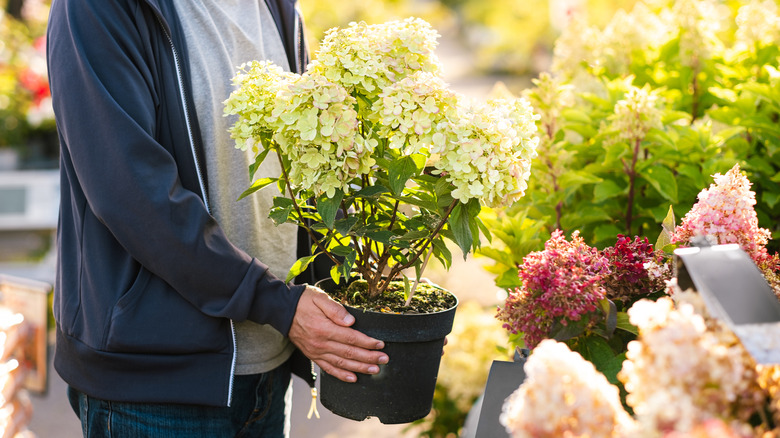
Hydrangeas are among the most popular ornamental shrubs throughout much of the United States, in large part because they come in so many different varieties. However, when it comes to choosing the best type of hydrangea for your yard, the final answer actually may be "none." That's because camellia (Camellia spp.) is an alternative that holds a few advantages over hydrangeas and can bring year-round beauty to your lawn or garden.
The first advantage camellias holds over hydrangeas, at least for those seeking year-round color in their yard, is their evergreen nature and timing of their blooms. With the exception of a few varieties, hydrangeas are deciduous, losing their leaves as they head into dormancy during winter. So, for greenery all year, camellia is the better option. By the same token, if you are thinking of creating a hydrangea privacy shrub, you might want to consider camellias instead, as they will provide a full cloak of concealment throughout the year.
Not only do camellias maintain their lush green foliage throughout winter, but they also feature showy flowers. Depending on the variety and the hardiness zone you're planting in, camellias actually bloom fall through spring, so you'll have colorful flowers in your garden even after many other plants — including hydrangeas — go into dormancy. Come early spring, camellias are among the bushes that will turn you yard into a hummingbird haven, as blooms will be ready as migrating hummingbirds arrive.
Camellias aren't quite as prone to weather issues as hydrangea
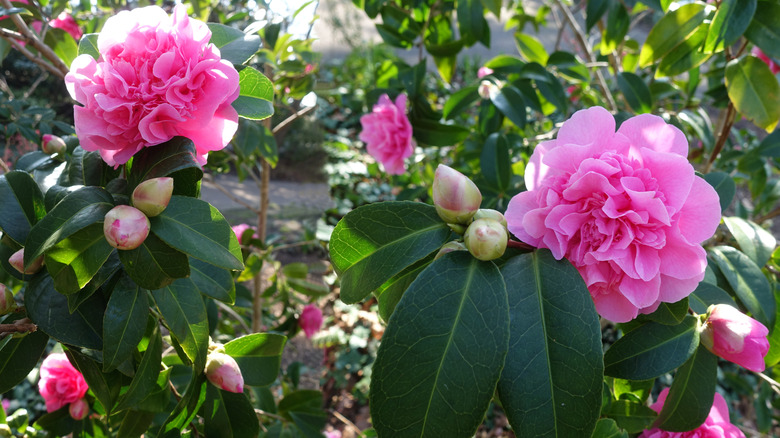
Both camellias and hydrangeas are best suited for slightly acidic soil. However, camellias are a bit more heat tolerant. While high heat, too much direct sunlight, and other hot weather factors can cause your hydrangeas to struggle, camellias are typically drought resistant, particularly once established. In contrast, hydrangeas typically take a bit of babying and frequent watering in order to endure these conditions. That said, although camellias can survive sub-freezing temps, they have a smaller growing range than hydrangeas, as they are only suitable for USDA hardiness zones 7 to 10, and thrive best in zones 6 through 9.
Besides the potential impact of heat and drought, hydrangeas do require some detailed care, such as picking the right time to deadhead along with well-timed pruning, in order to ensure a good crop of blooms the following season. Camellias, on the other hand, are widely considered low maintenance overall, even though it is a good idea to give them an occasional pruning to maintain optimum health and a tidy appearance. A camellia's large size is also often seen as advantage, as most varieties grow between 6 – 12 feet high. Most hydrangeas top out around 6 feet tall. This is another distinct advantage when creating a privacy wall using flowering shrubs.
Of course, if you don't want to skip hydrangeas altogether, you can plant both of these flowering shrubs in your yard. Combining the fall-through-winter blooming camellia with spring-through-fall blooming hydrangea will ensure your yard is cloaked in color all year long.