

Beautiful Bushes That'll Turn Your Yard Into A Hummingbird Haven
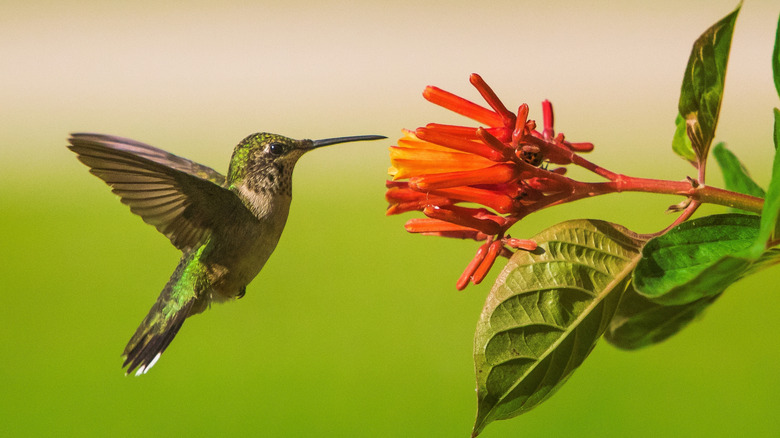
Hummingbirds are welcome guests in oodles of backyards across the United States. Some fanatics spend hours spying on their amusing antics. With the half-billion dollar hummingbird feed industry projecting continued growth and popularity, it's clear that interest in these fast, feathery fiends is only rising. But beyond the plastic feeders and store-bought juice sometimes ladened with red dye #40, natural food sources are simply better for the birds than sugary solutions, despite the common myth about homemade nectar being as healthy. Creating an inviting, natural habitat with a healthy array of native shrubs also provides these pocket-size migratory birds with protection, shelter, and a place to touch down for a moment's rest.
Hummingbirds are typically tempted by plants that offer the rocket fuel their busy metabolisms need to sustain that near-constant whizzing. This energy=rich nectar comes from tubular flowers that nature seemed to design specifically to accommodate their long tongues. These pixies of the bird world are especially attracted to shades of red, including orange and pink hues. So, armed with a few ideas of what will help attract the most birds to your garden, consider planting a some of these 12 bushes that'll turn your yard into a hummingbird haven.
Autumn salvia (Salvia greggii)
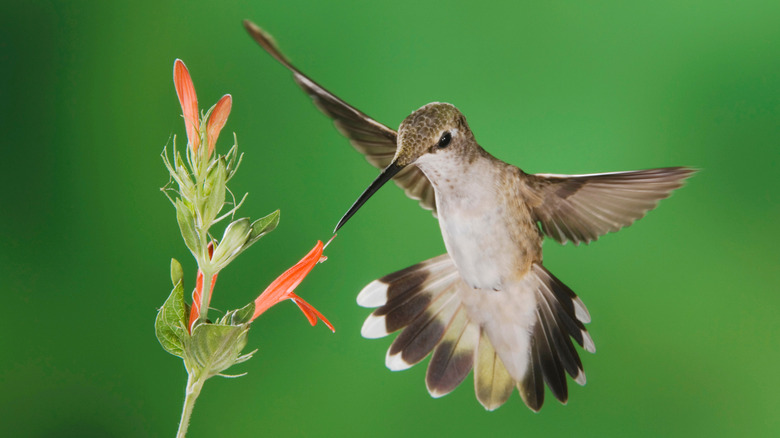
Autumn salvia is a mildly fragrant perennial sage that comes in a variety of colors and sizes. Each sun-loving hybrid offers the convenience of drought tolerance, while providing hungry garden guests with stunning, tube-shaped blooms through much of the year. The 'Cherry Chief' is a particularly choice option for your hummingbird haven, as this autumn salvia produces bright red blooms, just like its cheeky name suggests. This variety is on the smaller side, reaching modest heights of 3 feet, while 'Blue Anise' varieties tower over its siblings at closer to 5 feet. Autumn Salvia thrives in hardiness zones 8 to 10, where you may encounter a few ruby-throated hummingbirds, one of 365 different types of hummers that live in the Americas.
You can expect your sage buds to unfold from early summer to the first frost, providing both color and a reliable nectar source late into the season. While autumn salvia are beautiful bushes that hummingbirds find hard to resist, they offer another perk: Deer seem to find them unpalatable. Sage is also relatively low maintenance, making this pick a great choice for busy plant parents. Plant your 'Cherry Chiefs' in containers and place a few on your deck or tuck in this greenery along the edges of your pollinator garden for an enticing border.
Penstemon (Penstemon eatonii)
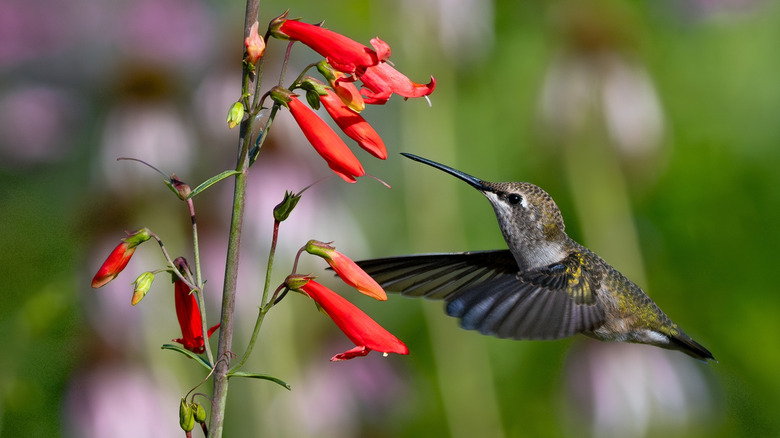
Penstemon, or beardtongue, is another terrific pick for low-maintenance, long-lasting blooms that will turn your yard into a hummingbird haven. Penstemon (Penstemon spp.) is a welcome addition to many outdoor spaces, because this oddly named perennial will bring in more birds thanks to its striking, two-lipped flowers. While this shrub's slightly tubular blooms come in a broad palette of colors, from white to blue, rich shades of red is a top choice for attracting hummingbirds. We particularly like the Firecracker penstemon (Penstemon eatonii), popular among indigenous peoples for centuries as a medicinal plant. With its brilliant red petals, this showy bush is a hummer magnet in yards across the Southwest.
Just as spring blooms are fading, penstemon bushes step up and transform your garden into a flaming buffet. From early summer, it provides abundant nectar for about a month to many a pint-sized pollinator. The Firecracker variety is also heat and drought tolerant, and because it stands at just 3 feet tall, it makes a colorful focal point on your patio. Firecracker penstemon is native to Southern California, home of the Anna's Hummingbird, and adds a splash of scarlet to sun soaked rock gardens and desert landscapes in hardiness zones 4 to 8. It's one of the best bushes for nectar-loving hummers with a bonus: It helps keep deer and rabbits at bay, too.
Bush monkey flower (Diplacus aurantiacus)
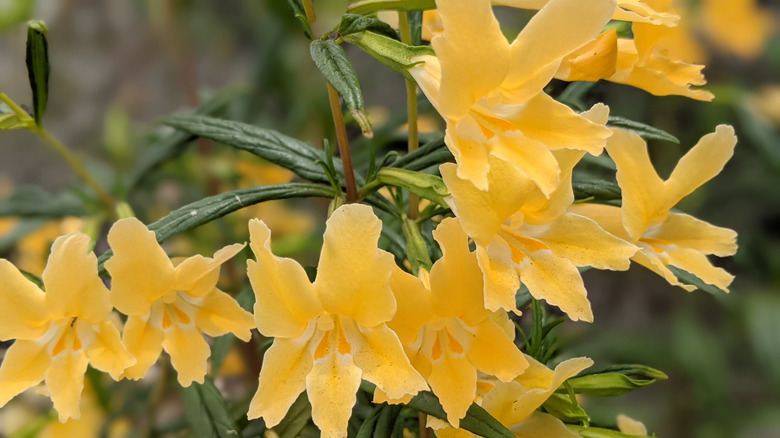
Bush monkey flower is a snapdragon cousin that will instantly turn your yard into a haven for hummingbirds. This sticky-stemmed perennial evergreen matures around 3 to 5 feet tall by 3 to 5 feet wide, and its smiling orange and yellow blooms are a genuine hummer hotspot. It puts out prolific trumpet-shaped flowers throughout spring and summer that are said to look a bit like a monkey's face. Both the bush monkey flower and the Xantus's Hummingbird are native to Baja California, and this beautiful backyard greenery thrives in hardiness zones 7 to 11. If you live in a mild climate, simply deadhead your monkey flower after its first bloom in early June and come late summer, you just may be treated to a second showing.
Place a couple bush monkey flowers atop a wall to enjoy its lovely spillover effect, let it expand across a rock garden, or put it in a large pot to adorn your entryway. It really is that versatile. This shrub is also pretty soil forgiving, as long as it's well draining, and deadheading the blooms is about the only maintenance this drought-tolerant plant requires. Make sure it has access to full sun or partial shade, depending on your area, and feel free to trim back springtime growth if you want to guide the plant's overall shape and size.
Lion's ear (Leonotis leonurus)
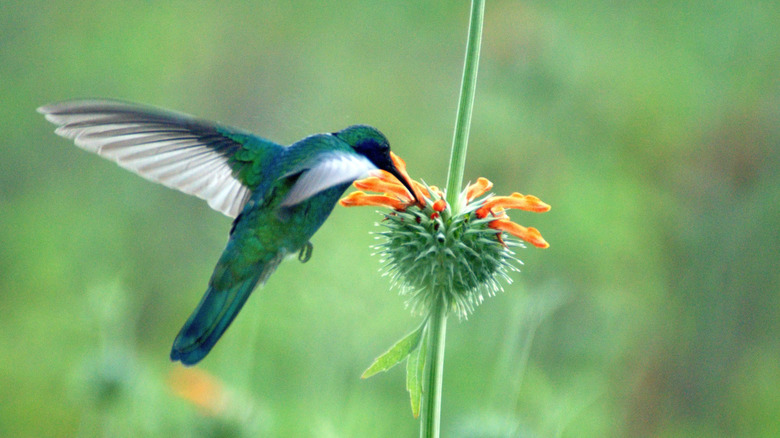
Create a pollinator paradise that'll lure hummingbirds into your backyard with a few lion's ear bushes. This tropical evergreen is a member of the mint family and reaches its mature height of 6 feet tall quickly, making it a top choice for a natural privacy wall. With showy, orange flowers, it'll be a standout addition to your hummingbird haven during the late summer and early fall months. These whorls of distinctively fuzzy petals are thought to be the origin of its curious name, and the plant's easy to share with other hummingbird fanatics in your neighborhood, as it propagates quite nicely from cuttings.
This South African native loves a sunny spot and well-draining soil to produce the most nectar-rich blossoms. But don't expect it to fare well outside during the cold months in hardiness zones 8 and 9, because lion's ear prefers warmer climates (but needs careful watering). It's possible to overwinter these bushes inside in containers,then return them to your pollinator garden in the spring. However, if you live in hardiness zones 10 and 11, this tender perennial may produce attractive flowers for species like Rufous Hummingbirds all winter long, especially along the Gulf Coast. Plant lion's ear alongside your autumn salvia, for a beautiful, vibrant display.
Camellia (Camellia sasanqua)
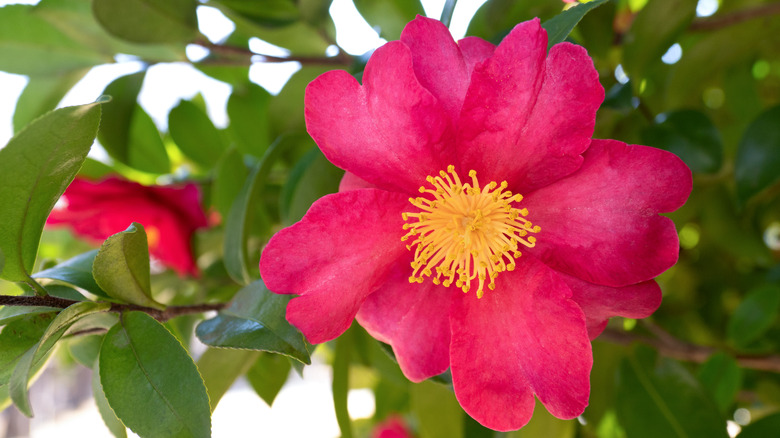
This next pick is ideal for the die-hard hummingbird fan because Camellia bushes will turn your yard into the perfect winter haven for hummingbirds. This Japanese native species has a heady fragrance for an evergreen that's a special boon to hummingbirds with its broad palette of colorful flowers. The 'Yuletide' variety is an especially enticing feeding station thanks to its exquisite scarlet-hued blooms and dark green foliage. Its festive fall blossoms can persist through mid-winter, depending on the intensity of your cold season, putting on a lovely show after your other pollinator-friendly inhabitants have gone to sleep.
Camellia is a beautiful plant that does best in hardiness zones 7 to 9. It's pretty vertically ambitious, reaching tree-like heights of up to 14 feet and a whopping 10 feet across, so make sure you have plenty of space for a mature specimen. Put one or two in a container and plan to repot them every two to three years as they grow. Once these bushes become too large for the pot, plant them along shady hedges, but only if you're sure your outdoor space has the right kind of dirt. Camellia needs acidic soil: If yours is heavily alkaline, this probably isn't the shrub for you. But, beyond that essential factor, camellia is virtually care-free.
Sweet Azalea (Rhododendron arborescens)

If you want to create a haven for hummingbirds in your yard, give sweet azalea a try. This beautiful bush is a top contender for high-speed foraging because its funnel shaped flowers are an important food source and a true crowd pleaser. They're a favorite of hummingbirds, like the ruby-throated variety, who stake out territories in the Eastern U.S., where this native plant thrives, particularly in hardiness zones 5 to 9. This plant puts out a generous supply of heavily scented blooms full of nectar by midsummer and its leaves are also a bountiful source for edible insects. Pinxter azalea and catawba or purple rhododendron' are in the same family, and these native varieties are also touted for their ability to tempt a few hummers into your garden.
Sweet azalea's clusters of petals span a colossal 2 inches and come in shades from white to pink, with long, showy red stamens. This beautiful specimen is quite cold-hardy and its glossy green leaves deepen to an attractive reddish purple in fall, another perk to add to its list of reasons why you want to plant this bird-friendly bush in your outdoor spaces. It can span 6 feet tall by 6 feet wide, so it's best to use this fast-growing shrub for borders and to add a splash of multi-seasonal color in your part-sun to shade gardens. Simply place it where it's well protected from icy gales, but beware: The entire plant is mildly toxic to humans and pets.
Rose of Sharon (Hibiscus syriacus)
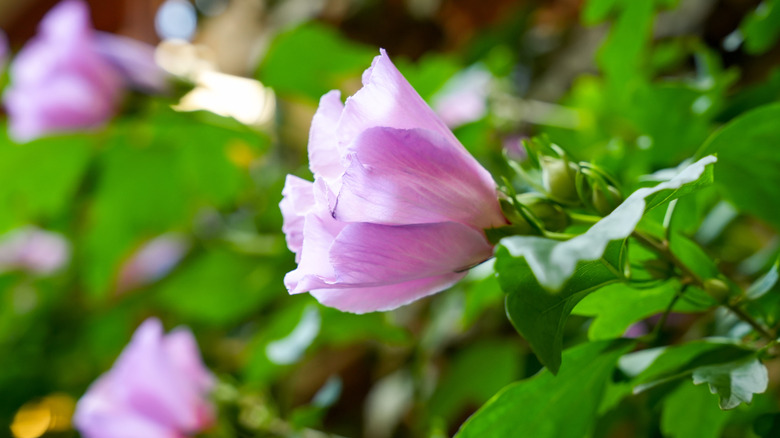
Many people know that if deer are a problem in your yard, instead of azaleas (which they love), you can plant some deer-resistant rose of Sharon. But what you may not know is that this bush is also a haven for many winged pollinators, attracting everything from bees to butterflies, and of course, our frantic friend the hummingbird. This stately shrub is in the hibiscus family and can grow to a ginormous 12 feet tall by 10 feet wide, making it a prime choice for a privacy screen or statement piece. If that's a little imposing for your urban patch, the smaller 'Blue Bird' cultivar may be a better option for your slice of heaven. At just 6 feet tall, it's the ideal rose of Sharon to sculpt into a stunning floral hedge. It even tolerates pollution and smog, so carry on with your eco-friendly quest to make a pollinator garden in the city.
Rose of Sharon is a beautiful bush that's native to Eastern Asia. It's relatively easy to grow (though overall, it is considered a high-maintenance plant) in outdoor spaces that fall into hardiness zones 5 to 8. While it produces white, blue, and purple buds, its pink and red flowers are some of our favorite offerings for ruby-throated hummingbirds who nest in this region. You can expect to attract hummers to your space when rose of Sharon's five-petaled blossoms put on their full display from spring to late summer, or even into mid-fall. To get the best yield, plant this fast growing shrub in full sun and do your best to keep the soil moist.
Weigela (Weigela florida)
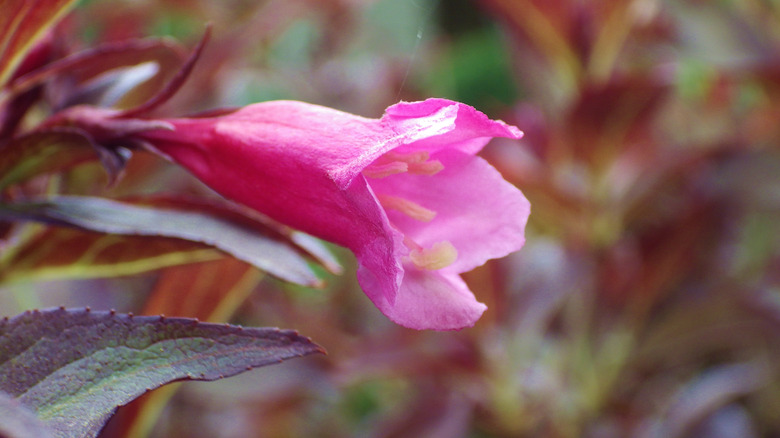
Droves of hovering hummers are more likely to descend upon your yard when you plant weigela, a low-maintenance pink flower hummingbirds can't resist. This easy-to-grow foundation bush will create a colorful bistro for these birds thanks to its delicate rose-colored blooms. A honeysuckle sibling, weigela originated in East Asia and is a dense shrub that puts out short-lived flowers that are pretty popular with the pollinator crowd. Their flowers last for just two weeks in mid spring, with an encore in late summer, but only if you live in hardiness zones 4 to 8 and your weigela has access to full sun. There are dozens of cultivars to choose from, in nearly every color of the rainbow, from red and white to yellow.
Plant weigela where it can stretch out to its full girth of 12 feet by 10 feet. Because of its jumbo size, this beautiful bush works well as the core piece in your hummingbird haven, or you can opt for a few dwarf varieties, like 'Spilled Wine' with its hot pink petals. Display them in containers near your home to enjoy you guests feeding, but not too close that the window glass becomes a hazard. Prune weigela after flowering for a more robust showing next season, and trim back a mature plant's coarse branches in late winter to boost blooms.
Chasteberry (Vitex agnus-castus)
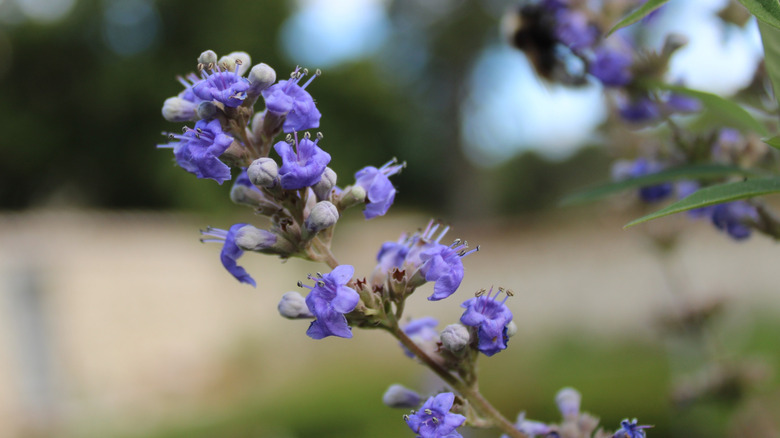
If you sow some chasteberry — also called chaste trees — in your yard, you're sure to turn it into an irresistible hummingbird haven. This low-fuss bush produces flower you might mistake for Lilacs (Syringa vulgaris). These blooms persist throughout the summer and fall seasons, providing a long-lasting supply of nectar from its foot-long, floral sprays. Its colorful blooms vary widely based on the cultivar, from white and pink to purple. Deciduous chasteberry are primarily from Europe and favor the warmer climates found in just two hardiness zones: 7 and 8 (though the roots may survive an annual dieback in zones 5 and 6).
For the best chances of smorgasbord success, this beautiful bush needs well-draining soil, and full sun. But that's not to say that this dazzling shrub requires a ton of attention. Quite the opposite, it's more robust than its fragrant doppelganger, and with its disease-resistant foliage, you'll enjoy healthy, more vibrant plants. Just do a quick spring pruning to further boost nectar production for those ravenous hummingbirds. Chasteberry is a fast-growing ornamental that can rise up to 15 feet, so it's probably best reserved for large gardens. Don't be daunted: Varieties like 'Blue Puffball' are much smaller at just 3 to 6 feet, and make the prettiest borders.
New Jersey tea (Ceanothus americanus)
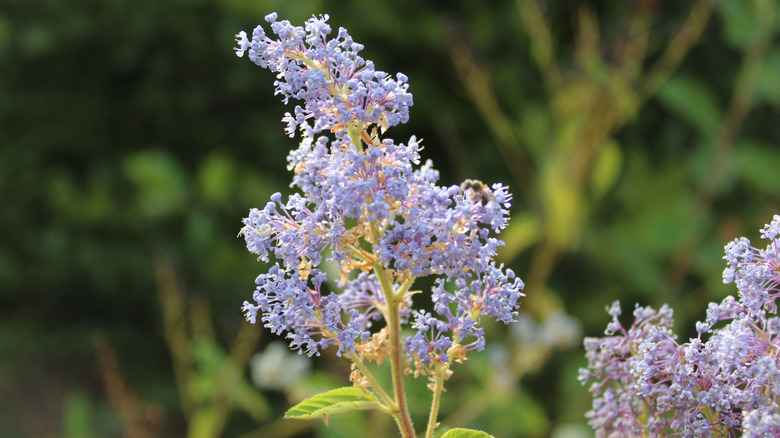
New Jersey tea puts out a welcome mat to hummingbirds, and not just because of its nectar, as you might have come to expect. Those pint-sized aviators actually dine on the smaller of many insects that live on or pollinate this compact bush's clusters of fragrant white flowers and glossy green foliage. Expect hummers to start arriving for the feast when New Jersey tea begins to bloom in May. With the proper conditions, including full sun and an occasional watering once the soil starts to dry, its fragrant flowers will stick around until July. In addition to sustaining tiny birds, here's some trivia for you: This plant's dried leaves were reportedly used as a Revolutionary War-era tea substitute (replacing all the stuff thrown in the harbor, presumably).
When fully mature, this beautiful bush is on the smaller side compared to many of the other enchanting options that attract hummingbirds to your yard. At 3 to 4 feet tall or less, a series of New Jersey teas make terrific ground cover for dry, rocky slopes and hard-to-grow banks. Thanks to its deep roots, it's great for stemming erosion, but it doesn't transplant easily. This shrub is pretty drought resistant, and prefers rocky soil or sandy loam, as long as it's well-draining. Native to the eastern half of the U.S. and Canada, it does best in hardiness zones 4 to 8. And because it's a nitrogen-fixer, it naturally enriches the soil, perfect for regions with nitrogen-poor dirt.
Flowering quince (Chaenomeles speciosa)
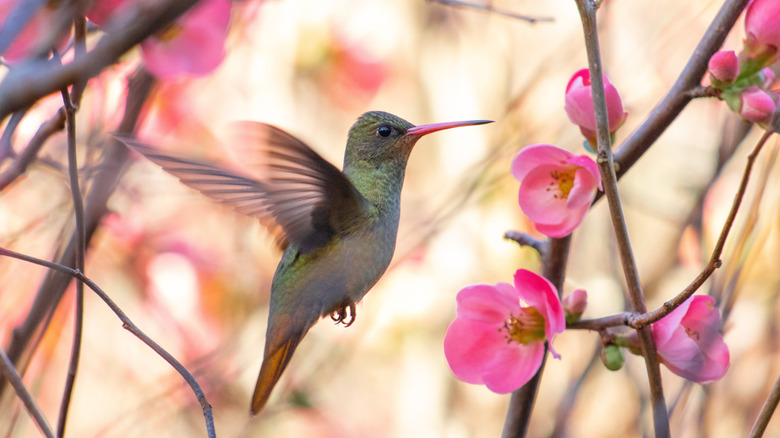
Hummingbirds nest during the spring and summer, and having an elegant flowering quince putting down roots in your yard will turn this oasis into a nectar haven the whole family will relish. This bush sprouts brightly hued petals, from white to pink to red, creating a vital habitat for hummers of all ages. Select this greenery at your local nursery when you live in hardiness zones 4 to 8. That area is right in the calliope hummingbird's migratory path, and because flowering quince puts out its five-petaled blooms early in spring between March and April, it provides a tasty syrup well before other nectar bearers make their appearance. That is absolutely one of our main motives for planting some of these beautiful bushes in our own outdoor spaces.
Flowering quince is the ultimate choice for a stunning thorny hedge, as it can reach 10 feet tall and 10 feet wide. It's tough, and can survive a wide range of temperatures well below zero and above 100. You'll get the most flowers if your quince has access to full sun. The reddest flowering quince varieties, like 'Nicoline' and 'Knap Hill Scarlet", may be the best options due to this hovering aviator's love of everything red.
Four o'clock (Mirabilis jalapa)
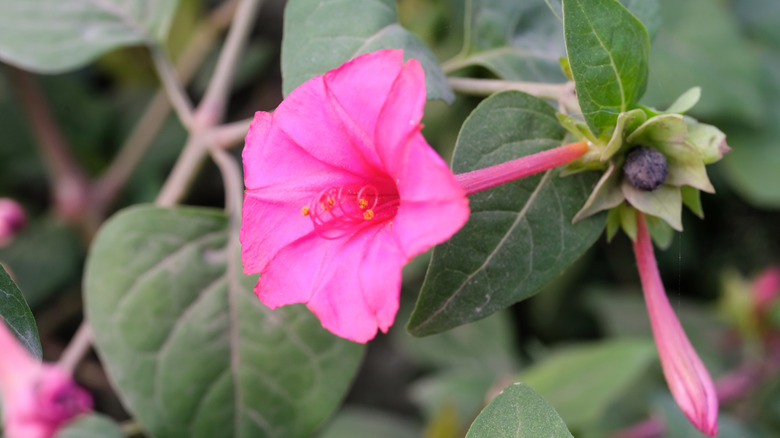
Common four o'clock, also called marvel of Peru, is an old school, tender perennial from Mexico and Central America with unique, lobed blooms. Each flower stem produces numerous small clusters of buds that can reach 2 inches when open. They come in all the typical colors, like red, white, yellow, and pink, and some varieties are even bicolored or variegated. These marvelously fragrant flowers open late in the afternoon (as their name implies) between July and September, just in time to attract hummingbirds at dusk with their heady perfume.
This shrub can grow up to 3 feet tall, but its stems are weak — if not supported, they will likely break. But the good news is, four o'clock is overall pretty hardy, with no major disease or insect issues, except for the occasional slug or aphid. Four o'clocks grow best in hardiness zones 7 to 10 and 9 to 11, depending on who you ask. But don't let that boundary stop you from growing this beautiful bush elsewhere as an annual, especially as they have the penchant for self-seeding in full sun, with moist soil, and shelter from the wind. Line your walkways and patios with four o'clocks, or place a few under your windows, where you can enjoy their wafting fragrance over warm summer nights. Just don't eat four o'clock seeds, as they can cause stomach upset.