

Plants That Are Attracting More Snakes To Your Yard
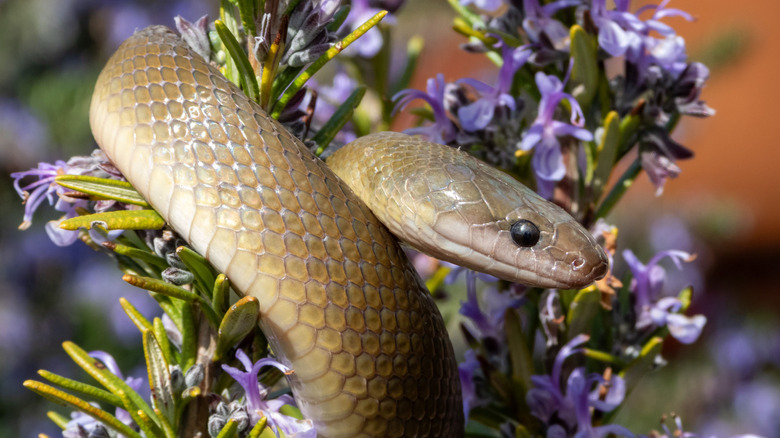
Depending on where you live and the wildlife that inhabits your area, you may well be curious as to which plants in your garden might attract snakes. However, it's important to note that none of the growers we're listing here are inherently attractive to snakes. The things that actually attract snakes into your yard are usually related to their prey, including birds, reptiles, insects, and amphibians. This means that the best way to mitigate against snakes is to control the populations of their natural food. On the other hand, depending on your location and local wildlife, it could well be worth leaving your garden to its own devices.
Some snakes can be beneficial for your garden, helping to keep unwanted rodents at bay while posing no threat to humans or pets. Having said that, if you live in an area where dangerous snakes are known to be present, then you may want to consider preventative measures. At the very least, it can be worth knowing which plants snakes are likely to be found near, and then maintaining those areas to keep invasions to a minimum.
Fruit trees, for example, can drop a steady supply of food for rodents, while long grass and bushy, low-growing hostas are among the most common hiding places for snakes, providing convenient cover for them to hunt unseen. In other words, while snakes aren't really interested in eating your favorite flowers, certain plants can make their perpetual search for food and shelter easier; plants which, if you'd prefer not to share your yard with snakes, might be best omitted from your landscape.
Dwarf cypress (Cupressus)
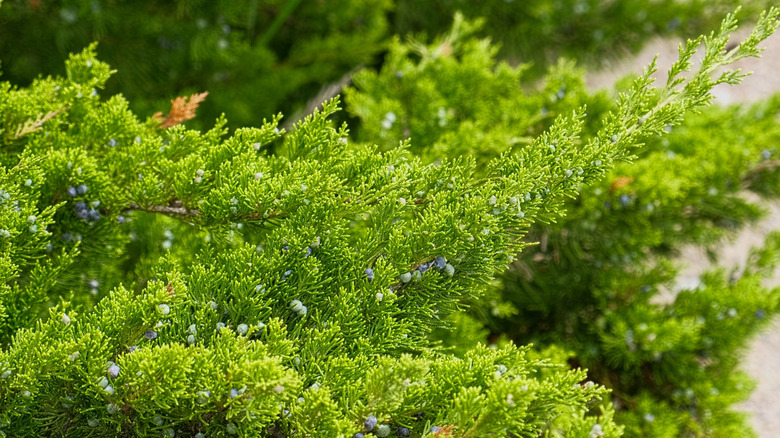
Knowing that snakes won't eat your plants, you can rest reasonably assured that your favorite cypress (Cupressus) shrub is unlikely to incur damage if snakes happen to find their way into your yard. However, you should know that dwarf cypress varieties can provide precisely the kind of shelter that snakes love, helping them to both hide from predators and remain concealed while they hunt.
Cypress plants are often used to provide natural fencing or screening in gardens, thanks to their dense growth pattern. And it's precisely this that makes them so useful to snakes, helping them stay concealed. What's more, since cypress grows best when it's planted in either full sun or partial shade, any reptilian residents won't need to travel far when the time comes for a much-needed spot of sunbathing. With this in mind, ensuring that any errant low-level branches on dwarf varieties are pruned back can help to keep snake ground cover to a minimum. To help keep the bottom of these plants clear, you could trim them back by cutting away older, leafless branches. Since cypress doesn't shoot new growth from bare wood, this will help to make your snake-proofing more permanent.
Creeping phlox (Phlox subulata)
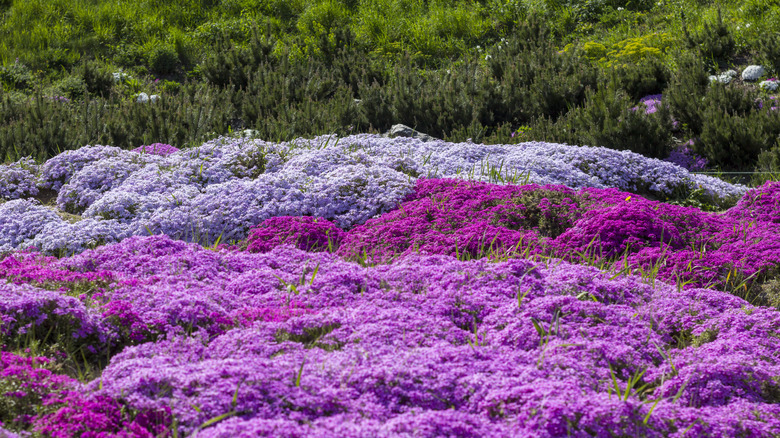
When choosing a ground cover plant for your garden, consider which local fauna is likely to find its way underneath it. While snakes are unlikely to take up permanent residence, they will nevertheless be thankful for the convenient hiding spot that ground cover plants like creeping phlox (Phlox subulata) provide. This cover can be incredibly beneficial for hunting, resting, and traversing your garden unseen. It's also likely to be conveniently close to potential sources of food, including rodents.
Voles, for example, like to eat creeping phlox, and if a local population gets wind of such easy pickings, then the getting will also be good for any nearby snakes. If you're planting ground cover for mulching purposes, then you could always consider a less snake-friendly alternative. Sharp gravel and crushed rock are both good choices, providing an uncomfortable surface for snakes to slither across while discouraging rodents from burrowing.
Hostas (Hosta spp.)
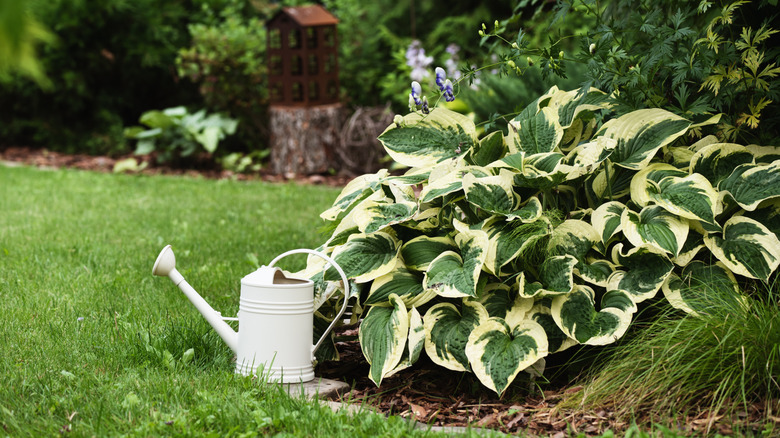
As popular as they are, low-maintenance hosta plants could also be attracting snakes to your yard. Especially if planted in rows and allowed to bush out, they can provide a useful and potentially extensive area for snakes to hunt, not least because hostas can attract rodents like voles and mice. All of this might sound pretty concerning, but please, don't hoist your hostas out just yet.
Hostas are often planted for their perennially luxuriant foliage, bringing joy to the eyes of loving gardeners as they return abundantly each year. However, it just so happens that their ability to conceal snakes often keeps them healthy, since these reptiles will gladly keep your hostas clear of annoying pests like slugs and rodents. In other words, if you don't have dangerous snakes in your area, it might be best to simply leave your hostas in place. And if you do, either refrain from planting them or find a place to plant your hostas that's least likely to encourage human and pet encounters.
Fruit trees
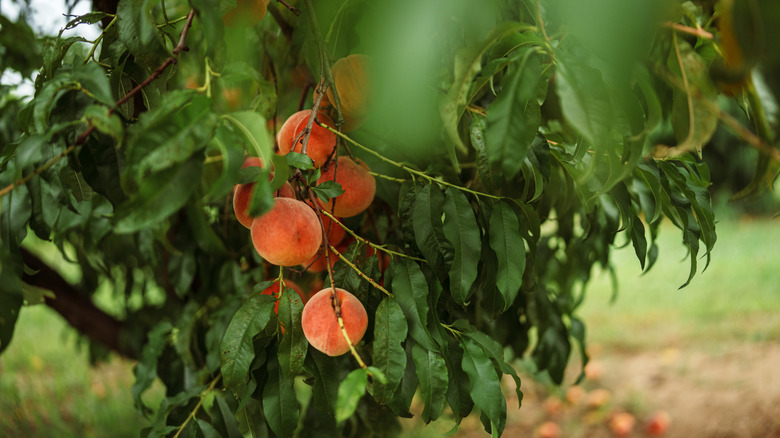
Since snakes are carnivorous, you don't need to worry about them climbing up the trunk of your prized fruit tree and helping themselves to your crop. However, any rodents in your area are sure to be thankful for such a bounty, especially when it begins to drop overripe fruits on the ground. Voles will gladly feed on easy pickings around the base of your tree, and any nearby roof rats will gladly climb to feed before your fruits even have a chance to drop.
The best way to snake-proof your home and yard is to make it less attractive to their prey — in this case, rodents — and while it's hard to deter them from entering your yard altogether, you can minimize attractive food sources to a point where creatures like voles and roof rats are unlikely to stick around. For example, frequently clearing away dropped fruit from the base of your tree could help to manage vole activity. While it's harder to eliminate the possibility of roof rats climbing your tree, if you really want to plant one and you're worried about snakes, then consider planting it away from your house and in a spot where any potentially dangerous species are unlikely to run into your household members.
Creeping juniper (Juniperus horizontalis)
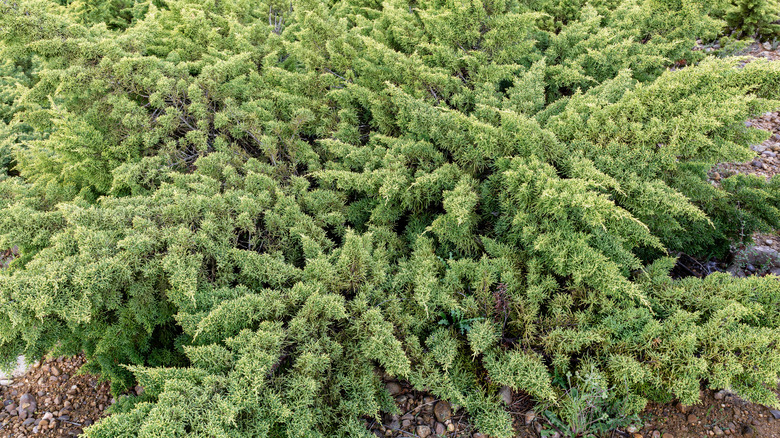
Creeping juniper (Juniperus horizontalis) can be a boon to snakes as they look for a place to go about their daily duties unseen. This is especially true given the other species that are likely to appreciate creeping juniper's bountiful foliage. These include voles, which favor both the food and shelter that juniper provides, while wood rats are another species that's particularly partial to juniper.
Both voles and wood rats are a staple food source for a number of snakes — including rat snakes — which means that, by planting creeping juniper, you could inadvertently be welcoming reptiles into your garden. Now, if your concern is primarily with rat snakes, or indeed any other non-dangerous, rodent-loving species, then the best advice is usually to leave everything as it is. These snakes serve a valuable role when it comes to pest control, preventing rodent populations from getting out of hand. The same can be said even for venomous snakes, although they pose an obvious potential risk to humans and pets, especially in high-traffic areas where encounters are more likely. Replacing creeping juniper and other, similar ground covers with something like sharp, tight-fitting gravel or stones is less likely to lead to slithery surprises. Not only will this remove a food source for voles and wood rats, but snakes also find it uncomfortable to move across coarser surfaces.
Zucchini (Cucurbita pepo)
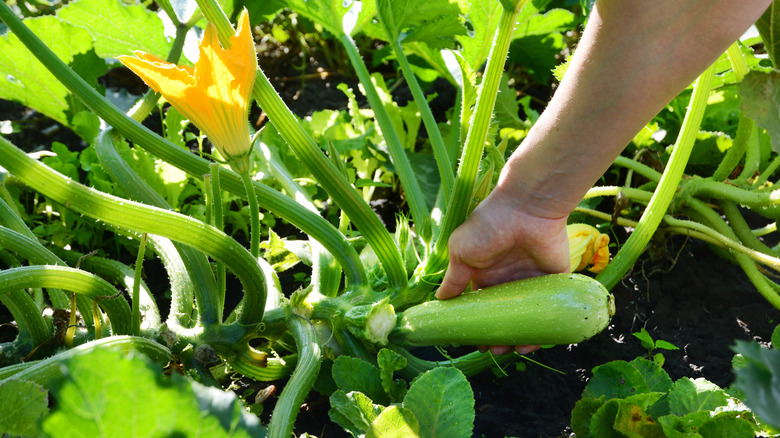
The delicious vegetable zucchini (Cucurbita pepo), often so appealing to kitchen gardeners, is also very tempting for rodents. In fact, they can potentially attract a number of hungry critters, ranging from rats and voles to shrews and even moles. All of these species are pretty zealous when it comes to zucchini, and if they're allowed to come and go in large numbers, local snakes are unlikely to ignore them for long.
You might be thinking that you'll be fine if nowhere else in your garden provides snakes with an easy place to hide, so even if rodents happen to find their way into your zucchini patch, snakes won't dare to venture near it. The issue is that zucchinis have a natural tendency to sprawl horizontally wherever they're planted, and a single plant can spread outwards up to 4 feet. Combined with their bushy growth pattern and large leaves, and in a patch with several plants, there's likely to be enough cover for snakes to lie in wait for their prey — regardless of how well you've snake-proofed the rest of your yard.
Wisteria (Wisteria spp.)
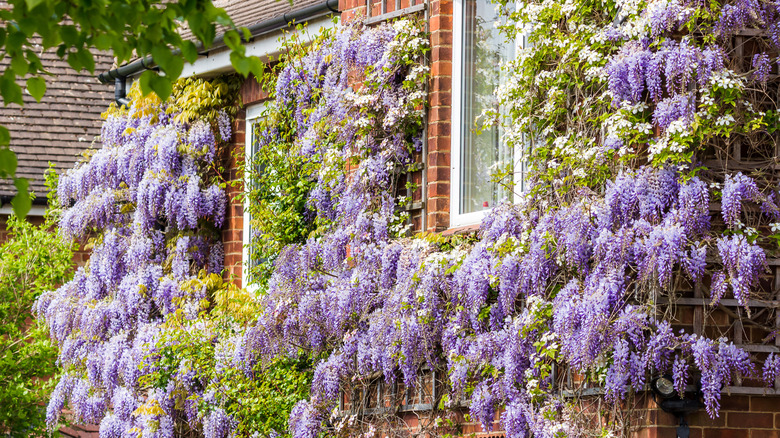
Wisteria (Wisteria spp.) is popular among gardeners who want to reap the rewards of its regal appearance. With strong, woody vines that are known for their ability to climb, planting wisteria is a great way to add more privacy to your backyard. It's also often planted to scale the sides of houses, adding stately curb appeal with vibrant shades of blue, purple, pink, and white.
The reason that it could potentially attract snakes is two-fold. The first is that, when planted on the side of your house, it can provide an easy climbing frame for rodents like mice and rats to access your home, which they'll gladly do if it means finding food and shelter. This in itself makes it more likely to attract snakes, as they're more inclined to venture into gardens where prey populations are high. The other potential problem with wisteria is that it's easily climbed by tree-dwelling snakes. By climbing wisteria's web of vines and creepers, snakes can gain a superb above-ground vantage over their hunting ground. More than that, those same vines and creepers provide an easy means of moving in for the kill.
Of course, not all snakes have a tendency to climb, and the "risk" factor with wisteria is largely dependent on the kind of snakes that inhabit your area. Rat snakes are proficient climbers, and while they're not dangerous to humans, they will readily climb your wisteria if it means catching rodents en route to your loft. As for more dangerous species, like rattlesnakes, cottonmouths, and copperheads, while there is evidence to suggest that they can climb, research tends to agree that they're not the most likely types of snakes to climb, instead preferring to hunt at ground level.
Grass (Poaceae spp.)
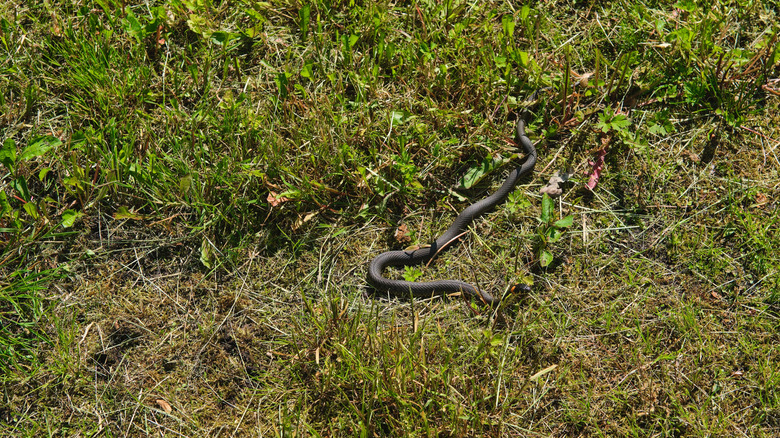
No matter what type of grass is growing in your lawn, if you don't want snakes in your yard, then you should aim to keep it nice and short. Snakes are more likely to stay in your garden if your grass is longer, since not only does it provide useful concealment from their prey, but also because it provides cover and concealment from predators and humans. Of course, snakes are only more likely to visit you if it's worth the trip. Unfortunately, unkempt grassy areas are ideal hiding grounds for rodents like mice, which means that by not keeping on top of your lawn, you're providing snakes with both food and a covert means of hunting it.
For most households, the idea of getting rid of their lush, green grass is nothing short of a non-starter. Fortunately, it's relatively easy to prevent your grass from becoming a holding ground for predators and prey. Simply mow your lawn often enough to keep the grass short, which will deprive nearby rodents of easy cover. Keep other essential lawn-care tips in mind, too, like clearing away leaf litter and dethatching your grass, both of which will minimize potential rodent attractants, and therefore reduce the likelihood that snakes will start hunting in your yard.
Strawberries (Fragarua x ananassa)
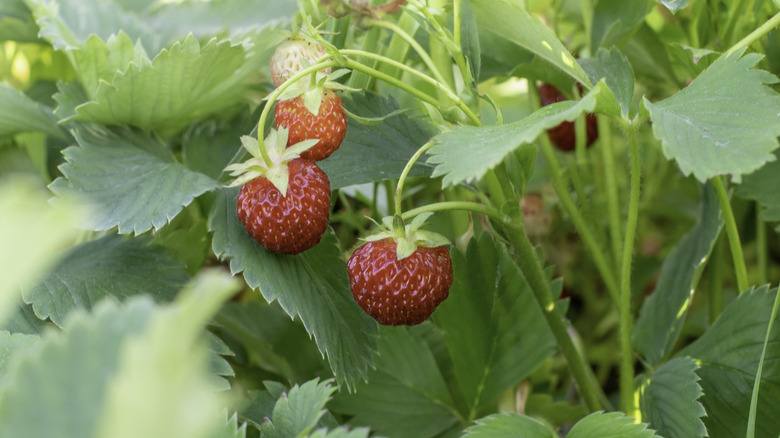
Planting strawberries is a superb way to suppress weeds while providing yourself with a delicious supply of sweet treats. The only drawback is that, if there are rodents in your area, there's a good chance they'll come scampering in search of such tasty morsels. And since strawberry plants can form an effective mat of foliage, snakes are also unlikely to resist the chance to slither underneath and lie in wait for your fruit thieves.
Again, this might not be a bad thing. Unlike rodents, snakes won't eat your strawberries. Provided that the snakes in your area aren't dangerous, they could well prove a valuable ally, and there's nothing like Mother Nature for a spot of pest control. However, if you have dangerous snakes nearby that you'd rather keep out of your garden, and you're unable to safeguard your strawberries against rodents, then you should always approach your patch slowly and with caution. Snakes have superb hearing and can pick up vibrations through the ground. This means that if one's hiding in your strawberries, it'll likely scarper before you have a chance to encounter it. If it doesn't, and you're unsure how to tell whether a snake is venomous, then it's best to back away and leave it to its own devices.
Oak trees (Quercus spp.)
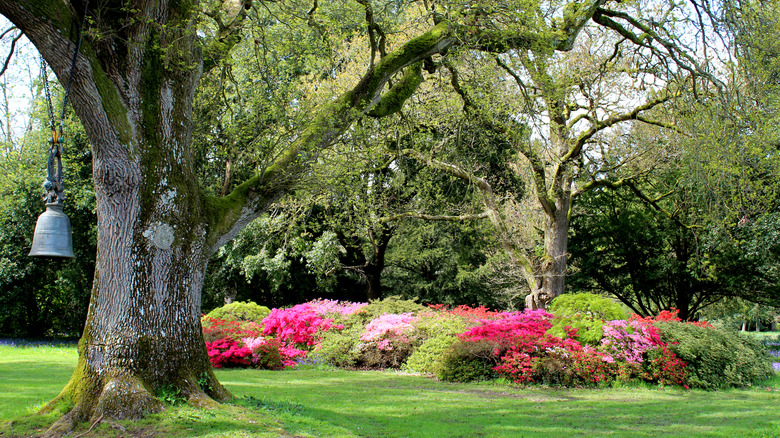
The gray rat snake, otherwise known as the "oak" snake, is just one of the species that's likely to find your oak (Quercus spp.) attractive. These mighty trees provide an excellent habitat for squirrels, birds, and rats, which in turn make them excellent hunting grounds for reptiles. The eastern rat snake is also thought to like large, mature oak trees, favoring them as above-ground shelters and handy places from which to soak up the sun.
Now, it's important not to jump straight into chopping down your prized oak. Firstly, rat snakes are not dangerous to humans, so if you happen to find one taking a well-earned break in yours, there's no need to worry. Even if you're petrified of snakes — regardless of their danger level — and would prefer to banish them for good, there are likely other ways in which to discourage future visits. More often than not, rat snakes, like most species, are only likely to stick around if they find an abundance of food. Therefore, reducing rodent populations around your yard, such as by keeping your grass short and removing sources of food for them, is perhaps the surest defence against future incursions.
Ivy (Hedera spp.)
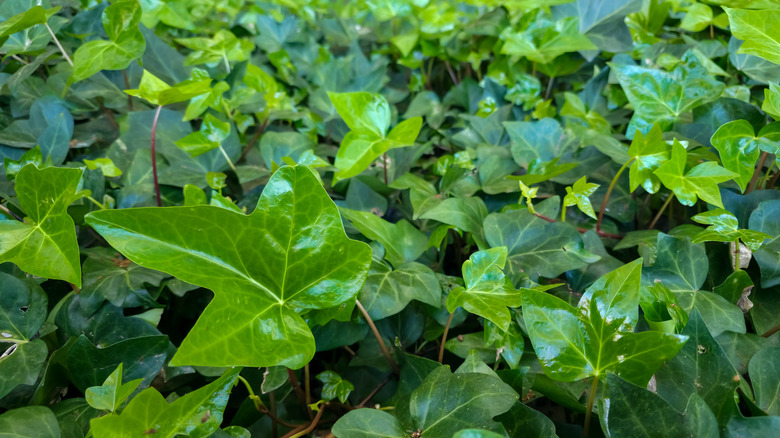
Ivy (Hedera spp.), and indeed many types of ivy, can provide a cozy and convenient environment for snakes to hide in your garden. Again, it's not that snakes like to eat or even smell ivy. It's just that it grows densely, thus providing cover for both hunting prey and hiding from predators. It also attracts rodents that love to burrow beneath it, and if you have snakes in your area, they'll be only too happy to lie in wait beneath a dense cover of ivy as they wait for one to come scurrying by.
If you really want ivy in your garden, and you only have harmless snakes in your area, then they'll likely take care of any rodent problems on your behalf, all while posing zero threat to you and your family. But if your area is home to more dangerous species, then you'll want to think seriously about how to keep snakes away from your yard. This could include keeping on top of rodent populations yourself, planting the ivy in an area away from frequent human traffic, or avoiding planting it altogether.