

Head-Turning Ways To Add Water To Your Garden
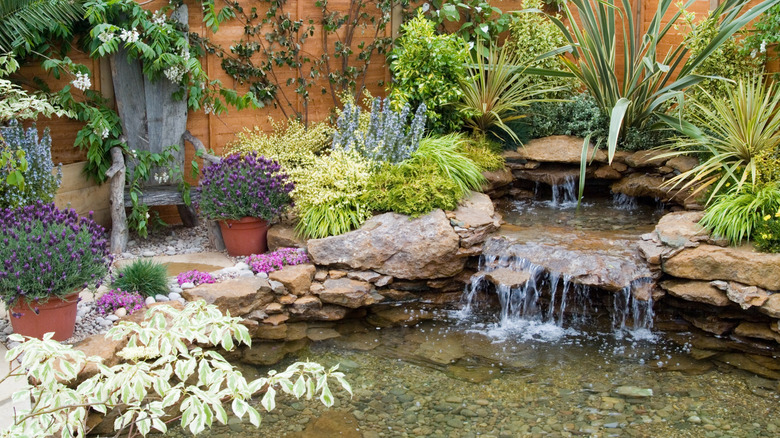
Water has had its place in the gardens of homes around the world for centuries. In fact, the earliest records of garden water features date all the way back to the Romans. Of course, while groundbreaking and absolutely astonishing given the period, many of the structures developed back then were put in place to ensure a steady supply of water for drinking, bathing, and irrigation. Today, adding water to a garden is a mostly a decorative pursuit, but it's not without additional merits.
Depending on how you decide to incorporate it into your outdoor space, water can do a multitude of wonderful things. Wildlife are always happier when close to a reliable water source, so they're sure to thank you for a nature pond. And there's also something deeply rooted within us humans that connects us to water. We can experience it with all of our senses, whether we're swimming in it, drinking it, running fingers through it on a warm day, or listening to the soothing sound of water flowing. This might not seem surprising, given our species' innate connection with the natural world, and yet it's all too easy to become disconnected from the importance of water in our lives. Luckily, there are plenty of ways to introduce the wonders of water to your garden that allow you to benefit from such natural connectedness while elevating the overall appeal of your yard.
Consider the benefits, drawbacks, and required upkeep
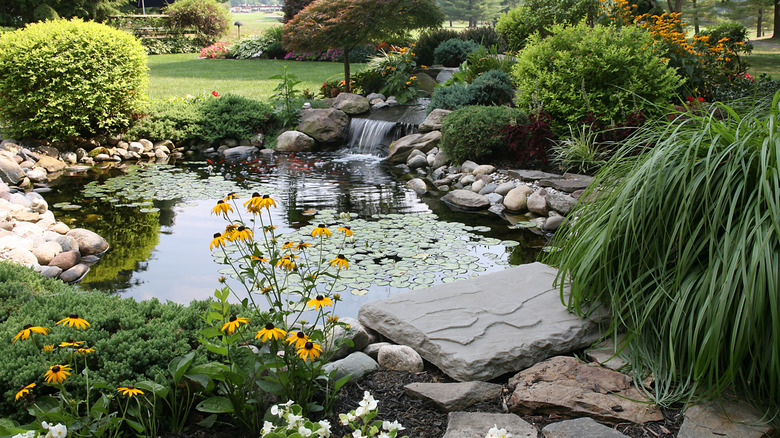
By adding water, you can create intriguing zones of interest to your garden. What's more, depending on the type of water feature you choose to install, its inclusion could come with a host of additional benefits, including an increase in biodiversity as animals find their way to the new local watering hole. However, you also need to consider the potential drawbacks. Cost, for one, is a factor that makes many homeowners reconsider adding a water feature in their yards. There's also the potential for pests. Unfiltered, standing water is sure to attract mosquitoes, who will happily lay their eggs in the pond regardless of how much you spent on installing it. Clean, moving water is the obvious solution to this potential headache, but even that throws up the problem of how to power it. A water pump needn't be overly expensive; solar-powered filters can do the trick without the need for specialist electrical work and inflated energy bills, but they will still need to be factored into your planning.
Of course, the overall cost depends entirely on the kind of water feature you plan to install. A simple water fountain needn't set you back a fortune. On the other hand, a large, natural swimming pool or a fish pond will require careful landscaping and appropriate (often expensive) materials to ensure it's able to both retain water and remain resilient through the seasons. Even after your water feature is installed, it's important to know what maintenance it's likely to require. Wildlife ponds and natural pools, if designed correctly, can often be left to their own devices with very minimal maintenance. Ponds with fish, however, may need regular maintenance or potentially-expensive equipment to ensure the water quality stays clean and the fish remain healthy.
Add movement and soothing sounds with bamboo
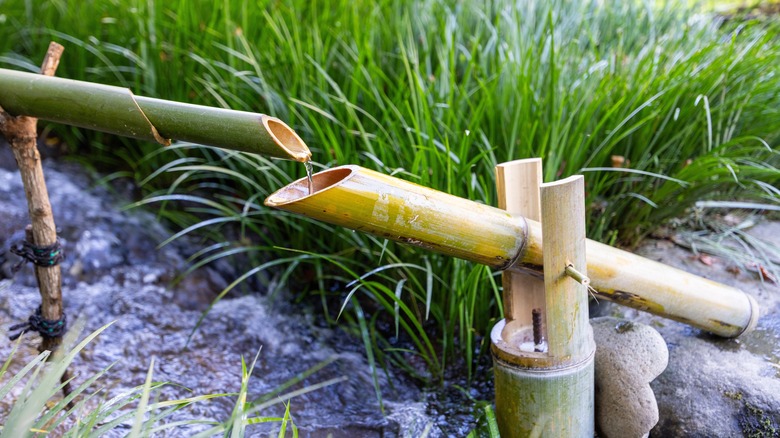
Whether you have it growing in your garden or know somebody who has just chopped some down, bamboo is an incredibly versatile material, with plenty of potential uses for the thrifty gardener willing to embark on a little DIY. You probably already know that bamboo can be used to stake plants, helping to support their weight as they climb toward the sun. But did you know that you can also create a beautiful fountain using bamboo? Of course, there are countless ways to arrange bamboo water features, each with their own benefits. One easy method is to use halved sections of bamboo to create "gutters." These can be used to transport trickling water around your garden, whether that's from natural collection areas or as part of a circular pump-fed water system.
The second popular idea is a Japanese concept known as a "shishi-odoshi" (鹿威し), which is especially popular among gardeners who want to deter local deer and other animals. It's constructed with two separate elements: a mounted bamboo spout that's fed water from a reservoir, and a second reciprocal bamboo vessel that's mounted on a pivot. Fed by the spout, the second pipe becomes heavier and fuller until it eventually reaches its tipping point. When it does, it upends itself, emptying the water back into the reservoir and slamming onto a stone beneath with a hollow "thunk."
Embrace color with a koi pond

Whether you're introducing them into a natural swimming pool or providing them with a dedicated sanctuary in which to live, allowing koi to make a home for themselves in your garden is a real head turner. Closely related to carp and goldfish, koi fish develop in an array of wonderful colors and patterns. Provided that you keep the water in tip-top shape, they will continue to grow and dazzle your summer soirée guests.
However, you should note that koi ponds can be quite expensive to build, requiring filters, pipework, and a pump, and will need to be carefully dug, lined, and water-tightened to ensure that your fish's home doesn't start to disappear. It's also important to maintain a steady water temperature to keep your koi happy and healthy. They can survive low temperatures down to 35 degrees Fahrenheit, but they'll thrive best in water between 65 and 75 degrees Fahrenheit.
Provided that you can tick these boxes, you and your family are sure to spend hours gazing at these incredibly graceful creatures. You can also add an array of aquatic plants to your pond, making it more homey for the fish while adding verdant new interest for humans. You could even use LED lighting to bring your koi pond to life after dark.
Build a nature pond for watching wildlife
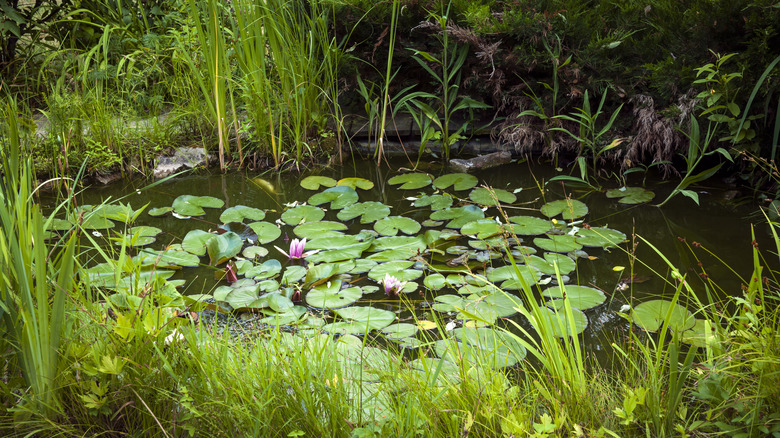
Instead of carefully cultivating a pond and choosing which creatures should make it their home, why not let nature decide? Nature ponds require minimal maintenance, provided that they're properly designed and filled with native plants. Once established, they can, for the most part, be left to their own devices. What's more, whether you dig a dedicated pool or use an old tire to create your pond, the end result is sure to encourage an array of local wildlife into your yard.
In fact, when done right, a backyard nature pond will encourage flora and fauna to work together to maintain your pond's ecosystem. To help speed this process along and ensure its success, try incorporating other water features, like waterfalls and pumps. Keeping the water moving will prevent mosquitoes from laying their eggs and causing you and your guests grief. Many birds also find the sight of moving water irresistible, so design places where they can rest, sip, or splash in the water. Just make sure that the water in your nature pond is deep enough; if it's too shallow and allowed to completely freeze in the winter, your carefully cultivated plants are unlikely to survive.
Install a rill to connect areas of your garden

A rill is similar to a dry creek bed or stream, providing a "roadway" for water to traverse through your garden. They can be made with concrete, natural stone, or cut stone slabs. Rills can help to keep water away from areas prone to flooding and move it to those that are designed to hold it, like ponds and pools, all while gracing your eyes and ears with the calming sights and sounds of running water.
Rills aren't strictly reserved for excess rainfall, either. You could always create a circular system with a pump that continually feeds them with water, and use them to connect different zones in your garden. Rills are often seen gurgling between fountains and other water features, like ponds, and can be helpful in drawing you and your visitors' eyes to particular focal points around the landscape.
If you have a steeply sloped or tiered garden, consider connecting multiple shallow pools at different heights. This will amplify the sound of the water as it circulates its way between them, also resulting in dramatic whitewater as it gushes into each pool. Even if your garden is relatively flat, you can still connect different pools via rills, but with a far more tranquil and slow-moving effect.
Construct an elegant geometric pond
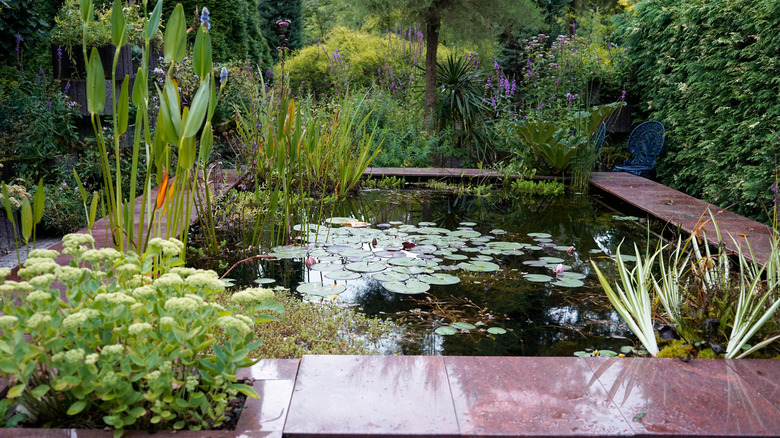
If you keep a formal flower garden — one that's well manicured and worthy of a place at the RHS Chelsea Flower Show — then a geometric pond might just be the perfect way to tie in a water feature without feeling too rustic. Small, mirror-like bodies of water like this can manage all kinds of visual feats, like reflecting dramatic skies and bringing treetops into view. If you have a quiet zone in your garden, one to which you like to escape and enjoy some solitude away from the chaos of your household, then this structured, elegant pond style could be the perfect fit.
You could install your geometric pond at ground level or build it up with raised walls and edges , a good option for landscapes with tough, hard-to-dig soil. Building a raised pond also provides built-in seating and a place to rest and gaze into the pool. Whichever you choose, ensure that you line the pond with a dark material to enhance the water's reflective qualities, and to further inspire peace, consider aquatic plants like lilies and reeds.
Enjoy a pleasant trickle with irrigation pipes
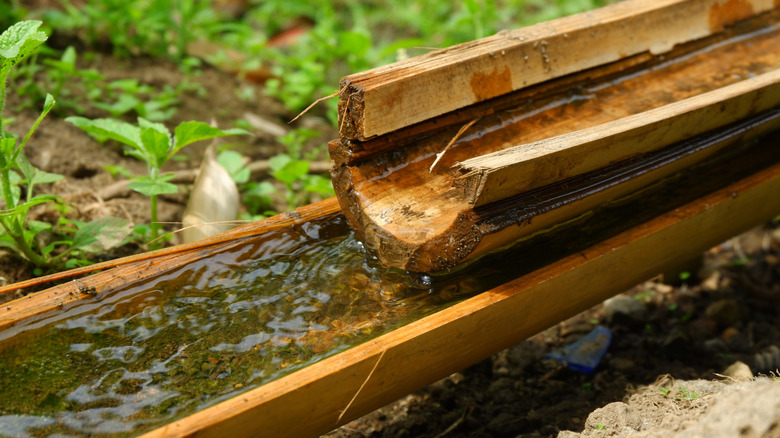
There are several ways to draw water away with downpipes, and you don't have to stick to ugly plastic gutters. A novel alternative to collecting rainwater in a traditional barrel involves incorporating wood, metal, or bamboo drain pipes into your landscape scheme, using them to divert water away from collection areas and into your flower beds. The benefit is twofold. The first is that, if you're on a water meter, you'll save on utility costs, as you'll need to draw less from the tap in order to keep your thirsty plants quenched.
The second benefit is that rainwater is actually better for plants than tap water. Tap water typically goes through an all-important filtration process in order to make it safe for humans to drink, and is often lightly chlorinated. Rainwater doesn't have chlorine, but it contains more nitrogen, and is especially good for flowers like azaleas. You can also use a natural gutter system to channel water away from your garden, which is a great way to improve drainage and manage flooding in areas with high rainfall.
Make a splash with a natural swimming pool
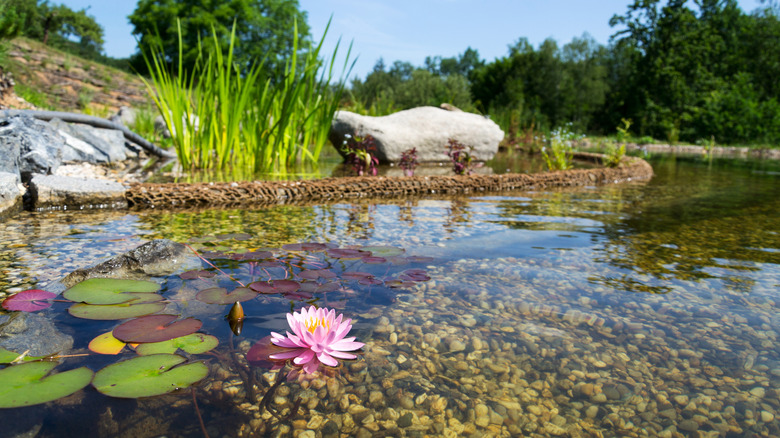
If you've had to reconsider adding a pool to your yard because of upkeep costs or how it would spoil your garden's aesthetic, then a natural swimming pool might be for you. Since they're heated naturally by the sun, the only energy required is that which you'll need to build it. As for maintenance, the key is in the name. Natural pools typically have a swimming zone separated from regeneration zones, which are filled with aquatic plants and microorganisms that filter the water and remove excess nutrients to prevent algae growth. If planted and designed correctly, nature will keep everything in balance. If anything, all you'll need to do is trim the plants around the edges from time to time to ensure they don't block your view.
Natural pools can largely be left to their own devices, becoming an integral and decidedly beautiful part of your garden landscape, and their interactive nature offers a fun oasis for both wildlife and humans. Depending on where you live and the season in which you use it, the water can be brisk — but that's also partly the point. Cold water immersion, especially when done outdoors, can improve your metabolism, alleviate aches, pains, and stress, improve circulation, boost your immune system, and even help with anxiety. Perhaps it's no wonder that natural garden swimming pools are becoming more popular when they give homeowners the chance to enjoy such benefits in the comfort of their own gardens.
Add a fountain wall for a simple statement
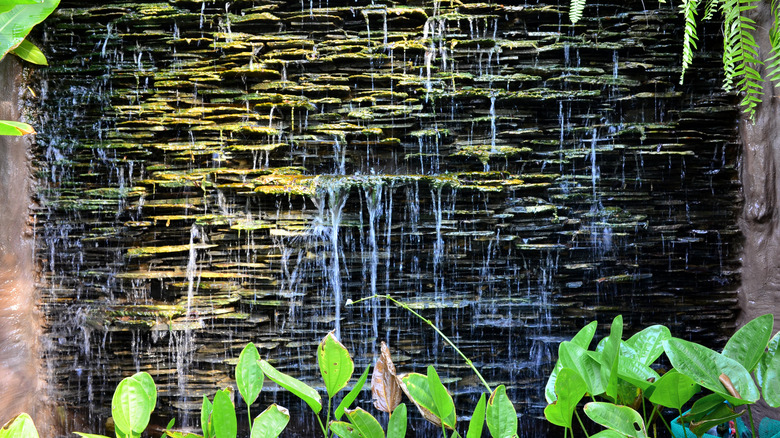
Bringing both elegance and a deep feeling of serenity to your garden, vertical dripping fountains come in an array of materials, shapes, and styles. They act somewhat like a moving mural, hypnotising all who lay eyes on them and proving especially helpful in outdoor areas that are dedicated to relaxation, such as a sensory garden or meditation nook. You could also add a trickling wall fountain to an area that's otherwise underutilized, turning a boring corner into a key focal point in your garden. These water features can even be strategically placed to help block your view of your neighbours — and, in the process, their view of you.
If you like hosting evening parties or spending time outdoors after dark, you can also add LED lighting behind the water curtain for an enchanting glow. Provided that you have the correct materials — and a can-do attitude to DIY — it's easy to incorporate a lighting arrangement that blends your perfect combination of color, material, and brightness. The base of your fountain can also be customized with a small pond, aquatic plants, moss, or stones that conceal the recollection system.
Cultivate a water garden with old barrels and buckets
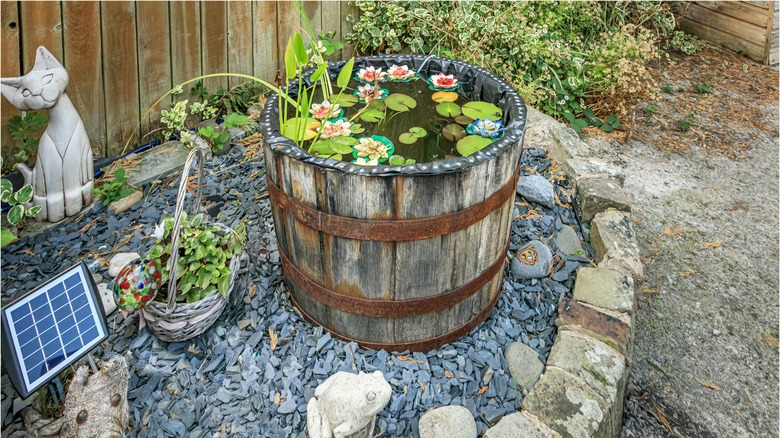
Sometimes, the simplest solutions are some of the most eye-catching. If you have old buckets, barrels, or indeed any other kind of water container, these are essentially ready-made water features that are great for small gardens or even porches and balconies. It's easy to create a water garden with an old barrel or even turn your old fire pit into a water feature., but you'll have to resist the urge to simply fill them up with water and place them amongst your favorite flowers. Standing water is a surefire recipe for mosquitoes. Instead, ensure that the container is well-sealed and that there's water movement. You could retrofit a pump system to your bucket, barrel, or fire pit, or alternatively, place it strategically beneath another source of moving water, like a waterfall or downpipe.
Once you've proofed your container pond against unwanted insects, look for pond-friendly plants that will complement the colors in your wider garden. Alternatively, if you're using your upcycled barrel or bucket to populate a spot that's otherwise devoid of life and color, then get creative with eye-catching plant combinations. However, it's important to note that most smaller containers like these aren't suitable for fish, as the water can easily become too warm.
Draw in local wildlife with a bird bath
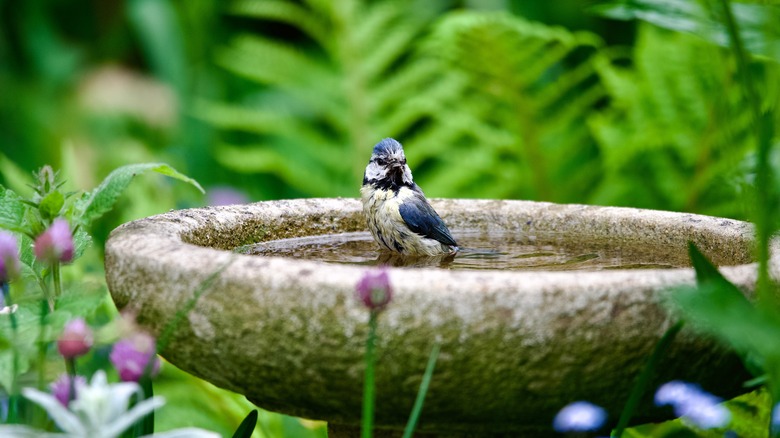
It's not just humans that enjoy the presence of water in gardens. Birds do too, and they'll reward you for your foresight by returning day after day for a good drink and a bath. There are just a few things to consider when you buy a bird bath, the first being which size bath is right for the birds in your area. A wide, shallow dish with an approximate depth of four inches and a diameter of at least 12 inches is usually a good bet. Baths with a rough texture are better than smooth ceramics to keep small birds from slipping. Alternatively, you can design your own and add an auditory element by following any DIY guide to make your own recirculating birdbaths. Birds love running water, and are much more likely to flock to your water source if you keep it fresh and flowing.
As for the location and height of the bird bath, this is entirely up to you. A lower bird bath might encourage ground-based critters like frogs and even racoons to visit your garden. The important thing for birds is that their bath is in a spot where they feel safe, ideally close to trees or shrubs so that they can fly to safety if they feel threatened. If you can find a spot like this while affording yourself a good view of their comings and goings, then the budding birder in you is sure to be rewarded with plenty of sightings.