

Essential Lawn Care Tips To Keep Your Yard Thriving

We may receive a commission on purchases made from links.
After endless afternoons in the summer spent keeping on top of your lawn, it can be a relief (especially for those with larger gardens) to see grass growth beginning to slow. However, if you want to ensure your grass remains in tip-top condition for the following spring and summer, then there are several autumn tasks that you should take care of before hanging up your tools for the winter.
For example, although temperatures are starting to drop, it's not yet time to stop trimming your lawn, so hold off on sending your mower for its annual maintenance. Nor is it necessarily time to stop watering it. You may also need to aerate your soil, add soil amendments to top up any nutrient-depleted areas, and with certain grass types, you may need to continue actively fertilizing your lawn throughout the fall.
This sounds like a lot, but don't worry. From mowing and fertilization schedules to tackling weeds, overseeding, and ensuring pests don't make themselves at home, this guide will cover everything you need to ensure your lawn is duly cared for this fall.
Consider your grass type
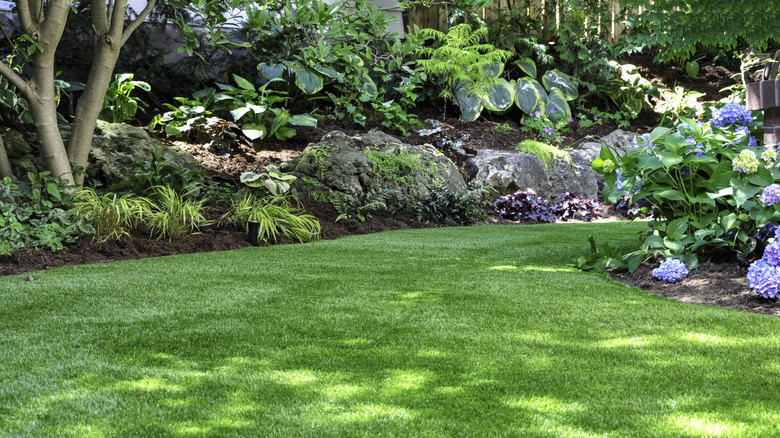
You can only care for your lawn properly in the autumn if you know which type of grass it is. Most lawn grasses can broadly be broken down into cool-season and warm-season types, and the reason you need to know which you have in your yard is that you may — or may not — need to hold off on some of the steps in this guide.
Cool season grasses, as you might expect, are native to colder climates. They're much better adapted to cope in parts of the world that experience extreme temperature fluctuations — from freezing winters to scorching summers. Kentucky bluegrass (Poa pratensis), perennial ryegrass (Lolium perenne), and tall fescue (Festuca arundinacea) are all common cool-season grasses grown in the United States.
With warm season grasses, the opposite is true. Warm-season grasses hail from tropical regions, and include types like Bahia (Paspalum notatum), St. Augustine (Stenotaphrum secundatum), Bermuda (Cynodon dactylon), Zoysia (Zoysia spp.), and Centipede grass (Eremochloa ophiuroides).
Since each of these broad types are suited to thrive in different climates, they naturally have different growth patterns. This includes the time of the year during which they go dormant. Warm-season grasses go dormant during the colder months. Cool-season grasses, meanwhile, come into their own when the mercury drops, before slowing to a crawl in the height of summer. With this in mind, the time at which you should carry out the steps outlined below should be guided by the kind of grass you're working with, and therefore the time of the year at which each task is likely to do the most help.
Continue mowing until the grass stops growing
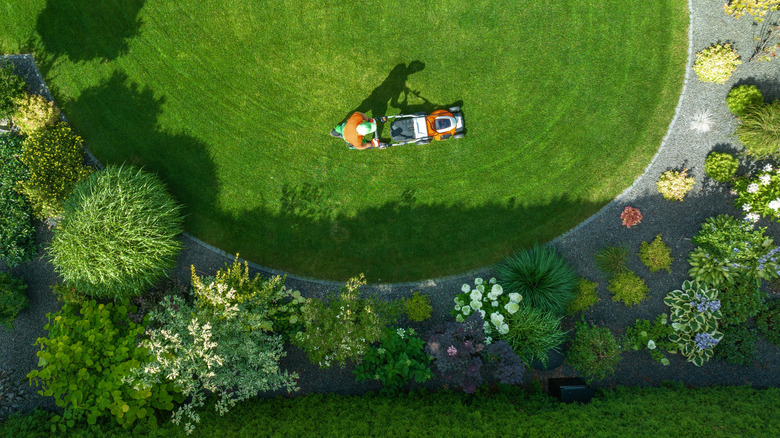
The first frost is usually the best time to hang up your mower or send it off for its annual service. Until then, it's best to continue with your lawn-mowing regimen, following the one-third mowing rule to maintain a luscious yard. Different types of grass are best left to grow to different heights during the warmer months, however, it's almost always best to shoot for around two to two and a half inches with the final mow of the season. This helps insulate the roots, but protects fragile blades from snapping in the cold.
In lieu of any frost, keep an eye on your grass to see if it is starting to brown (kind of like straw) or failing to bounce back to life even after watering. Both of these are good signs that it's time to prepare your lawn for winter.
As for the equipment you use, if possible, ensure that you buy from reliable lawn mower brands. While most lawn-mowers are, as standard, able to cut your grass, a high-quality steed will ensure you don't have to pay for costly replacements each year, or rush to have it repaired before winter sets in.
Keep watering your lawn
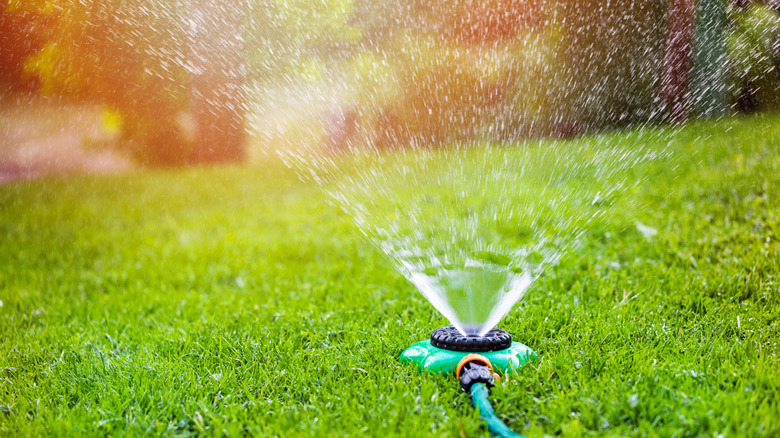
A common question among gardeners is should you keep watering your lawn during the fall? The answer is yes, but only as long as local temperatures remain above freezing. Watering your garden might seem like a strange recommendation, especially when chilly conditions leave you needing a jacket when you venture outdoors. But be wary of under-watering your grass.
The above rule is especially important for cool-season grasses. These are suited to cooler climates, which means their growth beneath the cooler skies of fall is likely to be prolific. Warm-season grasses are likely to require less water at this time than their cool-season cousins, but you should still be wary of under-watering. If you opt to overseed bermudagrass with ryegrass for the winter, definitely keep up the watering schedule.
The only exception to this rule is if your area is experiencing enough natural rainfall to do the job for you. In many parts of the country, seasonal precipitation will contribute somewhat to your lawn's H2O needs. But you should still keep an eye on the amount of water your grass is getting. If your area receives less than an inch of rainfall over the course of a week, then try to top it up. As for how to measure it, you can use an empty tuna can to measure rainfall, or buy a dedicated measuring instrument like the JMBay outdoor rain gauge.
Rake seasonal debris and remove thatch
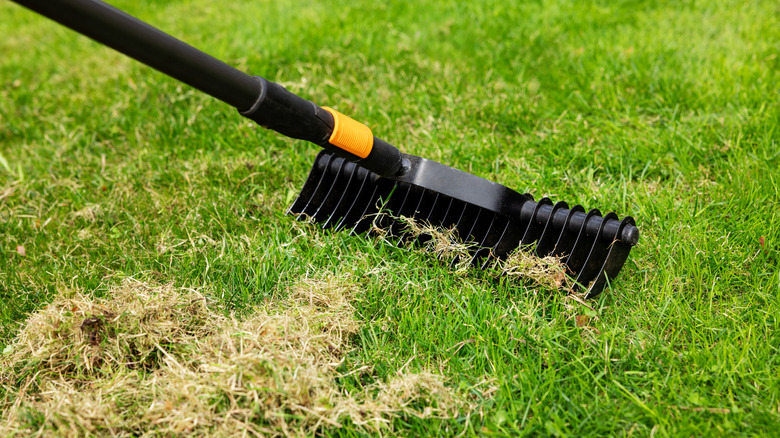
Whether your grass is a cool-season or warm-season variety, raking away fallen leaves is key to ensuring your lawn remains healthy and free of brown or bare patches. Large piles of leaves can quickly build up in collection areas around your garden. If left unchecked, will prevent sunshine from reaching the grass, thus leading to bare patches. The leaves can also retain moisture which, if allowed to sit, can cause your grass to develop fungal infections. Over time, this can damage and even kill patches of grasses entirely.
Whilst you're at it, inspect your lawn for thatch. This is a layer of dead grass and other organic matter that typically builds up between green and healthy blades. If your lawn feels spongy when you walk on it, this is a common sign that it's time to de-thatch your lawn. And while it's healthy to have a light layer, too much thatch can lead to restricted air and water flow, which in turn can lead to all kinds of lamentable lawn problems.
This is true for both cool- and warm-season grasses, which makes de-thatching an important part of maintaining a healthy lawn. The only difference between the two is when you should do it. With warm-season grasses, it's better to wait until spring, when temperatures are higher and the grass is more capable of coping with such an invasive process. Cold-season grasses, which grow and repair themselves better in cooler climates, are best de-thatched in the fall.
Be sure to aerate your soil
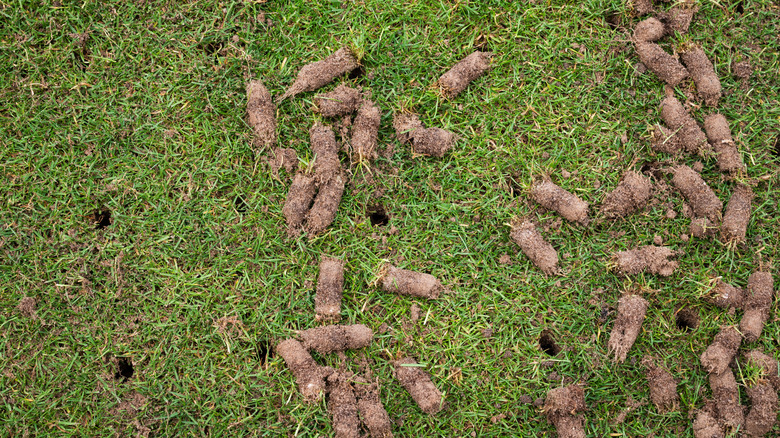
This is another step that you should take for cool-season grasses in the autumn. Aerating, or spiking, is the process of poking lots of small holes in the soil to improve the movement of air and water among your grass' roots. It's especially important in areas that receive a lot of wear, be that from animal or human footfall, and is often considered the key to a thriving cool-season lawn.
The reason? As soil gets compacted, it becomes far less permeable for water, oxygen, and critical nutrients. By aerating it, you provide free passage, helping to restore the hardest-trodden parts of your garden.
Like de-thatching, aeration is an invasive and potentially damaging process, which means that proper timing is critical. In fact, choosing the wrong time of year is one of the most common mistakes gardeners make when aerating their lawn. The fall is the best time to aerate cool-season grasses, since they are more active and therefore better able to cope with the stresses of aeration. For warm-season grasses, it's best to hold off until spring, when higher temperatures are far more conducive to self-repair than the lows of fall and winter.
Overseed your grass
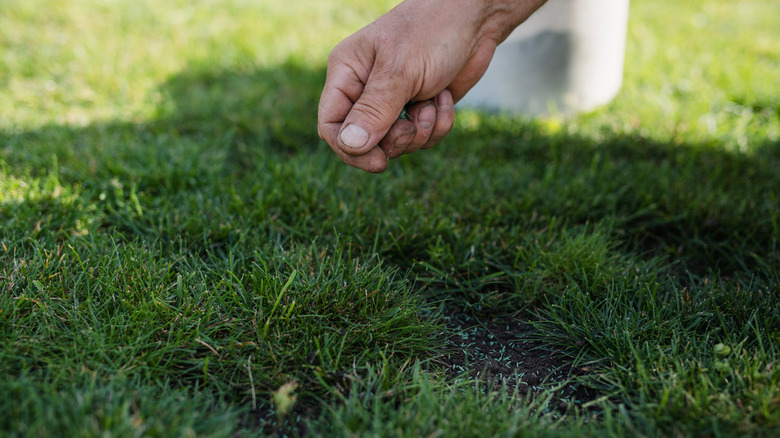
Both cool-season and warm-season grasses can benefit from overseeding. However, the best time to overseed your lawn largely depends on the type of grass you're growing. For cool-season-grasses that are starting to thin or recede, autumn temperatures are ideal, as the seeds are more likely to germinate in these conditions. The following spring, you should be rewarded with a rich, luscious green lawn.
For warm-season grasses, you can overseed in the fall, but with one important caveat. Warm-season grasses tend to go dormant in the fall, often leading to a brown and rather drab-looking lawn. With this in mind, it naturally makes sense that autumn is the wrong time to sow warm-season seed. Instead, to keep your garden vibrant and verdant through the cooler months, the best type of grass for overseeding is one that's suited to cooler climates, particularly perennniel ryegrass. Cool-season seeds will gladly germinate in the fall, bringing some welcome green to your yard at a time when we could all use a little more color.
Of course, if you're happy to let your grass fade during its natural dormant phase, then this might seem like an unnecessary addition to your to-do list. But if you're concerned about bare or thinning patches starting to appear on your warm-season lawn, then overseeding with matching grass is probably the best bet. Just don't do that in the fall. Spring is better for sowing warm-season grass seeds, as it's much more inclined to germinate once the temperatures start to climb.
Consider how much you should fertilize your lawn
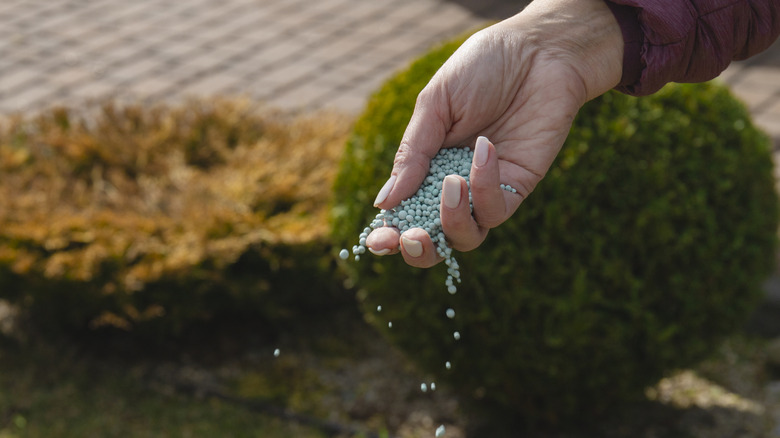
Most lawns will thank you for a good feed, but as with other steps in this guide, the best time to fertilize your grass depends entirely on the types of seeds you've sown. Cool-season lawns, for example, should be fertilized throughout the autumn, but not with the same regimen you followed in the warmer months. In the height of summer, you hold back on the fertilizer, to prevent cool-season grass from growing too vigorously when it's trying to keep a low profile. But during the fall, a regular high-nitrogen feed is precisely what is needed.
Your fertilizer of choice doesn't matter, provided it's taking care of your lawn's nutrient needs. There are lots of products on the market that will do the trick, and you can even use seaweed to promote a lush green yard. The secret, rather than being in the sauce, is timing. By feeding it when it's hungry, you'll ensure your lawn is able to establish strong, healthy roots, bolster its energy reserves for the harsh cold of winter, and be in fit, fighting form for recovery during the summer.
With warm-season grasses, pretty much the opposite is true. Like cool-season grasses, the growing season is the best time to keep them well fed and watered, but since they grow best during the spring and summer, their annual feeding frenzy should be almost over by autumn. So, aim to stop fertilizing your warm-season lawn roughly eight weeks prior to your first frost. Any later, and you'll risk interfering with your grass' natural cycle, leaving it vulnerable to winter damage.
Tackle any pest issues early
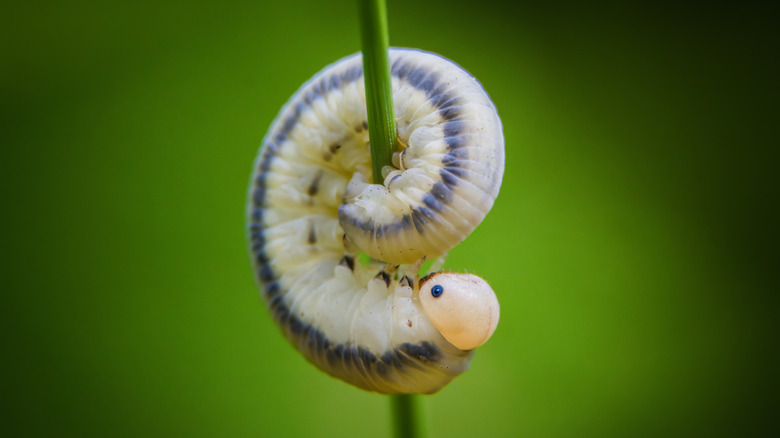
If you've started to notice insects crawling in and about your lawn, you might need to do something about them, and quickly. Different kinds of pests can cause different types — and varying degrees — of damage. Some will set up shop in the fall, waiting for spring growth to start chowing down. Others dive right in. Armyworms, for example, will happily munch their way through your grass. This can lead to a dry and brittle lawn — one of the many sneaky signs that your lawn has a pest problem.
Chafer grubs, while inflicting just as much damage as armyworms, are much harder to detect. Instead of wreaking havoc aboveground, these annoying little larvae keep their search for sustenance at a subterranean level, eating away at the roots of your grass. This is damaging in itself. But when you pair it with damage from critters like raccoons and skunks who will gladly tear up your lawn in search of gourmet grubs, you could be in for a serious horticultural headache.
Many pests are easy to spot, along with the damage they inflict. They tend to be simple to combat with either contact insecticides or organic alternatives like neem oil. Chafer grubs are slightly trickier: Dying, easily pulled-up grass is one sign, as are patchy areas on your lawn. And if you happen to find chafer beetles eating your spring flowers, that's a sure sign that grubs have successfully managed to weather the winter. The answer? Nematodes. These beneficial microscopic worms can be bought as a paste, mixed into water, then applied with a sprayer or watering can. Once they've infiltrated your soil, they'll actively seek out pests like grubs, spreading bacteria that prevents them from feeding.
Prevent weeds from taking root
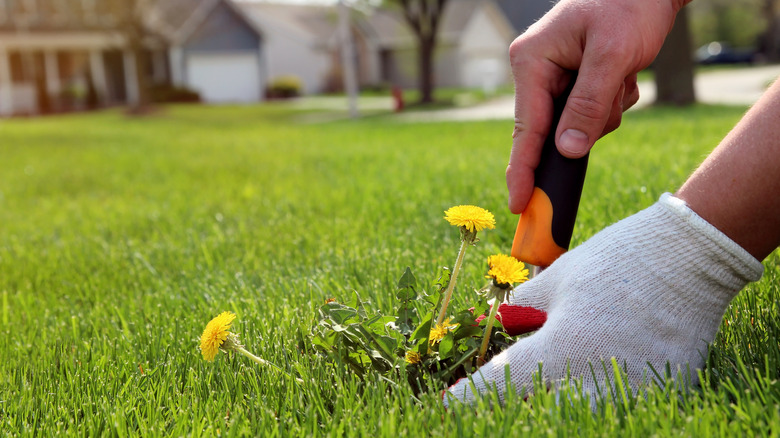
As new grass growth begins to subside, weeds are more likely than ever to spread. This means that, in the fall, it pays to up your weed control strategy. So long as your lawn continues to grow, mowing will help prevent weeds from spreading. In fact, simply mowing your lawn is one of the best tips to prevent weeds from taking over.
But what about when the grass stops growing? When this happens, keep an eye out for opportunistic weeds starting to appear across your lawn and garden, and pull them whenever you see them. Whether you do this by hand or use repurposed garden tongs to remove weeds is entirely up to you, but it's important to keep at it. Alternatively, if time is at a premium, and you're worried you might miss new weeds taking root, then consider overseeding. This is a great way to stifle weed growth; just be sure to use cool-season grass seed. Warm-season grass seed probably won't germinate until the spring, by which point it could well be too late.
Consider soil amendments

If you think your soil may be starting to lose its efficacy, then fall is a good time to make amends. By testing your soil's pH level and nutrient levels, you'll give yourself plenty of time to make corrections before winter sets in. This, in turn, will set you up for verdant success once the growing season returns.
Depending on your findings, you might need to use soil amendments to restore pH levels to your grass-type's idyll. And if your garden is under-nourished, consider adjusting your fertilizer regimen. By now, you know that the latter should wait until spring if you have warm-season grass — the last thing you want is to encourage this type of grass to grow when it's most vulnerable to damage. But if you have cool-season grass growing in nutrient-depleted soil, then autumn is a great time to top it up.
Stick to the schedule
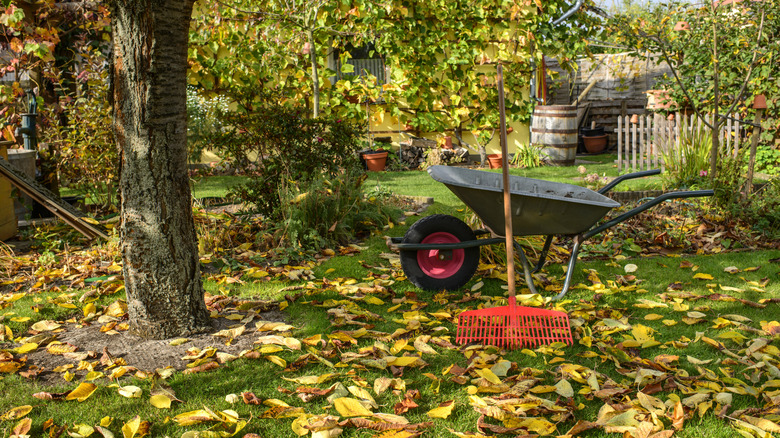
With winter rushing to establish itself, it's important to plan your fall lawn care routine carefully. Of course, there are some tasks for which you have no choice but to be guided by nature: When to stop mowing, for instance, is usually dictated by whenever your grass stops growing. Similarly, you should continue watering your grass up until the first frost, or whenever you begin receiving adequate amounts of weekly rain. In lieu of either of these, it's usually best to keep going.
On the other hand, there are certain items on your lawn care list that can be carefully planned and timed. For example, depending on your grass type, you can work out when aerating is most likely to have the best impact. Cold season grasses are better aerated in early fall, as they are better at repairing themselves in cooler climates. If you have warm-season grass for which the opposite is true, then good news: That's one less thing to do in the fall.
As for fertilization and soil amendments, cool-season grasses will thank you for feeding them every six weeks throughout the autumn, so it's a good idea to note this on your calendar if you hope to keep your grass from groaning. Similarly, whatever your grass type, setting a reminder to patrol your lawn for weeds will ensure these opportunistic enemies of luscious lawns are unable to take hold.