

Simple Ways To Extend The Life Of Your Lawn Mower

We may receive a commission on purchases made from links.
You've purchased the perfect mower for your lawn's grass type. But how do you make sure your lawn machine remains in tip-top shape for as long as possible? The most common answer is routine maintenance. However, that is a rather general term. So, what exactly does that mean? When it comes to getting a long, healthy life from your mower, simple things like proper cleaning and storage can go a long way, as can choosing the proper fuel for your mower. Additionally, basic chores like changing oil and filters can help keep your mower functioning properly for years to come. Best of all, you don't have to be a mechanic to tackle these simple tasks to extend the life of your lawn mower.
Some of these maintenance tasks are done on a continual basis — essentially every time you mow. Others should be done annually or periodically, every so many hours. To make sure you are keeping up with these maintenance duties in a timely manner, it is a good idea to create a maintenance schedule. Review your owner's manual to get the relevant time frames. Additionally, you should keep track of when these tasks are performed by utilizing a simple maintenance log. While this may seem a bit tedious, keeping up with all of these maintenance issues on a regular basis can results in getting a decade or more of good use from your lawn mower.
Change motor oil and filter regularly
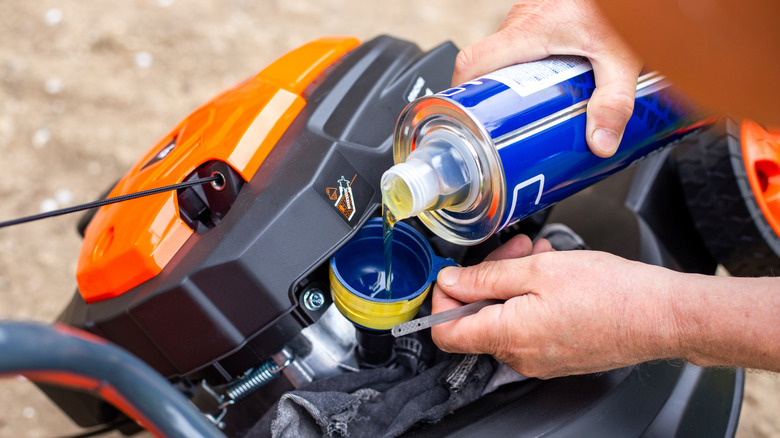
When it comes to engines, whether in your mower or vehicle, most experts will tell you regularly changing the oil is at the top of the list of things you can do to extend its life. This is because the moving parts in engines cause a great deal of friction, which in turn creates heat. The friction and heat can cause a litany of issues with various parts, from warping to wear, to breaking into pieces. The lubricating properties of motor oil reduce the friction and heat. So it is of utmost importance to always have the proper amount of oil in your mower engine whenever you are running it.
However, engine oil doesn't last forever. Even if it doesn't leak out, over time the engine heat and friction will begin to reduce the effectiveness of motor oil. In addition to lubricating the moving parts of an engine, motor oil captures any particles, dirt, debris, gunk, or sludge that finds its way into or is formed in the engine. As a result, draining the old oil is necessary to remove these potentially damaging particles and allow the engine to be refilled with fresh oil that has maximum lubrication capabilities.
Most mowers require an oil change every 25 to 50 hours of operation. If you don't run your mower that much in a year, it is still recommended to perform an oil change annually, before the beginning of the new mowing season. The best method for changing your mower's oil depends on the model and type of mower. But, in every instance, the old oil should be drained, disposed of properly, and replaced with fresh oil. If your mower has an oil filter, replace that at the same time.
Keep it clean and properly stored
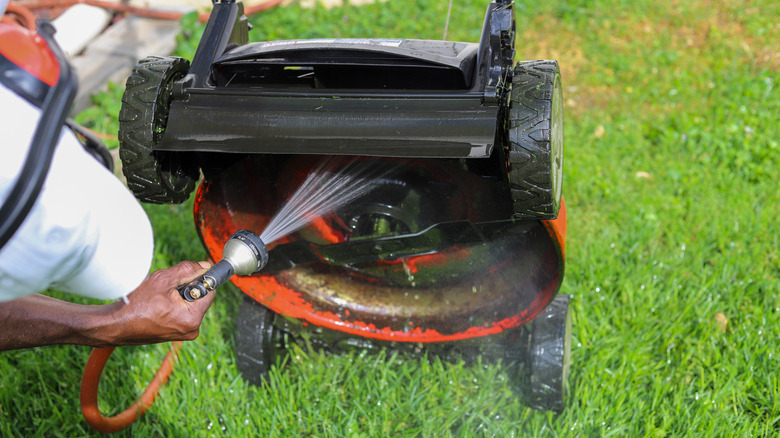
Keeping your mower clean isn't just about appearances, it actually goes a long way in extending your lawn machine's life. This falls under the category of tasks that should be done on an ongoing basis. Every time you mow, take the time to remove any grass clippings and dust from the engine, mower body, mower deck, and blades. If left in place, the accumulated grass clippings, especially when wet, can lead to corrosion and rust, as well as wear and damage to mower parts. On the engine itself, dust and grass clippings can interfere with the cooling process.
A quick and easy way to remove the dust and dry grass clippings is to blow the mower with compressed air. You can also use a leaf blower or firm bristle brush to complete this task. Of course, you can also use a water hose to spray the grass off. If the grass clippings beneath the mower deck are wet, a hose will usually be necessary. You may have to physically remove some clumps of grass with your hands, a brush, or plastic scraper. Be sure to disconnect the spark plug before reaching under the mower deck and let the mower dry completely before putting it away.
It is also important to properly store your mower. Throughout the year, it needs to be kept in a place where it is protected from rain, sun, and blowing dust, such as a shed or garage. If the mower will be stored unused for a long period of time, like over the winter, remove the gasoline from the tank either by siphoning or running it out. Another option is to add a storage fuel stabilizer, such as Sta-Bil before putting it away for the season.
Always use fresh fuel
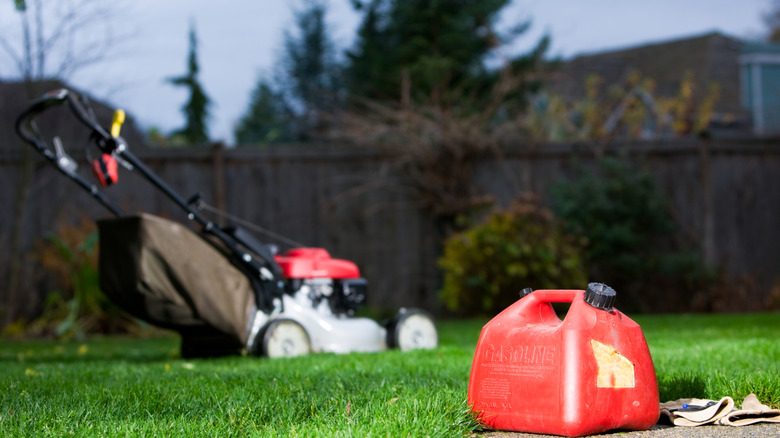
Using gasoline with at least an 87 octane level is important to be able to get peak performance from your lawn mower. However, it is just as important that gas be fresh. When gas is stored for prolonged periods, whether in a can or mower tank, it can develop a number of issues. For one, gasoline tends to evaporate. As it does, it can leave a residue in engine parts. Additionally, as this process happens, the combustibility of the gas wanes, making it less efficient and causing your mower to lose power.
While all gas evaporates and deteriorates over time, the issues are exacerbated in fuels containing ethanol. It is always best to use ethanol-free gasoline if possible. However, make sure whatever fuel you purchase has no more than 10% ethanol for use in your mower. Even then, gasoline with any amount of ethanol not only evaporates over time, it also absorbs moisture. As this happens, the ethanol and gasoline separate, and you will have a layer of water in your gas tank. Running separate fuels can cause major damage to your mower engine.
With that in mind, any gasoline that's sat for an extended period should be properly disposed, even if it was ethanol-free. Additionally, anytime you are using gasoline with ethanol, it is advisable to add a fuel stabilizer to slow the separation process. If you run through the gas in your mower fairly quickly — like refilling once a week — this may not be much of an issue for your mower tank. However, any stored cans should also be treated with stabilizer and you should avoid storing large amounts of gasoline.
Routinely clean and replace air filters and spark plugs
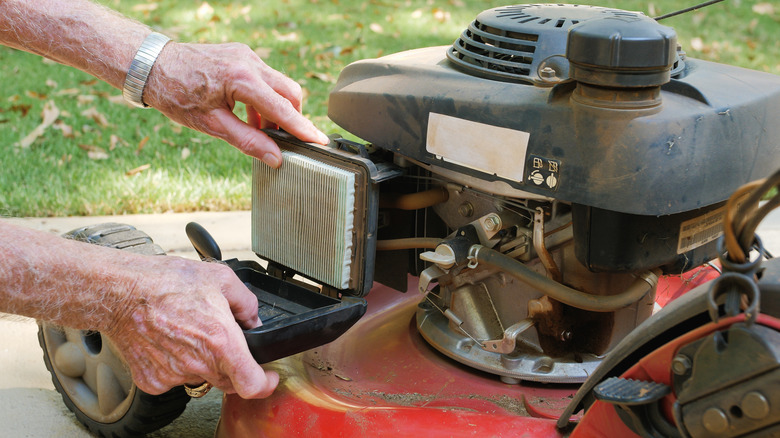
While having fresh, combustible gasoline is important, you still need to make sure your mower is getting the air and spark necessary to complete the combustion process. To ensure that's the case, both air filters and spark plugs should be inspected, cleaned, and replaced regularly. If either of these components isn't functioning properly, your mower won't run efficiently — if at all — or last as long.
In order to burn fuel, your lawn mower engine needs air. However, especially when mowing, that air is often filled with particles ranging from dust to bits of grass. The purpose of the air filter is to prevent this debris from entering the engine, where it could do serious damage. At the same time, as the dust and debris accumulates on the filter, the air flow becomes restricted. So, it is necessary to clean and maintain lawn mower air filters regularly. Paper element filters can be cleaned with a blast of compressed air. Foam filters should be cleaned with soapy water and allowed to dry completely before being reinstalled. If you can't adequately clean the filter, just install a new one.
The other element that fuel needs to burn is fire. This is provided by the spark plug. Typically, it is a good idea to change the spark plug around the same time you do an oil change – every 25 to 50 hours, or at minimum every 100 hours of operation. However, it is also a good idea to periodically remove the plug and inspect it: Cleaning off any soot or residue with a brush can help it fire smoothly until it is time to replace it.
Keep your blades sharp and balanced
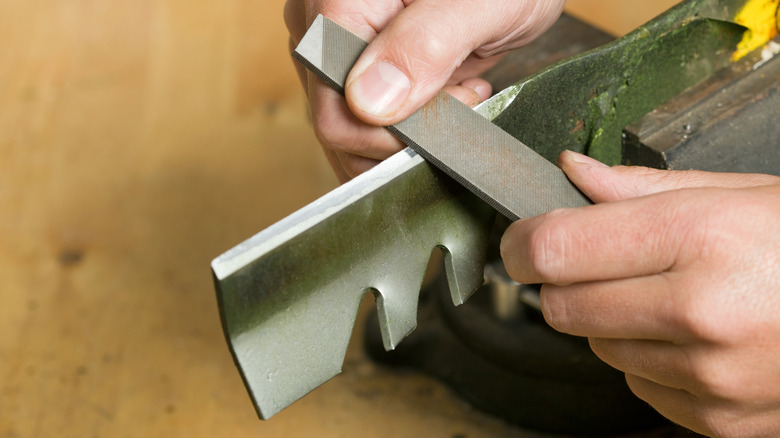
Something else that's important for not just the short-term performance of your mower, but also its long-term life, is keeping your blades sharp and balanced. Sharp blades allow you to easily cut through thick grass, reducing the amount of strain on the engine. This reduced strain, in turn, can help add years to your mower's life. By the same token, blades must be balanced. Unbalanced blades will wobble and vibrate as they spin. This unbalanced movement leads to excess strain on many mower parts, including the shaft and engine, and increases the risk of blade damage while mowing.
There are usually obvious signs blades need to be sharpened. These include uneven cutting and tearing of grass. Additionally, your mower may become harder to push and often bog down or stall. If you notice any of these signs, sharpen your blades immediately. However, the best practice is to not wait that long. Instead, proactively aim to sharpen them every 25 hours — or around the same time you do an oil change.
There are several ways to sharpen mower blades. However, whether sharpening blades by hand or with a bench grinder, it is usually best to remove the blade before sharpening. It is important not to oversharpen lawn mower blades. Once you've honed the edge to where it can cut a piece of paper that is pulled across it, the blade is ready to be balanced. This basically is checking to make sure you've removed the same amount of metal from both sides. If it is not balanced, remove / sharpen a bit more from the heavier side and check it again. When the blade is balanced, it is ready to reinstall.