

The Unexpected Organic Fertilizer To Consider Trying Out In Your Garden

Homeowners are always on the lookout for ways to help their plants thrive — bonus points if the garden remedy is organic! There are plenty of liquid nutrient boosters you can cook up yourself, and even coffee grounds can double as fertilizer for certain plants. However, you might be surprised to learn that if you have fish, you have another source of nutrients for your garden. Fish emulsion from fish parts works surprisingly well as an organic fertilizer because it contains a wide range of nutrients that many plants rely on. But don't worry: You don't need to sacrifice your precious pet fish to reap the benefits they have to offer your garden. If you have a pond or tank, you can make good use of the water whenever you clean it out, because that leftover liquid can actually work well as a kind of fertilizer, too.
Aquarium or pond water contains fish waste, plant material, and leftover fish food, which have many of the same nutrients you'll find in commercial fertilizers, including potassium, phosphorus, and nitrogen — all ingredients that help your garden plants thrive. Plus, the great part of this DIY fertilizer is that you don't need to do any measuring, mixing, or diluting of ingredients. If you've been cleaning your fish tank or pond regularly (anywhere from once a week to once a month, depending on factors like how big your tank is, your filtration system, and how many fish you keep), you can utilize the water as-is. To use the water as fertilizer, simply pour it around your plants the way you would with any other water or fertilizer tea, and let the organic matter do its job.
Some caveats to using fish tank water on your plants
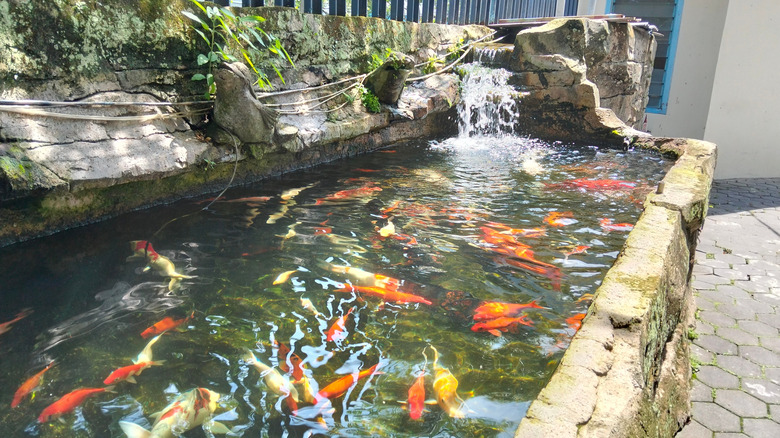
Before you go wild christening your garden in fish water, you should be aware of a few downsides. Unlike commercially available fish-based fertilizers, the water you get directly from your fish tank or pond hasn't been processed to remove contaminants such as harmful microbes and pests, which can actually hurt your plants instead of help them.
You may also want to think twice before using this fertilizing method on any plants you plan on eating, such as vegetables, fruits, or herbs. If you've recently treated any fish in your tank or pond for disease, or you've used chemicals to take care of problems such as algae, the byproducts of those treatments and diseases are likely still lingering in the water. Instead, it's probably safest to stick to just ornamental plants when fertilizing your garden with this DIY fish water fertilizer — and if you've gone extra heavy on the chemicals in your fish tank lately, it's probably wise to skip this method entirely.
Of course, if you have a saltwater tank or pond, this method definitely isn't for you. While plants can tolerate some salt water on their stems and leaves, soaking up too much from the soil is toxic to plants and can damage their roots, dehydrating and eventually killing the plant entirely. Instead, if you want to reap the benefits of an aquatic fertilizer, try using seaweed as a fertilizer. It's another nutrient-dense byproduct of the ocean that can help enrich your garden without any risks that are too fishy.