

Ditch Chemical Fertilizers - Your Garden Will Thrive With This Natural Alternative

We may receive a commission on purchases made from links.
For decades now, brightly colored bottles of synthetic plant fertilizer have dominated garden centers, under the supposed promise that they make your life easier by packing all the nutrients your plants crave into a single, easily-accessible package. While it may be convenient to opt for these chemical-based fertilizers, they're not a one-size-fits-all solution. As more gardeners begin to question the chemical stuff, some have been turning to a natural alternative, such as fish fertilizer or fish emulsion. The best part? You can easily make your own fish emulsion fertilizer from scraps and leftovers you'd normally toss.
If you're wondering how to choose the best fertilizer for you, fish fertilizer shouldn't be ignored. It's made from emulsified and fermented fish byproducts, offering a natural alternative to your bog standard store-bought plant food. Unlike chemical fertilizers that provide a quick surge of nutrients, the fish blend offers long-lasting nourishment that will enrich your plants, bolster your soil, and encourage stronger root systems. This natural blend slowly breaks down, releasing a steady stream of organic matter into the soil. Alternatively, chemical fertilizers often come packed with excess nitrogen and phosphorus, which plants can't readily absorb. The runoff from these formulas can cause soil degradation, algal blooms, and release greenhouse gases, a gardening mistake which can be horrible for the environment when left unchecked. While you can buy commercial products like TPS Nutrients fish emulsion fertilizer, it's also super easy to make at home for a fraction of the price.
How to make your own fish fertilizer at home
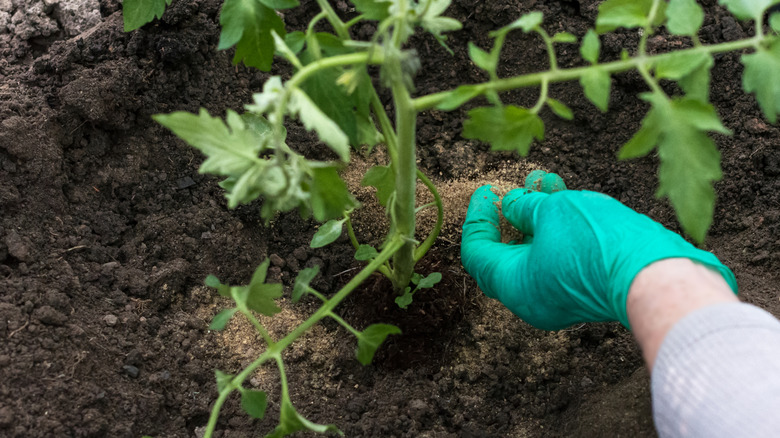
To make a batch of simple DIY fertilizer at home, start by collecting fish scraps. These can be reserved from your own fishing trips, or donated by local fishmongers or grocery outlets. Once you've got a sizable pile of fish heads, gills, bones, and guts lying around, scoop them into a securely lidded 5-gallon bucket to let them ferment. If you've got a high-quality blender on hand, you can choose to blend the animal byproduct before emulsifying, but it's not necessary. Chopping them into smaller bits with a knife will also help speed the process.
To ferment your fish, you'll want to add in some sugars, such as unsulfured molasses, raw cane sugar, or soft brown sugar, to feed the microbes. It also helps to include a small amount of a lactic acid-based ferment such as kimchi or sauerkraut. This will import helpful microbes which will break down the enzymes in your fish parts, speeding up the fermentation process. A few optional handfuls of sawdust or wood chips from untreated wood will help mitigate the smell of this pungent ferment, aerate the mxi, and balance out some of the high levels of nitrogen (fish acts as a nitrogen-rich "green" in compost).
Finally, add three parts rain water or distilled water (avoid chlorinated water) to your mixture, stir it up like a bubbling cauldron of magical plant-growth serum, and set aside, covered, for several weeks. Periodically burp this gaseous mixture (remove the lid) to relieve pressure, and give it follow-up stirs to encourage airflow. When your mixture is finally ready to debut, you'll want to dilute it: Roughly two tablespoons of fish concentrate to one gallon of water. Apply once every week or so around the roots, or sprayed on plant leaves and stems.