

Winter Storm Warning: How Much Time Do You Have Until The Snow Hits?
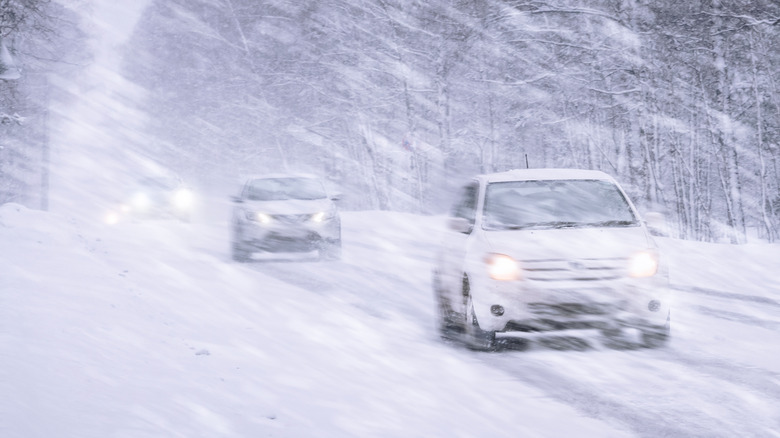
We may receive a commission on purchases made from links.
Throughout the winter, severe weather is a possibility in much of the U.S. In fact, over the past century, the number of extreme winter weather events has risen dramatically. To help keep the public up-to-date, the National Weather Service issues a variety of advisories, watches, and warnings. However, seeing a warning scroll across the screen or hearing it on the radio is one thing. Knowing the timeframe associated with such an alert is another. Both are imperative to staying safe when a winter storm is on the way.
So, when a winter storm warning — defined as the point when significant hazardous weather is happening or about to happen — is issued, how much time do you have until the snow hits? The answer to that question is somewhat complicated as snow could already be falling by the time either a winter storm watch or warning is issued. Or it may not fall at all. The more pertinent question is how much time do you have until the severe weather begins? To that end, the NWS typically issues winter storm warnings 12 to 24 hours prior to the expected arrival of dangerous conditions. Sometimes a warning is given up to 36 hours prior, if all signs point to Yes (to an oncoming storm).
It is important to note that these warnings are only issued when hazardous winter weather is expected, but this may not always involve snow. The storm may produce major sleet, high winds, dangerously low temperatures, ice accumulations, or a wintry mix of snow, sleet, and rain. However, given that warnings are issued for potentially dangerous weather events, when one is put out, you should take action immediately.
It's best to stay in a state of preparedness throughout the winter

While the typical 12- to 24-hour warning window associated with a winter storm may seem like ample time to get ready, it really isn't. This is especially true if you have yet to take care of major tasks such as preparing your outdoor plumbing for freezing weather, trimming tree limbs, cleaning gutters, or prepping your roof for snow. Additionally, with some fast-forming and moving storms, such as snow squalls, you may have even less lead time when the warning is sounded. In such instances, it may be a matter of hours, or the severe weather may already be occurring.
Due to this uncertainty, it is best to stay in a state of preparedness throughout the winter. That means taking care of tasks to prepare your home and vehicle before severe weather is on its way. This way, you can focus on last-minute tasks with the half-day or so notice a winter storm warning gives. Stock up beforehand on non-perishable foods, secure an alternate heat source and fuel for it, put fresh batteries in your flashlights, and gas up your generator. Get an emergency preparedness kit, an NOAA weather radio, and plenty of salt or sand for de-icing your driveway.
You should also keep an emergency preparedness kit in your vehicle, along with jumper cables, extra clothes, blankets, a phone charger, and snacks. When a warning is issued, even though you may have some time, stay off roads if possible. And use that advance notice to your advantage: Fill up your tank so you don't risk getting stranded on the road in a snowstorm or, in case you need to leave immediately, ahead of an approaching storm.