

What Does A Wintry Mix Mean? How To Prepare And Stay Safe
We may receive a commission on purchases made from links.
As you monitor winter weather forecasts, you may read or hear the term wintry mix. While this may sound like a relaxing playlist for chilly nights, it actually refers to what can be a messy, miserable, and dangerous weather situation. This is because the mixture to which the term refers to is composed of various types of precipitation, which can make freezing winter weather more unpleasant than usual.
When meteorologists proclaim a wintry mix is in the forecast, they mean that there will be a jumble of sleet, freezing rain, and snow. Each of these elements can create issues on their own. When they all happen at once, the result can be quite the conundrum. This is complicated all the more by the fact these type of precipitation events are notoriously difficult for forecasters to accurately predict in that the blend is not an even ratio. Which means, it can get difficult if it's more wet or more icy under any snow. Throughout the storm, one type of precipitation may dominate, or it may oscillate among the three. The end result is typically a frequent shift as to which type of precipitation is falling and how hard. It is also not out of the question for all three to fall at once.
Wintry mix is a result of layers of stratified air of various temperature levels. The cold air near ground level doesn't just result in sleet and freezing rain, it can also make a mess of roadways. In addition to deep snow, those driving through a wintry mix may also experience a slushy blend of snow and sleet or even dangerous black ice, and the mix can vary along your route, making travel particularly hazardous.
Be prepared for a variety of hazards with a wintry mix
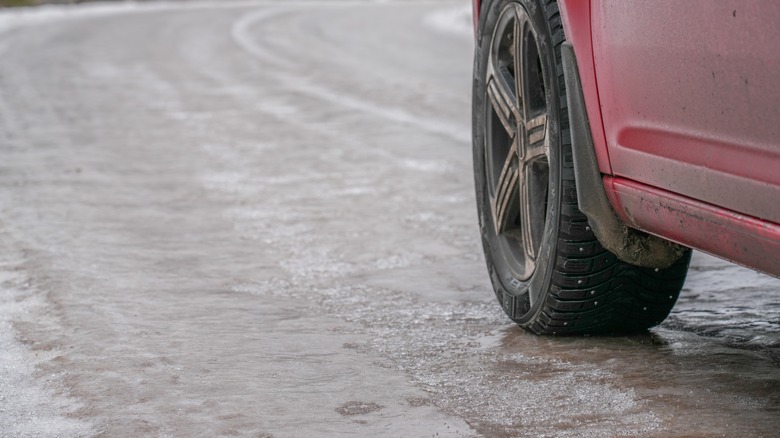
Each type of precipitation in a wintry mix can present problems, and you will need to be prepared for a variety of hazards. First and foremost will be the dangerous roadways referenced above. If you don't have to drive during a wintry mix weather event, don't. Should you need to hit the road, make sure your car is prepared for winter driving. That means properly inflated tires with good tread, the battery is charged, and both wiper fluid and gas are topped off. You should also make sure you have a roadside emergency kit, jumper cables, and tire chains, such as SCC Peerless Auto-Trac traction chains.
Pedestrians may also have issues with slick roads and sidewalks. So, make sure you have plenty of salt or sand for de-icing and providing traction on your sidewalks, driveway, and patio. Of course, you can't control the conditions outside of your own property. So, be sure to wear shoes or boots with good traction and pay attention for slick or icy surface conditions. When walking in areas you're unsure of, move slowly and take small steps, shuffling your feet. If there are handrails, use them. Since it's a mix, don't expect the snow on top to mean it's easy walking: Slush or ice could be just below the surface.
Preparing your home for a wintry mix is more or less the same as getting ready for a snowstorm or blizzard: Clean gutters and downspouts, secure loose objects in your yard, and prepare outdoor plumbing for freezing weather. It is also a good idea to trim tree limbs hanging over your roof or power lines, as the excess weight of freezing rain and snow accumulation on branches and limbs can cause them to break.