

11 Easy Flowers To Grow And Add Color To Your Garden
We may receive a commission on purchases made from links.
If you're hoping to infuse your garden with color but don't have years of gardening experience to draw on, knowing which flowers are likely to grow with minimal fuss is key. Fortunately, by understanding just a few basic principles and then applying those to your research, finding easy-to-grow flowers becomes incredibly straightforward.
Now, this doesn't mean you have to understand degree-level botanical theory in order to be successful. In most cases, the information you need is readily available — often printed right on the seed packets that line the shelves of your local garden supplier. The trick to avoiding horticultural headaches is in knowing which information to look for, and how to match it with the unique conditions presented in your garden.
Pair that knowledge with this guide to easy-to-grow flowers — many of which are suitable for an unbelievably diverse range of climates and environments — and you'll quickly realize just how easy bringing color to your garden can be.
Determine which types are likely to grow in your garden
The first thing to consider when choosing flowers for your garden is your region's hardiness zone. This can easily be discovered by consulting the USDA Plant Hardiness Zone Map. The zones listed here are used across the entire world of horticulture to help define the geographical regions in which specific flowers are likely to thrive.
Depending on where you live, your specific hardiness zone may limit the selection of flowers you could potentially grow. But this is a good thing. By knowing your zone and therefore only buying seeds for flowers that are recommended for it, you can stack the odds of floral success heavily in your favor.
You should also consider whether you want perennial flowers or annual varieties, how much sun your chosen plants are likely to need (and whether your space is able to provide it), and how much maintenance they'll require, including watering, feeding, and pruning. A final consideration is any given plant's preferred soil type. For example, does it prefer heavy or light, free-draining soil? How about nutrients? Surprising as it sounds, some plants actually prefer poor, low-nutrient soil.
Sunflowers (Helianthus annuus)
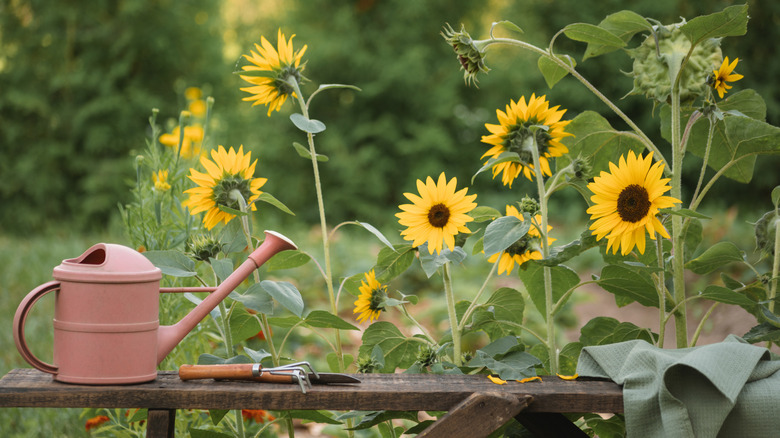
Incredibly vibrant, with colors including yellow, orange, and even dark red, some varieties of sunflower (Helianthus annuus) can grow up to an incredible 13 feet in height. And did you know that sunflowers can be grown in an impressive 10 out of the 13 USDA hardiness zones? This is good news for gardeners between zones 2 and 11, especially given how easy they are to grow.
Sunflowers' needs are fairly straightforward, their main requirements boiling down to full sun and rich, well-drained soil. They can be sown straight into the soil, too, provided that you do so once the risk of frost has passed and your soil has surpassed a consistent 50 degrees Fahrenheit in temperature.
The main difficulties associated with growing sunflowers are keeping slugs and snails away from new shoots (which can be easily managed by covering seedlings with half of a plastic bottle), and ensuring the soil remains watered but not waterlogged. In some cases, you may also need to support the stems as your plants grow, particularly if you grow tall varieties like the aptly named American Giant.
Nasturtiums (Tropaeolum)
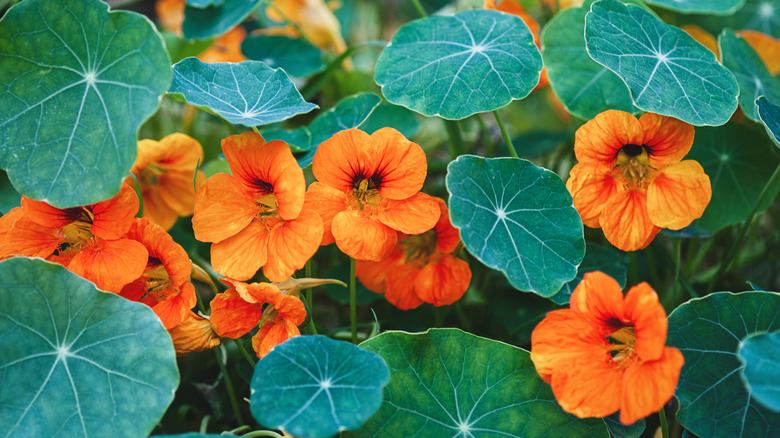
Since they tend to bloom through the winter, nasturtiums (Tropaeolum) can bring flashes of color to your garden while the rest of your flowers lie dormant. Their visual interest appears in a beautiful range of colors, including white, orange, yellow, and red, and if you happen to spot rainbow wings fluttering around your flowers, that's because nasturtiums are one of several plants that are great for attracting hummingbirds.
In fact, not only do nasturtium flowers attract pollinators, but they also attract certain species of aphids. This may not sound like much of an upside, but it actually makes nasturtiums useful flowers to grow as trap crops. In other words, they can be planted next to other species that you would prefer to be left alone, effectively preoccupying aphids and preventing them from voraciously eating your vegetables. Oh, and if you happen to avoid pest problems altogether, you'll find that nasturtiums' edible leaves and flowers make a vibrant and surprisingly tasty addition to salads.
As for how and where to grow them, nasturtiums will happily reseed themselves and continue to grow perennially in hardiness zones 9, 10, or 11. Elsewhere, they'll need to be grown as annuals, since they're simply not hardy enough to survive the winter frosts. Seeds can be sown directly into your soil after the final frost has passed, and as long as your patch has full sun, they'll grow just fine. And don't worry if you have average or even poor-quality soil. Provided that it's well drained — and that it receives around an inch of water per week — nasturtiums actually prefer it.
Plume Celosia (Celosia argentea)
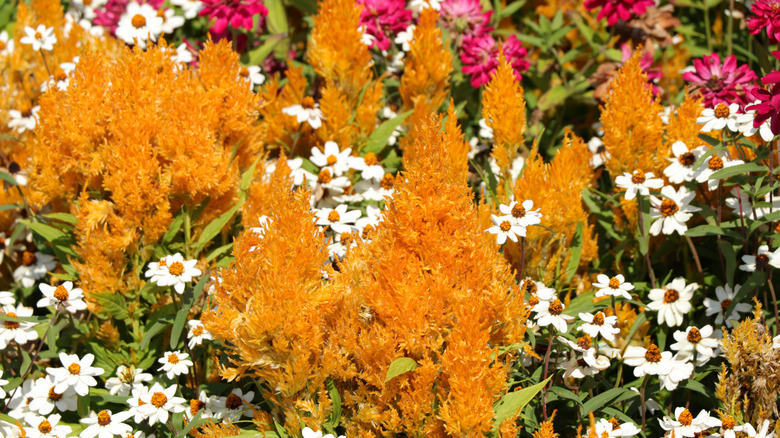
With its flame-like flowers, you could be forgiven for thinking this particular plant is the preserve of only the most accomplished gardener. But before you resign yourself to a life without this gorgeous flower's fiery flourishes, you should know that, in fact, plume celosia is a very easy to grow annual that will actually thrive in your flower bed!
Provided that it receives plenty of sunlight, is planted in well-drained, fertile soil, and is watered regularly, you'll be amazed by how readily it grows. It'll do so in hardiness zones 2 to 11, although only as an annual in zones 2 to 9. In zones 10 and 11, it'll gladly reseed itself and continue to add interest to your garden for years to come.
To get your seedlings started, it's advised to sow them indoors in module trays, and to keep them in a warm place while they grow. Aim to sow them roughly eight weeks ahead of your final frost, and only transplant them into your garden once the threat of frost has passed. It's also possible to sow celosia directly into your garden soil, but this is only recommended if your region regularly experiences long, warm summers.
Impatiens (Impatiens walleriana)
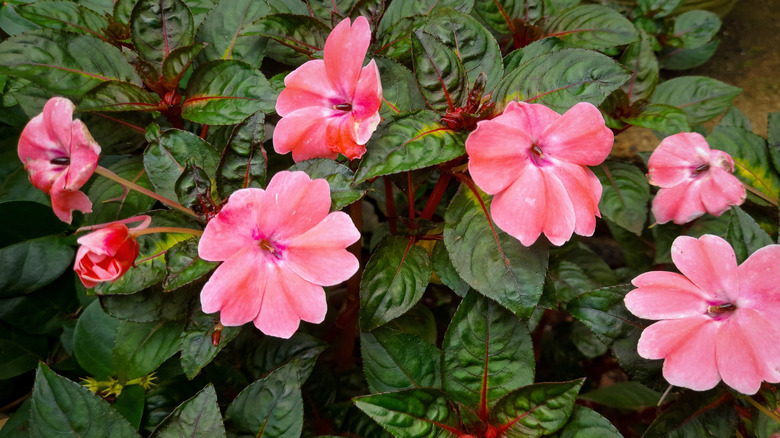
Shady spots in your garden need no longer be reserved for moss. Especially if you're impatient to finally see some color in your garden, impatiens (Impatiens walleriana) are an aptly-named and easy-to-grow annual that adds color to any flower bed.
They thrive as perennials in hardiness zones 10 and 11, which is handy if you'd rather plant something that you can rely on to keep growing with minimal fuss. Even if you live outside of those zones, you can still grow them, but you'll most likely need to sow fresh plants each year as any frost is likely to put paid to perennial growth.
Fortunately, impatiens are easy to grow from seed. Start by sowing them indoors around three months ahead of your area's final frost, and when they're starting to grow on, give them a chance to acclimate to cooler outdoor temperatures by placing them outside for a few hours during the day. Once nighttime temperatures are consistently above 50 degrees Fahrenheit, you can transplant them to your garden. Ideally, their home soil should be consistently (but not excessively) watered. It should also have a PH of 6-6.5, but only soils that are far outside of this range are likely to cause impatiens an issue, so there's plenty of wiggle room.
Petunias (Penuia spp.)
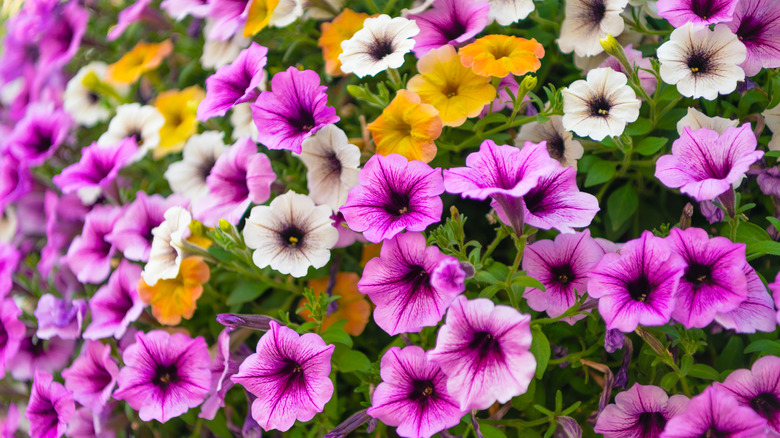
It's no surprise that petunias (Petunia spp.) are so popular. Their vibrant, multi-hued flowers bring a level of colorful interest to gardens that's at once explosive and yet beautifully delicate. But the best part? They're incredibly easy to grow. In fact, in hardiness zones 9 to 11, they can be even grown as perennials. In the majority of hardiness zones, they're grown as annuals, which means you'll need to replant them each year, but don't let that put you off. Once established, they'll continue to bloom from spring until wintertime, and they're easy flowers to grow from seed.
You'll need to sow them indoors around late February, well ahead of your area's final frost. Sown in a propagator, or in pots that are covered with glass or plastic film, they can be left to germinate on a warm windowsill until they begin to produce leaves, at which point you can simply transplant them to your chosen pot. As for where to plant them, petunias like spots that afford them six hours' full sunlight per day, and they prefer fertile soil that's moist but free-draining. Alternatively, if you're limited on space, consider a low-maintenance container garden combo by planting petunias together with sweet potato vines (Ipomoea batatas). Not only are both species easy to grow, but they look absolutely astounding when grown together, the vibrant colors of the petunias perfectly complementing the verdant lushness of the vines.
Purple coneflower (Echinacea purpurea)
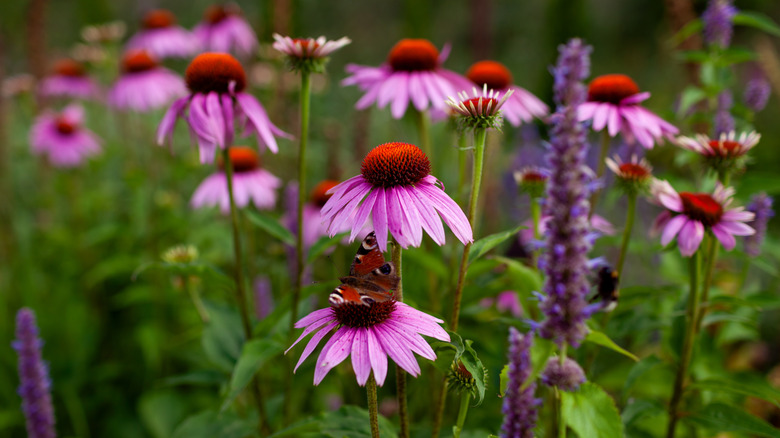
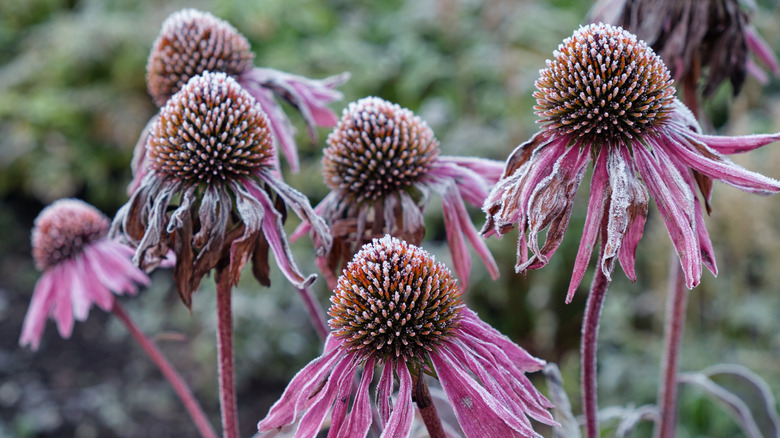
The purple coneflowers (Echinacea purpurea) is a hardy perennial in hardiness zones 3-9, and it's one of the easiest plants to grow for attracting cardinals. The cone-shaped center that gives this flower its name is in actual fact a boon to a multitude of pollinating species. What this means is that when you plant purple coneflowers, you'll enjoy flashes of more than just purple as it blooms in your garden.
What gardeners love about this particular flower is that it thrives in most soil types and is incredibly easy to grow from seed. It can be planted in bunches, too, which can help to stifle the growth of weeds in your borders and beds. The only issue you're likely to encounter when growing purple coneflowers is finding a suitable spot. If possible, you should sow your seeds shallowly in a spot that enjoys full sun, around four weeks ahead of your final frost. In the summer, it's important that they're kept well watered (but never waterlogged), and in the winter, the soil should be able to easily drain and not become flooded through rainfall.
Zinnia (Zinnia spp.)
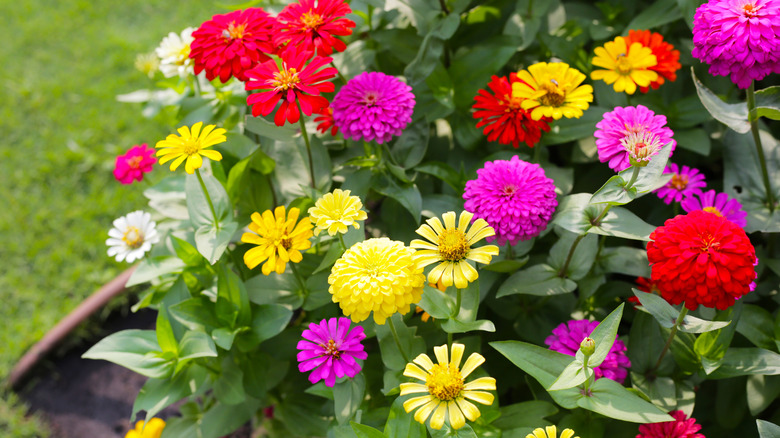
This group of annual-growing flowers can be grown throughout hardiness zones 2-11, and depending on your particular choice of species, can deliver floral flashes of orange, red, white, pink, purple, and even green to your garden. That's not all, though. Zinnia (Zinnia spp.) is a fast growing flower that'll turn your garden into a butterfly paradise, adding even further variety to your garden's seasonal palette.
As for where to grow them, zinnia prefer a spot with full sunlight. If you're growing them from seed, it's best to sow them indoors first and allow them to acclimate (otherwise known as "hardening off") before planting outdoors. Once they're ready to be transplanted to their new home, try to plant them in a spot with full sun and rich, easily draining soil. Once they're in, you'll find these easy-to-grow flowers are pretty hardy. Yes, regular watering during dry periods will never go amiss, but they're actually quite tolerant of drought, so missing a few days here and there is unlikely to be disastrous.
Marigolds (Tagetes spp.)
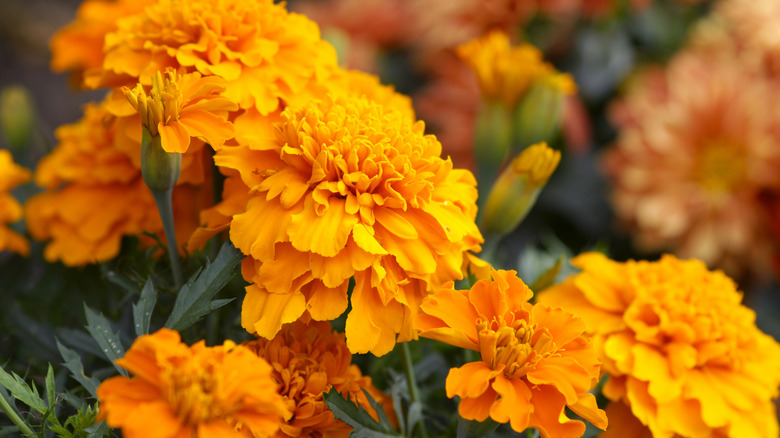
Whether you're looking for plants that naturally repel pests from your flower bed, or want to add dashes of red, yellow, and gold to your garden, marigolds (Tagetes) are well worth adding to your planting scheme. Thriving in well-drained soil, they're a great addition to dry and even sandy-soil beds, and while they do require a good soaking of water, you won't need to do it every day. In fact, marigolds like to be dried out between waterings, which they'll do quite easily if planted in a spot with full sun.
As for where they're most likely to grow, marigolds will thrive in most zones across the U.S. In warmer climates, like zones 9-11, they may even reseed themselves and return the following season. What's more, if you're growing them from seed, marigolds often flower within just a few weeks of sowing, making them one of the quickest-flowering plants in this list.
It's recommended that you sow them indoors early-on in the spring, and only transplant them to your garden once the weather (and your soil) has begun to warm. Alternatively, you can sow them directly in the garden later in the season (once the risk of frost has passed), which will result in later blooms. This versatility is especially handy, allowing you to adjust your marigolds' blooming schedule to either complement, or fill the gaps between, the flushes of your other flowers.
Lavender (Lavandula spp.)
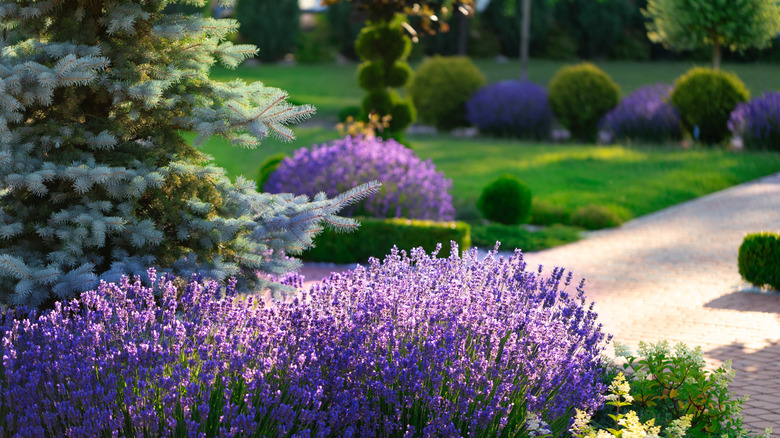
Known and wrongly bemoaned for being tricky to grow, lavender (Lavandula) is in fact one of the easiest flowers to grow on this list. The only difficulty in growing a healthy, bushy lavender is ensuring that it's planted in the right conditions. And honestly, it's not that needy.
In fact, it's grown across an impressive six hardiness zones (4-9). What's more, some varieties, like English lavender (Lavandula angustifolia), are hardy enough that they can be left to go dormant during the winter — provided that the soil is free-draining — before coming happily back to life in the spring. The key is ensuring that your lavender plant gets full sun and is planted in soil that's poor and only moderately fertile. Yes, you heard that right. Lavender prefers poor soil!
What this means is that lavender is not only easy to grow given the right conditions but is actually one of the best solutions to fill bare spots around your garden where other flowers refuse to grow. Its inimitable, purple stalks are also beautiful to look at and utterly soothing to smell. Perhaps most impressively, lavender can be planted around your patio to form a natural barrier against the transgressions of pests like mosquitoes.
If you're planning to grow from seed, then sow your lavender in a clear, covered propagator between February and July, and keep it warm, between 70 and 75 degrees Fahrenheit. Once the seeds have germinated, pot them and continue to grow until well established, only transplanting them once the risk of frost has passed. Just don't leave it too late — lavender needs time in warm conditions to establish and strengthen its roots, so the more time it has outside in the late spring and summer, the better.
Daffodils (Narcissus spp.)
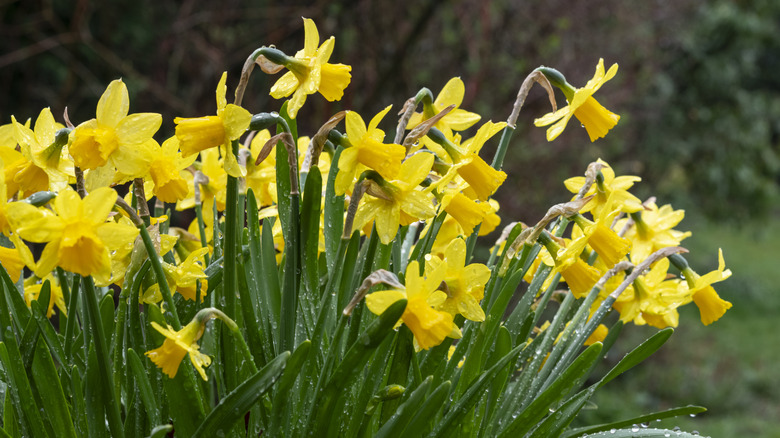
Daffodils are believed to derive their Latin name, Narcissus, from the mythic Greek hunter who is said to have fallen in love with his own reflection. How reminiscent their nodding flowers are of his head as he beheld himself in the water, it's hard to say. Easier to know is that once you plant these easy-to-grow flowers, you'll find yourself falling in love with their dazzling yellow displays each and every year.
Most varieties are perennial in hardiness zones 3-9, preferring full sun (but tolerating partial shade) and fertile, free-draining soil. To plant the bulbs, dig a hole that's around triple the depth of the bulb itself, ensuring to do so in areas where the soil drains freely and away from water collection areas, like the bottom of slopes. To achieve the most dazzling results, it's important to give daffodil bulbs two things: time to establish their roots before the ground freezes, and then a period of cold dormancy during which they absorb the nutrients required for growth. With this in mind, plant them in the autumn, and consider planting them in bunches to achieve the highest impact when they bloom.
Allium (Allium aflatunense)
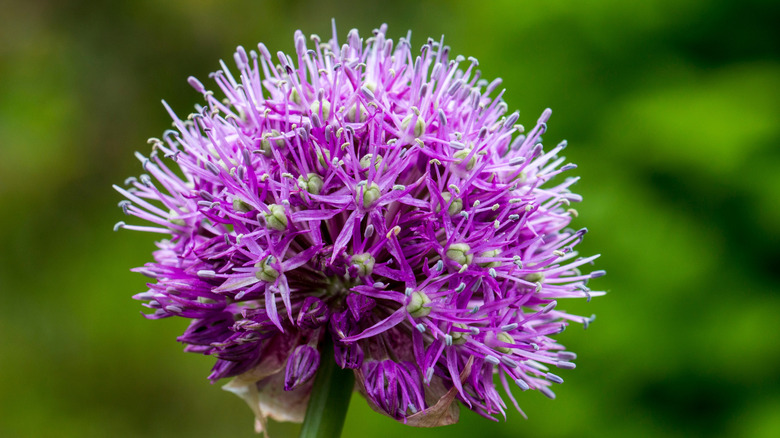
With their dense flower balls filled with vibrant, star-shaped leaves, Alliums (Allium aflatunense) — often referred to as "ornamental onions" — bring joyful, purple flourishes to wherever they make a home for themselves. And since this plant is a perennial, it'll continue to do so season after season — all you need to do is plant it. Fortunately, this is super easy, and once they're in, these flowering beauties have an incredibly long lifespan. For each bulb, dig a hole that's around three times the bulb's diameter, spacing them out between eight and 12 inches apart. You can also plant this easy-to-grow flower in groups for a high-impact bloom, and since they don't take up much space, they can make an easy and manageable addition to an otherwise crowded garden.
Alliums are best suited to hardiness zones 4-8 and prefer parts of your garden that receive full sun. You should aim to plant your bulbs in autumn, ideally around September or October, and in fertile, well-drained soil.