

Things That Are Attracting Skunks To Your Yard
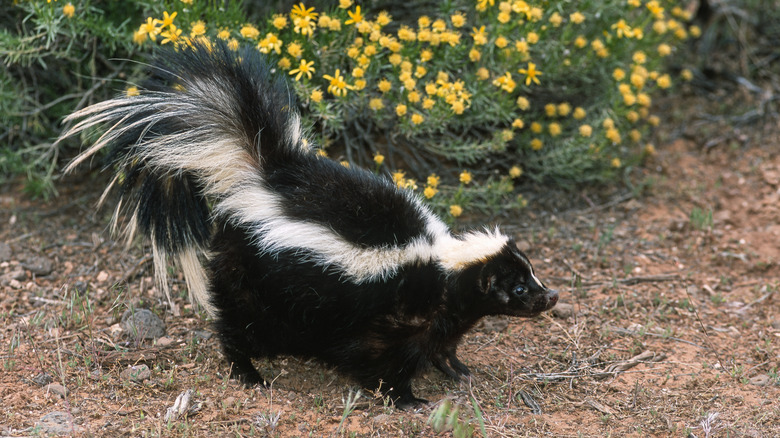
We may receive a commission on purchases made from links.
If you can't find it in your heart to welcome the neighborhood skunk into your garden, who can blame you? In their endless search for food, skunks can cause significant damage to gardens, tearing up grass or plants in pursuit of worms and grubs, and even digging themselves a new home. They will also quite unashamedly dig through your bins to see what's left over from dinner, leaving a mess and overturned cans behind.
Now, it's worth noting that a skunk in your garden is no reason to panic. Skunks aren't inherently dangerous to humans. The main risk is that, if you accidentally venture too close, you could well find yourself on the receiving end of this mephitid's musky warning. And while we would wholeheartedly recommend that you learn what to do if you're ever sprayed by a skunk, the best advice is to avoid that scenario altogether.
How, you ask? Out in the wild, the best way is to keep your distance. But if you're at home and you've spotted a skunk's signatory stripe skulking along your lawn, then you first need to figure out why they're visiting. For example, your grass could be harboring a bevy of delicious insects, in which case a skunk will happily trot into your yard and garden in order to dig them up. If you decided to add a head-turning water feature to your garden, you might have skunks swinging by for a quick refresher. They may find a tempting den site under a pile of wood or under your shed. The key to preventing skunks from revisiting your yard is to find and address whatever it is that's attracting them in the first place, then fixing whatever you can to make it not worth setting up shop.
Fruit and berry trees
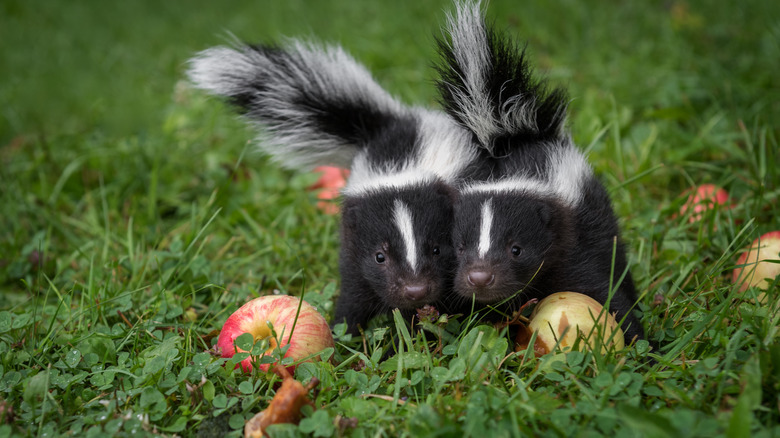
Skunks will go to great lengths to enjoy a good meal. They're opportunistic omnivorous, which means they're not that fussy about what they eat. Whatever's on the menu needs to be found at ground level, however, as they can't jump or climb (unlike raccoons, which are expert climbers). On a skunk's long list of myriad favorite morsels, berries are likely targets, especially those growing on low-level bushes like raspberries. What's more, berry bushes can also be incredibly attractive to critters like mice and rats. This represents a two-for-one kind of deal for skunks, as they are also rather partial to rodents (more on this below).
Pretty much any fruiting trees and vines that you have in your garden (like cherry trees and grape vines) could also be attracting skunks. These are more easily managed than ground-level bushes, since skunks can only enjoy the fruit once it's fallen onto the ground. By regularly tending your trees and bushes, picking fruit as it ripens, and keeping the ground clear, you give skunks one less opportunity to gorge. Just be mindful of how you dispose of any waste fruit. If adding it to your compost heap, then ensure it's covered and the lid is secured. Any scraps of the above fruits, as well as pears, apples, bananas, and even cranberries are sure to please a skunk's palate, so ensuring they're locked down with a secure lid is key. If you have an open pile, cover food scraps with a deep layer of leaves and browns, and turn frequently for faster decomposition.
A ready supply of water
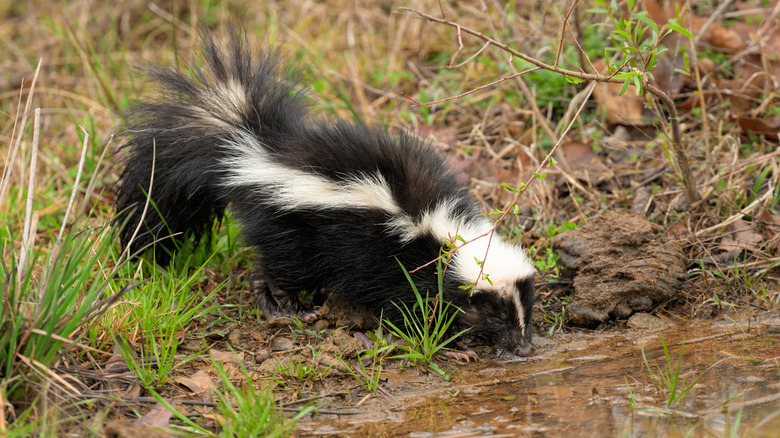
There are several reasons to reconsider adding a water feature to your yard, but one you may not have thought about until now is that it could be attracting skunks. Like every animal on Earth, skunks need water. If they're passing by your yard and it has a pond, they'll readily take the opportunity to drink from it, and happily return to it as they make their rounds. It's believed that skunks try not to live more than a couple of miles from a water source, which means that if you have one (and you're not willing to get rid of it), then you should consider what other factors in your garden are likely to encourage a skunk to wander in.
Even if you don't have a pond, that doesn't mean that you're safe from thirsty skunks. Bird baths, leaky pipes, and anything that tends to collect rainwater will all provide a welcome drink. If rainwater regularly pools in your yard, it may be time to consider installing a French drain, rather than hosting a skunk spa. What's more, water sources, including ponds, can often attract various critters, like frogs, that skunks like to eat. So they're getting not just a nice meal, but a convenient way of washing it down.
Ideal conditions for digging burrows
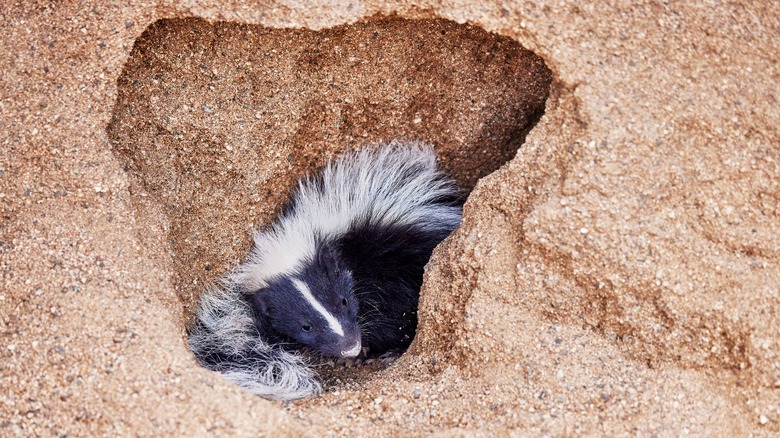
Skunks are well-built for burrowing, with stocky legs, large feet, and sharp claws that can make light work of your lawn. If a skunk has determined you've got a consistent water source and your garden or garbage bin happens to offer an abundance of food, then it may view your yard as worthy spot to dig a den.
Don't panic just yet: Just because you've noticed a skunk in your yard, it doesn't necessarily mean that it's nesting there. Knowing how to identify animal holes in your yard will help here: With skunks, you should look out for two types of holes. The first is easy to spot, and is often the one that causes most consternation among home owners. These are the small, shallow holes they dig in your yard or garden for food, like grubs and insects. That might sound manageable, but skunks can dig many of these inch-wide holes in a single night.
The second type of hole is their burrow. These are much deeper, and skunks prefer digging them near or beneath existing structures that provide shelter and protection. In a forest, a likely spot might be a fallen tree. But in your garden, it could just as easily be against a shed or under your home's foundations. Of course, it's difficult to get rid of a shed, and you can hardly do away with the foundations of your house. However, if you have other things in your yard that a denning skunk might find tempting, like a log pile or a pile of large stones, consider removing it.
Manmade nesting sites
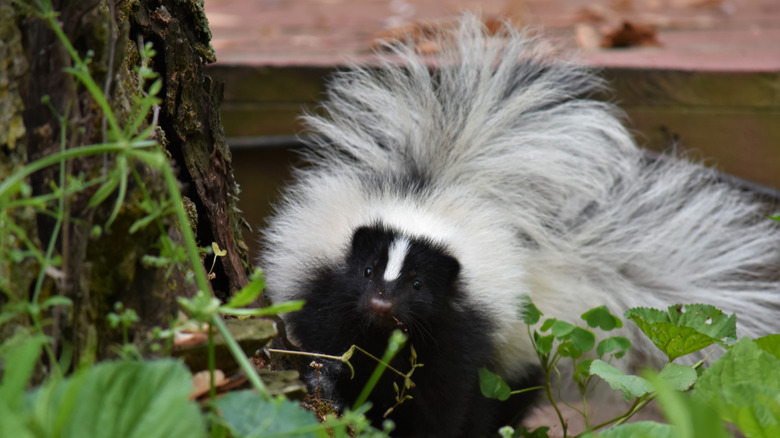
Even if your garden is clear of likely digging sites, it could still offer ready-made shelters, removing the need altogether for skunks to work for their home. For example, the crawl space beneath your home or porch is sure to be warmer than the ambient temperature outside, especially in the winter. Any spaces or cracks through which they can access it, skunks won't need much convincing to try it. In fact, skunks can squeeze through holes as small as four inches in diameter, so if you've noticed even a tiny hole in your home's foundations or a damaged vent, it could well be worth fixing.
Other common places for skunks to hide include beneath concrete paving slabs and among rock and wood piles. If you have a pile of rocks — whether it's part of your landscape or leftover rubble from a recent renovation project — removing it is at least worth considering. Worse still, if it's soft soil beneath the pile, they could easily dig a burrow beneath. One piece of good news: Many skunk dens are temporary, used for safety or to take a nap. So wait a few days before calling the exterminator: The skunk may take off on its own, and you can then deal with the lodgings.
The best time to address access points and hiding spots is ahead of the winter. From November until March, skunks tend to bed down, sometimes in groups of three or four, for the colder months. In the spring, female skunks begin preparing their dens for the mating season. And since skunks are nocturnal you may not even realize that they're raising their young in your yard.
A lawnful of grubs and bugs
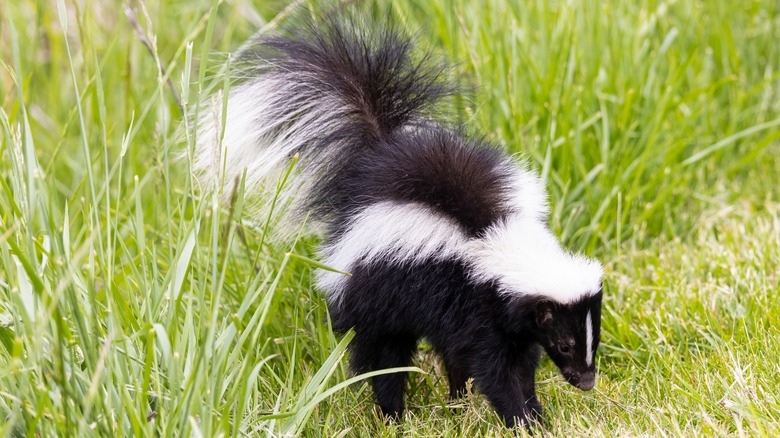
We've touched on this already — skunks will make light work of the insects, grubs, and bugs languishing beneath your lawn. The problem is that they'll need to dig their way to them, which can leave you with a frustrating clean-up (and potentially costly repair bill) in the morning.
It's not always easy to know whether or not your lawn is likely to attract skunks. Of course, if you've woken one morning to find skunk holes (about 1 inch in diameter and 3 to 4 inches deep) in your yard, then that in itself is a sure sign. But if skunks have yet to find their way into your yard, you should know that even healthy turf can support populations of grubs, with relatively few signs of injury. This means you should check your lawn periodically for signs of grubs, either by checking for patchy areas, or by digging a small area to check what's in the soil. Depending on your findings (five to 10 grubs per square foot is considered an infestation), you'll need to treat your lawn.
The type of pest control you use depends entirely on which pest you're trying to combat. If it's grubs, then one of the best solutions is nematodes. As marvelous as they are microscopic, nematodes hunt down and kill the grubs in your lawn, giving skunks one less reason to come rooting around in your yard. It's important to time your grub control for maximum effectiveness, and with nematodes, that means applying them when the soil is at its coolest during the day. These tiny organisms are sensitive to high heat. By applying them in the early morning or evening, you'll give them the best possible chance to find, and kill, your grubs.
Safety from natural predators
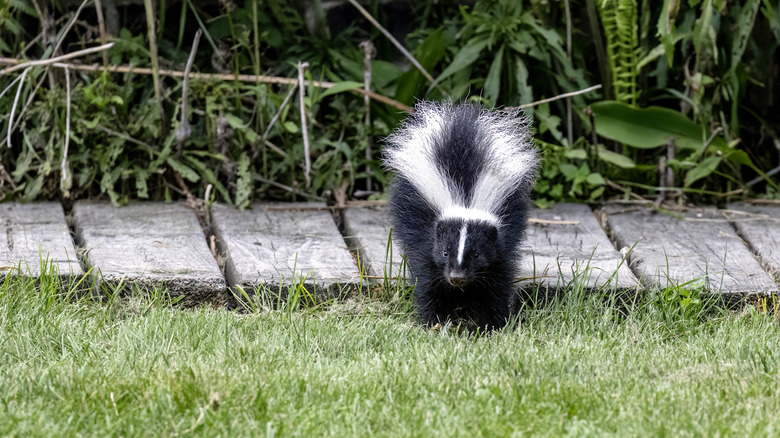
Given what skunks are most famous for, it may not come as a surprise to hear that skunks have few natural predators. They're hunted primarily by birds of prey like eagles and owls, who don't seem to mind the stench. Coyotes, foxes, bobcats, and cougars Forest predators like coyotes, cougars, and bobcats have also been known to hunt skunks if they're hungry enough. however, due to their strong sense of smell, they are, quite sensibly, usually less inclined.
In urban areas, skunks are even less likely to be preyed upon. Sure, family dogs and the occasional brave cat may give them a temporary cause to pause. But generally speaking, a skunk's primary predators are less likely to be soaring overhead or prowling nearby. Even where they are, built-up environments make it harder for them to hunt, and easier for skunks to hide.
Just because you live in an urban environment doesn't mean skunks will head straight to your yard. But if you haven't managed your garden against other skunk attractors, like food, water, and places to dig shelter, then you may be. And if there are more places for the prey to hide than the predator to stalk, it's all the more tempting as a temporary safe zone.
Other skunks
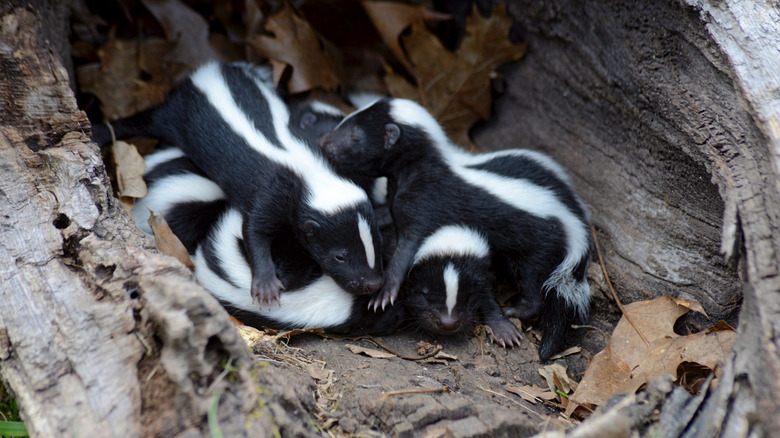
For the most part, skunks are solitary creatures, spending their days taking shelter and their nights wandering their local area in search of sustenance. The exception is during mating season, when the males are known to travel several miles each night in order to secure a successful relationship (or several). In the winter, three to 12 female skunks may share a large den (sometimes the males join too, for warmth). This means that if a skunk is already visiting, or denning in, your garden, then it may well attract others, particularly between February and April. And unlike temporary dens, skunks may revisit a winter den each year. This makes the summer and autumn a good time to rectify any issues that are attracting skunks to your garden.
If you leave it too late, and you suspect that a group of skunks are wintering (or later in the spring, a mother is now raising her young) in your yard, try not to intervene. While you could be forgiven for wanting to rid your yard of their presence at the earliest possible time, let the mother and her kits be for at least a few weeks. During this critical time, the kits are helpless, and the mother needs to be able to go about her nightly rituals in order to keep them healthy. Provided you take steps to make your yard less attractive in the future, the brood is likely to move on once the kits have had time to grow.
Rodents making pests of themselves
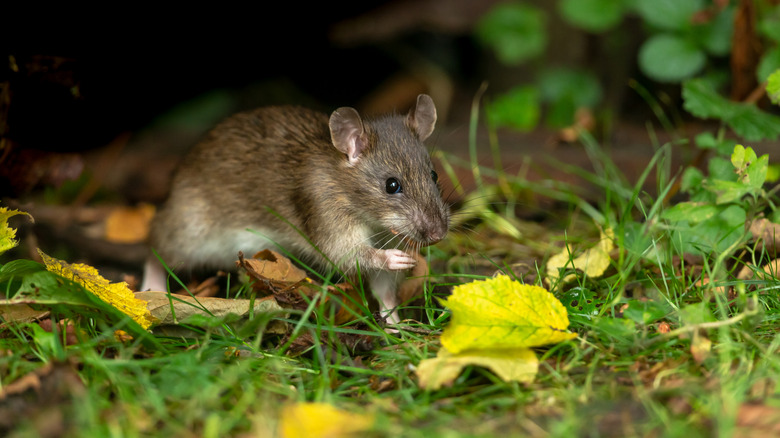
As the adage goes, prevention is almost always better than cure. And while there are a few homemade remedies that could help to repel skunks from entering your yard, the reality is that skunks will keep trying so long as there's a chance of a decent meal. Mice, rats, and voles all match this description, in fact they are some of a skunk's favorite foods. This means that if you have a rodent problem, you should look for ways to solve it, fast. Oh, and to answer your question, skunks are not, themselves, rodents: They belong to a family called Mephitidae.
Now, to add some balance here, it is worth saying that a skunk could well prove a valuable ally to homeowners struggling to with rodents. Natural pest control is often the most effective, however, the problem with skunks — especially if there are other food sources in your yard, like lawn grubs, berries, or unsecured garbage — is that you could simply end up trading rodents for a skunk. Instead, try and banish pests from your patio and garden either by laying humane traps or by calling a pest control expert.
Unsecured bird coops
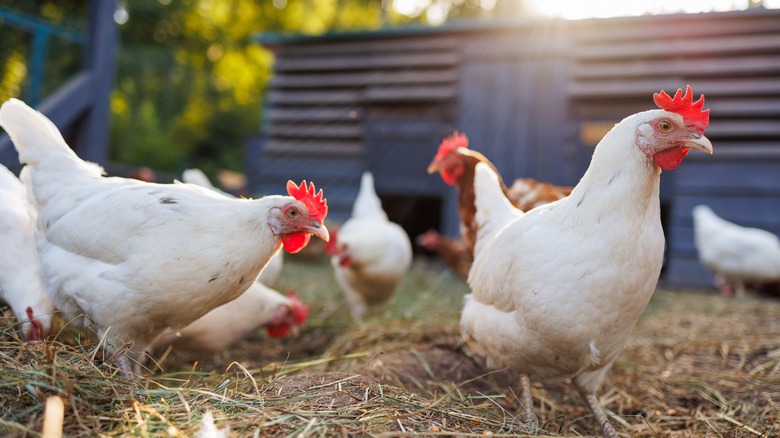
As far as skunks are concerned, nothing in your garden is sacred. Like garbage, rodents, and the berries on your bushes, they are also quite happy to eat bird eggs. Now, this isn't a problem for birds who nest and lay their eggs in trees, since skunks are not natural climbers. However, since chickens roost at ground level, your home-laid breakfast eggs could be at serious risk of being snaffled.
Both spotted and striped skunks are partial to poultry eggs. This in itself needn't be disastrous, especially if you realize what's happening quickly and rectify the issue. However, while skunks are primarily focused on eating the eggs, they may also kill a chicken or two, particularly if hens attack to protect their eggs. Even if your coop's fence is secure and comes down to the ground, skunks can easily dig underneath it. To prevent this, extend chicken wire into ground several inches, creating a dig barrier. You should also make a point of securing the coop at night, locking all doors and keeping your hens securely housed during the hours of darkness.
Carelessly managed garbage

Always keen to exploit a culinary opportunity when one arises, the skunk skulking around your yard won't hesitate to enter if there's a delicious supply of unsecured garbage up for grabs. This in itself is worrying, since nobody wants to wander outside after dark only to be met — and sprayed — by a surprised skunk. More than that, skunks will make a mighty mess as they root around in your trash for something tasty (raccoons usually take the blame, but sometimes it's skunks).
You may be thinking that since your garbage is housed in tall, upright bins, there's no way skunks could get to it. To a point, you may be right, since skunks aren't good climbers and are unlikely to scale your bins. However, if there is a way to tip over your cans, skunks are likely to find it. And once they've gotten the hang of it, they'll keep coming back until you do something to stop them.
Fortunately, there are a few easy fixes for you to consider. The first is to use wildlife-resistant garbage cans with secure, lockable lids, or purchase something like X-partner heavy duty trash can locks. Alternatively, you could use bungee cords to keep the lids tightly shut. Finally, keeping your garbage stored in a garage or shed will help to keep skunks out. In any case, try to only put your trash out for collection on the morning it's due to be taken. If left exposed overnight, you could simply be making life easy for any nearby scavengers.
Easy access to your yard

While easy access alone may not be enough to attract a skunk into your garden, it's an important factor that could well be contributing to your wildlife problem. If your fence lines don't reach the ground, or you rely on natural screening plants like conifers, it could be very easy for skunks to enter your yard. What this means is that, as well as removing the things that skunks are drawn to, you can also try to more securely seal your fence lines.
One way to do this is to run chicken wire along the base of your boundaries and underground, creating a dig barrier (skunks are excellent diggers). Just be careful not to fence any skunks inside your garden. If you think that you're being visited by a skunk at night, try to block off all possible exits bar one. To test, you pour some flour at this any exits and keep an eye out for outbound tracks. When you're happy that the last skunk has departed, seal the exits.