

How And When To Use Grub Control On Your Lawn
We may receive a commission on purchases made from links.
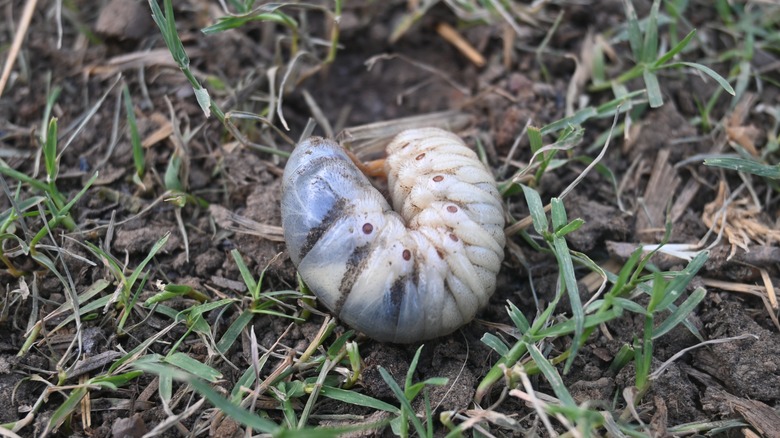
Grubs are a natural enemy of those who love lawns and a type of worm you never want to see in your garden or yard. When grubs invade your lawn, they can quickly destroy it, damaging the roots of your grass and loosening the turf. This is not to mention the fact that the presence of grubs attracts an array of other lawn-destroying critters, such as birds and possums, that feed on them. Knowing how and when to use grub control on your lawn can be the key to saving it and preventing future damage.
There are ways to mow your yard to help get rid of grubs. However, while maintaining a healthy lawn by following the one-third lawn-mowing rule and not overwatering can help, it is not foolproof. If you see signs that grubs have taken a liking to your lawn, you may need to apply a chemical grub control product, such as Scott's GrubEX1 or BioAdvanced Grub Killer Plus. Of course, seeing a lot of live grubs is a sure-fire sign you have a pest problem in your yard. Brown patches in your lawn, spongy turf, or an increase in the number of birds and animals rooting in your yard are other clues grubs are setting up residence.
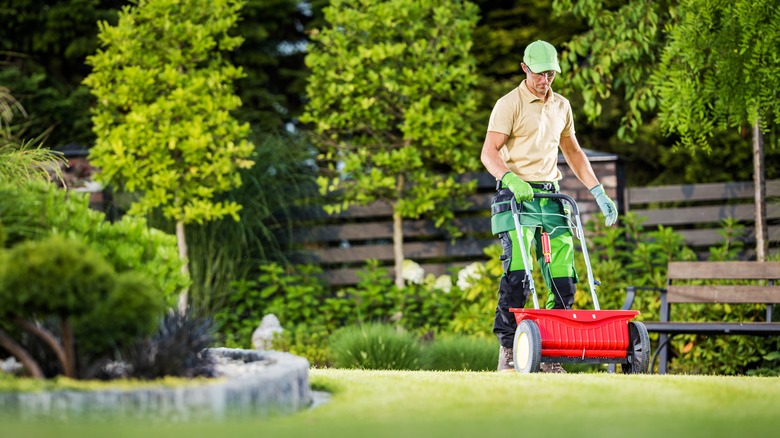
The how-to-apply part of grub control is relatively simple. No matter when you treat your lawn, the process will be the same. Most products are granules, which can be applied by the use of a lawn spreader. Essentially, just follow the instructions on the label as far as the amount to apply, use the spreader to ensure it is being distributed evenly throughout the lawn, and water your yard as soon as you are done applying the product.
The best times to apply grub control products
While the how-to part is pretty straightforward, the when-to bit is a little more tricky. Really, it depends on if you are trying to prevent a grub invasion or if you already know they're there. This will also dictate the type of product you choose to use. It is possible to miss the boat if you use the wrong product or apply it at the wrong time, given the status of grubs in your lawn. To that end, it is important to distinguish between prevention products that target the beetles, which lay the eggs that hatch into the larvae that we refer to as grubs, and products that kill the grubs themselves.
For grub prevention, the best time to apply it is typically spring or early summer if you are using a product designed to kill eggs and newly-hatched grubs. During this period, such products will prevent grubs from hatching as well as be lethal to newly emergent grubs and those that are holdovers from the previous year. Later in summer and through fall, it is best to apply a product that also targets the beetles, which typically emerge sometime in summer. Products such as Ortho BugClear are good for this purpose.
For grub removal, it is best to apply grub-killing products from mid-summer through fall. This is after the grubs have hatched and when they are most actively feeding. However, you should be open to applying grub killers whenever you see damage to your yard that points to an invasion of grubs. Even if you get the grub invasion under control, it is a good idea to apply grub control products the following spring, as any grubs that escaped the previous application will likely re-emerge. So, being proactive by applying product will help avoid another lawn-damaging situation.