

Why Breaking Ice On Your Frozen Birdbath May Do More Damage Than You Think
We may receive a commission on purchases made from links.
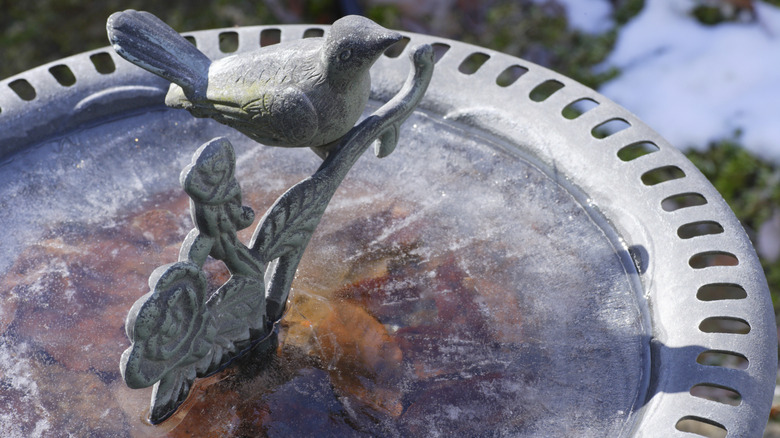
Bird baths are a good way to provide your flying friends with a source of safe drinking water throughout the year. However, if they become frozen during periods of severe winter weather, birds are unable to gain access to the water they need in order to bathe and stay hydrated, which are necessary even when the temperatures drop. If there is a layer of ice above unfrozen water, you may be tempted to simply break the ice. However, doing so can actually cause quite a bit of damage to your birdbath itself, including cracking, chipping, or splitting it. So, instead of breaking the ice on your frozen birdbath, you should opt for safe ways to melt the ice or, better yet, prevent it from freezing in the first place.
There are also some things to avoid when it comes to melting the ice as opposed to breaking it. For one, do not use boiling or extremely hot water, as this, too, can cause considerable damage to your birdbath. You should also avoid using any sort of ice melts or antifreeze solutions. While these products can indeed melt the ice or prevent the water in your birdbath from freezing, they can also present problems for any birds that drink from your birdbath.
There are a couple of options you can use for melting the ice in your birdbath. Perhaps the simplest method is to slowly pour warm water onto the ice. Again, you should not use boiling or extremely hot water. Another method is to heat water in a soup pot on your stove, then put the heated pot on top of the ice to melt it. Once the ice is melted, either dump it and refill or add some cooler water so the water temperature is not too hot.
Prevent your birdbath from freezing in the first place
As with most things, prevention is the best bet. Keeping your birdbath from freezing begins when you are looking for and buying a birdbath. The material from which a birdbath is made can make a big difference. Some materials are designed to be resistant to freezing. Others, such as glass, are more likely to be damaged by the cycle of freezing and thawing. Choosing the right place for your birdbath also makes a difference. Ideally, the location will get plenty of sun and be protected from winter winds. Additionally, it is helpful to keep your birdbath full, as the more water there is, the longer it will take for ice to form.
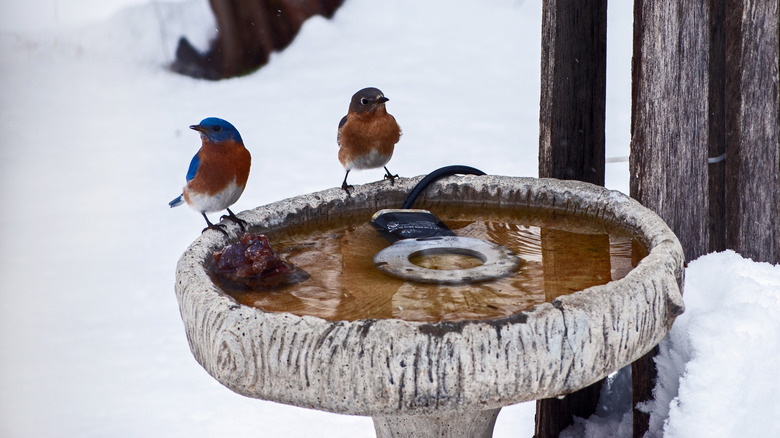
You can also prevent birdbaths from freezing with a tennis ball or other floating objects. The idea here is that these floating items will be pushed around by the wind. As they move through the water, they will continually break up any ice that begins to form. Another way to keep the water moving is to create a recirculating birdbath. Whether the water is moving or not, adding a birdbath heater can ensure that the water does not freeze when temperatures plummet. If that's something you'd want to try, the GESAIL Bird Bath Heater should do the trick.
One obvious way to make sure the water in your birdbath does not freeze overnight is to empty it each evening. You can then add water the following day once the sun is up and temperatures have risen. Throughout the winter, it is also necessary to regularly clean your birdbath, to ensure there is always fresh water available for the birds in your backyard, just as you would at other times of the year. If you clean your birdbath late in the day, leaving it empty overnight can prevent the freshly added water from freezing.