

Durable Birdbath Materials To Consider If You Experience Harsh Winters
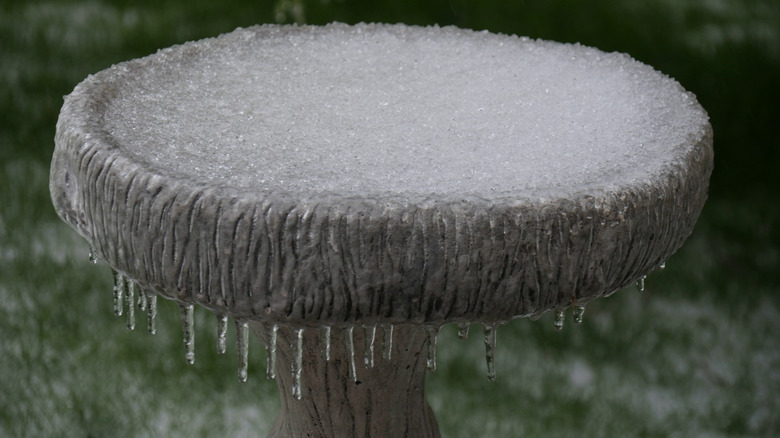
In areas with cold winters, resources become scarce for many forms of wildlife, including your favorite backyard birds. When temperatures continually drop, it's even hard for birds to find water that they need for both hydration and feather maintenance. Offering fresh water in a birdbath is one way to keep the birds coming to your garden all winter long, but not all birdbaths are created equally. Just like terra cotta plant pots, some birdbath materials can crack from freeze-and-thaw cycles, and cracks can likely get worse over time. Resin and sturdy plastic birdbaths don't crack easily, no matter what the weather, and they're usually much lighter than classic concrete pedestal birdbaths. Metal is another option that can make it through the winter, although some metals can corrode under such harsh, wet conditions.
While concrete is a durable birdbath material if it's sealed with a bird-safe sealant, it can be hard to find a non-toxic sealer. Once concrete cracks, it'll lose water and may or may not be repairable (silicone caulk can work, but you need warm weather). Plus any cracks are likely to get worse as water continues to freeze and thaw within them. A concrete birdbath may not be the best option for your feathered friends anyway, since some are too deep or have too steep of a slope entering the bottom of the basin, and they're very heavy which can be a challenge for the humans placing or moving them as needed.
Choosing a winter-worthy birdbath
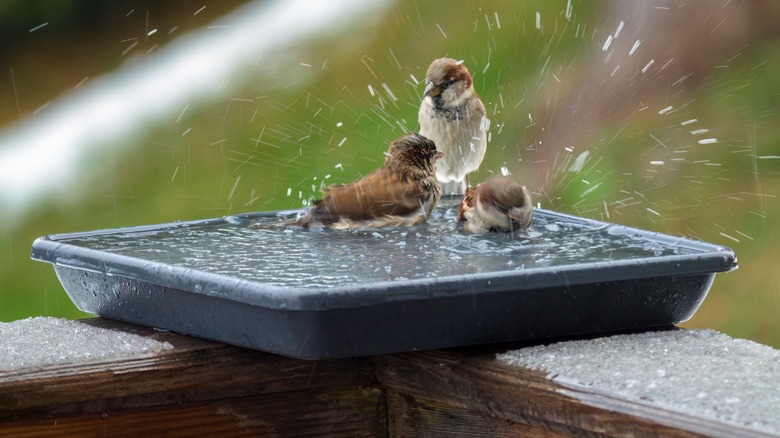
Resin and reinforced or thick plastics are excellent year-round options for birdbaths: They're lightweight, easy to clean, and won't crack when temperatures take a plunge. Metal also holds up well to the elements, but you'll likely need to add some texture, a birdbath feature that makes things more comfortable for your feathered friends. Even adding some stable stones to the basin gives the birds something to stand on so they don't slip. Adding dark stones to the birdbath can help keep it from freezing, too, since the stones absorb heat, especially on a sunny day.
Speaking of color, if you have the choice between a light and dark color for the birdbath basin you're considering, opt for the dark one for those same heat-absorbing reasons. If the bath is in a sunny area for the winter, it'll warm up more easily than in the shade. Of course, once summer's heat returns, you'll want to think twice before putting your birdbath in direct sunlight. Change the water every couple days to keep it fresh, unfrozen, and safe for the birds. When the weather warms back up, move the bath back into the shade, as that'll slow algae buildup.
While materials such as glass, ceramic, or porcelain can be stunning for a birdbath bowl, they're not ideal when temperatures dip below freezing. If you'd like, save those for summer use, keeping in mind they can still crack if they fall or get knocked over.