

How To Detect And Identify The Snakes In Your Yard
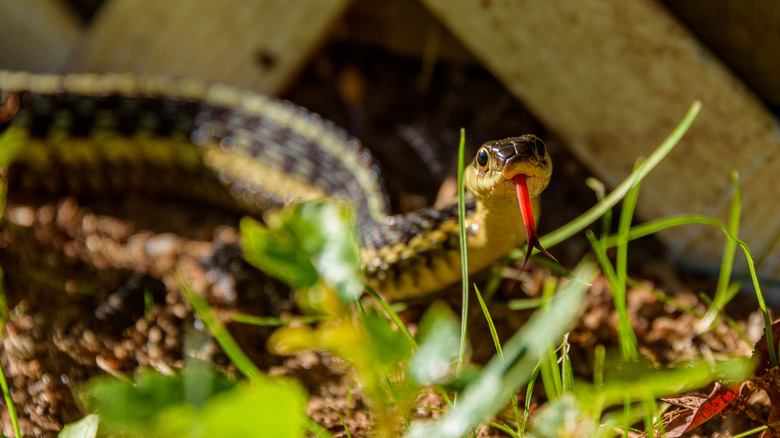
Depending on where you live and the species nearby, it's possible (even probable) snakes are spending time in your yard. Whether you have children and pets, or simply a healthy appreciation for the dangers snakes can sometimes represent, it makes sense to understand which snakes you're looking for and the signs that are likely to indicate their presence. From there, you can learn how to discourage them from entering your garden, and which snakes you may actually want to invite into your yard.
Some serpent signs are obvious, like shedded skins. Others are more subtle, like a change in your pets' behavior or a strange smell. Others can be downright misleading, like droppings that could belong to one of any number of other animals. There are also several environmental factors that might encourage the presence of snakes, including an abundance of natural prey like rodents, long grass for cover from predators, and old burrows from other animals giving snakes a cozy place to let their meal go down. This sounds like a lot to take in, and that's partly because it is. But don't worry. This guide will cover all you need to know.
Learn which snakes in your area are dangerous
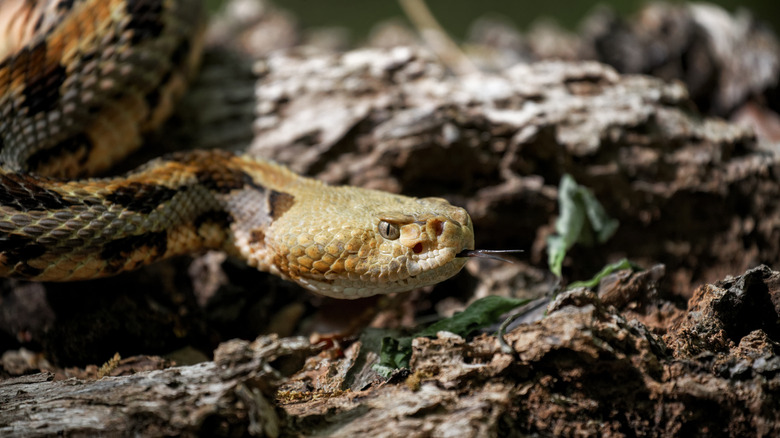
Before you begin beating around the bush in search of snakes, it can pay to know the kinds of snakes likely to be lurking in your garden, and which snakes represent the most danger. For example, the eastern diamondback rattlesnake is one of the most dangerous snakes in Florida. The water moccasin or cottonmouth is one of the deadliest snakes in Texas, while one of the most dangerous animals in New York is the timber rattlesnake.
Of course, with around 120 snake species in North America and more than 50 in the U.S. alone, it can be tricky to know how to identify all of them. Narrowing the list down to those that are actually likely to be in your specific region can help. But so, too, can simply knowing how to identify a venomous snake. A reptile's body type, head shape, eyes, color, scale patterns, and tail type can all tell you a lot about whether or not you should keep your distance. It can be worth spending time really getting to know your slithering neighbors. And remember that most venomous snakes in the U.S. simply want to be left alone, only biting if stepped on or feeling cornered.
Determine where in your yard snakes could be hiding
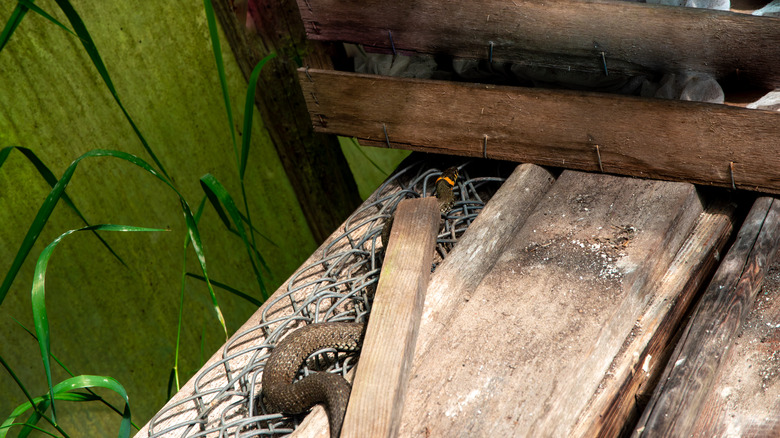
By knowing the environments and habitats snakes prefer, not only will you know where to look for them, but you'll also know the conditions to avoid in your garden in the future. Places to look for signs include areas of long grass, as this provides natural cover for snakes to hide from predators. If you have trees or shrubs whose lower branches are at almost ground level, then these spots are likely to contain signs — or even the presence — of snakes. In fact, did you know that snakes are actually rather fond of fruit trees? They're not particularly partial to the fruit, however, rodents like rats and mice certainly are, and their presence can often be enough to tempt a snake to slither into your yard.
Piles of firewood and other similar garden debris are also a tempting prospect for snakes, particularly those that lay eggs, as they offer a cozy, private spot in which to lay their clutches. Keep wood piles neat and away from the house or any play areas. Ponds are another obvious place to look; water attracts all kinds of local fauna, including frogs and rodents, each making tasty meals for various kinds of snakes.
Monitor your pets for strange behavior
If you have dogs, then the presence of snakes is likely to get them excited. Dogs are curious beings and can lack the caution that dominates the psyche of so many hesitant humans when it comes to snakes. The jury remains out as to whether or not human ophidiophobia (an extreme fear of snakes) is learned or hardwired. Dogs, however, are lacking in either regard, and will inspect a snake as readily as anything else in the natural world. Meanwhile the snake under inspection may remain frozen as long as possible...until it's too late for the dog. So, if you notice your pup wagging its tail and sniffing exuberantly around a mystery object in your garden, call it back and approach the area with caution. One way to avoid this situation is to enroll your best friend in snake aversion training (it's especially useful if you and your dog spend a lot of time where rattlesnakes hang out).
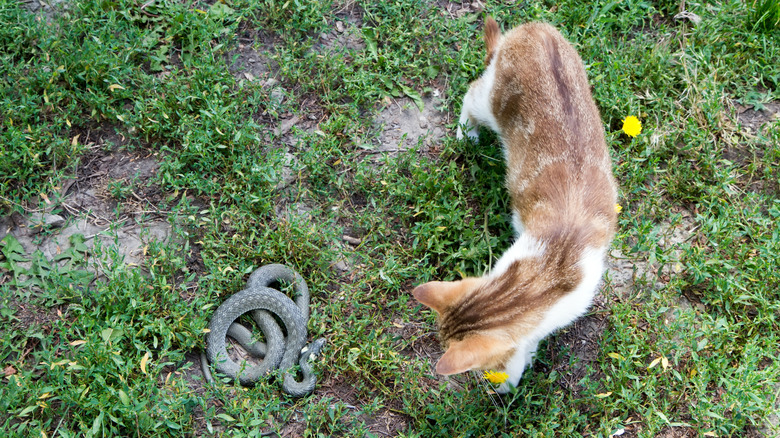
Cats, meanwhile — with their strong prey drive and instinct to hunt — will betray the presence of snakes in your garden by stalking and potentially killing them(feral and domestic cats in Australia kill an estimated 650 million reptiles each year). You'll likely see your cat slowly stalking, and even circling, a snake, as well as striking at its prey with sharp claws. Cats are harder to call to heel than dogs, but it's important you try to discourage them from continuing their hunt. If the snake is venomous or poisonous, such a pursuit is fraught with danger. Venomous snakes can potentially kill a cat with a bite. Poisonous snakes, meanwhile, can be deadly when eaten, as they carry their toxins in their bodies.
Look for shedded skins
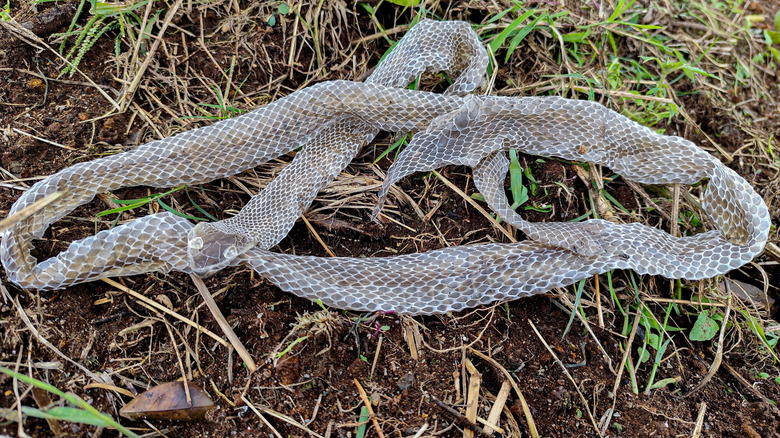
If you see a molted, papery snake skin, it's a surefire sign that there is, or has been, a snake in your yard. It's hard to know exactly when the skin was shed, since snakes of different species and ages shed their outer skins with varying frequencies throughout the year. But if you regularly spend time in your garden and find a molt that wasn't there when you last ventured out, then it's likely that the visit was recent.
Skin shedding is also a sign of a healthy snake, which can be a tell-tale sign of why they're entering your yard in the first place. Among other reasons, snakes molt when they grow — that is, when they're getting enough food to outgrow their old clothes. In other words, not only is a shedded skin indicative of a snake's presence, but it could well be because your yard is home to lots of prey. It can also be a way to signal health to potential mates, so you may find more snakes cruising around. Heads up: For a brief time after a skin is shed, snakes can't see well and feel particularly vulnerable, so may be more prone to bite if they feel threatened.
Don't ignore strange smells
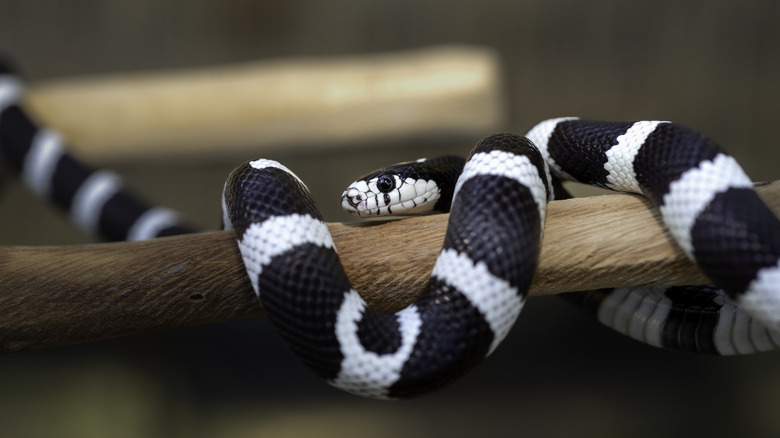
Snakes aren't known for their strong smell. In fact, when left to their own devices, they are generally quite inoffensive on the nose. However, when threatened, certain species can give off a foul odor, often described as rotten, like cucumbers, or even "skunky." Otherwise known as a musk, if you get a whiff of something that comes close to the above descriptions, then tread lightly, and carefully.
Since snakes only release musk when they feel stressed or threatened, there's a chance that your fork-tongued friend is nearby. The best course of action is to retrace your steps (double checking you didn't already walk past or over a snake), and get out of the nervous animal's way. Make a note of the location, and keep any children and pets away. If you spot the snake, make a note of its appearance, and research snakes in your area to see if your guest is dangerous. Many snakes aren't, and can actually be beneficial by keeping rodent populations down, but it's always best to be safe until you're sure.
Keep an eye out for snake droppings
This is a tricky one, especially since snake droppings look remarkably similar to those of a bird. Generally speaking, snake scat is dark brown or black, tubular in shape, and comes with a distinctive, chalky-white cap. This cap, otherwise known as urates, is the snake's nitrogen-rich solidified liquid waste. Birds and snakes both expel all of their waste from the cloaca as one neat, albeit unappealing, package.
This must mean that it's impossible to discern between the two, right? Well, the good news is that it's not. The bad news is that if you're not certain which creature the droppings belongs to, your best bet to physically examine it. Since snakes feed on other animals, including frogs and rodents, you'll often find traces of bone and fur in the droppings. It also smells way worse than bird poo, since snakes only defecate once or twice a month. This is a grim task, to put it mildly, and if you're squeamish, don't worry. There are plenty of other signs to help you discern whether or not your mystery defecator is a snake (see above and below).
Monitor the rise and fall of other wildlife
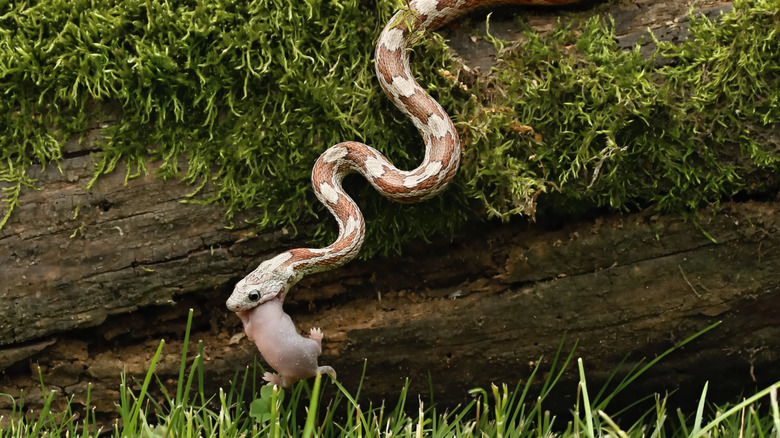
If you've noticed a strange decline in rodent activity around your yard, it might not necessarily be a cause for celebration. Sure, it's nice to know that there are fewer mice and rats causing mayhem in your flower beds and looking for a way into the interior of your home. What may not be reassuring, however, is that their sudden demise could well be the doing of a snake. Now, this isn't to say that a snake in your yard is always a bad thing. Again, if the particular species is harmless to humans, then it's often best to leave your slithery guest to its own devices. The other issue is, if you're seeing an increase in snakes, it likely means you have a rodent problem that needs to be dealt with.
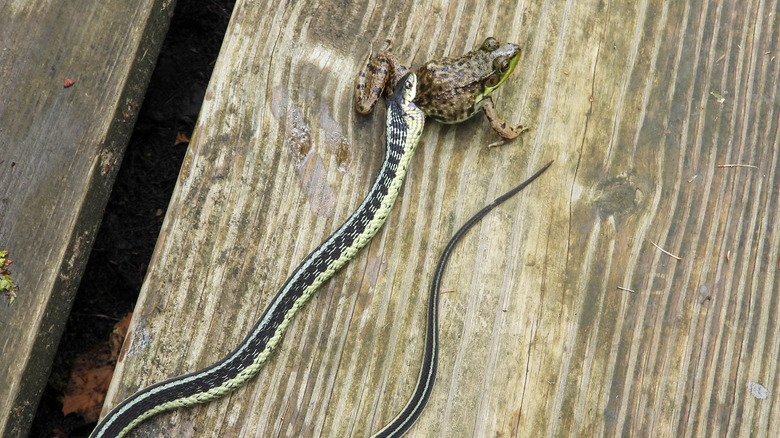
Unfortunately, garden menus offer more to snakes than just rats and mice. Other populations that are likely to croak in the presence of snakes include frogs, toads, and small fish, as well as slugs, grubs, and voles. Birds and eggs are also a target, and unless you've opted to protect your bird box with a stove baffle, it could well become a target for any ravenous reptiles.
Look for slither tracks
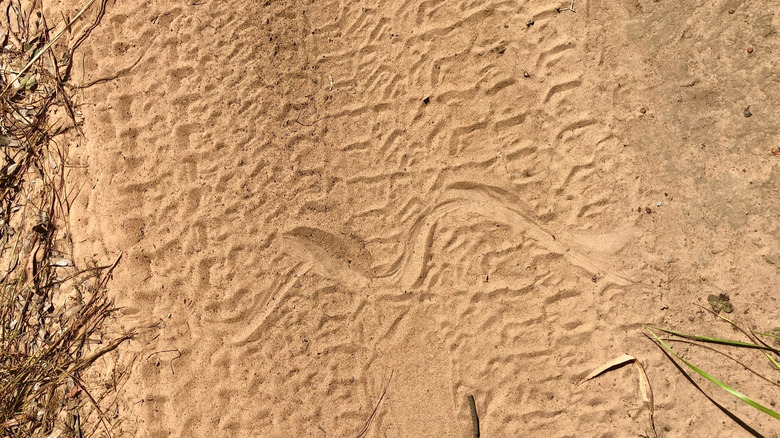
The way snakes move makes them more conspicuous in certain garden conditions. Especially in areas of soft soil, or in desert gardens where the soil is sandy, snakes tend to give themselves away with meandering, wavy S-shaped trails whenever they traverse across it. This could well lead you to the snake's hiding place, especially if you have rodents or other animals digging holes in your yard. Snakes aren't particularly fussy about who originally dug these, and will gladly accept such readymade shelters, especially in areas where there's plenty of natural food around.
There are a few things you should do if you find a snake hole in your yard. First look for the aforementioned trails leading in and out of the hole. Then, examine it (carefully) to see how smooth the opening is. A snake's comings and goings will smooth the opening over time. If you're confident that it is, indeed, a snake making use of the burrow, then try to keep an eye from a safe distance so that you can identify the type of snake you're dealing with. If it's harmless to humans, it's best to leave it be. But if it's dangerous, consider calling your local wildlife removal service. You can also use humane traps, which capture the snake without harming it, allowing you to release the snake far away from built-up areas. Avoid using sticky traps which can indiscriminately trap other animals and leads to a slow painful death for anything caught.
Keep your ears open
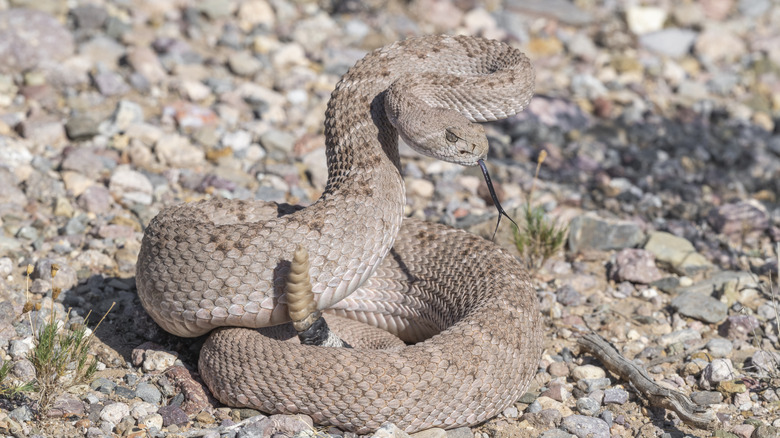
Snakes are excellent predators, in part because they move so stealthily. This means that they don't generally make a lot of noise. Of course, if they happen to be moving through an area with lots of leaves, you may hear a faint rustling as they attempt to hide themselves from you.
However, if you find yourself too close to a snake, then there are some audible signs designed — and should be heeded — as warnings. Hisses, buzzes, and rattles should all be treated as firm advice to back-off, and could well mean you're already within striking distance. Some species, including the western hook-nosed snake and the Sonoran coral snake, make a popping noise that sounds an awful lot like human flatulence. If you hear this, then it's best to be safe and get out of harm's way first before attempting to blame it on a family member. In all cases, the first step is to freeze. Sudden movements can cause a threatened snake to strike, even if you're backing away. Assess where they are, and either let them calm down and move on, or back away slowly if you're out of striking range.
Look for snake eggs
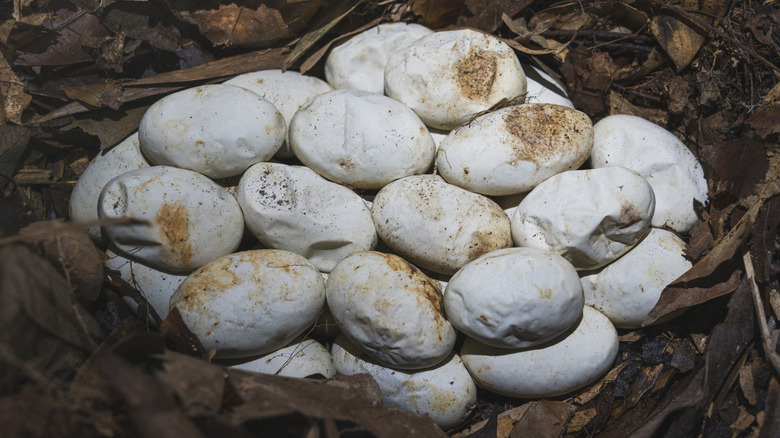
Snake eggs are another clear sign that a snake has at least visited your garden. Many snakes pay little attention to their clutches once they've laid them, which could well mean that the layer has left. However, that doesn't solve the problem you'll have once the clutch begins to hatch. And don't be fooled into thinking baby snakes lack the same threat as their parents. In fact they can actually be just as dangerous as their elders.
Fortunately, at least for the most part, egg-laying snakes in the U.S. are not dangerous to humans (rattlesnakes, for example, give live birth). But as is so often the case with Mother Nature, this rule is not without exceptions. Sonoran coral snakes lay eggs, and while their venom is not considered as threatening to humans as that of rattlesnakes, a bite can still be dangerous and requires prompt medical attention.
As for how to identify snake eggs, you'll usually find clutches of between four and 50, depending on the species. They're typically oval or oblong-shaped, white in color, and without speckles. As for size, they tend to be at least an inch in length, sometimes longer, and if you're brave enough to touch them, you'll notice that they feel soft and leathery.
If you find eggs, the best bet is to leave the nest alone and call your local wildlife control. They should be able to advise you on how to remove the eggs safely, whether or not it's considered an infestation, and may even be able to take care of the problem for you.
Prevent future visits from snakes
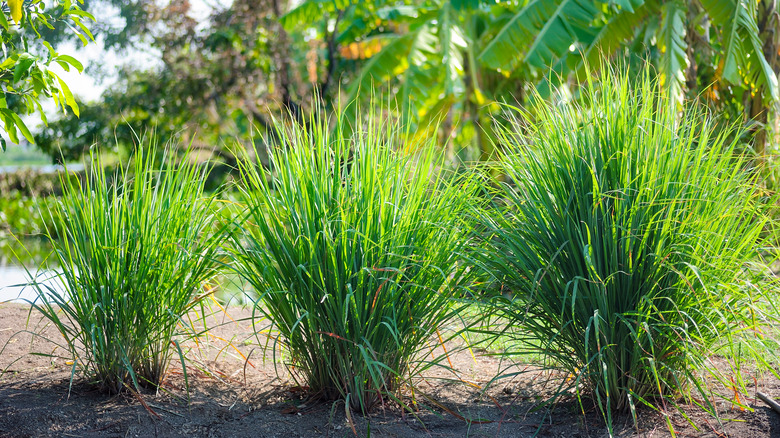
Since there are a number of different things that can attract snakes to your yard, it stands to reason that there are also lots of ways to discourage them. One is keeping on top of prey populations — animals like frogs, rats, mice, and voles are all likely to tempt snakes into your garden. Another, especially in areas where snake populations are high, is to avoid landscaping with water. Since water is so attractive to wildlife, including potential snake food, then its presence is only likely to increase your chances of finding snakes.
Keeping grass tightly mowed will discourage snakes from sliding across it, since they prefer more covered areas that shield them from predators like birds. If you absolutely have to store piles of logs or other debris, then try to do so on a platform at least one foot off the ground. If you'd like to be more certain that snakes can't breach your garden's boundaries, consider building snake-proof fencing around the perimeter. It's not 100%, but is effective.
If this is too expensive, then consider how you plant and landscape your boundaries. Gravel can be used to deter snakes by creating a surface they find uncomfortable to traverse, so spread it along your fence line and alongside driveways. As for plantings, lemongrass is a fantastic natural snake repellent, emitting a fragrance that's decidedly easy on human nostrils but tough for snakes to put up with. This can be planted all along your fence line to create natural barriers, or around specific areas to discourage snakes from encroaching those spaces in the yard or garden which you and your family or pets use most.