

11 Fascinating Facts About Hummingbirds You May Not Have Known
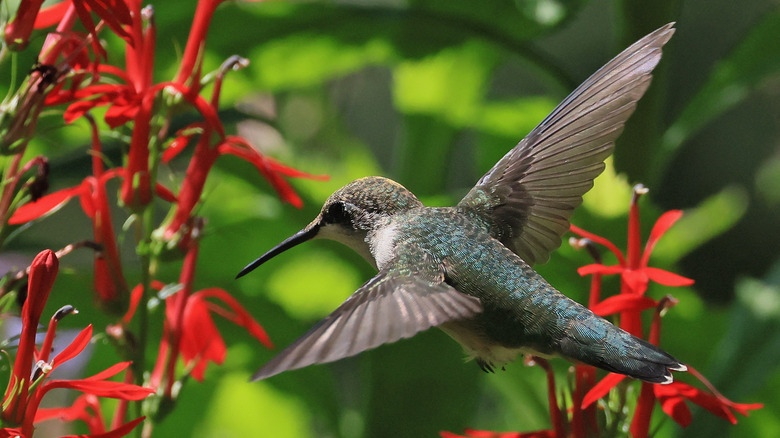
If you're lucky enough to be visited by hummingbirds, you've probably spent many a moment marveling at them as they go about their busy lives. And who could blame you? They are some of the animal kingdom's most wondrous little creatures, and not just because of their striking colors or the signature hum of their wings.
There are lots of fun and fascinating facts about hummingbirds, and you probably already know that they are excellent pollinators. But did you know that the smallest bird in the world belongs to the hummingbird family, or that a single hummingbird might visit thousands of flowers in a single day? Speaking of their constant search for food, did you know that migration patterns of hummingbirds regularly (usually, in fact) require their tiny wings to travel thousands of miles each and every year?
In other words, while they may be some of the smallest birds in the Americas, they are undeniably some of the most intriguing. So, whether you have hummingbirds in your yard and want to know more about your gorgeous summer guests, or are simply curious about the wonders of the natural world, this guide to fascinating facts about hummingbirds is most certainly for you.
There are more than 360 hummingbird species
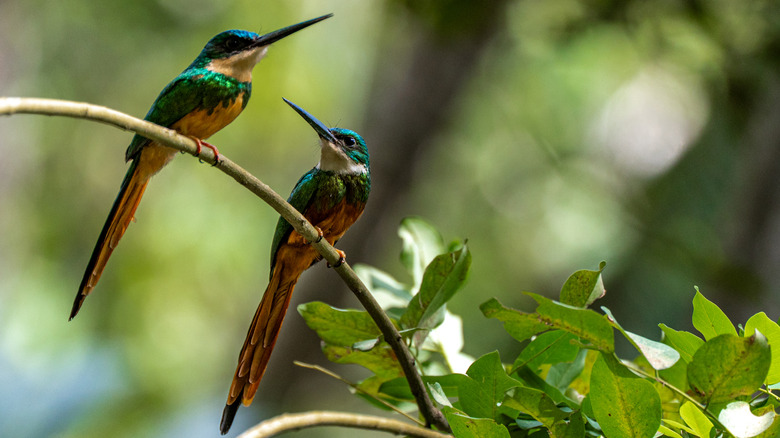
You read that correctly: As it stands, there are more than 360 recorded species of hummingbirds. Even more interesting is that all of these are found in the Americas, with the bulk of species making their home in South America. There's every possibility that number could continue to grow. In fact a new species was discovered as recently as 2017. Named in 2018 as the blue-throated hillstar, this recent discovery was made in Ecuador, which itself is home to the most varied concentration of hummingbird species at 130.
Fortunately for those living in the U.S., there are several species — 15 to be precise — that commonly migrate here for the warmer seasons. Most of these travelers are identified as neotropical migrants, meaning they breed in the United States before making the ludicrously long return trips to their wintering grounds. As for where they spend their winters, it varies from species to species. The majority favor the warmer sanctuaries of Central and South America. But there are those that enjoy much cooler climes, spending their winters in Canada and even Alaska.
There are other species, however, that are known as "facultative" migrants, like the Anna's hummingbird. Essentially, "facultative" means that they choose whether or not to migrate each year based on environmental factors, like the severity of the weather and the abundance or scarcity of food. In other words, if the getting's still good, they're likely to stay put for winter, and if it's not, they won't waste any time moving on.
Hummingbirds can hover and fly backwards
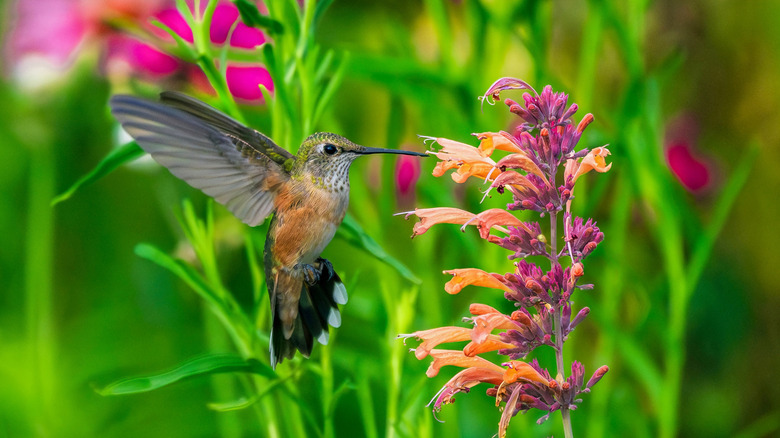
Did you know that hummingbirds are the only birds capable of hovering for a sustained period of time? Sure, there are other species that can hover, like kestrels and kingfishers, but only hummingbirds can sustain it. In fact, hummingbirds might spend up to 90 percent of their time in hover mode.
The ability stems from a highly flexible shoulder joint and an unbelievably high rate of wing beats per minute — between 60 and 80 — and is crucial to how they feed. Hovering and flitting between flowers is more energy-efficient than constantly perching and taking off, which is important for a bird with such a fast metabolism. What's more, hovering allows them to access and feed from flowerheads that are suspended above the ground — often flowers other birds can't access. This is further helped by their ability to fly backwards, which essentially means they can manuver their beaks into a flowerhead, then easily back out.
But it's not just eating that's made easier by hovering. So, too, is mating. The incredible iridescence that makes male hummingbirds so striking to us humans is also one of their greatest assets during courtship, and hovering in front of females is the perfect way to show it off. In a bid to prove their virility and worthiness of a female's attention, males of many species will hover in front of a prospective partner, flashing their colorful gorgets and stretching their wings to ensure that every last feather catches the light.
They visit thousands of flowers every day
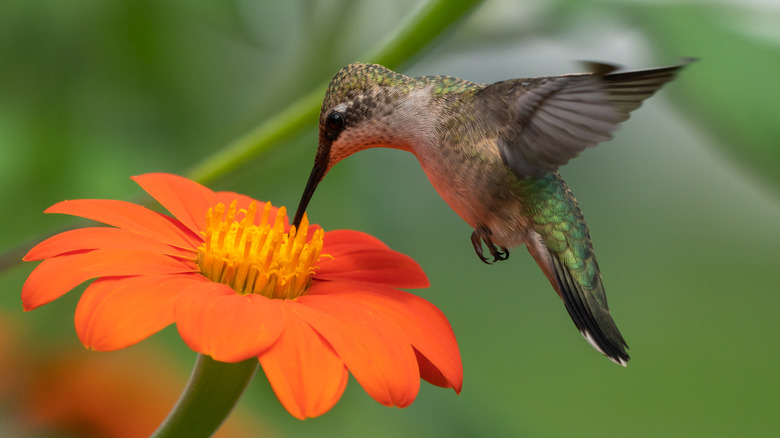
This, quite frankly, is remarkable. And it's completely true. Because of their need to feed every 10 to 15 minutes, fueling an olympian-grade metabolism, hummingbirds are constantly visiting flower sites to extract the nutrient-rich nectar. In fact, they can visit between 1,000 and 2,000 flowers in a single day.
So, whether you're an avid birder or simply like the sight of these enigmatic creatures in your garden, be sure to sow lots of hummingbird friendly plants in your garden. Bee balm (Monarda didyma) and hosta (Hosta plantaginea) are both great choices. If you're in need of fast-growing blooms, then lion's ear (Leonotis leonurus) is a superb, easy-growing flower that hummingbirds love. If your planting is successful (and with a little bit of luck), you may notice these voracious feathered feeders making their merry way into your yard. What's more, since they tend to remember a good meal, they just might pay you another visit the next time they're in town.
Hummingbirds remember a good meal
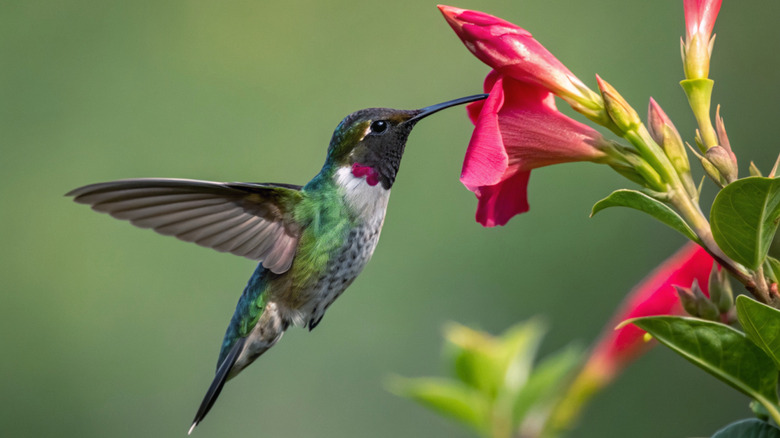
As humans, we know very well how hard it is to forget a decent meal. But where our memories are often connected to the events that took place and the people with whom we shared that meal, for hummingbirds, being able to relocate a particularly rich seam of pollen can be a matter of life or death. This is because they have a constant need to feed.
To put it simply, they know where their bread is buttered, and will likely return to the same spot each and every year if it regularly comes into bloom with nectar-rich flowers. What's more, studies have shown strong evidence that hummingbirds can track time intervals, meaning they may actually know when flowers — and the nectar inside them — are likely to be most abundant. The same holds true for feeder locations and schedules.
For anybody hoping to invite more hummingbirds into their yard, this should be encouraging news. It's easy to whip up a homemade hummingbird nectar recipe, and provided that you follow the best tips for keeping your hummingbird feeder clean, there's a good chance that your local population will thank you for your work season after season.
Hummingbirds have very fast heart rates
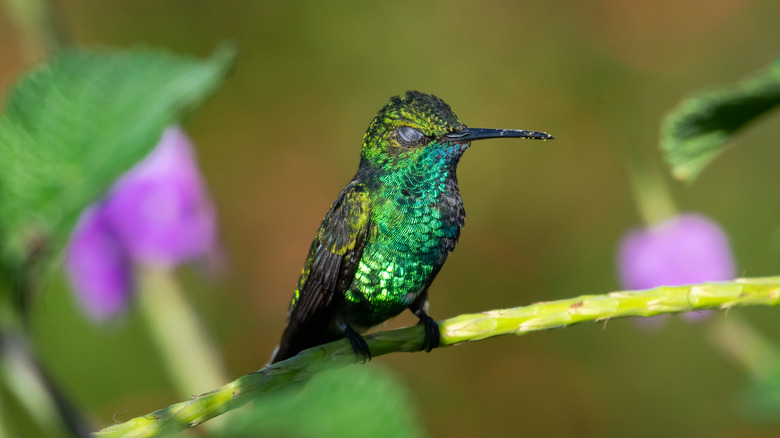
If you've ever seen one whizzing busily around your flower beds, then this fact about hummingbirds may come as no surprise. While not all hummingbirds have the same heart rate, they're all rather rapid (between about 500 and 1,200 beats per minute). For example, the Blue-throated mountain gem has a heart rate of up to 1,260 beats per minute. The Costas hummingbird, while slightly lower, is still eye-wateringly fast for us humans, clocking in at between 500 and 900 beats per minute.
So, why are their hearts so fast? Because they need them to be. Hummingbirds fly so quickly (and beat their wings so fast) that they need an exceptionally efficient supply of oxygen-rich blood to keep them going. But don't go thinking that such a high heart rate means they have no control. One of the most amazing facts about hummingbirds is that they can actually bring their heart rates down until they enter a state of "torpor." In this sleep-like state, their heart can beat as few as 40 times per minute, which can help them conserve energy during rest and to survive extremely low temperatures.
Some hummingbirds can sing
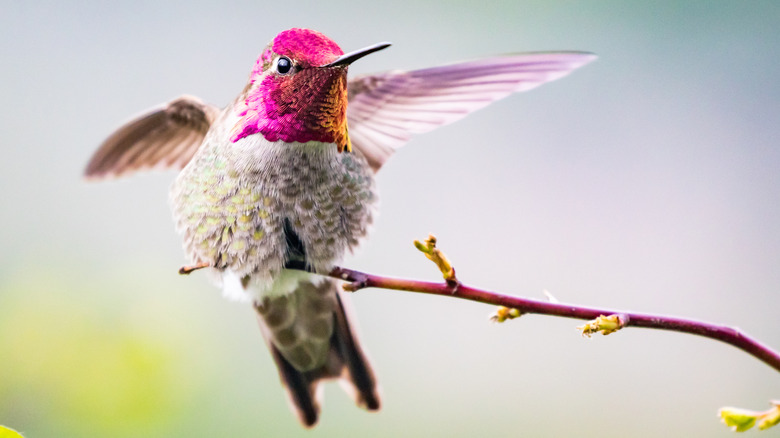
You may have heard hummingbirds chattering or squealing, which are often signs of aggression as they compete with one another for territory. But certain species, including Anna's and Costa's hummingbirds, can, in fact, sing.
Male Costas utter a high-pitched whistle, usually from their perch or when performing a looping dive during courtship. If you spot one in your yard, listen out for the whistle rising and falling in pitch as it dives. Amazingly, this sound comes from their tail feathers. Even more amazing is that, not only does the sound help the courted female discern the speed of the male's dive (a key measurement for success), but the male can actually manipulate how the sound of their speed is perceived. By diving to the side of females, instead of in front of them, males are able to mitigate the doppler effect (the acoustic curve of their sound), thus deceiving the female about the speed of their dive.
Anna's hummingbirds, meanwhile, utter a series of raspy buzzes, which are usually a prelude for a more melodic whistle followed by punchy chipping sounds. The whole symphony, which comes from their mouths and not their tails, is beautiful to hear, can last up to ten seconds, and will often be repeated.
Hummingbirds cannot walk
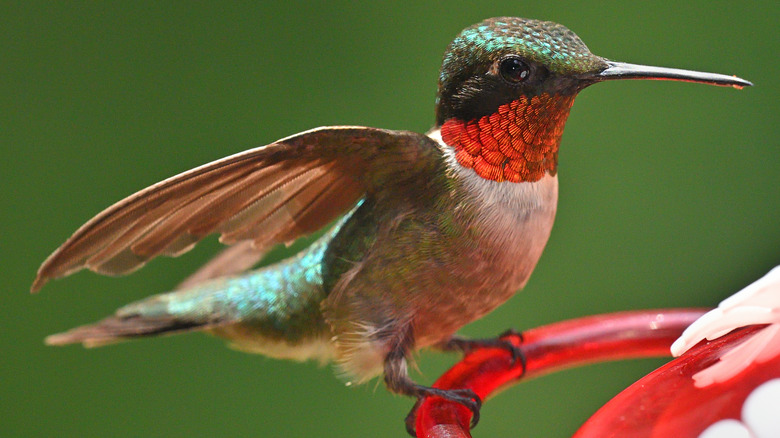
If you've seen pictures of hummingbirds — or are lucky enough to have them visiting your garden — then you might think this fact about hummingbirds is way off, but it's not. Sure, they have tiny legs (as you'd expect), however, they can only use them to grip a perch. Once perched, they can also move sideways along it. However, they can't walk along the ground like other birds or even hop, and instead rely on their incredibly precise flight to move around.
The upshot of such tiny toes is that hummingbirds are more streamlined, which is crucial to precision flying. In turn, their ability to hover in precise spots makes it easier for them to access a flower's nectar. But they still need a rest from time to time, so if you're hoping to encourage hummingbirds into your yard, you should not only consider where and how high to hang your hummingbird feeder, but also what they'll perch on while they feed from it.
One hummingbird is the world's smallest bird
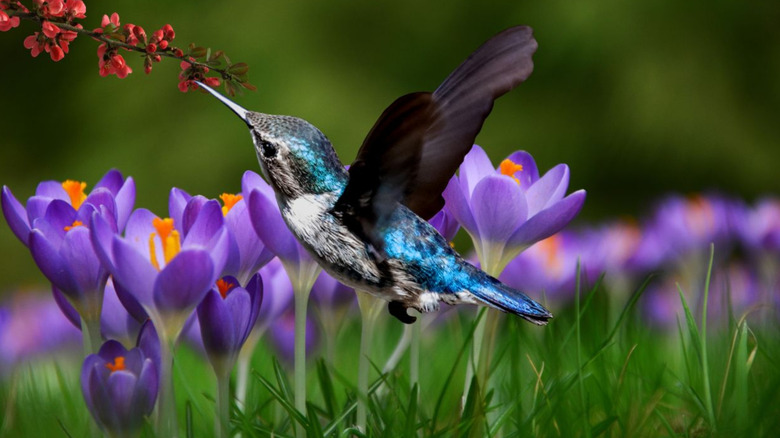
Growing to approximately two and a quarter inches from beak to tail and weighing less than a dime, the bee hummingbird is the tiniest bird species on the planet. It really is small! However, what it lacks in size it absolutely makes up for in beauty.
It gets its name because of its diminutive size. In fact, it's often mistaken for a slightly (although not by much) oversized bumblebee. The males dazzle those who are lucky enough to see them with flashes of metallic blue and green on their backs, plus iridescent hues of red, pink, or orange on their faces, crowns, and gorgets.
If you're hoping to spy one of these in your yard, then bad news. Unless you live in Cuba, you'll need to travel to see these miniature marvels in the wild. They are often found in and on the edges of dense forests, sipping at the nectar of flowery vines. Even if you manage to find them, you'll have to squint: Hatching from an egg roughly the size of a coffee bean, bee hummingbirds are born — and remain — tantalizingly tricky to spot. It's also getting much harder to find these tiny flyers. Due to deforestation, the population has dwindled dramatically as has the bee hummingbird's geographic distribution.
Hummingbirds are omnivores that eat constantly
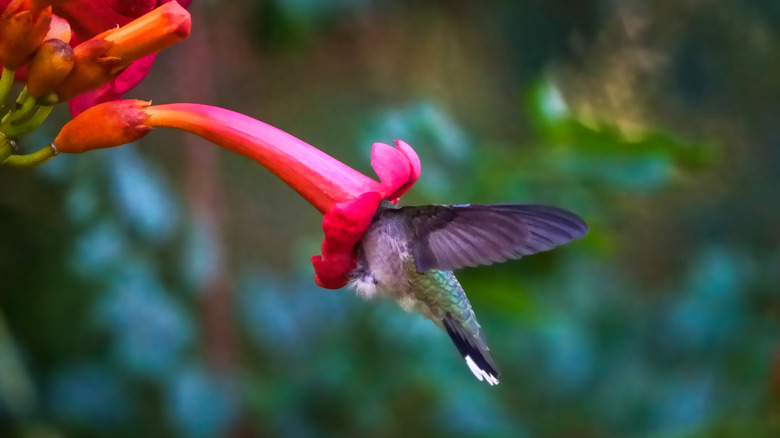
Despite visiting thousands upon thousands of flowers each and every day to extract their juicy nectar, hummingbirds also like to top up their diets with protein-rich insects. This might seem greedy, but it's really no surprise when you consider the sheer speed of their metabolisms.
In actual fact, hummingbirds can eat up to half their own body weight daily, grazing every 10 to 15 minutes. This is good news for gardeners with pests in their plants. Thanks to their omnivorous diet, they'll quite happily feed on nuisance insects, including flies, mosquitoes, and aphids. But that doesn't mean that they'll eradicate your pest problem entirely.
With this in mind, you might want to think about bolstering their efforts with naturally pest-repellent plants or a homemade, organic pesticide — one that's harmless to birds. Unfortunately, certain common chemical-based insecticides, particularly those classified as neonicotinoids, have been found to have a detrimental effect on pollinators like bees and hummingbirds. This includes a disruption to their amazing memory for food, which can create real problems for a creature that travels thousands of miles to find it.
They migrate thousands of miles each year
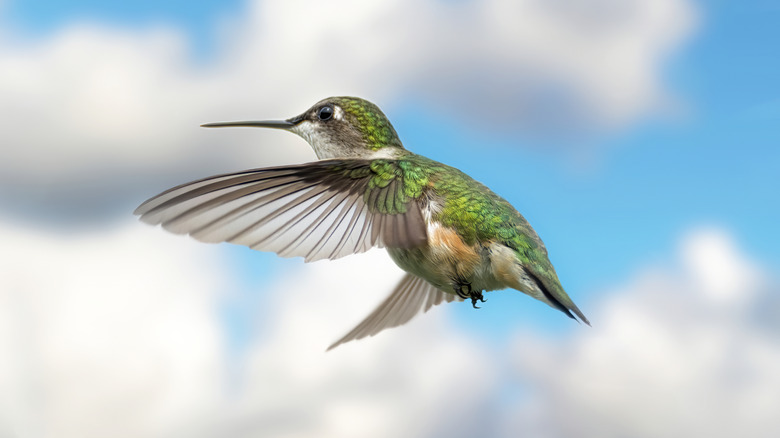
By now, you know that many of the most fascinating facts about hummingbirds revolve around their appetites. And this one's no different. Since such a substantial portion of their diet is the nectar taken from flowers, it makes sense that they'll go the extra mile to find it.
Actually, depending on where they spend the breeding season, they'll go the extra thousands of miles if that's what it takes. Now, there are no hard and fast rules when it comes to hummingbird migration. In areas where the winter climate has a serious impact on flower growth, hummingbirds are unlikely to stick around, making spring the best time to hang a hummingbird feeder in your yard. In fact, most North American hummingbirds migrate a long way each year, many preferring the warmer regions of Central and South America. The roufus hummingbird, common in Oregon, Washington, and British Columbia, in fact may travel all the way from Alaska to central Mexico.
Of course, there are exceptions, like Anna's hummingbirds. With a year-round range that covers from northern Mexico to southern Canada, if you have these birds in your area, there's a good chance they'll stick around, wherever they live, for the winter so long as there's plenty of food. These birds will assess the environmental conditions each year, and if there's a seasonal shortage of flowers, they'll swiftly move on to richer pastures.
Despite their size, hummingbirds can be aggressive
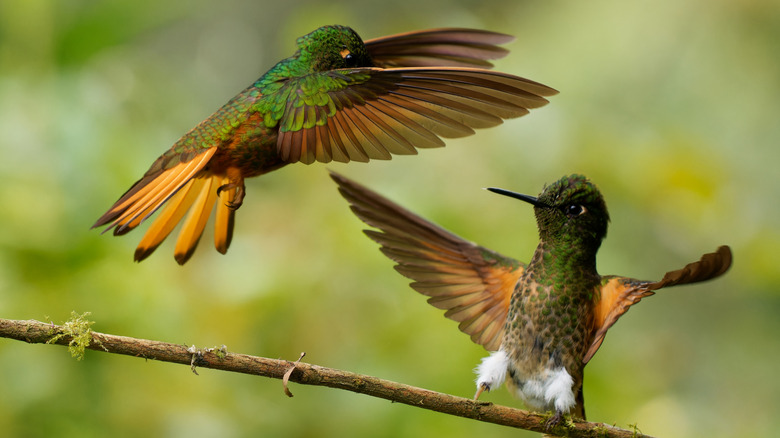
You might not think so, but these tiny winged wonders can actually be quite hot-tempered. And when you think about it, it's hardly surprising. Given their existential need to constantly feed, it's really no wonder that populations of hummingbirds become so competitive, especially in areas where there's a scarcity of comestibles. Certain species, like rufous and ruby-throated hummingbirds, will even take on larger birds, and sometimes posture against passing humans, in a bid to defend their territory.
The most common conflicts, however, occur among fellow hummingbirds, and the fights to secure dominion over territory can often become quite spicy. When a bird is pushed out of a feeding patch, it'll need to fly to find another quite quickly — a trip that comes at a great energy cost. Given that their next necessary meal is never more than 10 or 15 minutes around the corner, it's really no wonder that hummingbirds are so determined in their quarrels.
With all of this in mind, if you're planning to encourage more hummingbirds into your yard, then it's important to consider ways to make your hummingbird feeder conflict free. Small touches, like an opaque divider in the center, can prevent competitive hummingbirds from seeing one another, leading to less conflict and happier hummers.