

Alternatives To Bark Mulch That Serve A Similar Purpose In Your Garden
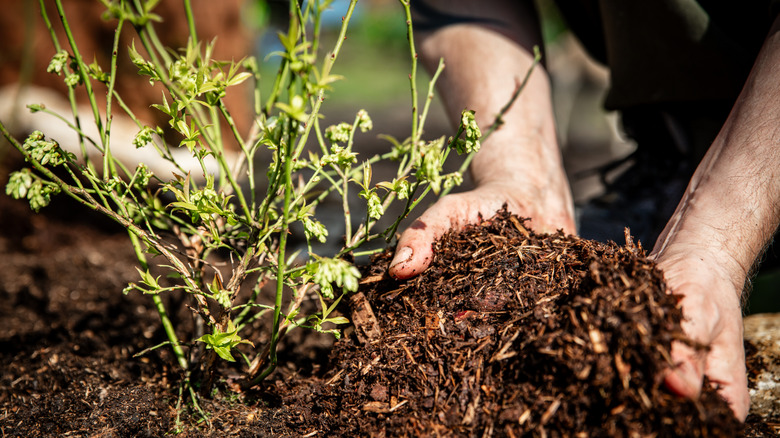
Any gardener will tell you that mulching is one of the most effective and environmentally-friendly ways of controlling weeds and nuisance grasses. More than that, when mulching with certain materials, especially organic ones, it can also insulate your plants' roots against meteorological extremes like frost, as well as helping your soil to retain moisture during particularly dry spells.
Now, there is no single mulch material that's objectively the best for your garden. The term "mulch" doesn't refer to one specific material at all, but rather any material with which you cover your soil in order to either feed it, or protect it from the growth of nuisance weeds and grasses. In fact, there is a long list of potential solutions, both natural and manmade, if you're trying to achieve these goals. Shredded bark is one of the most common materials used for mulch, serving all of the above functions, but you could also consider other organic (natural, not necessarily certified) alternatives like compost, grass clippings, and even cocoa bean shells.
What's more, if you're looking for a mulch that achieves both form and function, there are lots of inorganic materials you can use too, like gravel and pumice stone. These can keep those pesky weeds under control, add visual appeal to your garden and flower beds, and offer the added benefit of not breaking down and requiring replacement.
Consider pumice stone as a permanent mulch material
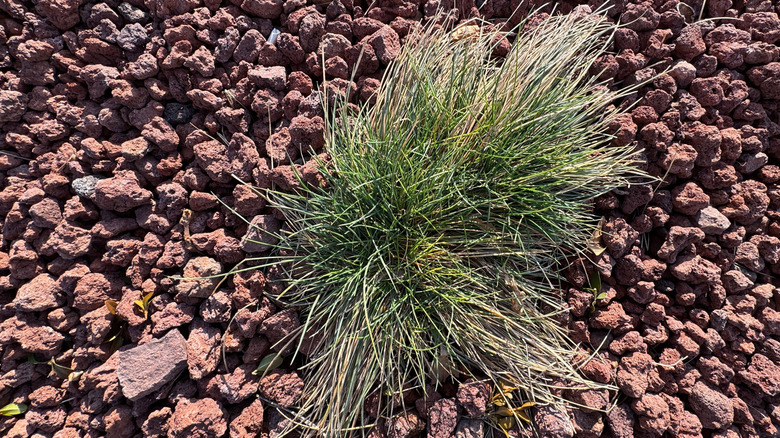
Light in color and weight, pumice is easy to handle and can add contrast to the otherwise dark colors of earthy patches like flower beds. Coarse-ground pumice stone is also an excellent, sturdy mulch material, helping the soil beneath to retain its moisture for longer while suppressing weed growth. What's more, thanks to its coarse texture, it's easier to spread than larger chunks of stone.
One of the key benefits of using pumice stone for mulch is that, unlike organic materials like bark and compost, it doesn't compact when you water it like compost or newspaper might. And since it's inorganic, it won't eventually break down and need replacing.
It also presents a world of creative opportunity. Pumice is already available in a number of natural shades, and can easily be dyed with food coloring. So even at times of the year when your flowers aren't in bloom, your beds will still add to your garden's visual appeal with flashes of your favorite colors.
Mulch borders and flower beds with gravel and stones
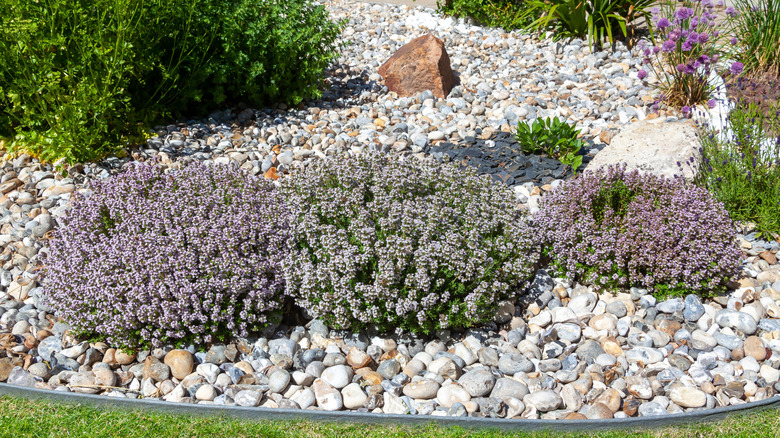
If you're low on time and want to choose the best mulch for your garden while minimizing the time you'll have to spend maintaining it, gravel and other similar-sized stones are good options. You can also find gravel and stones in an array of beautiful colors, which makes mulching with them a handy means of adding further visual interest to your flower beds and borders.
Gravel and stones are also a superb material for guarding against weeds, creating a barrier through which seeds are unable to receive sunlight for germination. And since these mulches are inorganic, you are virtually guaranteed not to risk sowing new nuisance seeds by laying them down, which is one of the common issues associated with compost or grass-clipping mulches. Finally, if you live in areas that experience frequent, extended dry periods, or vicious bouts of frost, gravel and stones' insulative properties can help to protect roots against such extremes.
Of course, inorganic mulches also lack some of the benefits that their organic counterparts offer in abundance. Organic materials like wood or bark chips, compost, and grass clippings offer the same insulation and weed suppression benefits as gravel. But as they break down, they also act as a slow fertilizer, feeding vital nutrients into the soil beneath, which is superb for its long-term health and for feeding your plants. But the key words are break down: If you're worried about how often organic mulch needs replacing, or you don't want to risk accidentally sowing problem seeds into your flower bed, then gravel and stones are superb, long-term solutions.
Try artificial mulch materials like rubber
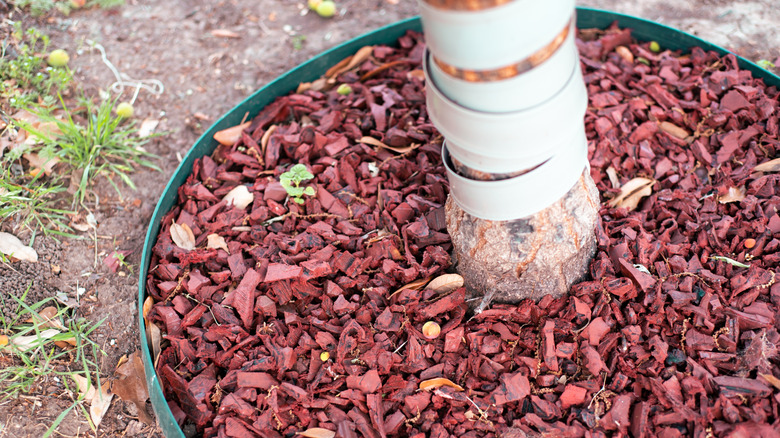
While similar in appearance to organic materials like wood chips, rubber mulch lasts far longer. It's also available in a multitude of colors, helping you to match it — or contrast it — with your wider garden scheme. Rubber mulch is also incredibly tough, standing up to even the worst weather conditions and forming an barrier through which weeds find it very tough to grow. It's so resilient, it can do the job for as long as two decades.
However, rubber mulch should be used with caution. In fact, it should only be considered for very specific areas — ideally those where you don't intend to grow plants or grass, and away from any water sources. Not only does rubber mulch add zero nutrients to the soil, but it can actually pollute it by leaching toxic chemicals, including high levels of zinc, which can harm plants to the point of death. It's also highly flammable, rendering it unsuitable for areas near a firepit or a chiminea, as well as regions that are prone to wildfires.
Make use of your lawn clippings
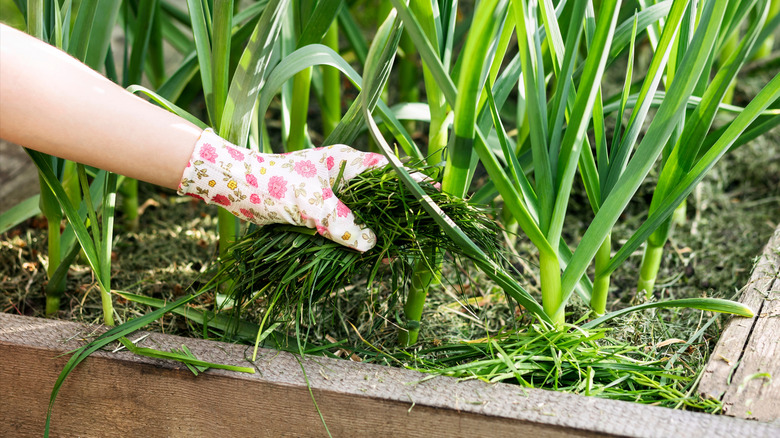
Grass clippings offer one of the most cost-effective mulching solutions, especially for gardeners with a lawn. During the warmer months especially, that lawn is sure to need a few trims. This means you're likely to be left with an abundance of organic material that would otherwise be thrown in the garbage can or added to a compost heap. While the latter is a good, long-term strategy for creating mulch for future seasons, did you know that grass clippings can be used as they are to mulch your flower beds?
The benefits of using them are many. One is that they take care of all of the usual mulch duties — suppressing weeds, retaining soil moisture, and insulating plants against poor weather. Another is that, since grass clippings are naturally high in nitrogen and potassium, they can also be a useful material for fertilizing your soil. There are even crucial lawnmower options that will further convert your grass clippings into an effective mulch.
Before you dust off the lawnmower, it's important to note the potential downside to using grass clippings for mulch. The main concern is that it risks spreading unwanted grass seed to your flower bed, especially if any of your grass was allowed to grow tall and form seed heads before mowing. If so, reserve those clippings for the compost heap, give them time to rot down, heat up, and for the seeds to die. Then cut the grass again while it's short for more ideal mulch materials. If your garden bed requires a very specific NPK fertilizer balance, it's also worth double-checking before adding such nitrogen-rich clippings.
Make your leaves matter
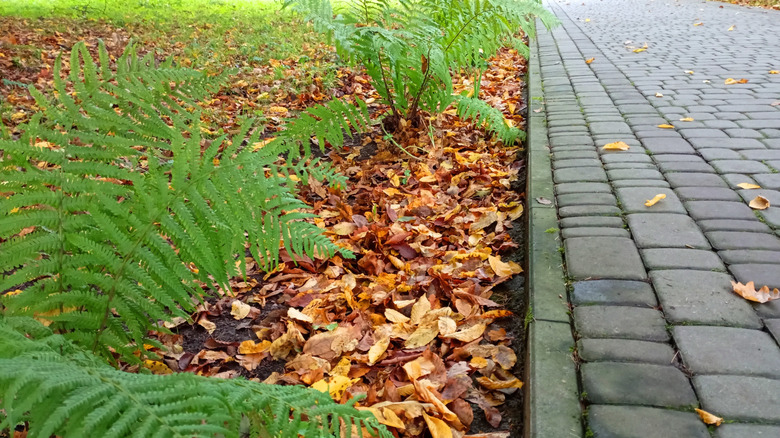
Mulching with leaves is a fantastic way to suppress the growth of weeds and nuisance grasses, since leaves make for complete, layered coverage. It can also help insulate your plants against the worst of the weather. This is handy, especially since the time at which fallen leaves are most abundant is also considered to be one of the best times to mulch.
So, whether you've just trimmed your trees and bushes, or autumn's leaves are piling up in your yard, think twice before bagging and just disposing of them. Instead, save yourself a few bucks on paid-for mulch solutions and put leaves to use on your flower beds.
Now, it's important that you don't simply spread piles of whole leaves across your borders and beds. Doing so can lead to them matting together when wet, blocking drainage and breaking down more slowly. In order to turn your leaves into fuel for your garden, you'll first need to shred them, which can easily be done with a lawn mower. Not only does this mean they can break down and pass their nutrients to your soil more quickly, but it makes spreading them in your borders and beds much easier.
Use straw to mulch your fruit patch
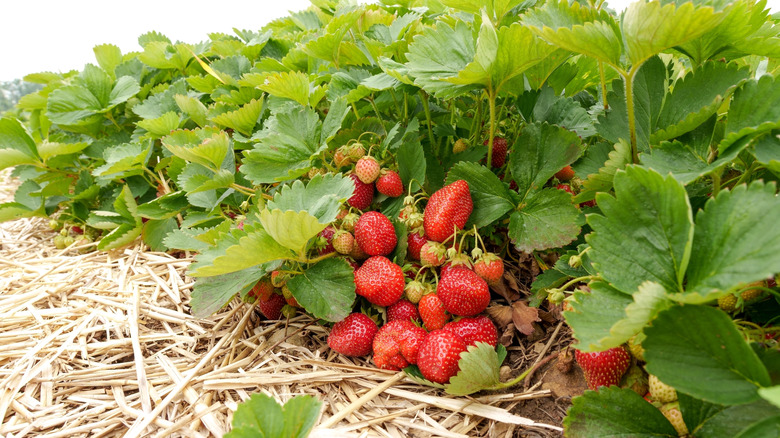
Made from the dry stalks of plants like wheat after harvesting, straw's nutritional content is much lower than that of other organic mulches like leaves and compost. This means that it's not necessarily the best mulch option if you're hoping to feed or fertilize your soil (there is also a slight risk of straw mulch increasing the acidity of the soil. However, it is very good at forming a protective barrier, insulating the soil and roots from extreme weather and helping it retain crucial moisture. Be aware that dry straw is far more susceptible to wind than bark or gravel, so if you live in a very windy area, it may not be the best choice.
Straw is also an especially handy mulch for fruit and vegetable patches that are beginning to bear produce, because it can protect the parts of the plant that live above the soil. Instead of allowing fruits and vegetables like strawberries and pumpkins to rest on damp soil and risk rotting, place some straw mulch on your bed and keep your hard-grown produce from spoiling. As with grass clippings, it pays to check your straw to ensure that there are no seeds still present (you can even shake it and separate the wheat from the chaff, as it were). The last thing you want to do is sow nuisance and potentially aggressive species of grass into your carefully cultivated kitchen garden.
Finally make use of all those pine needles
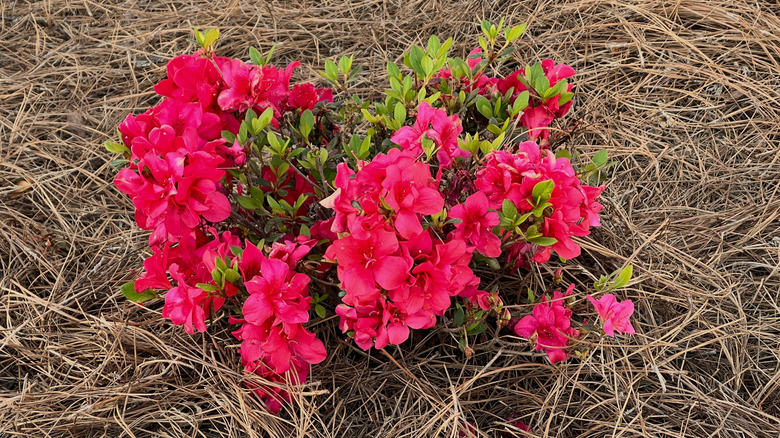
If you've previously written off pine needles as a mulch alternative because of their high acidity, it might be time to reconsider. It was once held that pine needles are too acidic and therefore present a threat to the PH balance of your soil if used as a mulch. In fact, while fresh pine needles — that is, those that are still on the tree — are lightly acidic, that acidity begins to neutralize the moment they fall to the ground. In other words, the idea that they will over-acidify your soil is a myth.
This is good news for anyone with an evergreen in their garden. While you can buy pine straw mulch from most garden supply stores, by gathering your own, you can potentially save a small fortune on your mulching budget. Pine needles don't compact as they decompose, meaning that they won't form a thick mat preventing drainage or locking in too much moiture. They're also very easy to spread and don't need to be chopped or shredded before application.
Just tread with caution if you live in an especially windy area, or in one that regularly experiences wildfires. If so, then those light, highly-flammable pine needles are best swept up and removed from your garden completely.
Mulch your annual beds with newspaper
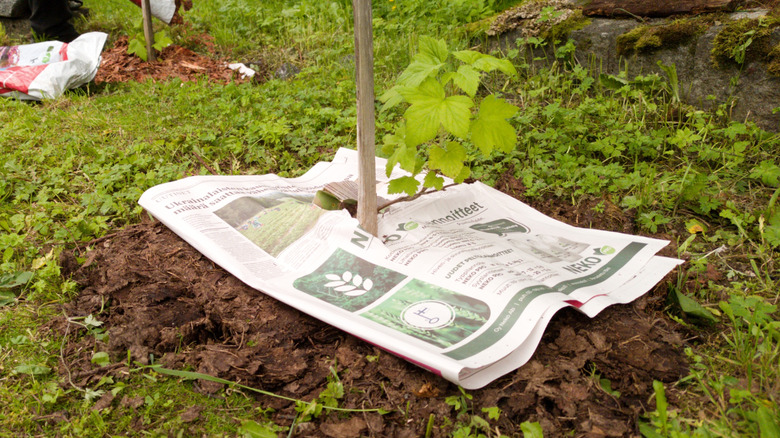
If you're part of the school that still enjoys reading a newspaper with your morning brew, then good news: By putting your newspapers aside and saving them for mulching season, you can stockpile for yourself a cost-effective and potentially useful alternative to other, more costly mulch materials.
Newspaper is best used to weed-proof annual beds — that is, those with plants that have just one growing season. "Newspaper mulch, either as intact sheets or chopped and shredded, has been successful in reducing weeds," says Dr. Chalker-Scott, Horticulturist and Associate Professor at Washington State University. However, she urges caution when using it in gardens that you don't regularly maintain. While dubbing this method "effective for annual beds if they are properly maintained," Dr. Chalker-Scott also explains that "permanent, ornamental landscapes, non-maintained sites, and restoration areas are not appropriate for newspaper and cardboard sheet mulches."
This is because, if allowed to get wet then dry out completely, these materials can actually form an impenetrable barrier for water movement, causing it to sheet away instead of soaking through. In practical terms, this means that if you have beds planted with perennial plants that rarely require any maintenance, newspaper is best avoided. But if you have beds with annual plants in which you regularly work and irrigate the soil, newspaper can be a viable method for suppressing the weed growth before it starts.
Get creative with your compost
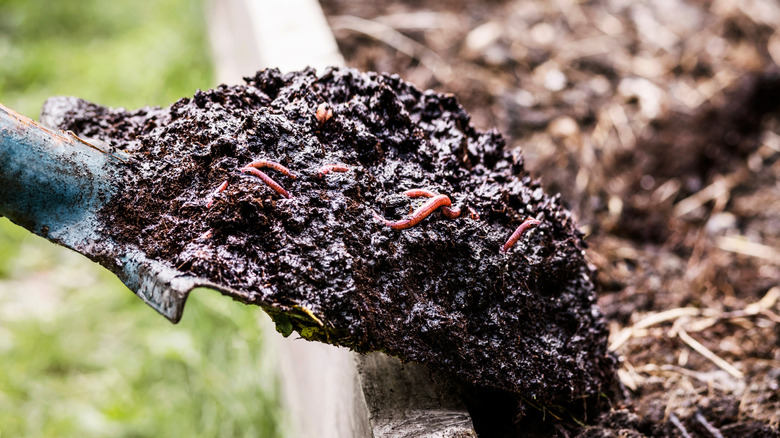
There's perhaps nothing more satisfying than adding your own, home-rotted compost to your flower beds. Doing so adds valuable nutrients to your soil, it's completely free, and it enables a sense of self-sufficient accomplishment you can't get sourcing mulch from your local home improvement store. As a mulch material, it's one of the best: It's loaded with nutrients, can help to suppress the weeds in your flower bed, and supports moisture retention in your soil during dry spells.
However, using compost as a mulch should be done thoughtfully. Firstly, using compost that's fully rotted down is key. If it isn't, the materials yet to fully compost can actually compete with your soil for nitrogen, effectively stealing it away from your plants. To tell whether or not it's fully rotted, you can check its texture and smell. A handful of well-matured compost is like a slightly moist forest soil that breaks apart easily in your hands. The smell should also remind you of walking through the woods.
Another important consideration is whether or not your compost pile has been fed with the cuttings of nuisance plants like grass or weeds. If so, those cuttings are likely to have contained seeds when you added them. To minimize the risk of accidentally re-sowing these seeds in your flower beds and borders, it's important to ensure that your compost heap regularly exceeds 131° Fahrenheit — the required temperature to kill any seeds in your compost. If that's not possible in your area due to the local climate, then consider omitting grass and weed cuttings from your composting regimen.
Encourage healthy growth with cocoa bean hulls
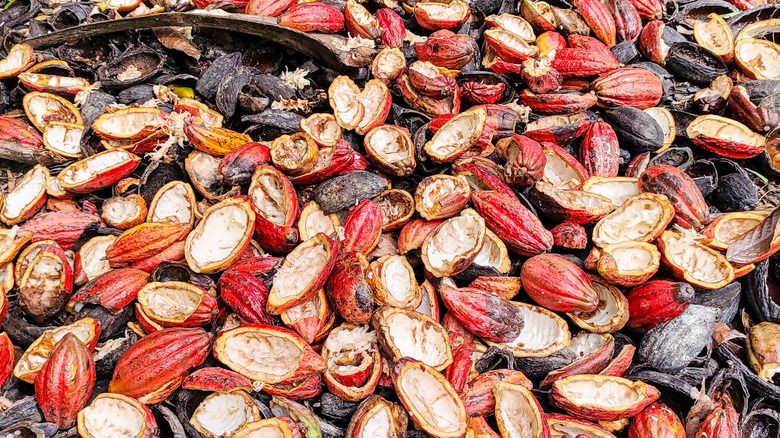
When it comes to weeds, prevention is always better than cure. Mulching is arguably one of the most effective preventative measures you can take, and any of the materials listed so far will be effective at suppressing weed growth. Another option is cocoa beans, the hulls or shells of which have been proven to be a superb defense against the invasion of nuisance plants. They hold a similar visual appeal to other mulches, like bark chips, and will rival most mulch materials when it comes to helping your soil retain moisture during dry spells.
However, whereas many other mulch materials — especially paper and straw — are somewhat lacking in nutritional value, cocoa beans boast an impressive amount of nitrogen, phosphate, and potassium in the form of potash. This gives them a serious edge over many other organic mulches, making them an excellent choice for feeding and fertilizing your soil. Their rough texture also provides a tricky surface for snails to slugs to navigate, thus helping to solve your pest problem.
So, what's the catch? Well, if you have dogs or cats, you'll probably need to avoid using cocoa beans shells altogether. This is because the same chemical that makes chocolate dangerous for your pets to eat — theobromine — is also present in cocoa shells, and for dogs especially, cocoa bean hulls have a tempting smell.
Add nitrogen to your soil with coffee grounds
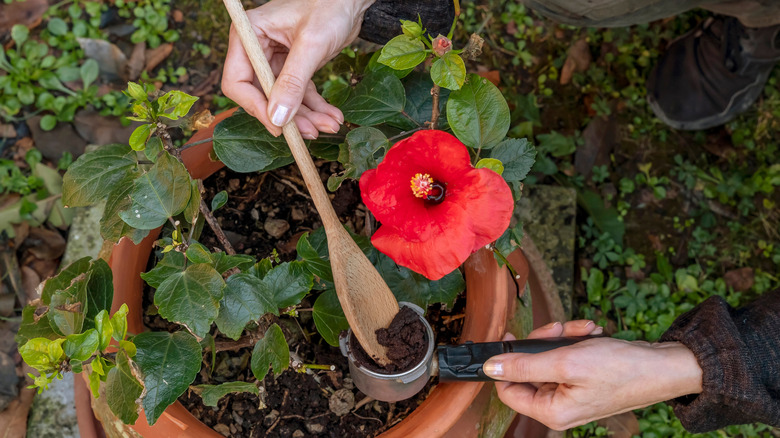
Those with an eye for nifty, thrifty hacks in the garden may well already have heard about this alternative to mulch. In fact it's one of many unexpected ways to use coffee grounds in the garden. If you haven't heard about this before, it might be time to stop emptying your grounds into the bin.
Coffee grounds are one of many fantastic alternatives to wood bark mulch. Instead of sucking nitrogen from your soil in a bid to help the mulch decompose, coffee grounds do the opposite, feeding your substrate with this crucial growth ingredient, encouraging healthy growth in your plants. As well as being a relatively rich source of nitrogen compared to other mulch materials, coffee grounds also contain phosphorus and potassium. In short, if you're looking to feed your soil while also stifling weed growth, coffee grounds are a great material with which to do it. As an added bonus, many coffee shops offer free grounds for composting or mulching. All you have to do is ask.
t's important not to lay coffee grounds too thickly over your soil. Doing so can cause them to form a crust, which in turn prevents water from passing through to the soil beneath. Instead, consider mixing coffee grounds with coarser mulch materials, like cocoa beans or shredded leaves. Alternatively, you can lightly rake your grounds into the top layer of your soil to feed it, before mulching more heavily over the top with another, more porous material. Another option, if you have the luxury of time, is to start adding your coffee grounds to your compost heap — something your future self will certainly thank you for.
Suppress weeds with a living mulch
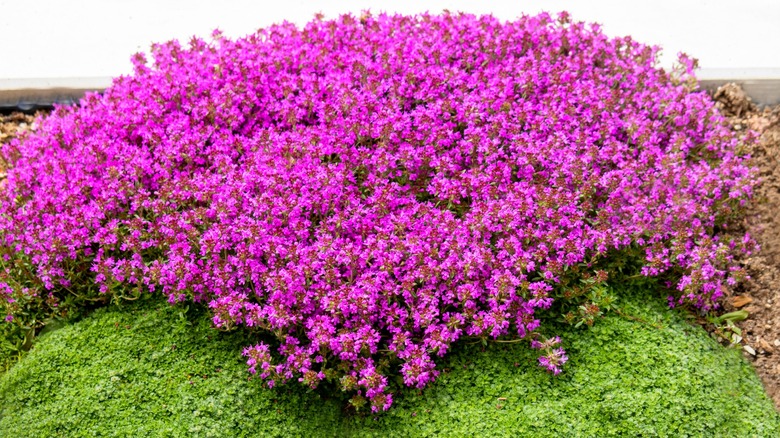
A living mulch is essentially any low-growing, ground-covering plant that's deliberately grown in areas that would otherwise be dominated by invasive weeds and grasses. It offers an effective and beautiful solution to other mulch types, especially in larger beds where you have room to allow ground-cover plants to thrive.
As for how to choose the best ground cover, it largely depends on your climate and the nature of your soil, so be sure to research the various ground cover options and their suitability to your area. Creeping thyme (Thymus serpyllum) is a popular choice. Especially well suited to USDA hardiness zones 4 to 9, creeping thyme demonstrates why you should use ground cover instead of traditional mulch. Not only does it suppress weeds by blocking out sunlight, it also outcompetes them for resources like water and nutrients, effectively playing weeds at their own dastardly game.
Creeping thyme is drought tolerant, low-maintenance, and perennial, which means you can leave it to do its job, season after season. It also smells wonderful, and tends to attract friendly pollinators like butterflies and bees.