

Avoid These Mistakes To Get The Most Out Of Aerating Your Lawn
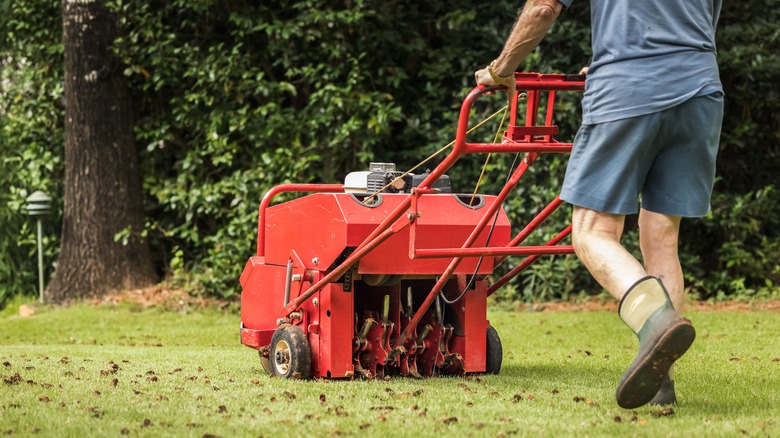
Aeration is one of those lawn tasks that doesn't get nearly enough credit. While mowing and watering are the obvious moves, aeration quietly works behind the scenes, opening up the soil so air, water, and nutrients actually reach the roots. Done right, it relieves compaction, strengthens turf, and sets the stage for grass that's greener, denser, and far more resilient against stress. The catch? Aeration is also one of the easiest lawn jobs to mess up. A few small missteps can secretly ruin your lawn, leaving it worse than before and wiping out all your hard work.
That's why it's so important to understand not just the how, but the what-not-to-do. From aerating in the wrong season to skipping aftercare, homeowners often fall into simple traps that cut results short. Thankfully, avoiding these pitfalls is simple once you know where they lurk. That way, you're armed with all you need to know about the biggest mistakes that trip people up, and how to sidestep them for good. By making sure you aren't just poking random holes in your lawn, you'll open the door to lasting health, thicker turf, and the kind of yard your neighbors will notice (in a good way).
Aerating at the wrong time of year
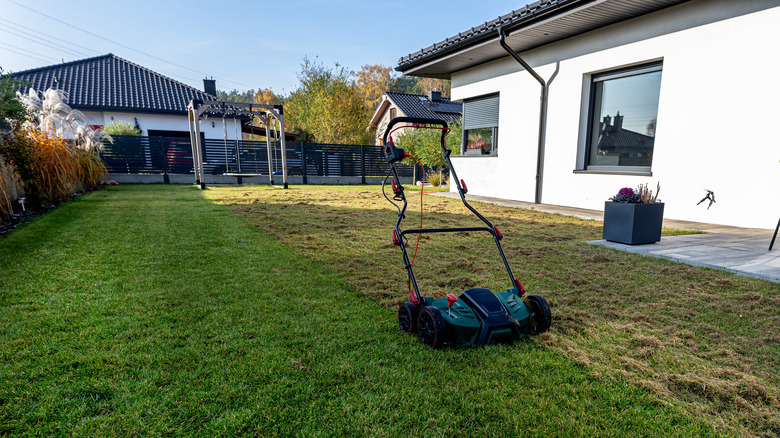
Aerating at the wrong time of year can cause more problems than solutions, so knowing the best time to aerate your lawn is essential. The trouble is, the right time isn't the same for all grass types. Cool-season and warm-season grasses follow different growth cycles, and that cycle determines when each is strongest. Also known as the active growth period, this window aligns with when aeration is safe and beneficial. Outside of it, you run the risk of stressing your turf instead of strengthening it.
So what time of year is best? Many assume early spring, when plants regain vibrancy after winter. But for most cool-season lawns (like fescue, ryegrass, and Kentucky bluegrass), winter dormancy leaves grass weak and vulnerable to disease if stressed further. Summer aeration is risky, too, since heat stress raises the chance of root damage, insects, and disease. Warm-season lawns (like Bermudagrass, zoysia, and Bahiagrass) have their own pitfalls, as well. Aerate too early in spring or too late in fall, and turf lacks the strength to recover. The key is avoiding aeration when grass is at its weakest.
That's why fall is often the best time for cool-season lawns. During this season, grass shifts energy to repairing roots, storing nutrients, and recovering before winter. Warm-season grasses, on the other hand, thrive when aerated in late spring to early summer, their peak growth window. By knowing your lawn's type and sticking to its active growth period, you set yourself up for a lush, resilient yard instead of wasted effort.
Skipping a mow before aeration
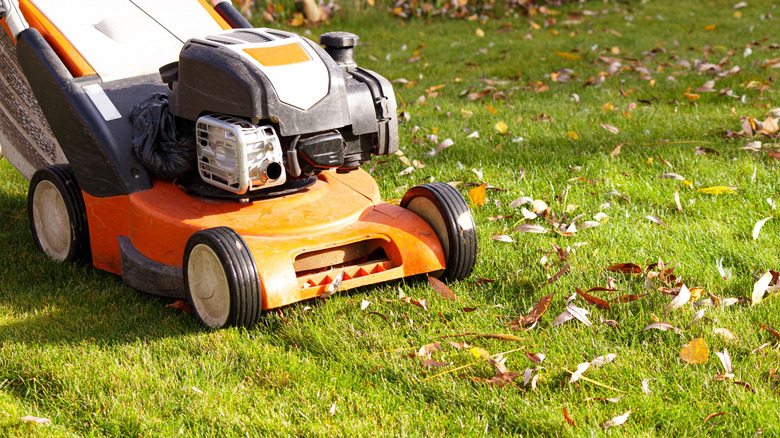
Mowing is a critical prep step that many skip, blunting their efforts in the process. One of the main issues is that tall grass blocks the tines of an aerator, so you end up with uneven penetration throughout your lawn. By mowing your lawn first and cutting it to about 2 inches, you provide your aerator with more even surface area to work with, making it easier to break up compacted dirt while also ensuring that overseeding, water, and fertilizer get evenly distributed throughout.
Mowing your lawn is only part of the equation, however. While you want your grass to be short enough that aerating is even, you want it long enough to protect the top layer of soil from getting scalped. To do that, the Goldilocks zone you're looking for is 1.5 to 2 inches. At this length, your grass gives you just enough for clean tine access while maintaining a buffer to keep your lawn safe. It's also the perfect length to cut your lawn in preparation of winter. If you're aerating in the late fall, you can probably just keep your mower adjusted to this level.
Before you start, it's also smart to mark any sprinkler heads, shallow irrigation lines, and even property lines so the aerator doesn't cause accidental damage. Taking these small steps ensures the process runs smoothly and safely. Combined with proper mowing, you set the stage for consistent tine depth, easier overseeding, and healthier roots overall. In that respect, determining the right height to mow isn't just about maintaining a beautiful lawn. Rather, it's the foundation for getting the full benefit from aeration.
Overlooking soil moisture
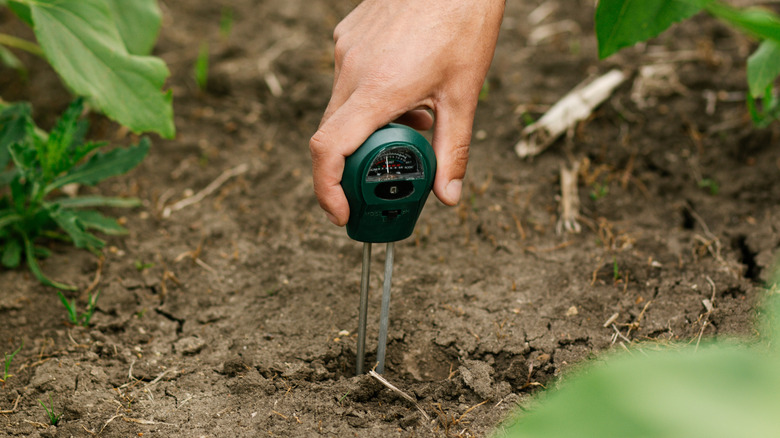
Aerating only works under the right conditions, which include ensuring that your soil is neither bone-dry nor waterlogged. Dry soil makes it tough for tines to penetrate, while oversaturated soil clogs tines and prevents proper core removal. So if you're planning on aerating, remember that aeration only works when soil conditions let the tines do their job effectively.
Ultimately, you want your soil to be moderately moist, not muddy. And for that, a great technique that helps is the screwdriver test: If a screwdriver slips in easily, the moisture of your soil is about right. If you have to force it in, the ground is too dry. If it slides in with no resistance and pulls up mud, it's too wet. By finding the sweet spot for soil moisture, you can ensure the tines of your aerator reach 2-4 inches deep and cores pull cleanly.
To set your lawn up for success, aim to aerate the day after a soaking rain or light watering, when the soil is at that ideal, moderately moist stage. This helps the tines pull clean cores without clogging or skimming over hard soil. A few minutes of prep pays off with smoother aeration, stronger roots, and a lawn that responds the way it should. But if you skip this step, you risk wasting effort, not to mention leaving your lawn far short of the full benefits aeration can provide.
Using the wrong equipment
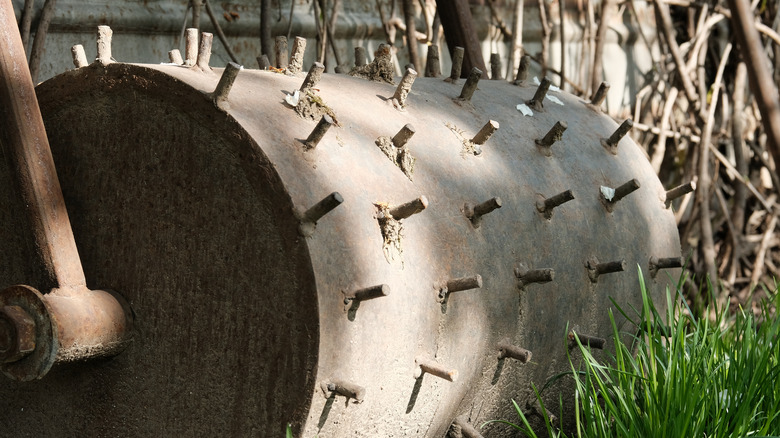
Grabbing whatever aerator is available without understanding the difference can have a serious impact on your lawn. As a matter of fact, there are two main types of aerators, and one of them — the spike aerator — you only want to use in specific situations. The central issue with this tool is that its tines are solid, so it only pokes holes in your lawn. Rather than removing the soil it displaces, it compresses it further into the ground. That means it actually increases compaction that compounds over time.
Core aerators, on the other hand, have hollow tines. As these tines sink into your lawn, they capture plugs of soil, pulling them out of the ground and dropping them in place. In doing so, they relieve compaction while improving airflow and nutrient flow — the main reasons you'd want to aerate in the first place. So not only can these aerators be used for larger lawns, heavy clay, and high traffic areas, but they also offer deeper penetration and encourage healthier root systems for lasting results.
Even so, spike aerators are sufficient in some situations. If you're looking for a temporary, low-cost fix for a small lawn with mild compaction, a tool like this can be useful. Just bear in mind that spike aerators come with limitations, and you'll want to upgrade to a core aerator sooner rather than later. Because if long-term lawn health is the goal, core aeration is the best tool to get you there.
Aerating too shallow or too deep
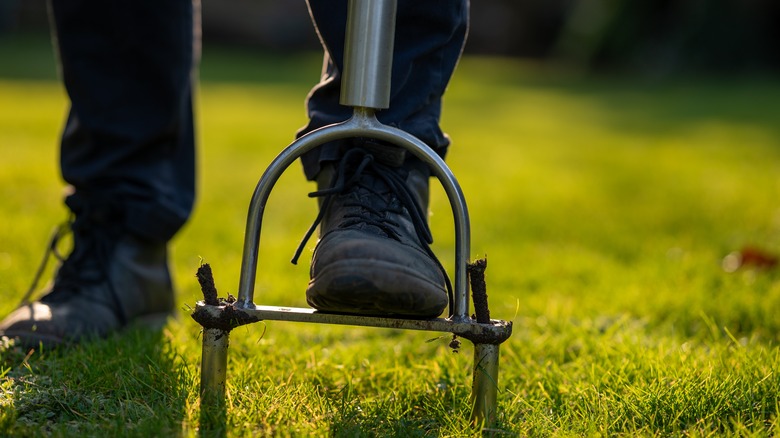
While aeration is beneficial, it's easy to overlook how important it is to reach the correct depth. If your aerator's tines are too shallow, you'll fail to relieve soil compaction. On the other hand, if your aerator penetrates too deeply, you make it harder for grass to grow strong and healthy. The goal is to pierce just deep enough for air, water, and nutrients to reach the root zone.
Here's what really happens when aeration is too shallow or too deep. Tines that barely scratch the surface don't penetrate compaction or thatch, so benefits like better drainage and oxygen flow never reach the roots. And when tines penetrate too far into the soil, you can damage the root systems and stress turf, especially during less-than-ideal weather like heat, drought, or cold snaps. In either case, you risk harming the lawn instead of helping it, not to mention wasting all your effort.
The good news is that most core aerators are designed with tines at least 4 inches long, which is ideal for loosening compact soil. The operative term here is most, however. When you aerate, you're aiming for a depth of 1.5 to 6 inches, so be sure to verify your aerator is within that range just in case. Additionally, it's a good idea to overlap or criss-cross passes so you don't leave gaps, ensuring your lawn gets even coverage. By hitting the right depth and making overlapping passes, you avoid damage and you set your lawn up for healthier roots, stronger growth, and better resilience.
Aerating too often (or not enough)
Neglecting aeration can weaken your lawn's health, but you also don't want to overdo it either. If you skip aerating, soil compaction increases, threatening your lawn's health by making it harder to absorb water, oxygen, and vital nutrients. When you aerate too much, however, the process stresses turf and weakens soil. Knowing how frequently you need to aerate depends on soil type, grass type, and usage. Does your lawn see lots of activity from kids, pets, sports, or foot traffic? Or is it mostly decorative and not walked on much?
One major determining factor is the type of soil your lawn has. If it's mostly clay soil, you want to aerate your lawn annually or every other year. But if your lawn is mostly sandy or loamy (hence, looser and less prone to compaction), you're safe to aerate much less frequently. Beyond that, keep an eye out for bare patches or thinning turf. If grass struggles to grow in certain spots — and it's not from drought or disease — it often points to soil compaction that aeration can fix.
Finding the right rhythm for aeration means syncing it with your grass type and your lawn's overall health. For most homeowners, once a year is plenty, especially if you pair aeration with overseeding during those windows. And because aeration also breaks up thatch, you rarely need to dethatch more than once a year, either. The goal isn't to aerate as often as possible – it's to give your lawn just enough attention to relieve compaction without adding unnecessary stress.
Ignoring heavily compacted areas
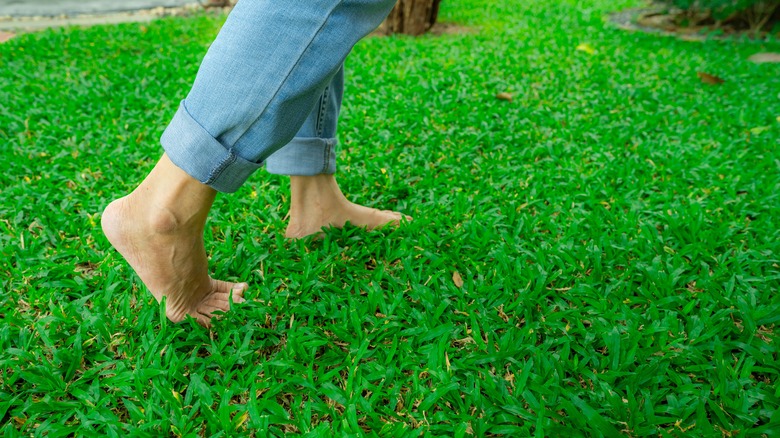
Many homeowners treat their whole lawn evenly during aeration, but neglect to consider that different areas serve different purposes. For instance, walkways, driveways, pet runs, and play areas see a lot more traffic. So you can imagine those areas compact more quickly, meaning they're more resistant to tine penetration and they remain stressed even after a single pass.
The trouble with high-traffic spots doesn't stop at compaction, either. Soil in compacted zones is denser, squeezing out air and blocking water and nutrient flow. Grass there struggles to grow and, if it does at all, it tends to stay thin and pale compared to the rest of the yard. You might even notice puddling after rain or patches that wear down faster. Aeration can work wonders, but with just a single pass in these stubborn spots, you'll be hard-pressed to make a meaningful difference. Multiple passes allow the tines to dig deeper, pull more plugs, and finally give the roots room to breathe again.
So rather than treating your entire lawn the same, it's better to target compacted spots with multiple passes during aeration. Focus on common trouble zones that see lots of traffic, and walk slower or overlap more in these zones to make sure the tines break through. By paying closer attention to these areas, you ensure more even turf health and prevent weak, patchy strips from undermining your lawn's overall look.
Removing the soil plugs too soon
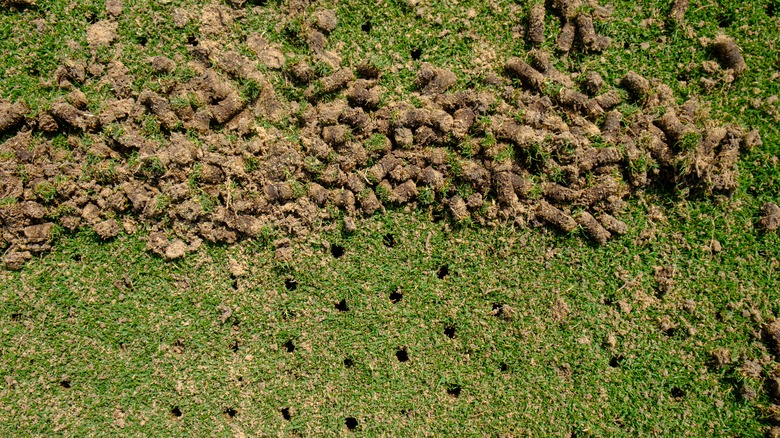
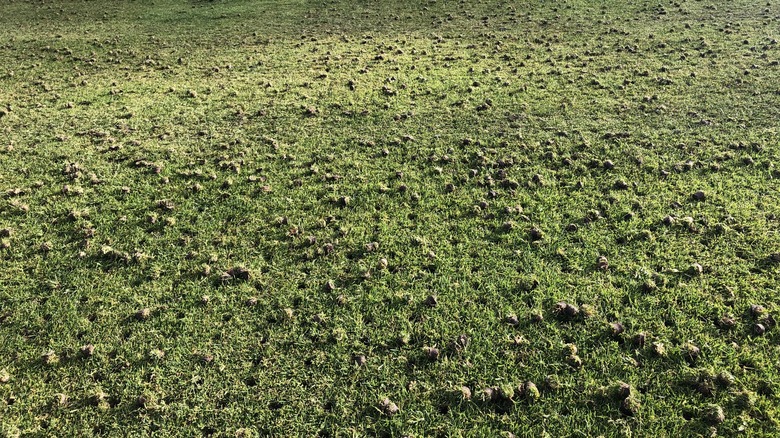
After aerating, your lawn is scattered with dozens or hundreds of 2- to 3-inch plugs of soil. Although you might be tempted to discard them, it's better for your lawn if you don't. Of course, the desire to clean them up and trash them is understandable. These plugs aren't exactly the prettiest thing to leave around, and after all, you're working hard so your lawn looks lush and healthy. The problem with removing them, however, is that you're tossing out all the organic matter and stored nutrients packed inside. Tossing them also means you'll have to make up for the loss with more fertilizer, which costs extra time and money down the road.
See, those soil plugs naturally break down within about two weeks, with help from rain and regular mowing. As they decompose, they return valuable material back into the soil. By letting nature take its course, your lawn feeds on that goodness: Strengthening turf, enriching soil, and even reducing the need for extra fertilizer. Their gradual breakdown also improves soil structure and helps thatch decompose, keeping your lawn from becoming spongy or weak over time.
If the appearance of soil plugs really bothers you, consider raking them to break them up, instead of removing them entirely. Raking speeds up the decomposition process, so you can diminish their appearance without robbing your lawn of the benefits. With a little patience, the mess will fade and leave behind the vibrant, healthy lawn you've been working for.
Forgetting to fertilize or overseed after aeration
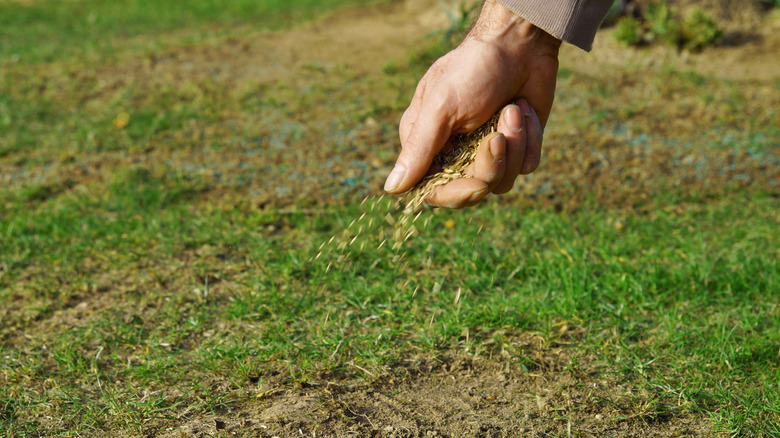
Many homeowners aerate but forget to follow up with fertilizer or overseeding. Keep in mind: Aeration leaves behind small holes that expose soil, giving nutrients and seed a valuable window to reach your lawn's root zone. Skipping this step means losing one of aeration's biggest benefits: Feeding a lawn that compaction was starving.
Fertilizing right after aeration delivers nutrients directly where roots can use them most efficiently. Grass recovers faster, grows denser, and builds deeper root systems, all thanks to the open channels created during aeration. This is especially important for compacted or clay-heavy soils, where nutrient access is already limited. In that respect, you could think of aeration as opening the door and fertilizer as stepping through it.
Overseeding, particularly with cool-season lawns, capitalizes on these holes even more. By taking this opportunity to spread grass seed over your lawn, you can fill in thin or bare patches. By so doing, you reduce the chance weeds will compete for the same space. Exposed soil and loose plugs provide ideal seed-to-soil contact, making it easier for grass seeds to germinate. Together, overseeding and fertilizing maximize the payoff of aeration, and for your effort, you're rewarded with thicker turf, fewer weeds, and healthier growth in just weeks.
Neglecting aftercare
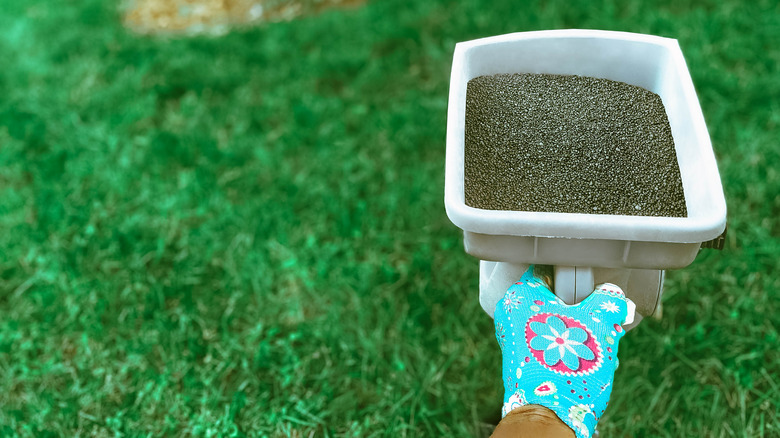
Aeration places a lot of stress on your lawn temporarily, so what you do after directly affects recovery. Yet many homeowners skip this step without realizing it. But by skipping fertilizer after aeration, they delay — or even cancel out — many of the benefits. The best way to approach aeration is to think of it as the setup, but it's aftercare that locks in all the gains.
If you want to get the most out of aerating your lawn, remember to water it deeply right afterwards to prevent the soil from drying out too quickly. Aim for moisture that reaches at least 6 inches down, then continue watering every few days for the next two to three weeks. Once watered, fertilizer — ideally, slow-release — penetrates directly into the roots. You also want the recommended NPK balance for your grass and soil types. Overseeding then fills in any thin spots and makes the most of all of those open cores, since the holes give seed perfect soil contact and steady moisture for faster germination. Together, these steps accelerate recovery, rewarding you with thick, healthy turf in the process.
From here, you can protect your investment by giving your lawn time to breathe. Avoid mowing too soon, and give new or recovering grass 2-4 weeks before the first cut. Try to keep traffic off the lawn for at least two weeks so roots can expand in the new holes. The name of the game is patience. What your lawn needs is downtime, and by giving it that now, you can expect stronger, denser turf later.