

Gorgeous And Creative Ways To Light Up Your Patio
We may receive a commission on purchases made from links.
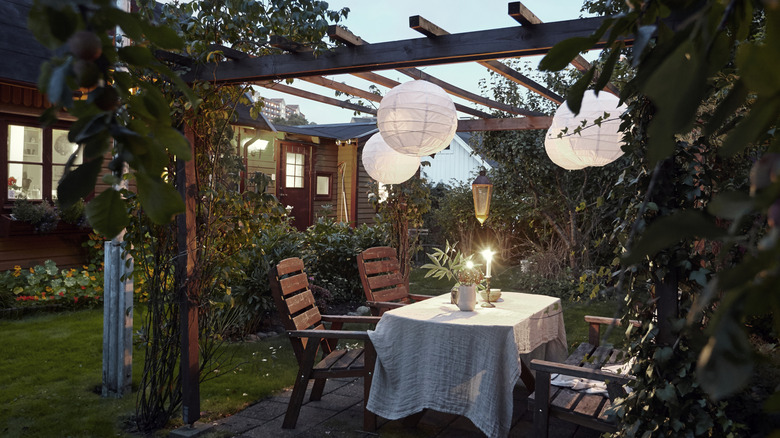
Time spent outdoors is one of life's greatest and most simple pleasures, however, it's also all too often limited to daylight hours. But it shouldn't be. Especially since people are tending to spend more time in the comfort of their own home nowadays, it makes sense, where possible, to extend your living space beyond its traditional four-walled boundaries.
This is where patio lighting can make an enormous difference. Not only does it shed light on your outdoor areas, rendering them useful after sunset, but it can also make time spent outside pleasurable by illuminating and accentuating your garden's most beautiful features. It can also improve home security, and certain patio lighting techniques are also recommended for safety, especially in gardens with potential after-dark hazards like steps or a pond.
Fortunately, there are myriad ways in which to light up your patio. From simple additions like festoon lights and outdoor chandeliers, to hardscaped spotlights, nylon lanterns, and simple fairy lights, if you're wondering how to capitalize on your outdoor sanctuary after sundown, don't worry: There are lots of creative ways in which to light your patio.
Light with layers
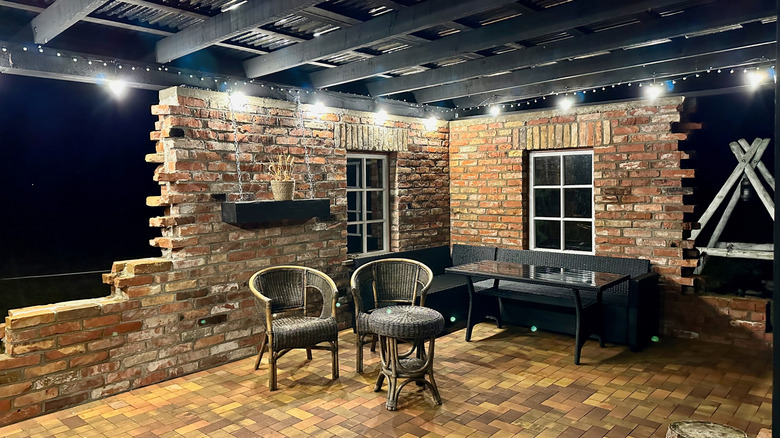
Before you start sourcing products and installing them in your patio, it's important to understand the different types of lightingcommonly used outdoors. Used in isolation, they don't tend to achieve an awful lot. Used collectively, however, they can add up to far more than the sum of their parts.
The first is ambient — possibly the most common kind of lighting that springs to mind when envisaging a cozy patio. Ambient lighting gives your space that soft, cozy vibe that so many strive for when the sun goes down. Festoon lights (also known as cafe or bistro lights) are a good example.
Task lighting is the second, and it's extremely important in spaces where you need to perform any potentially dangerous task. If you have an outdoor kitchen, for example, it's a good idea to install bright, focused lighting, aimed at your work surfaces and any other area in which you're likely to be handling hot food or sharp utensils.
Accent lighting is the final type, and while it's not essential, it can make the difference between a patio that's merely usable, and one in which you can't wait for the sun to set. It's used to add the finishing touches to your scheme, highlighting specific elements of your garden or patio, and adding visual depth to the overall scheme. Stake lights in your flower beds are a good example. If you've decided to incorporate a mural to give your patio a more personalized look, you can install accent downlights, like the multicolored solar fence lights from Soonanier, to continue enjoying its impact after dark.
Consider an outdoor chandelier
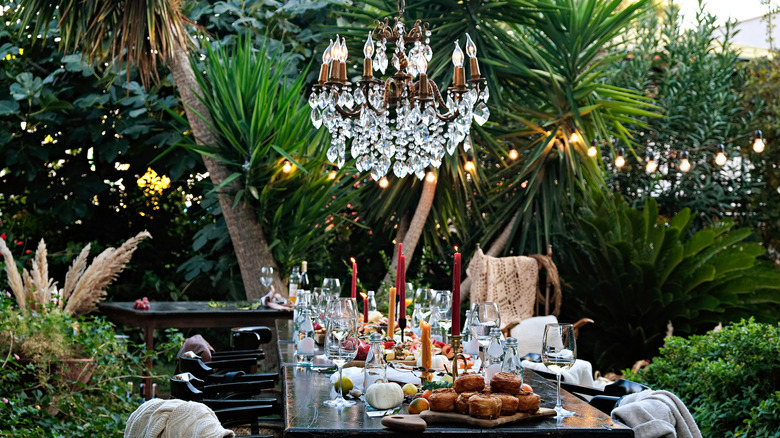
If you have patio dining furniture you'd like to use after dark, a chandelier hung overhead is both a stylish and practical lighting choice, illuminating your party long into the evening and bathing your guests in warm light. Just be sure to choose the right chandelier.
Sealed circuitry and a rubber-coated switch are key to ensuring any chandelier you buy is safe for outdoor use. This is one of the most important considerations when discerning which type of outdoor lighting is right for your yard. If you consistently have wet weather, or if your patio doesn't offer lots of protection from the elements, you'll need waterproof fixtures that don't need to be taken down ahead of wet periods. Specifically, try to find lights that are rated IP65 or higher. This means they're designed for outdoor use, and are therefore proofed against dust and low-pressure water ingress.
Once you've settled on the type of chandelier you want to hang, the next thing to consider is the color of the bulb. It might sound unnecessary, but the color and warmth of your lighting will have a significant impact on the vibe around your table. Harsh, bright light is less conducive to a relaxed atmosphere than lower, warmer tones. In fact, yellow light is believed to enhance relaxation by up to 30% compared to bright white light. An added bonus is that yellow light can actually help repel bugs, which you'll definitely want to do if you're planning on dining beneath your gorgeous new chandelier.
Hang nylon lanterns
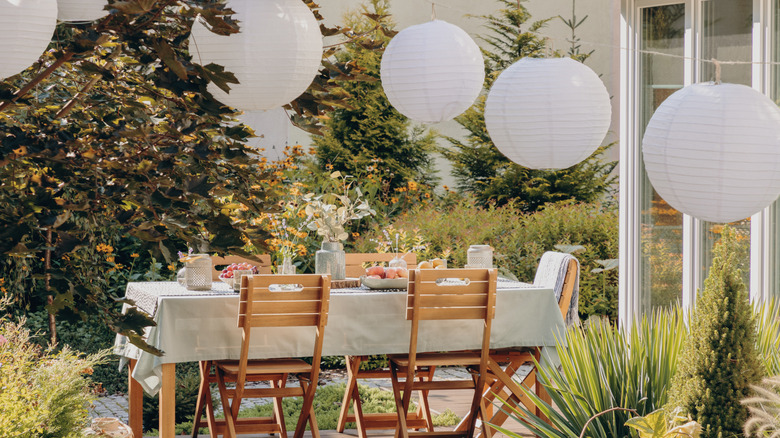
Who doesn't love the whimsy of a few paper lanterns? An ancient Chinese symbol of celebration, hope, and happiness, paper lanterns are a fantastic accent lighting choice for gardens and patios, especially when constructed from nylon. Offering exactly the same joyful aesthetic, nylon lanterns benefit from the kind of weather resistance that their paper cousins simply can't compete with. Just note you'll still need to take them down from exposed, uncovered areas, especially if strong wind or heavy rain is forecast.
You can hang these lanterns from the beams of your pergola, or string them overhead between walls. If you have trees surrounding your patio, even better — trees make the perfect hanging canvas for paper and nylon lanterns, which in turn illuminate the branches and cast the most intriguing shadows after dark.
Thanks to their weather resistance, nylon lanterns can be left in situ for longer than paper lanterns. And if you're hoping to reduce light pollution in your yard with low-level lighting, both paper and nylon lanterns are a great option, bringing a timeless sense of warmth and elegance to spaces of all shapes and sizes.
Drape fairy lights from overhanging trees
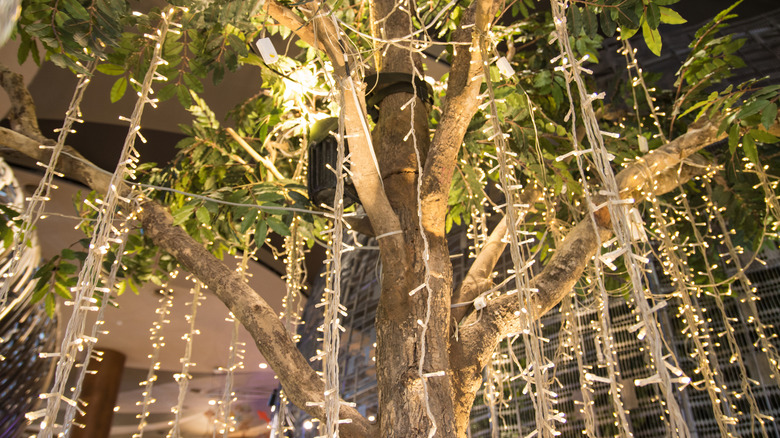
If you do have trees with limbs that extend over your outdoor space, don't immediately reach for the pruning shears. Instead of removing them to make way for manmade fixtures, consider whether you could save yourself some money by hanging lights from your garden's natural features.
Armed with a ladder and something like Solhise LED curtain lights, you can easily bathe your space in a warm, fairy light glow by draping them over your tree's limbs. What's more, while it's an easy and cost-effective way to add light to your outdoor living space, this method can also be used on trees situated away from your patio to create interest and drama in your nighttime yard. This adds depth to your lighting scheme, creating visual interest beyond the confines of your patio, and highlighting the natural beauty of trees that would otherwise disappear in the darkness.
Depending on where you choose to hang curtain lights, you'll need to consider their power source. If you're hanging them on your patio and have a power-source nearby, lights that plug directly into the mains supply are a good option. If you don't have a power source on hand, or if you're hanging lights in a tree in the middle of your garden, you can always look for items that are battery powered or solar powered, if you get enough sunlight. In any case, check that your chosen product is rated IP65 to protect against water ingress, keeping your trees safe.
Use netted fairy lights for smaller trees and shrubs

If your patio is surrounded by small or medium-sized shrubs or trees, netted fairy lights are a simple way of retaining their visual interest when the sun goes down. Such lights are easily placed over your shrub and hooked in place. When the sun sets, they help add a feeling of warmth to your space.
There are just a couple of important considerations to bear in mind before incorporating netted fairy lights into your patio lighting scheme. The first is ensuring that your lights are designed for outdoor use. An IP rating of 65 will ensure they're guarded against dust and water.
The second — and this is an important one — is how much your shrubs or trees are likely to grow. If you're using netted lights on special occasions only, this won't become a problem. But if you're planning to use them for longer periods of time — and especially if you're hoping to leave them in place for a season or more — you'll need to keep an eye on them to ensure that the growing plant isn't stretching and damaging the wiring. New growth can also risk getting tangled in the netting. By keeping a regular eye and adjusting the netting as needed, you can prevent breakages and therefore save on potentially costly replacements and safety hazards.
Light your patio with solar power
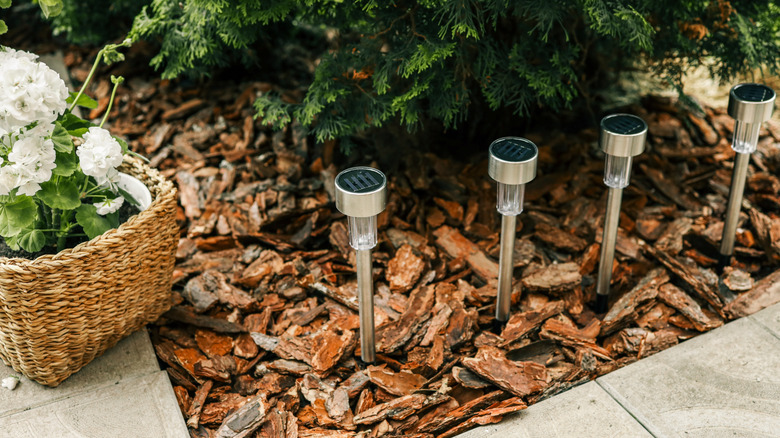
A common conundrum when trying to light your patio is determining your fixtures' power source. One of the easiest ways to power your new lighting scheme is with weatherproof outdoor sockets connected to your mains supply. However, if these aren't already in place, having them installed can be costly. Another obvious option is to buy battery-powered lights, however, with these comes the need to frequently charge or change the batteries. This in itself can be expensive, not to mention annoying.
Instead, why not harness the power of the sun? Solar power is free, you won't have to worry about hiding unsightly cables, and you'll never have to change the batteries. Solar-powered lighting is an especially great choice in gardens that receive plenty of direct sunlight. What's more, there are plenty of different types of solar lights to choose from.
Festoon lights can be strung across your patio, while flower bed lanterns can be staked into the ground and used to maintain your carefully cultivated patches' visual appeal long into the night. The latter are especially useful in flowerbeds that sit alongside walkways, as they also help to illuminate the path.
Consider practical lighting for safety
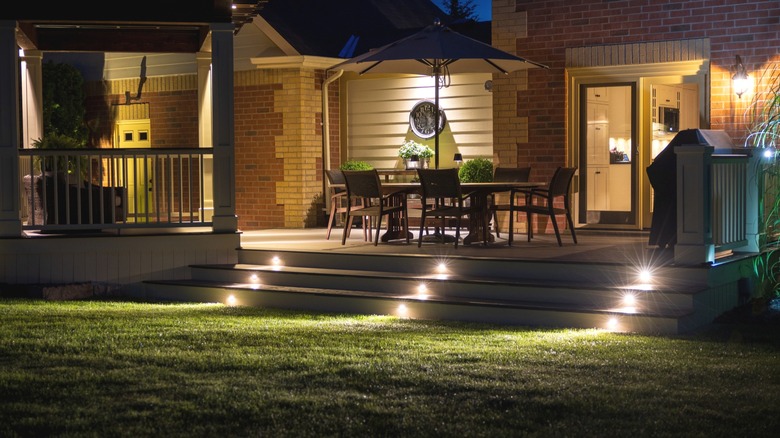
While ambience and accent lighting are key to a successful patio lighting scheme, it's important not to forget about task lighting. Not only in areas where you're likely to perform complex tasks, like cooking, but it's also key in outdoor areas containing potential after-dark hazards like steps, slopes, and even ponds. Don't worry: Safety lighting needn't mean sacrificing style for function. At least, it doesn't have to.
There are a few ways to incorporate practical lighting into your patio that can also add visual interest. Hardscaping is one, and involves incorporating weather-proof lighting into non-natural structures like stairs, walkways and walls. Hardscape lighting, like mounted sconces, are especially useful, and can help to create a low-maintenance oasis in your backyard with lighting that doesn't need to be taken down during wet or windy weather.
Moonlighting is another option. Otherwise known as downlighting, there are a few ways to "moonlight" your patio. One involves adding soft lights to trees or pillars, to ensure that darker patches near hazards are properly illuminated. You could also add strip lights to your steps — either on the rise or beneath the overhang of each step — to make them visible in the dark.
Whichever hazards you need to illuminate, it can pay in the long run to invest in quality fixtures. In fact, quality lighting, especially that which is designed to make the space safe for guests and children, is one of the best outdoor updates for adding serious value to your home. Not only will potential buyers view it as one less safety feature they need to add, but they may also see it as a security feature, since external lighting can potentially help with crime prevention by deterring would-be trespassers.
String festoon lights overhead
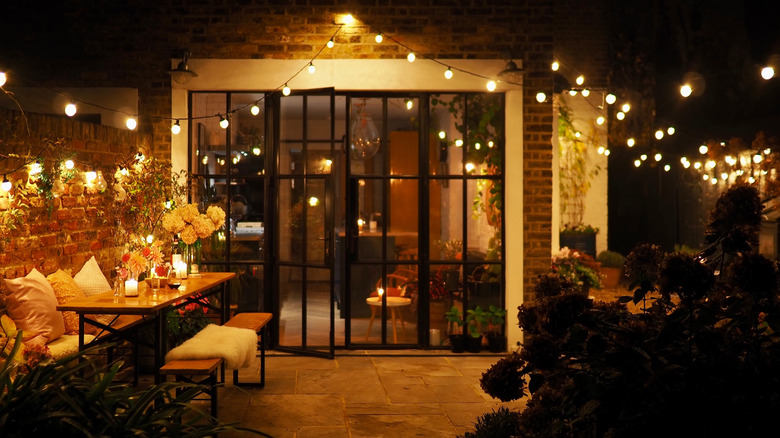
Festoon lights — or cafe lights — are a popular patio lighting choice, in part because of the cozy ambience they infuse outdoor spaces with, and in part because of their versatility. They can easily be hung between walls or beneath the canopy of a pergola. On patios flanked by trees, they can even be strung among branches.
Of the three types of lighting — task, ambient, and accent — festoon lights sit firmly within the ambient category. They're best for providing a cozy, ambient glow, which means you'll want to consider layering them with brighter options — like lanterns, spotlights, or chandeliers — in areas where you need to see clearly.
As for the lights themselves, there are plenty of types available. Styles range from exposed Edison bulbs to strings of miniature paper lanterns, making it easy to find one that suits your overall patio design. What's more, many products are connectable, so you can buy multiple sets and configure them to suit your space.
There are plenty of options when it comes to power, too. Since festoon lights usually form the ambient layer of a lighting scheme, solar power is a good choice. While not always the case, solar-powered lights often emit a lower level of light than those powered by battery or mains electricity. This low level light is ideal for curating a cozy ambience.
Add a fire pit or chiminea fireplace to your patio
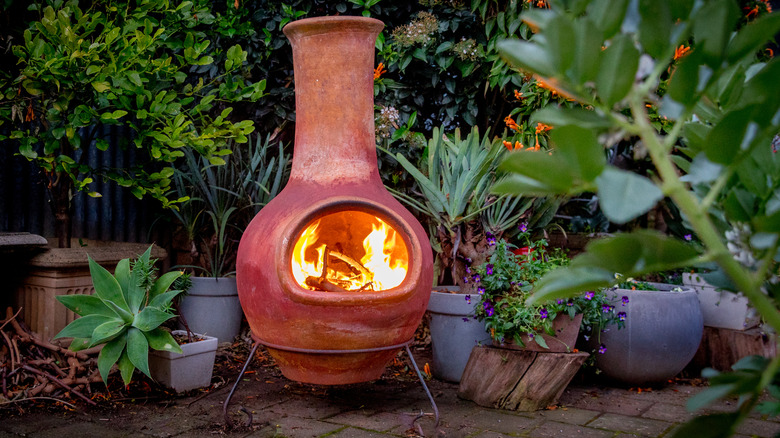
While ambient lighting like festoon and fairy lights can add a sense of warmth, they don't actually ward off the cold. On cooler evenings, there's nothing quite like a fire to take the edge off. Chimineas and fire pits are great options for adding genuine warmth to your gathering, but it's important to think carefully about where you put them. Areas with good air flow are a must, as are those where flames are unlikely to present a fire hazard, such as near wooden sheds and trees.
When it comes to deciding between a fire pit and a chiminea, you should weigh up their respective pros and cons. Fire pits, for example, are affordable and able to radiate heat on all sides. Installing a larger fireplace is also a simple way to add privacy to your backyard by blocking out your neighbors' view of your patio. Just know that an open fire can be hard to control, can produce overwhelming amounts of smoke, and can pose a safety hazard in areas with flammable structures and trees.
With chimineas, smoke control is less of an issue, the fire is more closely contained, and they're easier to use. The downside is that quality chimineas can be expensive, and many are prone to falling over if not on even ground. They can also crack if not properly maintained.
Opt for portable lighting
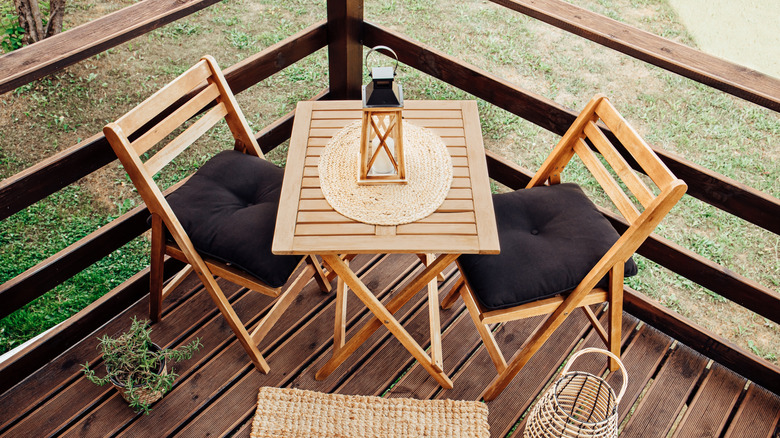
When you start to build your patio lighting scheme, you'll probably find yourself thinking about more permanent fixtures, like festoon lights and chandeliers. While these are all key to successfully layering your lighting scheme, it can also pay to consider more flexible additions and accessories.
Portable options like battery-operated lanterns and table lamps can help layer your space with cozy, warm lighting. They work to complement your more permanent fixtures while providing a useful means of finding your way around in the dark — especially handy if you've yet to line your path with stake lights. And since there are so many styles of lamps and lanterns to choose from, incorporating them into your lighting scheme presents an opportunity to accessorize your patio with both form and function. it's also an affordable way to light individual tables or spaces when entertaining.
Another option is to simply light a candle, especially on patios that are suitably sheltered from the wind. Remember to blow them out when you're done, and be careful not to light them too close to flammable materials — important if you plan to wrap yourself in a blanket for the evening!
Bring the inside out with a floor lamp
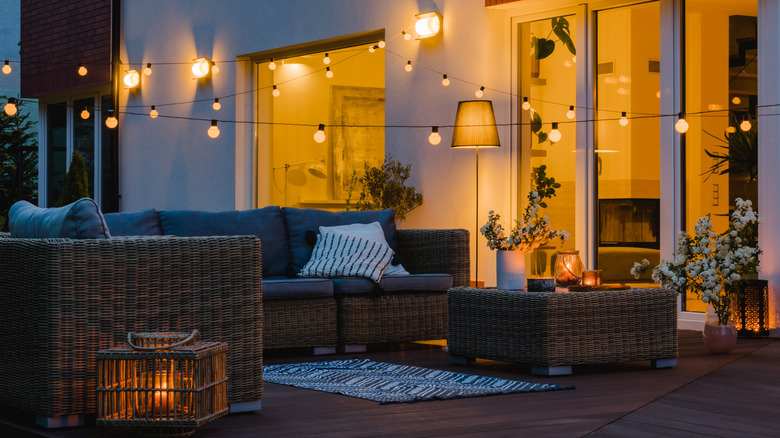
The first thing to say here is that you shouldn't simply unplug a floor lamp in your living room and move it out to your patio. In most cases, indoor lights are not rated for outdoor use. In other words, if you want to incorporate a floor lamp into your patio lighting scheme, you'll need to find one with an IP rating of 65 or higher, to ensure it is sufficiently resistant to water.
Fortunately, there are plenty of outdoor-rated floor lamps on the market, in an array of different styles. This makes it easy to find one that suits your wider design scheme, infusing your patio with the kind of personality-led design usually reserved for indoors. As for where to use a floor lamp, it's really up to you. Floor lamps can be especially effective when used to illuminate darker corners or tables. And if you like to spend your evenings curled up on your patio with a good book, why not throw some light on the page by standing a floor lamp next to your seating area?
Light and warm your space with a patio heater
Installing a fire pit or a chiminea are great ways to add real warmth to your patio space, but they may not always be suitable. This could be because you have small children, or that there are fire hazards present on your patio.
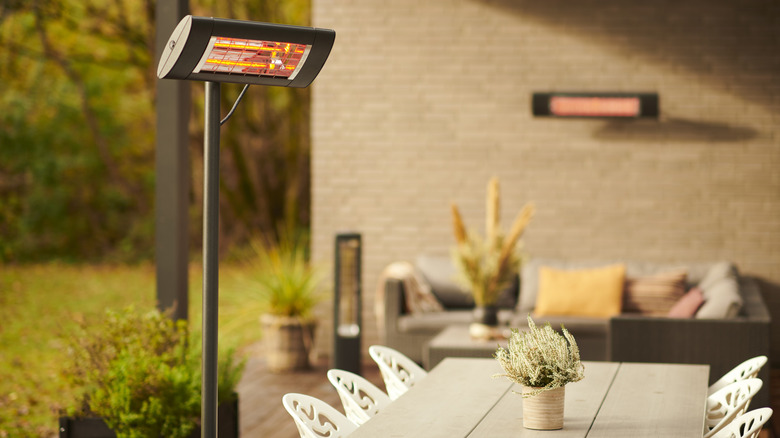
If this sounds familiar, then a patio heater might be the safer option. Traditional patio heaters warm the space immediately in front or below them with infrared heat, which itself helps to illuminate the space, albeit with low levels of light.
Another option is to find a patio heater with dedicated, integrated lighting. As with regular patio heaters, there are a few such options available. Some can be mounted in the ceiling, working like a traditional light fixture, while others are designed in much the same way as a floor lamp.
If the latter sounds appealing, Bromic's freestanding Eclipse portable patio heater is worth considering. Mounted on a wheeled base, it's portable, can be incorporated into your smart-home system, and crucially, emits soothing light while heating up to 121 square feet of space.