

Budget-Friendly Tricks To Keep Your Outdoor Pool Warm
We may receive a commission on purchases made from links.
When the dog days of summer roll around, there is nothing better than to take a refreshing dip in your very own pool. Yet, while the pool is an excellent medium for chilling out on a hot day, most people don't want the water too cold. The thing is, ideal temperature varies from person to person, and you can easily outspend your budget trying to figure out ways to warm up your pool water, with traditional heating methods running $200 to $600 per month or more depending on the energy source and where you live.
Pools are an investment, there is no two ways about it. However, once you've spent the initial cost to get your pool up and running, your budget might be a little worn out. The average cost to install an inground pool in 2025 is between $35,000 and $65,000, while a quality above ground pool can run you a little over $3,000. That is a good chunk of change no matter what. Therefore, coming up with clever, budget friendly solutions to keep your pool warm is going to save you time, money, and effort.
Most pools are at their most comfortable when the temperature hovers between 78 to 82 degrees Fahrenheit. Maintaining those temps can be tricky owing to a number of factors, including wind, evaporation, and fuel cost to heat the water. The following 10 tips are budget-friendly solutions that can help you keep your pool at the temperature you like, without breaking the bank.
Go for a dark hose and the sun
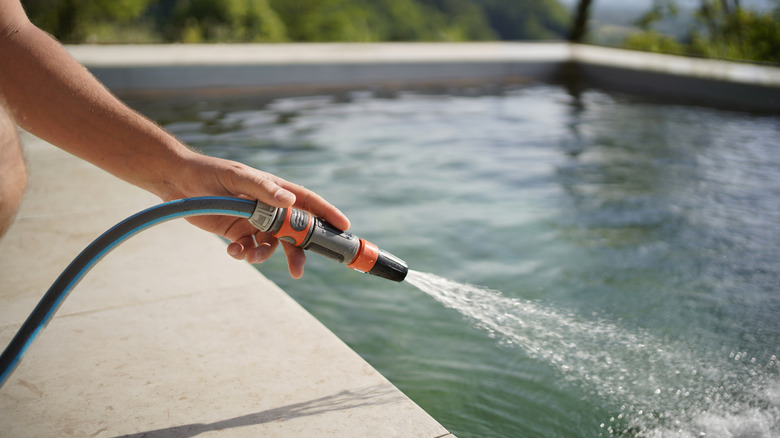
We will start with the most budget friendly solution of them all: the dark hose trick. It's as simple as swapping out your light-colored garden hose for a black, gray, or dark green one. Dark colors absorb heat, and no color does that better than black. But how can it help heat up your pool?
The first thing to do is make sure your dark hose is in an area that is exposed to full sun and attach a sprayer you can set to off, so you can fill the hose with water. If you have a long enough length, coil it up so the hose will insulate itself and not bleed heat. Keep the hose under the sun for as long as you have sunlight. As this happens, the hose will heat, as well as the water inside it.
To transfer that water to your pool you can hook up this black hose to your pump return, which will cycle the pool water through the hot hose and back into the pool, thereby retaining that solid temperature. If you don't have a pool pump, simply use the hose to refill your pool with the warm water. The water coming out of the hose will help warm up cooler water in the pool to a more comfortable temperature. This easy solution is often called a budget solar heater. You're harnessing the power of the sun through a hose, like the Teknor Apex Zero-G 4000 100-foot hose, costing less than $100. What is more budget friendly than that?
Purchase a solar cover
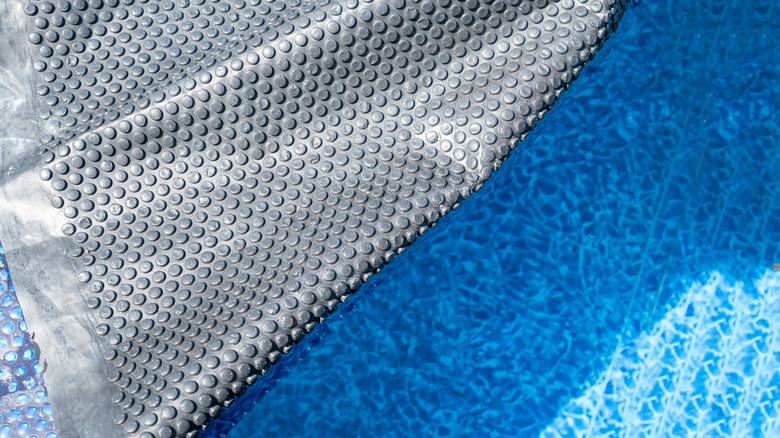
Evaporation is a big issue when it comes to maintaining your pool's water temperature. As water heats, especially under the sun, it turns into vapor and releases into the air. The hotter the water temp, the faster the evaporation. While there is no stopping evaporation, there are ways to minimize its effects. The best way to do this is by having a pool cover blanketing your pool when it is not in use. However, you can't just use a tarp for this, which is a winterizing mistake. If you want to maximize the heat retention of your pool, invest in a solar cover.
Also known as a solar blanket, these covers stretch the length of the pool and shield the water surface from the elements. Designed with materials that capture the heat of the sun, a solar covers can increase your pool's water temperature by an average of 10 to 18 degrees F. It also helps prevent evaporation, because any water vapor trying to escape will come up against the cover and return to the pool. The covers are relatively affordable, running anywhere from around $30 to just over $200., though there are also accessories like reels, that can add to the price.
Another benefit to the cover is that it helps keep debris, such as leaves, grass clippings, or bugs out of your pool water. The one downside is that, if your pool is oddly shaped, you won't be able to find a cover that can cover the entire surface of the pool. Fortunately, our next trick takes care of this issue, especially if you aren't willing to pay a lot to have a custom solar cover made.
Get more coverage with solar rings
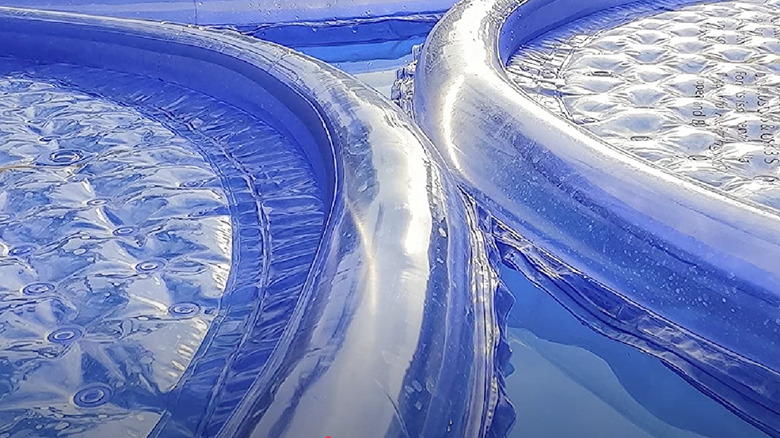
Solar rings are an excellent alternative to solar blankets, especially if you have an awkwardly shaped pool. While you are not going to get the full coverage you would if you had a solar blanket (so, less debris protection), these inflatable rings operate in much the same way. Essentially mini solar panels, the rings will take in the heat of the sun and transfer it to the water, while simultaneously preventing the evaporation that would cause the water to cool down.
The main difference between the solar rings and blankets is the fact that the rings are inflatable and more easily portable. They can be blown up when they are needed, and deflated and stored when they are not. The beauty also lies in their affordability. A single solar ring costs a little over $30, while a 10-pack costs around $300. That 10-pack should cover most of a 14 foot by 28 foot oval pool, to give you some idea of coverage.
Another excellent aspect to the solar rings is that you can purchase as many or as few as you need to cover your pool while it is not in use. Owing to the fact that they don't provide complete coverage, what little evaporation escapes through the seams between the rings is negligible when it comes to heat loss.
Pour in a liquid solar cover

If you're looking for a more economical alternative to a physical solar cover or set of rings, a liquid solar cover is an excellent option. Perfect for those who want to get their pool warmer without investing a ton in infrastructure, liquid solar covers are biodegradable and nontoxic, meaning you won't have to worry about them causing any skin irritation like heavy doses of chlorine and other pool chemicals might. Another plus? Most bottles, like Natural Chemistry's Cover Free liquid solar blanket don't cost more than $30.
The liquid solar cover works by creating an invisible, molecule-thick film over the surface of the pool. This film, once again, works as a type of solar panel. The sun's heat is transferred to the water and "trapped" under the film. The film also works to prevent evaporation, which as we know will cause the temperature of the pool to lower, and it's easy to apply.
Unfortunately the liquid cover is far less effective than a physical cover in that if the film is broken in any way, the whole thing becomes useless. So, in the event of any intense weather like rain or wind, the cover becomes ineffective. It also needs to be reapplied each month. However, with bottle costs being so minimal, it's not a hassle to replace.
Build a wind barrier
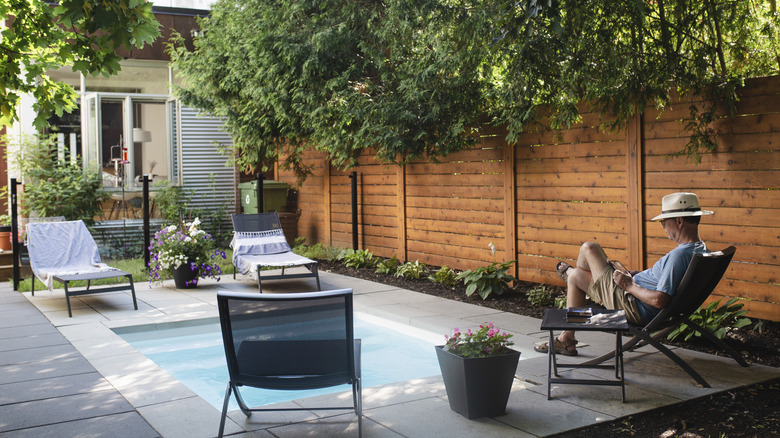
Wind is another huge factor that can contribute to the cooling down of your pool. As it blows across the surface, it aids the evaporating water in leaving the pool, and also really cools down anyone who is swimming in it! If you live in a place prone to wind, it would benefit you enormously to build some kind of structure to help keep your pool area from becoming too cold.
Building one of these barriers is a great way to add some privacy to your backyard pool area as well. It doesn't have to be intricate. You can do an easy DIY barrier with recycled elements like wood pallets, or just purchase some affordable garden fencing from your garden center. You can get creative with what materials you use, as well as the design of the structure, so long as it serves its ultimate purpose. These small barriers are particularly helpful if you've decided a cocktail pool is the right choice for your home.
A wind barrier won't be an end-all solution for your water warming issues. However, it makes a great security barrier for other things like the solar cover, and especially the solar rings. Having two working in tandem is going to benefit you much more than just having one over the other.
Invest in a heat pump
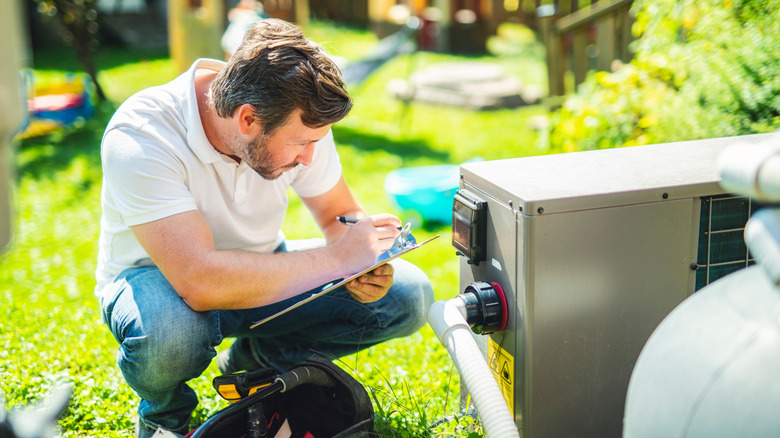
While the previous suggestions were excellent options for pool owners on a tighter budget, the following items are more expensive upfront, but pay off in savings down the line. Heat pumps tend to cost anywhere from $700 to $5,000 depending on the size and energy output. However, they can last a decade or more, and will provide you with consistent heat for your pool water, in all but the coldest weather.
This lack of worry about the weather comes from the fact that, unlike the solar options above, heat pumps pull in heat from the surrounding air, transferring that heat directly into your pool water. So it doesn't need to be a hot, sunny day to build up enough heat. Often powered by electricity, heat pumps provide consistent energy throughout the pool season. While they may be expensive initially, and increase your electrical bill during the summer, they are a low-maintenance solution that often runs cheaper than traditional gas or electric heaters.
These one and done type purchases may seem like they cost a lot, but you need to remember that you're investing in something that will last for a while. Plus, without the worry of weather affecting the heat of your pool, they are an excellent option for people who live in areas that have cooler summers.
Harness the sun with a solar water heater
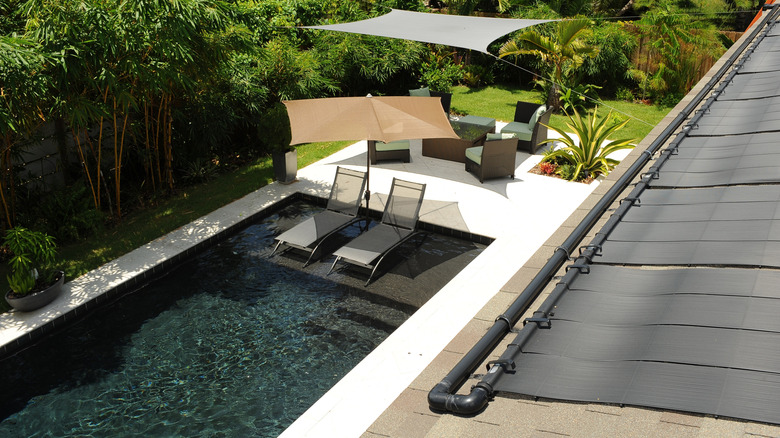
While the most affordable solar heating option was that dark hose trick, those looking for a more consistent source of pool heat would do well to invest in proper solar water heaters. Costing between $100 to well over $1,000 depending on their size and materials, solar water heaters can cost more upfront, but pay off for those who do not want to bother with fossil fuels or increased electrical bills during the summer. Instead, you'll be harness the power of the sun, which is typically in abundance during the summer months.
Solar water heaters operate by sending water through a series of coils located along the solar panels. When hooked up to the pump return on your pool, the coils heat up the water by capturing the sunlight and transferring that heat as the water travels from the pool, through the coils, and back into the pool.
Depending on the type of solar heater you buy, you can set a temperature on it via a thermostat. This involves purchasing additional equipment and, is going to be the more expensive option, running another $1,200 or so. Otherwise, you need to contend with however hot your solar heater makes your pool. The more panels you purchase, the faster your water will heat up. On the plus side, solar heaters have the longest lifespan among heaters, at 20 to 30 years with proper maintenance.
Nothing warms faster than a gas heater
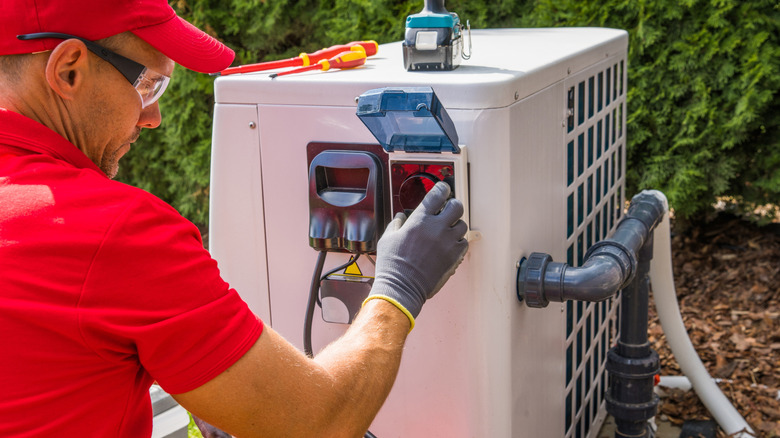
Speaking of which, if you need your pool water warmed up in a hurry, there is nothing better than a gas heater. A gas heater is not reliant on ambient air temperature or available sunshine. Instead, it utilizes propane or natural gas to heat the water as it circulates from the pool through a heating element, and back to the pool. Think of it as an overpowered coffeemaker. As such, gas heat will get that water warmer, faster. However, there is a literal price for such convenience.
Gas heaters for pools routinely run $2,000 to $5,000. While this may make your budget quake with fear, remember that when it comes to larger items like this, you are paying more upfront for the convenience and long-lasting capabilities the machine presents over time. Yes, you will be paying for fuel as well, but modern gas heaters are incredibly efficient in terms of the amount they burn to get the temperature you desire. There is another caveat, which is that, among heating systems, gas is generally the shortest-lived at 5 to 10 years before they need to be replaced.
Another plus to the gas heaters is that they are excellent for people who don't use their pool regularly. They can easily be turned off and switched back on to get the pool up to that comfortable temperature. They are also an excellent option for owners of both above ground and inground pools.
Bring the heat inside with a heat exchanger
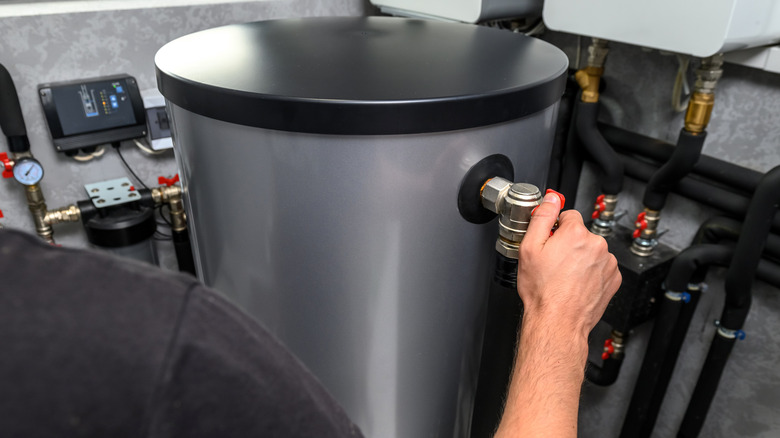
All of our options so far have been tools and systems you can use outdoors. But what if the heat for your pool is coming from inside the house? Funnily enough, there is an excellent, cost-effective solution to heating your pool that uses the existing water heating infrastructure in your home. It's called a heat exchanger, and the way it works will make you consider getting one for your pool.
A heat exchanger is a small device that hooks up to your existing boiler or hot water heater. What it does is transfer the heat from either of those devices and shares it with your pool's water circult without heating it directly. The only real downside is that your water heating bills for the summer will look a lot like those you use in the winter. However, it pays in terms of the efficiency you receive.
One word of note on these. Because the heat exchanger is being hiked up to your existing heating system, it would behoove you to hire a professional plumber or swimming pool pro to have it installed, which will add to the basic $1,500 or so cost for the exchanger itself. The last thing you need is a botched DIY that could flood your basement and cost far more than if you'd just hired a plumber to begin with.
Insulate your above ground pool
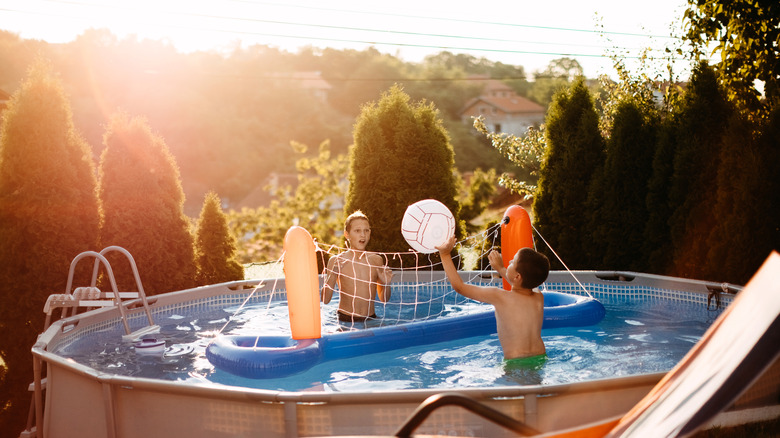
There is no question that, in terms of cost, an above ground pool is going to be much more affordable than an inground option. The main downside is they can be a little trickier when it comes to maintaining heat because they don't enjoy the insulating qualities of the surrounding earth. Therefore, it's worth investing in a good insulation for your above ground pool that helps keep heat from escaping unnecessarily.
In fact, it's not really worth going through the effort of heating your above ground pool if you are not going to do anything about keeping that heat in via insulation. Sure, a good solar cover will help, but that stored heat can escape through the pool walls. As such, though insulation panels or wraps, will cost $200 to $300, they certainly pay dividends when it comes to maintaining heat. Essentially, you'll spray a tacky adhesive to the outside of your pool and wrap it with a specialized heat blanket. Combined with a solar cover, it's an efficient, budget friendly option for above ground pool owners.
Each of these options will appeal to someone: Nature lovers will enjoy the greener aspects of solar, while those who prefer convenience can opt for gas or heat exchangers. Pool owners with very tight budgets can look to affordable sun, air, and wind-related aids. Whatever option or options you choose, they are incredibly helpful when to comes to keeping this massive investment — which can be an upgrade adding serious value to your home — warm and comfortable for summers to come.