

You Should Water Your Garden And Plants' Soil Before The Ground Freezes – Here's Why
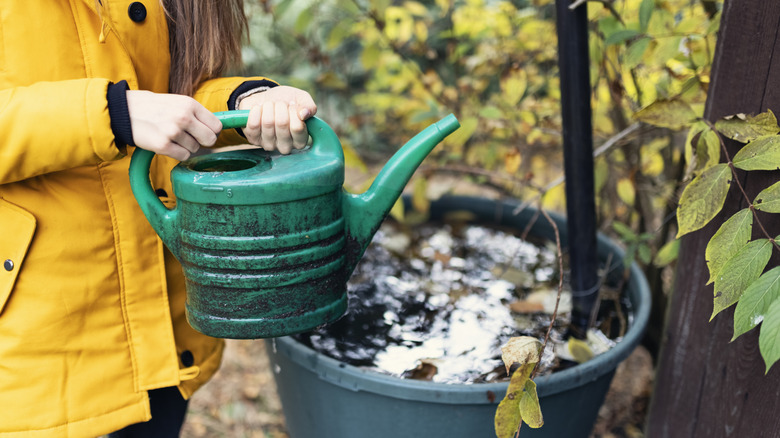
It may seem counterintuitive, but there are several good reasons to water your garden and plants' soil before the ground freezes. At this time of year, plants are preparing for dormancy by taking in as many nutrients as they can. Water is a very important part of that equation. Plus, drought-stressed plants are at far more risk of being damaged by a freeze, so just as you should water your lawn in preparation for winter, so too should you water your garden so your plants are hydrated and healthy heading into the coldest season.
But perhaps the biggest reason to water before a freeze is to protect plants by keeping them warm. As the water in the ground freezes, it releases energy and heats the area around the plant's roots, thereby protecting them from the cold. The moist soil also acts as a great insulator on freezing nights, absorbing heat from the sun during the day and releasing it to the roots. By contrast, if your soil is too dry, cold air can more easily penetrate it and damage the roots.
Watering your plants before the ground freezes is especially wise if you live in an area that is prone to prolonged cold winds. These conditions dry out plants a lot faster, and having the extra moisture available in the soil really helps them avoid damage from the wind and freezing temperatures.
How to properly water your plants before a freeze
When watering in cold weather, it's important to know the difference between a frost and a freeze. A frost occurs when calm winds and dry, cold air freeze the dew that's collected on plant foliage, whereas a freeze happens when the sustained air temperatures are at or below 32 degrees Fahrenheit. Frosts tend to dissipate when temperatures warm up during the day, meaning you can protect your plants by simply covering them. Freezes can last far longer and require the warmth that watering provides.
As for timing, water your plants 24 to 48 hours ahead of a predicted freeze, which will allow the soil plenty of time for proper water absorption. Focus your attention on plants like evergreen shrubs and trees, newly planted shrubs and trees, and perennials that have not yet gone dormant. Avoid watering plants that are well-adapted to dry environments, such as succulents or herbs like rosemary and lavender, as they can be harmed by the added moisture.
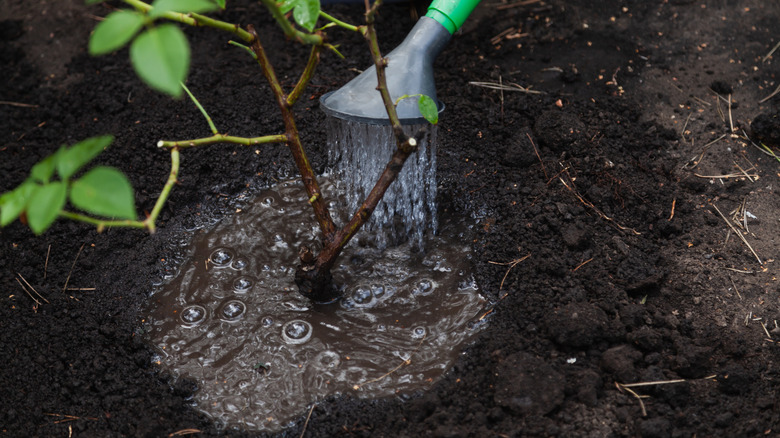
When watering, aim your hose or drip line at the base of the plant to avoid splashing any of the leaves or branches. Aim for a deep watering, which will ensure that the moisture reaches the roots. If you miss your window, you can also water after the freeze has passed to help the plants recover more quickly. Just be sure not to water when the freeze is still ongoing or oversaturate the soil, as this could leave the plants susceptible to diseases.