

Say Goodbye To Carpenter Bees With 4 Natural Solutions
We may receive a commission on purchases made from links.
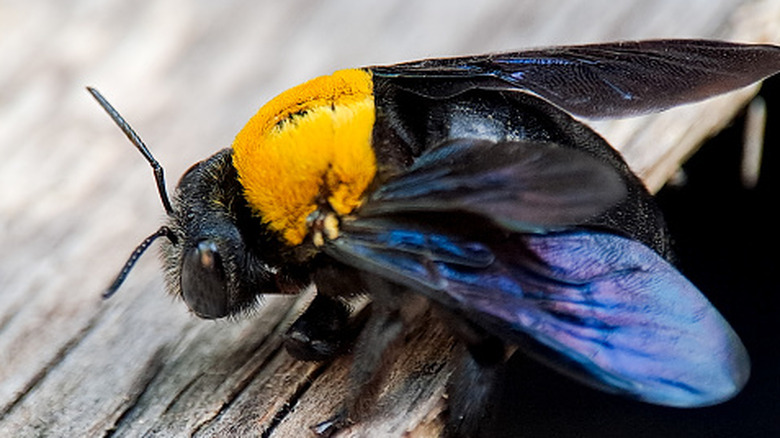
Contrary to their in-your-face antics, carpenter bees rank pretty low when it comes to dangerous types of bees. However, they do present a danger to the wood around your home. Carpenter bees have an unfortunate penchant for boring holes and digging tunnels in wooden boards. As a result, if you see carpenter bees hovering around your house, deck, or patio, you need to keep on top of the situation. There are a variety of chemical insecticides available. However, there are also a few natural solutions, ranging from essential oils to traps, that can help you say goodbye to carpenter bees.
Carpenter bees are particularly attracted to soft woods such as pine, especially if it is aging and/or unpainted. When boring holes, carpenter bees aren't eating the wood around your home. They actually feed on nectar and pollen like other bees. However, they are destroying the wood, nonetheless, by creating a network of tunnels that can compromise the integrity over time. These tunnels are where female carpenter bees lay their eggs. The bees overwinter in the labyrinth they create in the wood before emerging in the spring. If steps aren't taken to get rid of them, the female carpenter bee will continue to use — and expand — the tunnels they create for years. Some of the natural methods we're about to cover can eradicate carpenter bees that have started to tunnel into your woodwork. Others can help to deter them from your wooden structures in the first place. As carpenter bees are beneficial pollinators, lethal control measures are only needed if they are causing damage.
Traps are an effective, non-toxic control method for carpenter bees
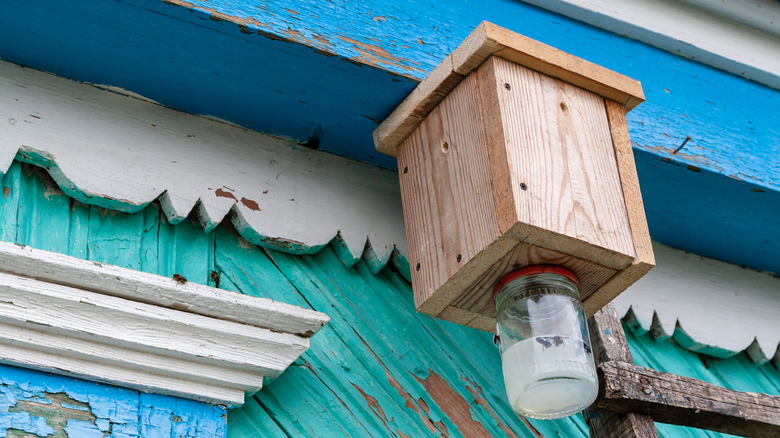
Carpenter bee traps are a safe and effective way of removing burrowing bees from your property without harsh chemicals. However, it is important to utilize traps designed for carpenter bees, as they are unlikely to be attracted to generic insect traps. The biggest difference between most carpenter bee traps and a standard insect trap is a wooden, birdhouse-like box affixed to the top. This wooden structure has pre-drilled holes to attract carpenter bees – basically making them think they have found a ready-made home. However, once inside, the sides of the box direct the bees down to the inescapable collection jar (or box) beneath.
While carpenter bees are unable to escape these traps, they can be utilized as either lethal or non-lethal methods. If you wish to relocate, rather than kill, the carpenter bees, be sure to keep an eye on your trap, as trapped bees will eventually die from starvation and dehydration. Once bees are in the collection jar, remove the trap, take it to your preferred location, and release the bees. This Bee Warehouse trap on Amazon is specifically designed for catch-and-release, and multiple reviewers say they were successfully able to relocate carpenter bees off their property with it.
Almond, citrus, and peppermint oil are also worth a try
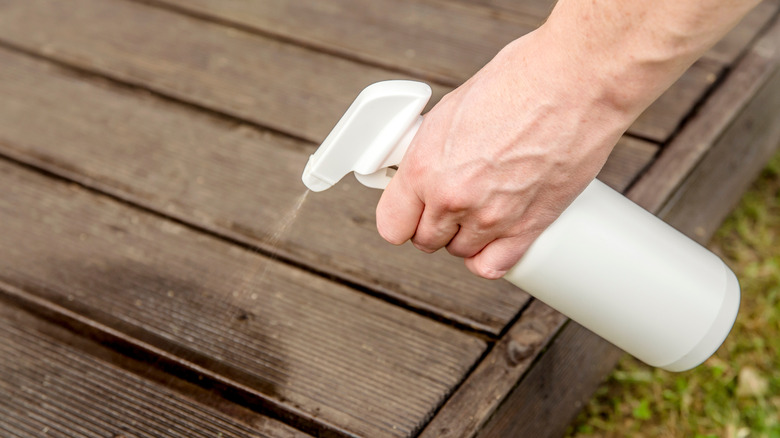
If you want to keep carpenter bees away from exposed wood, almond oil and essential oils are worth a try. Almond oil can help protect wood from carpenter bees, and it's a great solution for wood that you want to keep raw and natural, rather than stain or paint. There are also some anecdotal reports of people having success with peppermint and citrus essential oils. For instance, one Redditor in r/bees shared how, after applying an orange and lemon essential oil spray, both the male and female carpenter bee that were inhabiting her porch left.
While natural repellents like these aren't guaranteed to work 100% of the time, they're easy to test out. If you're using almond oil, rub it, undiluted, onto any raw wood surfaces, preferably in spring. To make a repellent spray from essential oils, mix 4 cups of water with a couple of teaspoons of dish soap and about 20 drops of peppermint or citrus oil. Or, you can try making a spray by boiling citrus peels in water. After allowing the mixture to cool, strain out the peels, and pour the liquid into a mister bottle or handheld sprayer. Whichever spray you choose should then be spritzed into any existing carpenter bee holes, as well as over any exposed wood. Alternatively, a cotton ball or cloth saturated with essential oil can be used to wipe wood surfaces.
Diatomaceous earth is deadly to carpenter bees
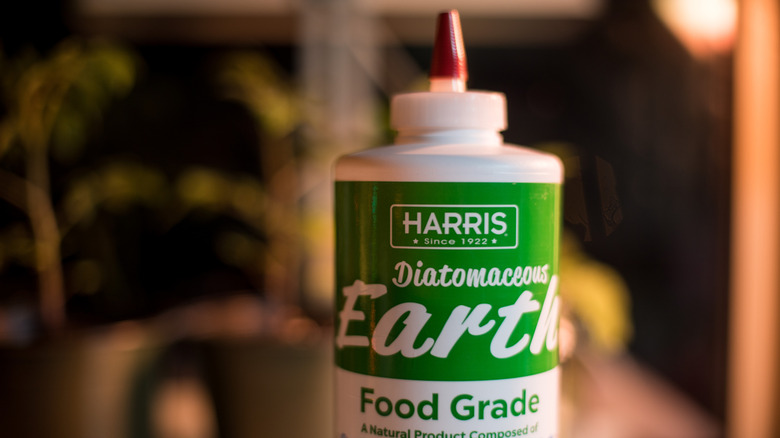
Diatomaceous earth is a natural solution that cockroaches can't survive. The same is true for carpenter bees and other bugs that have an exoskeleton. Diatomaceous earth is composed of ground-up fossils from small organisms known as diatoms, and is abrasive and drying. The silicate from the fossilized diatoms damages and dehydrates insect exoskeletons, making it an effective control substance for carpenter bees that have already made tunnels into important wood structures. Because it kills, rather than repels, it's best used as a last resort option.
While lethal to insects with exoskeletons, food- or pesticide-grade diatomaceous earth is nontoxic and safe to handle. However, to prevent skin irritation, it's still a good idea to wear protective clothing, as well as a mask to avoid inhaling the diatomaceous earth when applying.
The best way to utilize diatomaceous earth to get rid of carpenter bees is to apply a coat of it inside their tunnels. To do this, you will need something to blow or shoot the diatomaceous earth deep into the entry hole. Some squeeze bottle containers of diatomaceous earth are fitted with a tapered tip that works well for this purpose. However, if you have a bag or canister of diatomaceous earth, you need a device such as the Harris Powder Duster to function as an injector. After spraying a puff or two of diatomaceous earth into each carpenter bee hole, wait a few days, then brush away the excess, and plug the hole with either wood putty or caulk.
Pyrethrin sprays and powders can control tunneling carpenter bees
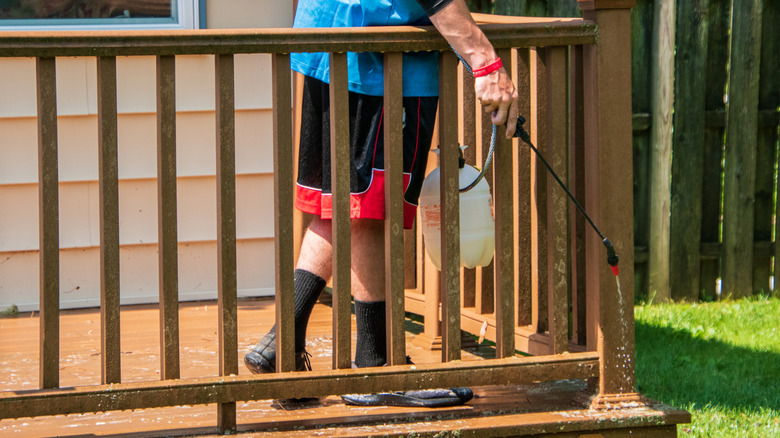
Pyrethrin is an insecticide that can kill carpenter bees, as well as many other insects, on contact. However, it is also a natural substance, as it is derived from certain types of chrysanthemum flowers. While pyrethrin is deadly toxic to carpenter bees, it's essentially non-toxic to birds. There are a variety of commercially available natural insecticides that utilize pyrethrins. If carpenter bees are damaging a wood structure, like a deck or porch pillars, a product like Drione insecticide dust can be used to eradicate the tunneling females.
If you have carpenter bees actively tunneling, apply the powder directly into the hole. Allow a couple of days for the insecticide to work completely, then patch up the holes with wood putty. You can also spray a pyrethrin product directly on any carpenter bees that are flying, hovering, or crawling. However, as carpenter bees are beneficial pollinators (and the males don't even make holes or have stings), you can also try trap-and-release methods for the ones flying about.