

Carpenter Bees Aren't Eating The Wood Around Your Home & Garden
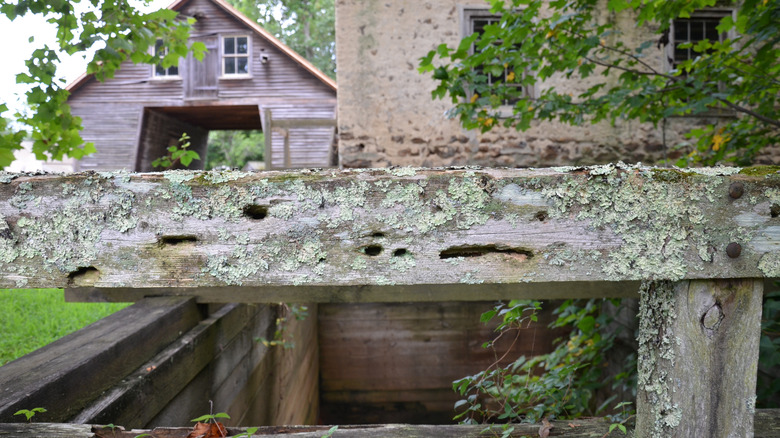
Sheds, wooden decks, pergolas, and privacy fences are upgrades that can add serious value to your home. That is, unless they are riddled with holes or falling apart. As you survey the damaged area — especially if you're seeing lots of circular holes and little piles of sawdust — you may jump to the conclusion that carpenter bees are eating the wood around your home and garden. But that's not what they're doing.
While wood damage can occur through weathering and rot, it may also be a sign your yard has a pest problem, like carpenter bees. They undoubtedly cause a lot of damage to wood — especially unpainted wood — around homes and gardens. However, even if you see a carpenter bee hovering nearby, they aren't eating your wood. While they bore countless holes into wood, carpenter bees do not ingest the stuff. Instead, the shavings and sawdust from the wood they tunnel through falls to the ground beneath the holes they drill.
Instead of wood, carpenter bees — like most other bees — live on a diet of pollen and nectar. As a result, they are considered valuable pollinators. However, having them drilling into the wood around your house and garden isn't just an annoyance — it can cause real damage, even if they aren't snacking.
Carpenter bees can cause plenty of damage
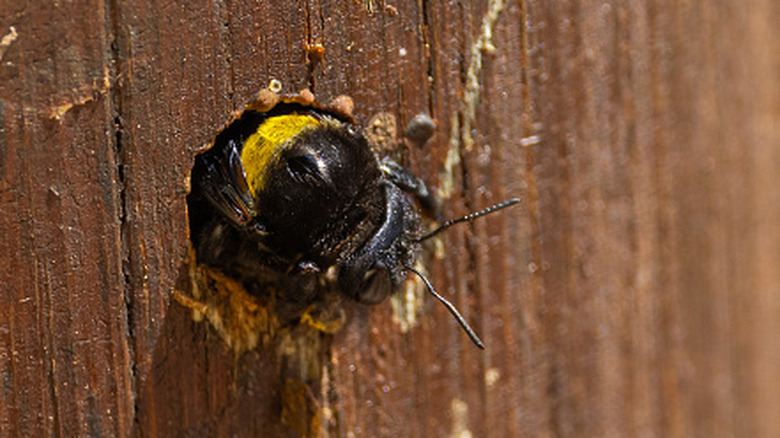
You might wonder why carpenter bees go through all that trouble if they don't eat the wood they're munching on. In fact, they are creating tunnel systems in which they lay their eggs and raise their young. If these holes are not plugged up, the bees will return year after year. Each year, they, or another bee who takes possession of the nest, will expand the tunnel system within the wood, causing more damage internally.
While a single bee drilling one hole isn't that big a deal, a number of bees chewing through wood in your yard can be a problem. If the holes remain untreated and are utilized and expanded each year, the structural integrity of the wood is eventually compromised. Additional damage can occur as a byproduct of carpenter bee activity, as these openings allow moisture to saturate the wood causing rot. The holes also attract woodpeckers. Like carpenter bees, woodpeckers do not eat wood. However, they will cause even more damage to get at what they do eat — carpenter bee larva, young bees, and any other critters taking advantages of your Swiss cheese wood.
If you notice signs carpenter bees have been active in the wood around your house and garden, it's important to plug the holes with caulk or putty. Maintaining a fresh coat of paint or sealant on wood surfaces goes a long way towards preventing carpenter bees from selecting your wooden structures as a nesting site. However, you first want to confirm that you've got carpenter bee damage, indicated by perfectly round entry holes (or several holes joined together creating an oblong gash). Hollowed out wood or a maze of tunnels is likely termite damage instead. Termites do eat wood and need to be treated with pesticide.