

Say Goodbye To Carpenter Bees With A Natural Ingredient They Hate
We may receive a commission on purchases made from links.
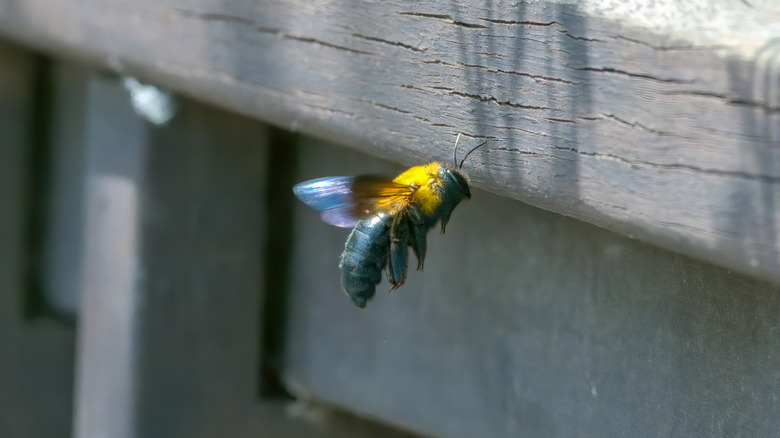
Bees can provide a lot of benefits for yards and gardens. In fact, many gardeners go to great lengths to create a pollinator-friendly garden in order to attract more bees. However, not every type of bee is a welcome sight, as some can do a great deal of damage. One such unwelcome visitor, for many gardeners, is the carpenter bee. Not only are carpenter bees a dangerous type of bee that can deliver a painful sting, they can be very destructive to your house, deck, garage, fence, and other wood structures. Luckily, there are ways to keep them at bay, including using almond oil, a natural ingredient they hate.
Carpenter bees are such a concern because they bore into wood, creating a labyrinth-style tunnel system in which they lay eggs. While this behavior is a natural part of their reproductive cycle, it can severely weaken the wood. In many instances, carpenter bees can be one of the reasons your deck boards are cracking, your wooden fence is falling apart, or your fascia boards are riddled with holes. As if the damage done by the bees alone wasn't enough, woodpeckers love to feed on the larvae hidden in these tunnels. So, it's not uncommon to hear them hammering away at wood in areas where carpenter bees are active, exacerbating the problem.
The best deterrent for carpenter bees is a thick coat of paint over wood surfaces. However, they can and will still bore into painted or stained boards if they have limited options elsewhere. Additionally, many people prefer the natural look of wood. Many other wood surfaces, such as exposed framing lumber in attics, are typically unpainted. This is where the natural solution of almond oil can come in handy. Essentially, almond oil's specific scent drives them away, at least for a bit.
Preventing carpenter bees with almond oil
Almond oil has long been touted as a natural and effective way to deter carpenter bees. One common explanation for its effectiveness is the strong scent of almond oil interferes with the bee's olfactory receptors, disrupting their ability to find food, locate mates, and detect predators. This sets off internal warning bells, so bees tend to avoid areas reeking of almond oil. Additionally, at least one scientific study has shown benzaldehyde — the active ingredient in almonds and artificial almond extract — to be one of the most effective natural bee repellents. However, the effects of almond oil are temporary, and need to be refreshed periodically, particularly through the spring.
If you are looking to keep carpenter bees from entering indoor areas with exposed wood like attics, sheds, and garages, you can soak cotton balls in something like Handcraft Blends almond oil, placing them in small containers and setting them around where bees may enter. Refresh the cotton balls as needed, such as when the scent fades or the cotton starts to dry out.
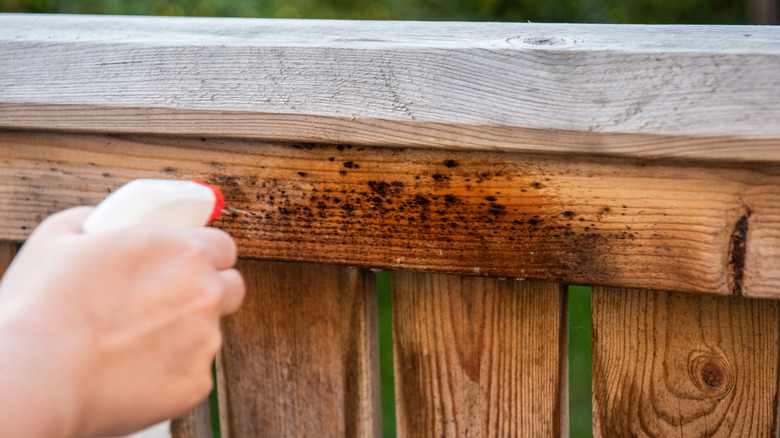
You can also treat exposed with surfaces, both indoors and outdoors, with a solution of diluted almond oil. To do so, just mix the almond oil with water, place it is a mister bottle or handheld sprayer, and coat the wood. Keep in mind, this is a preventative measure: Spraying the surface of the wood will not reach carpenter bees which have already tunneled deep into the wood. While some suggest forcefully spraying the almond oil solution deep into existing tunnels, it is best to plug any holes to be on the safe side. If you want carpenter bees hanging around your garden — they are effective pollinators — consider providing alternative housing, like an old log pre-drilled with a few holes to get things started.