

5 Long-Living Flowers That Can Survive Direct Sunlight
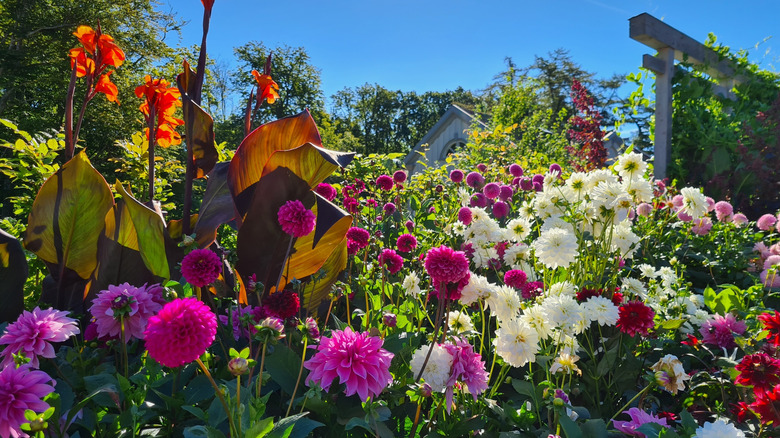
Few things make a garden feel more rewarding than planting a flower once and watching it return year after year. For gardeners with properties lacking shade, however, finding perennials that can handle intense, direct sunlight can be a major challenge. Many flowering plants wilt under the summer sun, while others tolerate the heat and light in small bursts. Though the situation can be daunting, there are plenty of hardy flowering perennials that can thrive in full sun and even bloom every season for decades, if you know where to look.
The term "full sun" generally means at least six hours of direct sunlight each day, although individual varieties have slightly different requirements. In any case, good drainage, appropriate soil, and adequate moisture during establishment are important factors for these plants. But longevity doesn't necessarily mean these flowers are difficult to grow. Many of the flowering plants on our list are surprisingly low-maintenance once established. Some need little more than occasional watering and deadheading, while others benefit from regular pruning to maintain their appearance.
Of course, these plants aren't immortal: Climate, soil conditions, disease, pests, drought, and poor planting locations can all shorten the lifespan of even the hardiest perennial. Still, choosing a species suited to your specific region and giving it the conditions it needs to thrive can help you enjoy your flowers for many years to come. With any luck, you might even be able to pass on a beautiful, thriving garden to your children decades down the line.
Blazing star
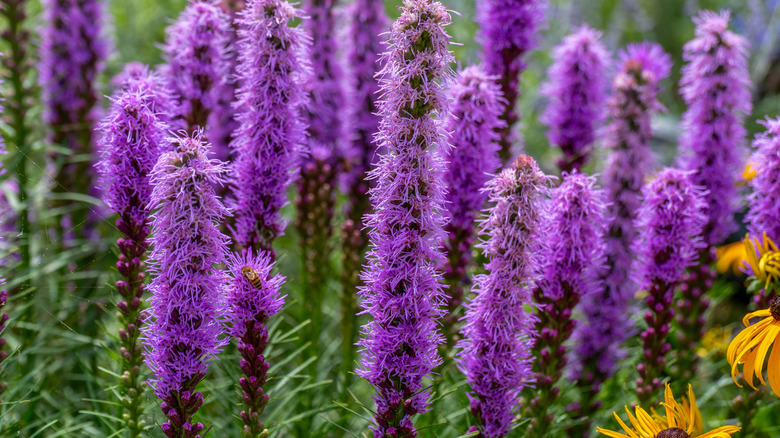
If you're looking for a colorful, heat-tolerant perennial that can handle intense sunshine while returning year after year, blazing star (Liatris spicata) is a compelling choice. Also known as blazing stars, this North American native that thrives in USDA hardiness zones 3 through 8 produces tall, upright flower spikes covered in clusters of feathery purple, pink, or white blossoms. The flowers typically appear in summer and run well into fall, creating a striking vertical accent without requiring constant attention. Blazing star thrives in full sun, generally preferring at least six hours of direct sunlight each day. In fact, giving it plenty of sunshine helps produce the strongest stems and most abundant flowers. This vibrant perennial is also remarkably tolerant of heat, humidity, and periods of drought once established, making it an excellent option for sunny gardens where other flowers may struggle. The biggest threat to this plant's longevity is usually excessive soil moisture, rather than too much sun. Well-draining soil is essential, particularly during the winter, because soggy conditions can cause most varieties of this plant's underground roots to rot.
One of blazing star's biggest advantages is its ability to return to the landscape year over year. Established flowers return from underground corms each spring. Over time, they can form larger colonies, as you divide and replant them in the spring. Furthermore, blazing star tends to be exceptionally popular with butterflies, bees, and other pollinators, making it a valuable addition to a wildlife-friendly landscape. Native bees also use the hollow, dead stems as nests.
Daffodil
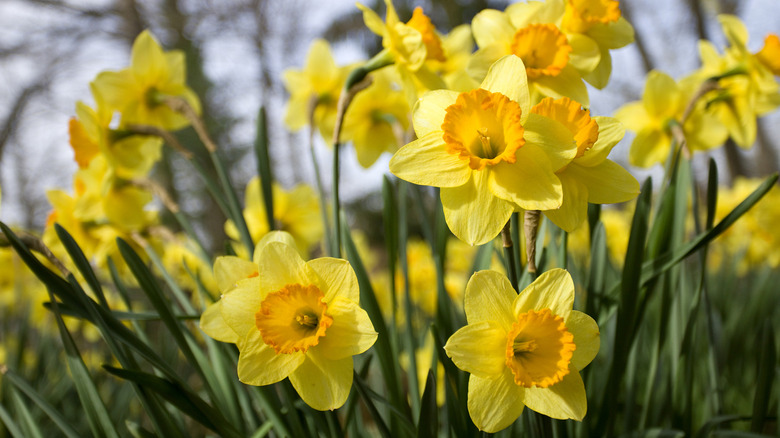
Daffodils (Narcissus spp.) are often hailed for their ability to thrive in full sun, offering long-term rewards to gardeners who don't have an abundance of shady spaces. These are relatively easy to grow in zones 4 to 8, and are ideal for adding color to your garden. Once established in a suitable location, these cheerful spring-blooming bulbs can return reliably for decades, with established clumps often producing more flowers as bulbs produce cloned offsets or"daughter bulbs."
Like all flowers on this list, daffodils need several hours of sun per day, particularly late in the growing season when leaves are collecting energy to replenish the bulbs for next spring. They can tolerate partial shade, but a location receiving at least six hours of sunlight generally produces the best blooms. In warmer climates, planting them where they receive some afternoon shade can help prevent the soil from becoming excessively hot and dry.
Much like blazing star, good drainage is one of the most important factors in keeping daffodils healthy for the long haul. Bulbs planted in consistently soggy soil may rot, while excessively dry conditions can interfere with the plant's ability to store energy for the following year. Once established, they typically require little supplemental watering, except when experiencing prolonged periods of dry weather. One of the best methods to ensure your daffodil's longevity is resisting the temptation to cut back foliage immediately after flowering. Those fading green leaves may not look particularly vibrant, but they're still photosynthesizing and sending energy back into the bulb. Allowing leaves to yellow and die naturally before removing them is key.
Purple coneflower
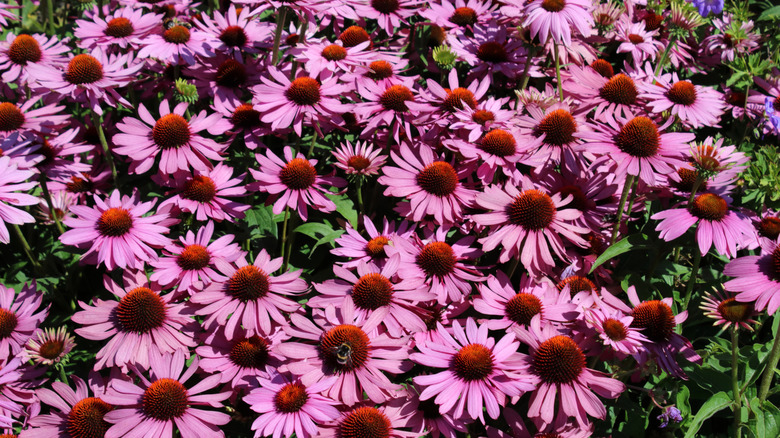
Purple coneflower (Echinacea purpurea) is the kind of low-maintenance perennial that can make a sunny garden feel complete without requiring years of patience. Native to much of the central and eastern United States, this plant produces its familiar pinkish-purple petals around prominent, cone-shaped centers. These hardy flowers can return for many years after their initial planting and freely re-seed, making them a particularly good choice for gardeners who want to invest in plants that aren't going to disappear after a season or two. Of course, full sun is where purple coneflower flourishes. Give it roughly six hours of sun daily, and you should see sturdy stems and abundant flowers from mid-summer into early fall. This flower is also notably tolerant of heat and dry conditions once established.
Like some of the other sun-loving plants on this list, well-draining soil is important for long-term health. Purple coneflower has a high tolerance for relatively poor soil, and doesn't need to be heavily fertilized, but persistently wet conditions can damage roots. USDA Zones 3 through 8 or 9 are the preferred domain for this plant, and sandy, loamy, or clay-based soil helps mimic the coneflower's natural environment. Once established, routine maintenance is minimal. Removing spent flowers can encourage additional blooms, but even that's not totally essential. Dividing mature plants every few years in fall or winter is a great way to rejuvenate crowded clumps, although healthy plants don't necessarily need frequent division.
Catmint
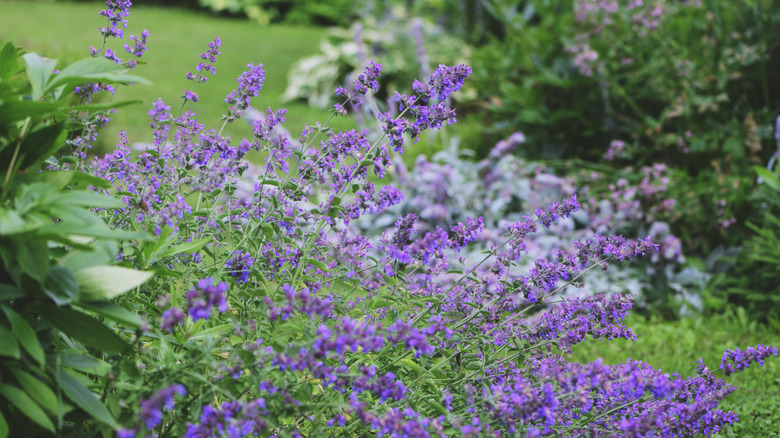
Catmint (Nepeta spp.) may look delicate, but this hardy ground cover is actually remarkably tough. These plants are prized for their soft green foliage and abundant lavender, pink, or white flower spikes. If you've been trying to get something to thrive in a sunny spot where fussier plants struggle, catmint could offer an appealing solution. This is especially true if you're located in USDA Zones 3 through 8.
Full sun, north of six hours daily, is ideal for catmint. With enough direct sunlight, these plants will develop the compact growth and plentiful flowers they're known for. They can tolerate partial shade, but too little light may result in fewer blooms and leggier growth. Once established, catmint is also highly drought-tolerant, making it particularly useful for sunny gardens where regular irrigation isn't practical. Be sure to water new plants regularly, but don't be afraid to let the soil dry, as this plant is particularly susceptible to rot when its roots remain consistently wet.
Once your catmint is bright and flowering, you'll find that its greatest strength is a long bloom cycle. Under ideal conditions, you should see cool-toned flowers from mid-spring through to late fall, attracting bees, hummingbirds, and butterflies the whole time. Catmint isn't necessarily as famous for its longevity as others on this list, but healthy plants can remain productive for many years when grown in suitable conditions. The occasional division in spring or fall — before or after flowering — can rejuvenate older clumps if they become crowded.
Daylily
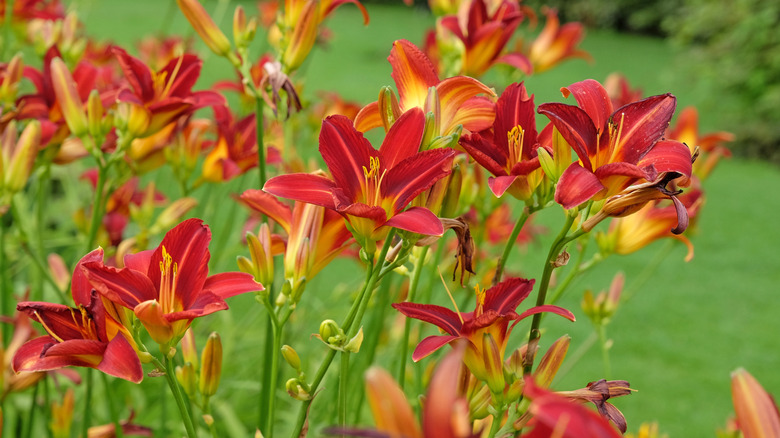
Few flowering perennials have earned a reputation for toughness quite like daylilies (Hemerocallis spp.). Despite each individual flower typically lasting just a day (hence the name), established daylily plants live for decades. Their grass-like foliage forms attractive clumps even when the plants aren't blooming, while their trumpet-shaped flowers come in an enormous range of colors and patterns. Daylilies thrive in full sun, generally performing best with at least six hours of direct sunlight each day. This encourages abundant flowering and helps keep the plants' foliage sturdy.
Daylilies perform best in USDA Hardiness Zones 3 or 4 through 9. In particularly hot climates, a bit of afternoon shade can be beneficial, especially when paired with fertile, well-drained soil. Unlike several of the flowers on this list, these otherwise sturdy plants do best in highly organic soil and may not bloom in poor soils. Regular watering is helpful during the first growing season and during prolonged droughts, but mature daylily plants are generally quite resilient to dry spells beyond that. A layer of mulch each season can help conserve moisture and suppress weeds, but even that isn't a hard and fast requirement.
One of your main responsibilities with these perennials will be dividing. This only needs to be taken care of every few years, but it will help manage the plants as they expand into larger clumps over time. Deadheading isn't essential, but removing faded blooms can keep the garden looking tidier and, depending on the variety, may encourage additional flowering.