

5 Fast-Growing Flowers That Will Turn Your Yard Into A Hummingbird Haven
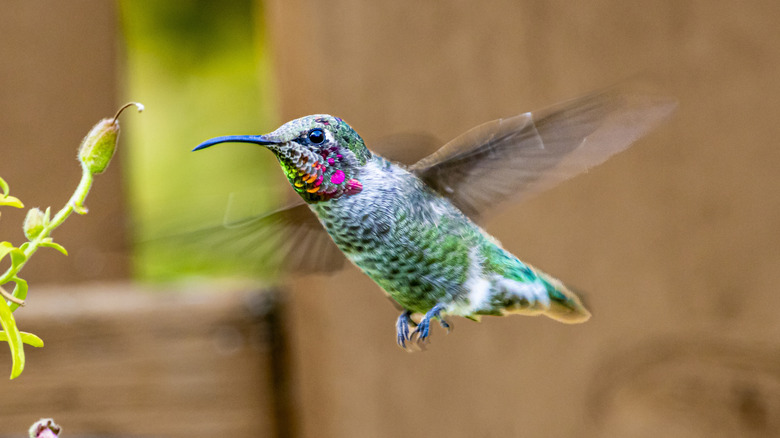
One of the best ways to ensure you'll regularly seeing hummingbirds flitting around your back yard is to grow flowering plants. There is actually a wide variety of flowers that will attract hummingbirds. However, some of those take some time to grow and bloom. If you don't already have an established pollinator garden and are hoping to attract hummingbirds quickly, all is not lost: There are a number of fast-growing, easy to cultivate flowers that will add color to your garden and pull double-duty drawing in hummingbirds.
Hummingbirds are attracted to flowers for a variety of reasons. The nectar they are able to siphon from flowers provide them with energy. So, the more nectar a flowering plant produces, the more attractive it is to hummingbirds. Additionally, the color of the flower, as well as its shape, can draw in hummers. In general, red is top on the color list. In fact, adding more red to your yard will attract hummingbirds. These fast flyers also find hues of orange, yellow, and purple appealing. As far as shape, hummingbirds can draw nectar from almost any flower, but long, tubular-shaped blossoms growing up off the ground — as on vines or long stems — are their preference. They'll even visit some flowers for the bugs those plants attract. So your options are pretty wide when it comes to planting these fast-growing blooms.
Nasturtium
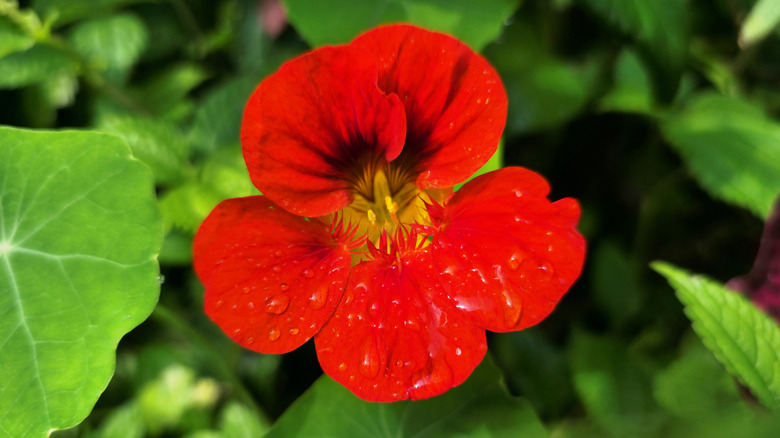
Nasturtium (Tropaeolum) is known for its bright blooms with edible flower petals. When it comes to attracting hummingbirds, nasturtium pretty much checks all the boxes. In fact, these birds are reported to be the primary pollinators of nasturtium. Various varieties and cultivars have flowers which are either a brilliant red or orange. Additionally, these flowers have the trumpet shape which hummingbirds prefer, as well as long pollen spurs and sweeter-than-usual nectar. There are two major types of nasturtium: Bush and trailing, which will impact how and where you plant them. However, each of these produce flowers which attract hummers.
The best part for those who are in a rush to establish a flower-rich, pollinator haven in the yard is that some varieties of nasturtium go from seed to bloom in as little as 45 days. Additionally, because they can be grown in USDA hardiness zones 2 through 11, they can be planted throughout the Lower 48. In zones 2 to 8 they are cultivated as annuals, and grown as perennials in zones 9 to 11. They typically bloom through summer and into autumn, making them a great source of nectar as hummingbirds prepare for their winter migration.
Sweet Alyssum
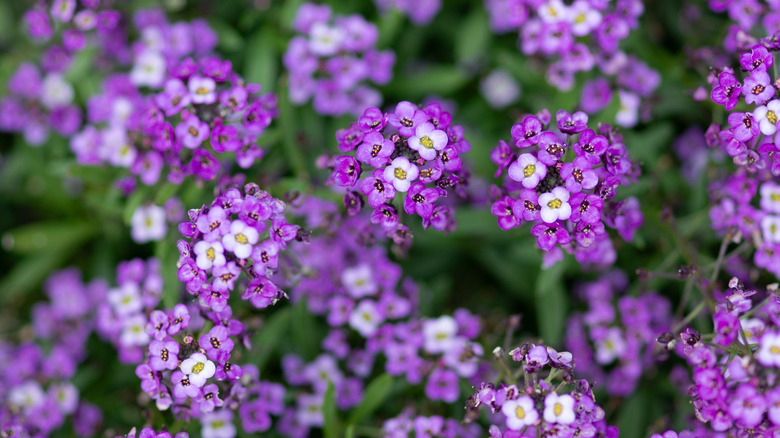
Sweet alyssum (Lobularia maritima) is a fragrant, flowering plant often utilized as a companion plant in pollinator gardens. It is popular for this purpose because it produces a dense carpet of sweetly-scented, purple-tinged flowers. These blooms are irresistible to hummingbirds, honey bees, and a variety of other beneficial pollinators. One downside is that it is a fan-favorite for aphids. But the bonus here, is that it serves as a trap crop for its companions, and hummingbirds will munch on both aphids and some of the smaller bugs the aphids attract, like mosquitoes and hoverflies. Plus, there is no need to wait for results, as this sweet-smelling ground cover goes from seed to bloom in around 45 days.
Sweet alyssum can be grown in hardiness zones 5 through 9, which covers a good portion of the hummingbird's range. Another bonus is that sweet alyssum is easy to grow and maintain. It is typically grown as an annual and blooms during early to mid-summer, depending on when it was planted. If you didn't plant ahead to get sweet alyssum seeds in the ground this year, you'll usually find ready-to-plant seedlings at nurseries as well.
Zinnias
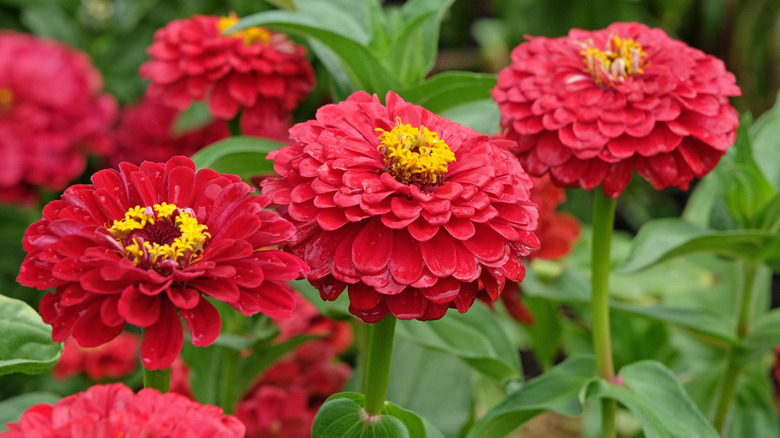
Zinnias (Zinnia elegans) are another flower which can be grown throughout the Lower 48, as they do well in zones 2 through 11. Although zinnias have an open flower as opposed to the slender tube hummingbirds often prefer, these tiny avians are nonetheless attracted to them. This is largely due to the coloration of these fast-growing flowers. While different varieties produce blooms in a kaleidoscope of colors, choosing those with red, orange, or pink flowers is the way to go when attracting hummers. And because a single, well-cared-for plant can offer up as many as 20 blooms at a time, it means hummingbirds can feed in one location with less energy spent going from bloom to bloom.
It typically takes zinnias about two months from seed to flower. Zinnias will bloom from mid-summer until first frost. The timing of these blooms makes zinnias an excellent late season source of nectar as hummingbirds prepare for migration. They can be harvested multiple times, producing as many as six to eight blooms over a long growing season, meaning hummingbirds have a long time to feed from these plants. Zinnias are also easy to grow and require very little maintenance, making them a good fuss-free choice for beginning gardeners and those who don't have a lot of time to spend in their garden.
Morning glory
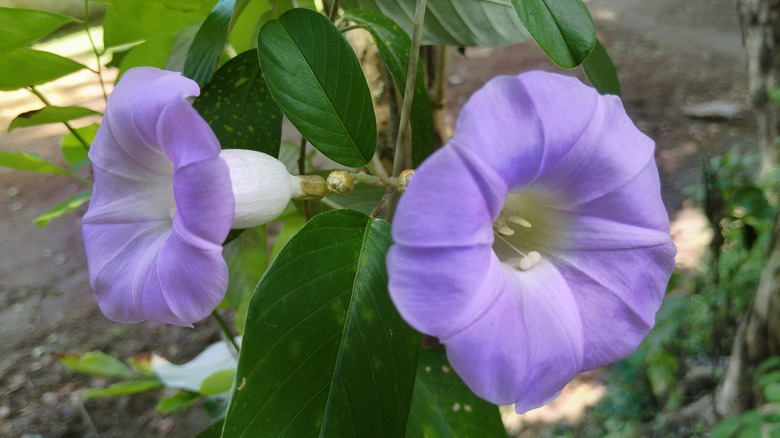
If the intent is to turn your backyard into a hummingbird haven, planting morning glory (Ipomoea purpurea) is almost a prerequisite. This quick-growing climbing vine is often touted as one of the top flowering plants for attracting hummingbirds, thanks mostly to its large, bell-shaped purple flowers. It is also a staple in backyards and pollinator gardens across the Lower 48 because it grows well in hardiness zones 2 through 11, can tolerate full sun, and is very low maintenance. Growing this climbing plant along a trellis or garden arch makes accessing these perfectly shaped flowers even easier for your hungry visitors.
While morning glory would be an excellent choice for anyone looking to attract hummingbirds, it is doubly so for those on a tight schedule. It typically takes barely more than two months for morning glory to flower after seeds are planted. The blooms appear in mid-summer and remain through October in most areas. That makes these nectar-rich flowers a vital source of energy as hummers begin fueling up for their long migration south for winter.
Snapdragon
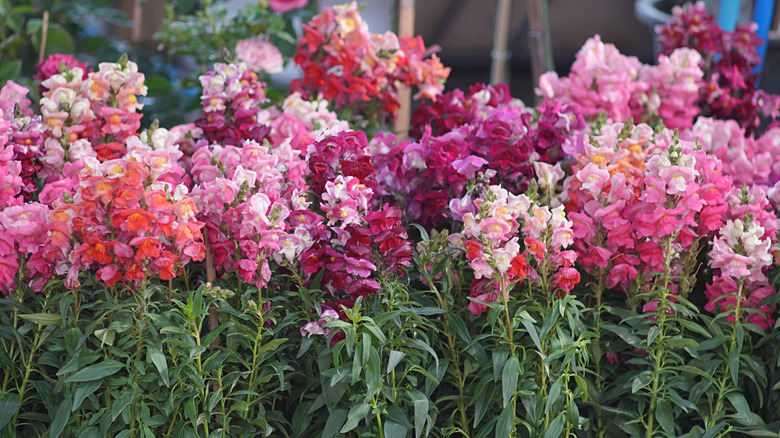
Snapdragon (Antirrhinum majus) is another of those flowering plants ideal for attracting hummingbirds, whether you are seeking a fast-growing plant or not. This fuss-free pink and purple flower will thrive in your sunny garden if you live anywhere within hardiness zones 7 to 10. While its growing range is somewhat limited compared to other flowers on this list, its attractiveness to hummingbirds is not. Hummers love snapdragons for their colorful, tube-shaped flowers which protrude above the foliage for easy access. The fact they can serve many different functions around your yard and garden, thanks to a wide variety of available heights and colors, means you can scatter snapdragons along borders, in flowerbeds, and in containers on the patio for hummingbirds to visit.
This annual requires a bit more maintenance than some of the flowers on this list, but still ranks as only moderate on the upkeep scale. If the goal is to bring more hummingbirds to your yard, the additional effort is well worth it. As a bonus, snapdragons have an extending bloom time, with flowers appearing as early as April and remaining until the first frost. That means these flowers can be a reliable source of nutrition for almost the entire time hummingbirds are in the area, even when other food sources are unavailable.