

The One Type Of Gravel To Never Use In Your Driveway
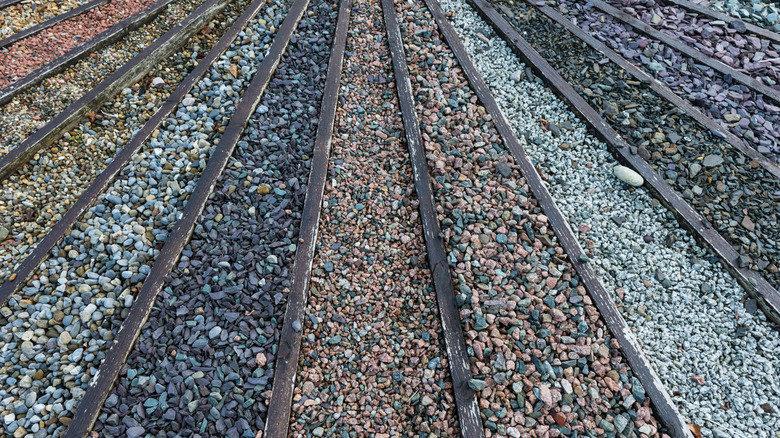
Gravel driveways are popular for a variety of reasons. They're relatively inexpensive, easy to install, and well-draining. However, there are drawbacks to using gravel for your driveway as well. For one, it can migrate or spread, messing up borders and yards, it can erode, or even wash away. Traction can also be an issue, as can removing snow from a gravel driveway. These issues can be exacerbated by using the wrong type of gravel. To that end, pea gravel is one type of you should never use in your driveway. Essentially, the very characteristics that define pea gravel make it less well-suited for driveways than other options.
As the name implies, the rocks that make up pea gravel are relatively small and round. Typically, they are between ¼- and ½-inch in diameter. They are also weathered and smooth, and come in a variety of colors. This makes it a popular decorative choice when placing gravel around backyard pools or other areas where people are stepping barefoot, and for a variety of other gravel landscaping projects.
For these same reasons, plus its relative affordability, many people choose to use pea gravel in their driveways as well. However, the very qualities that make pea gravel aesthetically appealing, namely its small size and smooth texture, are actually liabilities when it comes to creating a long-lasting, fully functional driveway.
Size matters with driveway gravel
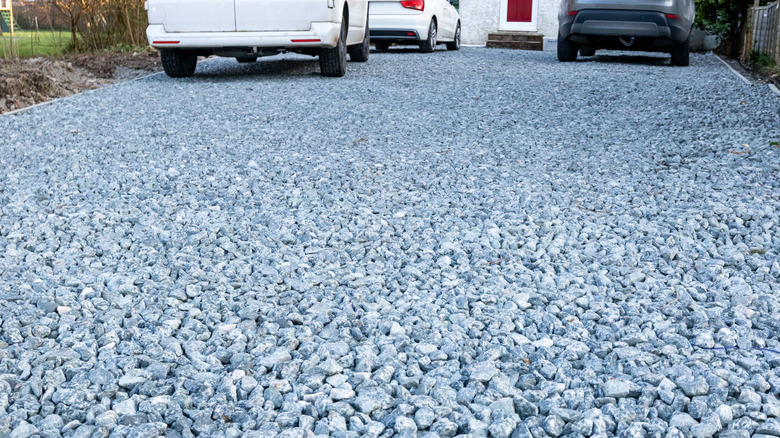
The biggest problem with pea gravel for driveway applications is its size. Because it is small and light, it is much more easily carried away by rain and water runoff. Its diminutive size also leads to pea gravel rapidly sinking into the soil beneath — especially if a solid, compact base layer was not created below it. It shifts and spreads quite easily when cars drive over it, and it can be very difficult to navigate strollers, wheelchairs, or wheeled luggage through the shifting rocks. This problem is amplified by the round, smooth nature of pea gravel, which prevents it from interlocking with surrounding rocks. Thus, pea gravel is essentially a fluid layer of rock that moves and migrates every time weight is applied.
So, if you wish to use pea gravel for you driveway, you will need to take extra steps, like edging, to stabilize and contain it. Better yet, simply use it as a decorative, easily refurbished top coat above a more suitable rock type, which will make the whole thing more stable.
With that in mind, the best overall type of gravel for use in a driveway isn't actually gravel at all, but crushed stone. In fact, mistaking crushed stone for gravel is a common mistake when landscaping with gravel. Its larger size prevents it from washing away or sinking into the soil as rapidly as pea gravel. Additionally, the sharp angles of crushed stone allow the individual rocks to naturally lock together to form a more stable surface, providing better traction for your vehicle. Finally, properly compacted crushed stone requires far less maintenance and upkeep than pea gravel.