

The Best Perennials To Plant In May
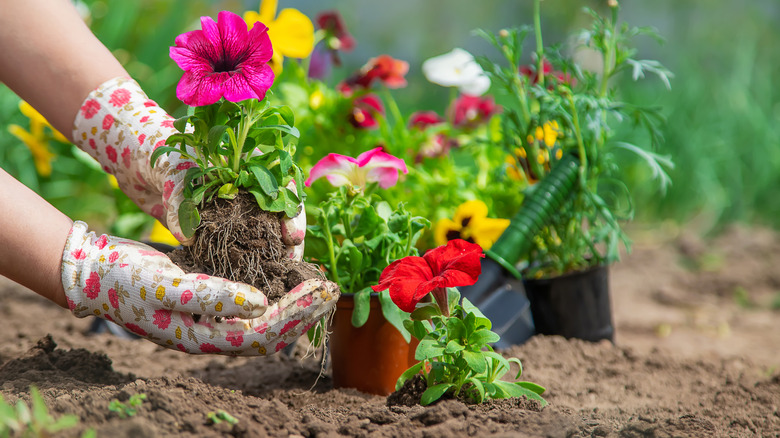
Whether you are looking to create a pollinator-friendly garden or just wanting to add a splash of color to your landscaping, there's a case to be made for many varieties of perennials — those plants that, once you plant them, they bloom year after year. But when should you plant them? Typically, when planting from seed, it should be done in fall. Alternatively, you can begin in late winter, by starting seeds indoors to plant in spring. However, there are some perennials that can be planted directly from seed in May, and will bloom by late summer of their first year. Additionally, May is an ideal time to transplant seedlings — at least for perennials that flower in late summer or fall.
Why May? Primarily because by that point, the threat of severe frost has passed for most of the United States. By then, the soil has sufficiently warmed to allow plants to adapt quickly and thrive, giving them time to establish before their blooming period. In the case of seeds sown in May, the warmer soil promotes germination and rapid sprouting. Conversely, while the weather has warmed enough to promote good growing conditions, the sweltering heat of summer, that can sap plants of energy, has yet to set in.
Perennials to sow from seed in May
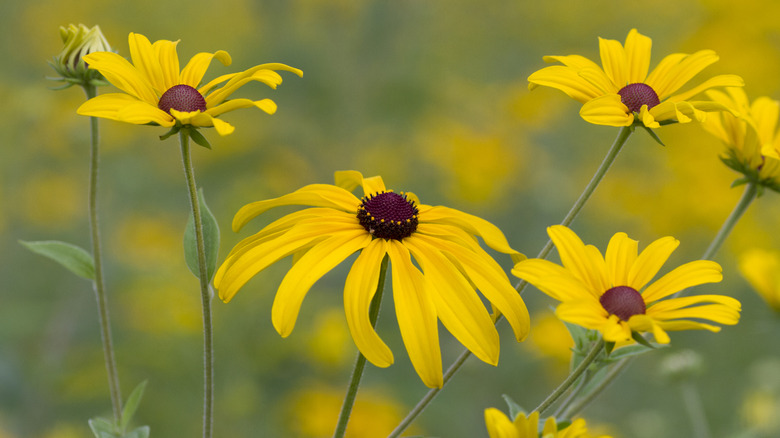
When planting from seed in May, one of the keys is looking for fast-growers, especially in terms of seed-to-bloom time. Again, ideally, you are looking for plants which flower in late summer or fall. With that in mind, one of the best perennials to sow from seed during May is black-eyed Susan (Rudbeckia hirta). These popular perennials thrive in hardiness zones 3 through 11 and typically bloom from July through October. Additionally, their color, coupled with their nectar, makes them attractive to butterflies and other pollinators, while their grainy seeds provide a late-season food source for various birds. They should be planted once the soil temperature stays above 70 degrees Fahrenheit, which is typically May in most parts of the U.S.
Gaillardia (Gaillardia spp.), also known as blanket flower or Indian blanket, is one of the fastest growing perennials and grows in zones 3 through 10. It usually takes gaillardia four to five months to flower from the time the seeds are put in the ground. It has a long blooming season, stretching over summer and fall, giving first-year plants a shot at blooming. However, like most perennials, don't expect all of your first-year Gaillardia to produce flowers in the initial season. Some varieties perform better than others in that respect. Note that some varieties, like G. pulchella, are annuals and will need to be replanted each year.
One perennial that typically does bloom in its first year — producing flowers during late summer and fall — is helenium (Helenium autumnale). Not only does helenium bloom during autumn, but its rustic red, gold, and orange adds variety to your fall foliage, and is a great late-season source of nectar for pollinators. It can be grown in zones 3 to 8.
Perennials to transplant as seedlings in spring
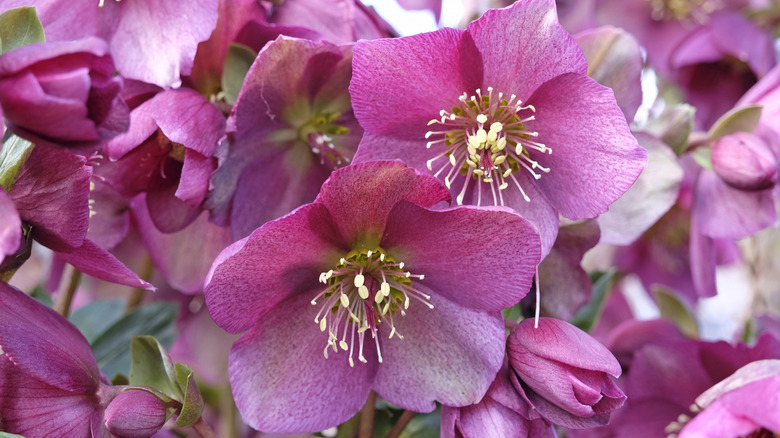
When it comes to transplanting perennial seedlings during May, you have more options. Among the best is hellebore (Helleborus spp.), also known as the Christmas rose or winter rose. While it is a bit more limited on its growing range, doing well in zones 6 through 9, hellebore is a late winter and early spring bloomer. Therefore, planting the seedlings in May allows them time to get established before blooming season begins.
Perennial geraniums (Geranium spp.), also known as cranesbill and grown in zones 4 to 9, are another good candidate for May transplants. There are hundreds of species and varieties, so be sure and pin down exactly what you're growing. While geraniums can be directly sown from seed in May, they will then flower the following year. Additionally, geraniums are usually easier and more successful when transplanted as immature plants. Seedlings should be put in the ground in May after the threat of frost has passed, allowing them to become established before summer heat sets in. If you miss this window, they can be planted after it cools down in early fall.
Hosta plants (Hosta plantaginea) are yet another option for May transplanting. These popular plants do well at this time for a few reasons. For one, typically at this point, their leaves are just forming and haven't unfurled. Spring is also a great time to divide any existing hostas for transplant. Putting them in the ground in May allows adequate time for divided sections to grow strong root structures before it gets too hot.