

If Your Yard Is Full Of Ticks, This Beautiful Flowering Plant May Be The Culprit
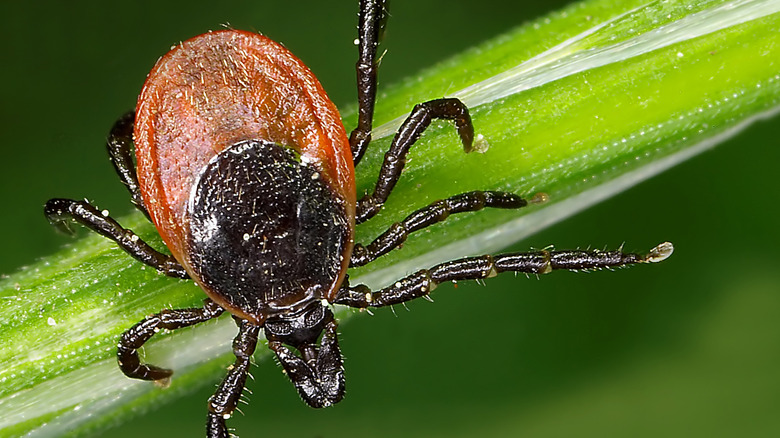
Just the thought of ticks is enough to make most people's skin crawl and itch, and for good reason. They carry numerous diseases ranging from mild to fatal, including Lyme disease and Rocky Mountain spotted fever. While there's only so much you can do to eradicate ticks when they're in season, that beautiful staghorn sumac in your backyard could be attracting them without you even knowing it. Native to eastern North America, staghorn sumac (Rhus typhina) is attractive to deer and other wildlife (it's an emergency winter food in the wild, and white-tail deer like to munch on its fruits), and it may be the reason your yard has turned into a tick hotspot.
To be fair, staghorn sumac doesn't actually attract ticks on its own. Ticks don't feed on plants; they feed on blood from animals, especially deer. These tiny arachnids are opportunistic parasites that use plants and tall grasses as cover, lying in wait for one of their hosts to come by. Because your sumac plant attracts wildlife with its dense cover and edible fruits, it becomes a sort of rest stop and hiding place for ticks as they wait for their next meal.
With its red fall color, attractive flowers, and interesting foliage, staghorn sumac is a remarkable specimen to include in backyard landscaping. If you're transforming your backyard into a relaxing oasis, you may already have one or two of these bushy trees in place. Unfortunately, staghorn sumac could be the reason your yard has become a wildlife corridor, creating the perfect microhabitat for ticks. So then you need to decide: Do you keep the trees, or is there something else you can do?
How to keep your staghorn sumac and ditch the ticks
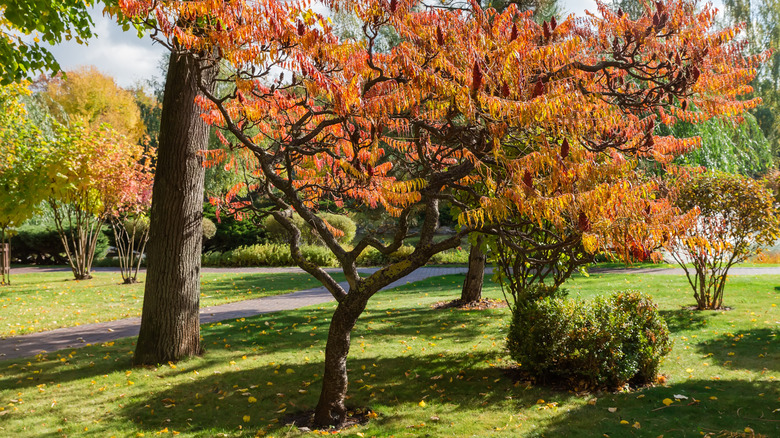
We understand if you're reluctant to remove staghorn sumac from your yard just to eliminate ticks. The good news is there are several things you can do to make your backyard less of a tick paradise without sacrificing these pretty trees. After all, you don't want a landscaping wasteland when you can easily make other adjustments to discourage ticks.
Sumac spreads by suckers from the roots, and can form a dense thicket, providing cover and easy food for wildlife. Start by cutting back suckers and low growth. Then, prune your staghorn sumac to remove dead, diseased, and crossing branches. By reducing the lush growth, you make it less of an ideal habitat for ticks, and less welcoming for munching deer. Pair pruning sumac with other strategies, like keeping your lawn neatly mowed, avoiding tall grasses that ticks love, and reconsidering planting pretty, but invasive tick-friendly shrubs. Creating gravel pathways is a landscaping trick that'll help keep ticks out of your yard. Whether you choose to add one around the base of your sumac tree or create wide garden paths, gravel in your landscaping reduces the vegetated spaces ticks thrive on.
Since staghorn sumac isn't the actual cause of your tick problem, it makes more sense to exclude deer and other wildlife that are bringing ticks into your yard. Deer-proofing your landscaping is a science unto itself. It can be as simple as putting up a fence or using motion-activated sprinklers. You can even help keep deer out of your yard with a simple fence upgrade.