

Water Sources That Attract Owls And Birds To Your Yard, Even In Winter
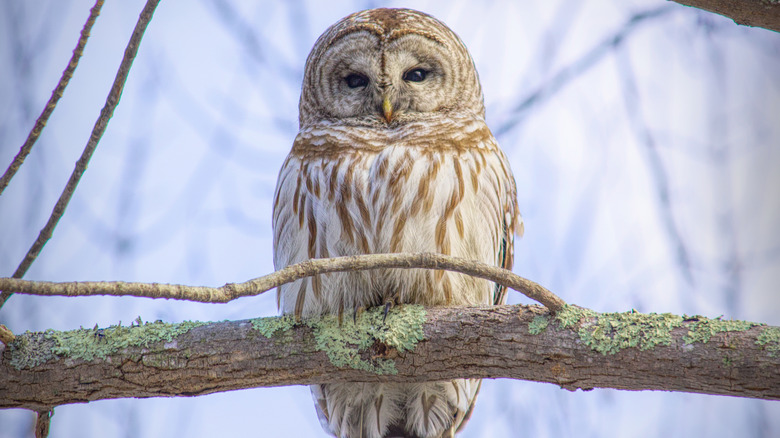
Owls, like other birds and animals, need food, water, and shelter. If you'd like to help your wise feathered friends, you can offer water in your yard by employing a variety of different sources, some available at different times of the year. Birdbaths, fountains, ponds, drippers, or even a birdbath-style bubbler from Costco can all be incorporated into your landscape. But remember, that water has to remain at least partially unfrozen for it to be helpful to owls and other birds in winter. Any form of water that moves a bit will stay accessible longer as the temperatures drop, so running-water sources — whether natural or manufactured like a pondless stream — could be the best year-round option. Birds also rely on water in colder months, and when birdbaths freeze or are emptied for the winter, they may turn to common natural water sources, such as puddles, ponds, or streams, where available.
At the very least, make a point of gently breaking any ice forming on the surface of a water source each day. You can float corks in a birdbath to keep the water from freezing, or stick other lightweight floating objects, like rubber ducks, on the water in a pond or other still-water source to help break up any icy skin that forms. When it comes to your favorite nocturnal birds, an owl-friendly birdbath or water source is usually a bit deeper than the baths typically used by cardinals and house sparrows. If you offer even a single, deep birdbath with a gradually sloping basin, most birds can stand in it at a depth that feels right for them. A deeper birdbath can mean there's more liquid water, which is great under the evaporating summer sun, but it can also mean thicker ice in winter.
Pay attention to seasonal needs for owls and other birds
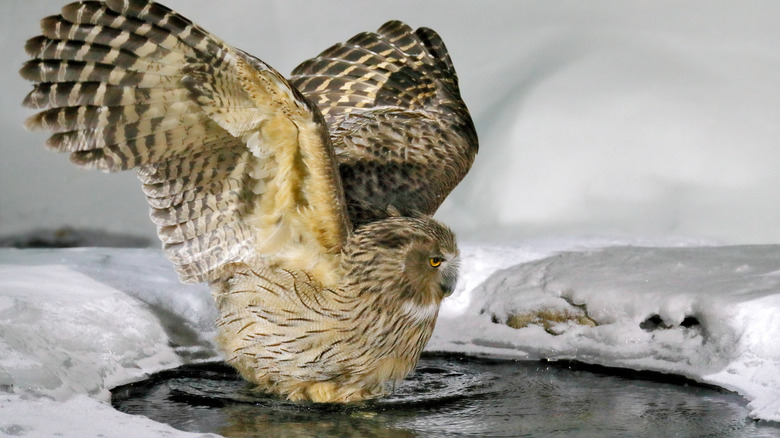
Winter offers special challenges for water sources, for owls and for you. Swap out concrete and terra cotta birdbaths, that can crack and spall in freezing weather, for resin, plastic, or temporary options. Many fountains, drippers, and bubblers also don't function properly when water in the pump freezes, so they need to be insulated, heated, or stashed for the season. Solar heaters for your water source are also an option, but they too can freeze if the temperature drops drastically. They can help delay ice formation, however. Skip chemical de-icers that could harm birds and consider a plug-in, heated birdbath if it will be frigid for a long time in your area. Finally, moving water sources to the sunniest parts of your yard, garden, or patio will help keep them useful longer throughout a chilly day. A dark-colored birdbath, or a birdbath with dark stones in it, will also keep the water a little warmer in a sunny location.
In hot weather, shade is best for a water source, and it's why you should reconsider putting birdbaths in direct sunlight. If you build a wildlife pond or stream, consider adding plants or structures in a way that some of it is shaded during the hottest parts of the day. The same design will ensure some of the water source is warmed by sun in winter, too. While owls will usually be visiting at night, after things have cooled off, you still need to pay attention to warm weather effects: Birdbaths evaporate faster, and harmful algae grows faster in warmer weather.