

Plants That'll Help Keep Snakes Out Of Your Yard
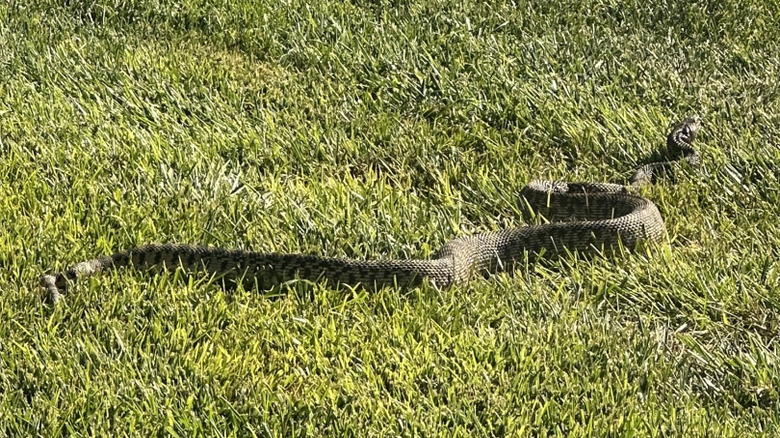
Although there are actually some benefits to having snakes in your yard, such as rodent control, most people would just as soon not have serpents slithering across their lawn. With that in mind, it is helpful to pay attention to the types of plants you use when landscaping and in your garden. That's because some plants can attract snakes, while others are known to repel them. If you're hoping to keep snakes out of your yard, focus on planting the latter. Luckily, there are a wide range of such deterrent plants, ranging from rosemary to holly bushes.
Plants often attract snakes because they offer shelter, shade, moisture, and ample hunting opportunities. However, many plants have the opposite effect: They emit odors snakes find offensive, taste bad, contain toxins, or make it difficult or uncomfortable for snakes to move or see. As a result, snakes tend to avoid areas where plants with these characteristics are grown.
Rosemary
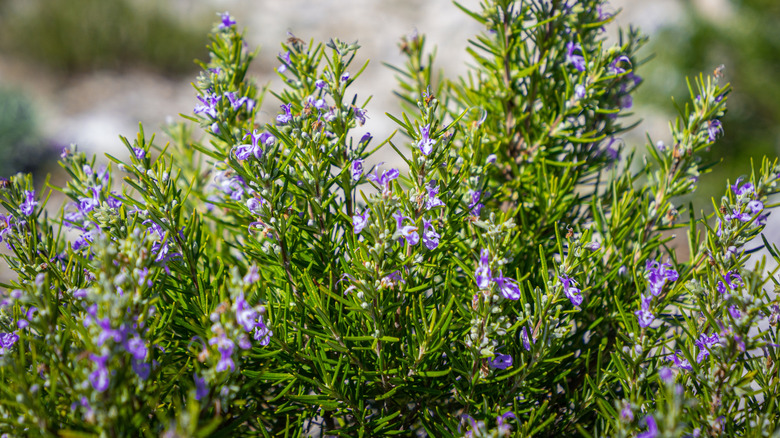
Many gardeners rely on rosemary (Rosemarinus officinalis) as a kitchen herb that repels bugs. What many may not realize is it can be used to keep snakes away as well. In the case of rosemary, it is the strong scent that serves to deter snakes. Rosemary can be effective when planted along barriers and entryways. It can be grown in-ground or in containers. You can also used dried rosemary as a mulch throughout your garden and flower beds.
Lemongrass
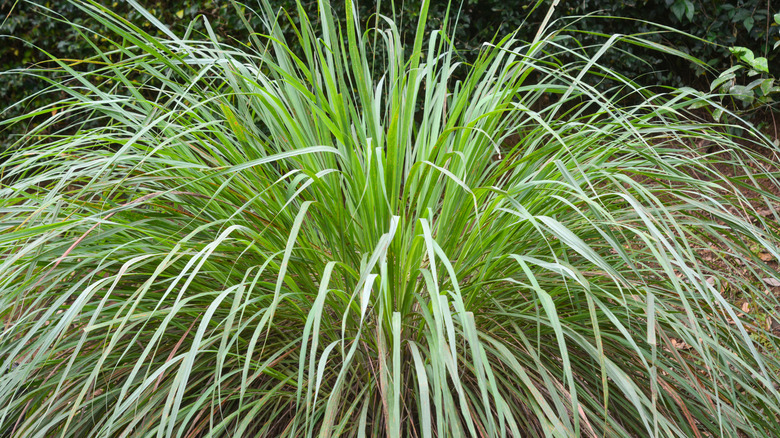
Lemongrass (Cymbopogon citratus) is a popular hack for keeping mosquitoes away, thanks to the fact it contains citronella. This same substance is a powerful snake repellent. As a result, lemongrass is a low-maintenance plant that can be used to keep snakes out of your yard. It is most effective when planted as a barrier on the perimeter of your lawn or garden. You can also grow it in containers which can then be strategically placed throughout your yard.
Marigolds
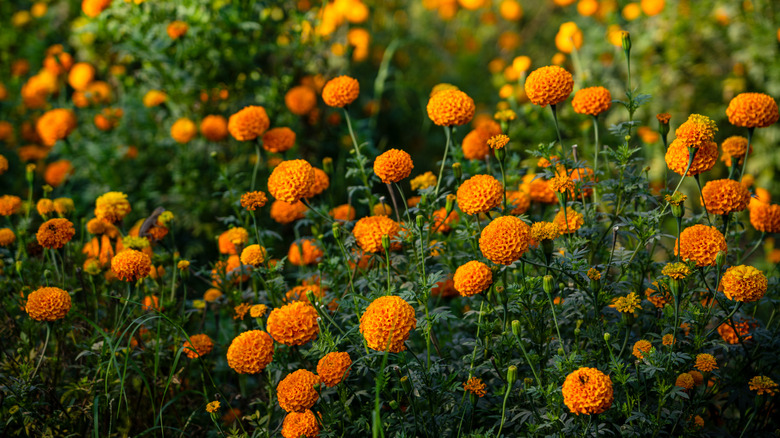
Marigolds (Tagetes spp.) are popular pollinator-friendly flowers. However, while every variety of marigold draw in helpful pollinators such as bees and butterflies, these colorful flowers have the exact opposite effect on snakes. Although they are nice to look at, marigold blooms have a strong scent that snakes find offensive. Additionally, another strong odor emanates from the roots, driving snakes away, even when the plant isn't in bloom. This dual-level scent production makes them a useful border plant.
Lavender
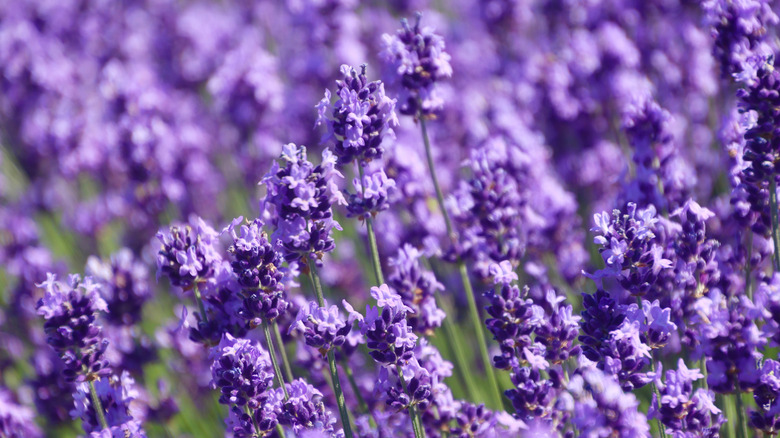
Lavender (Lavandula spp.) is one of the most effective pest-repelling plants. Among the creatures it offends are snakes. Ironically, it is the same scent which most humans find so calming and relaxing that sends snakes scurrying. To use lavender as a snake repellent, you can plant it around perimeters, along walkways, and near entryways. You can also place dried lavender in sachets and place them throughout your garden.
Holly
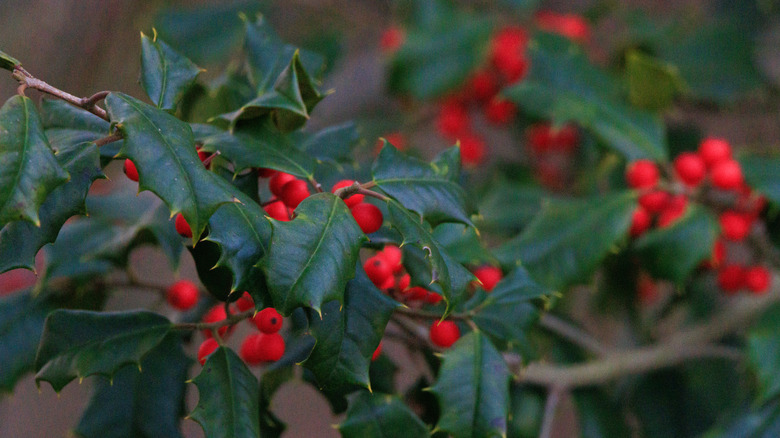
While scent is the key element of many snake-repelling plants, holly (Ilex aquifolium) has a different way of deterring serpents. Although snakes are not fond of the scent of holly, it is the sharp spines on its leaves that they find especially galling. Leaves on low-hanging limbs, along with those that have fallen to the ground serve as a painful barrier preventing snakes from entering your yard. So if you are hoping to use holly to deter snakes, don't overly trim the bushes and allow some leaf accumulation on the ground.
Onions
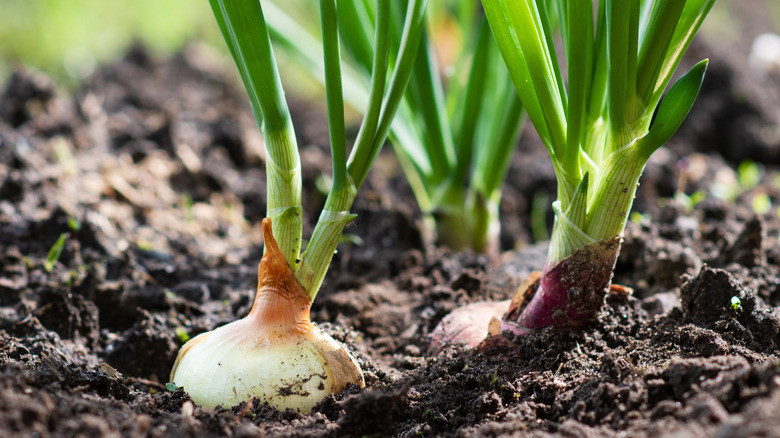
Anyone who has every handled an onion (Allium cepa) knows the effect it can have on the respiratory system and eyes. It's typically not pleasant for humans and is often even worse for snakes. As a result, planting onions can deter snakes from entering your yard. Onions are particularly effective for repelling snakes because their odor is strongest at ground level. You can plant rows of onions in your garden or scattered chopped onion throughout your flower beds and garden.
Garlic
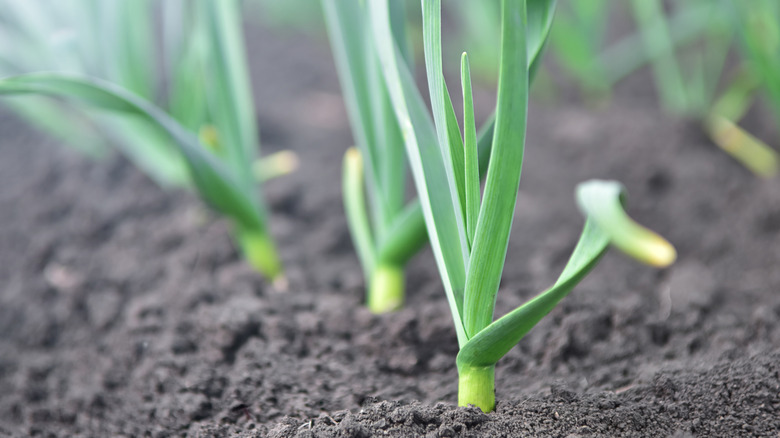
Through the centuries, garlic (Allium sativum) has been used to ward off everything from vampires to a way to keep Japanese beetles out of your garden. Snakes can be added to the long list of creatures which can't stand the scent of this cultivated bulb. In fact, it's one of the best natural snake repellants in your garden. The best way to use garlic is to keep rows of it planted on the outer edges of your garden. However, you can also sprinkle garlic essential oil or crushed garlic cloves around perimeters.
Daffodils
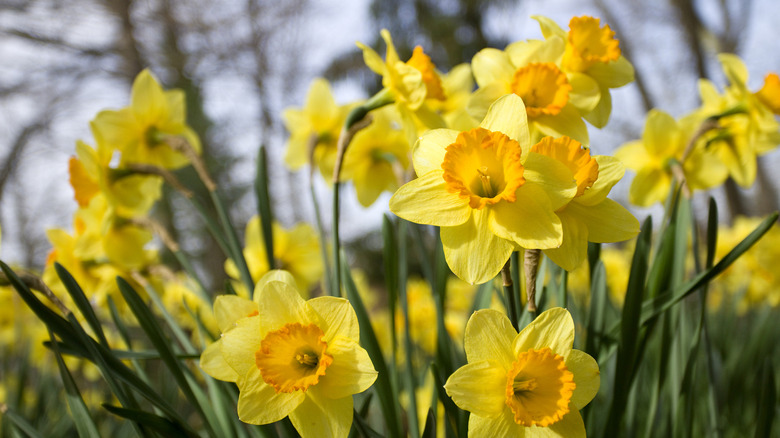
Daffodils (Narcissus spp.) are another plant that adds a splash of color to your yard, while also reducing the number of critters willing to enter. That's because daffodils contain the alkaloid lycorine, a substance toxic to snakes, as well as a variety of mammals. As a result, planting daffodils in beds, gardens, and around perimeters can be an effective way to keep snakes out of your yard.
Flowering onion
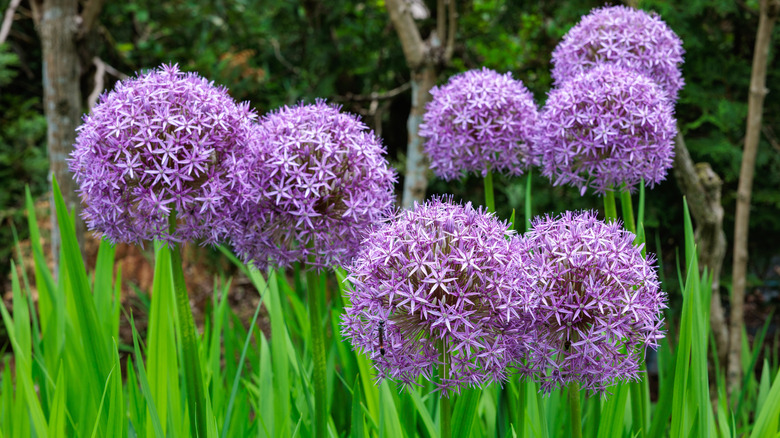
As is the case with most members of the Allium family, flowering onion (Allium spp.) is a good, scent-based natural snake deterrent. Flowering onion produces the same type of ground-level aromatic fragrance that repels snakes as other onions. Additionally, it has large, bulbous blooms that not only add color and attract pollinators, but give off a rich aroma as well.
Chives
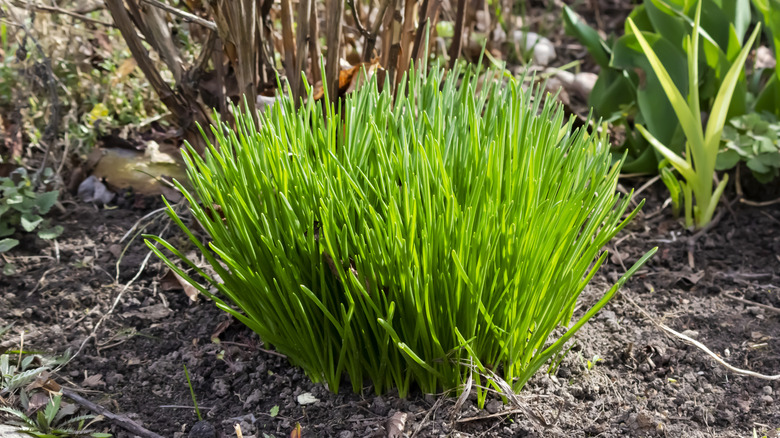
In some ways, many of the plants that provide flavor, spice, or scent to dishes people like to prepare, also serve as a red flag warning to snakes. Such is the case with chives (Allium schoenoprasum). Growing this perennial herb in your garden will not only allow you to flavor up your meals, it will also help keep snakes out of your yard. Chives can be planted along perimeters to create a barrier or border.
Snake plant
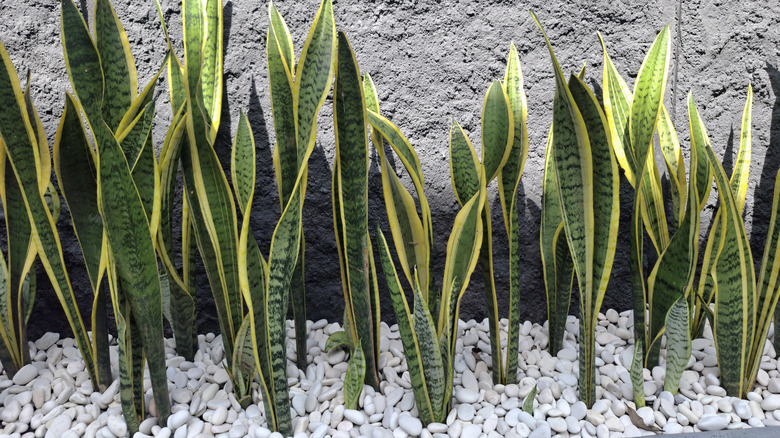
Ironically, snake plants (Dracaena trifasciata) are not well-liked by snakes. However, snake plants do not rely on a strong scent to steer serpents away. Instead, it is the pointy tips protruding from the top of the leaves that drives snakes away. They are also extremely easy to care for and can be planted around the perimeters of your home and yard. Planting snake plants in a gravel garden along the edges of your yard combines two elements snake despise, increasing the effectiveness.
Wormwood
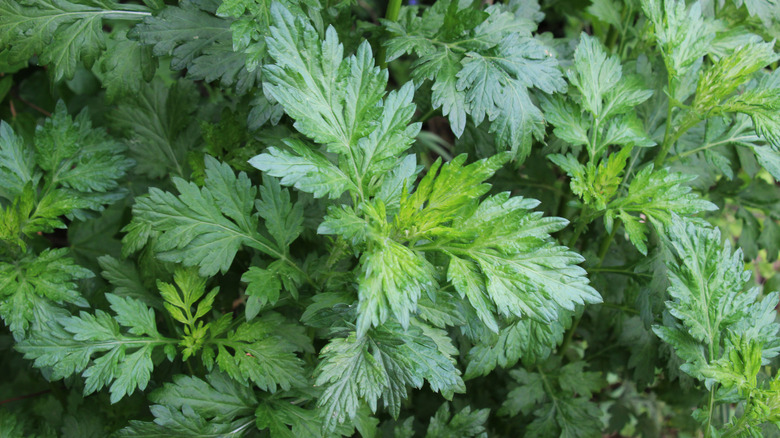
Wormwood (Artemisia absinthium) is a bit different as a snake deterrent. Although it does have a fairly strong scent, it's the plant's bitter taste that dissuades snakes from entering. A snake detects this bitterness by flicking its tongue in the air to collect molecules. While wormwood has long been sought out for various medicinal uses, those wishing to keep snakes away from their yards can add the plant along perimeters or place sachets of dried wormwood throughout the yard.
Pink agapanthus
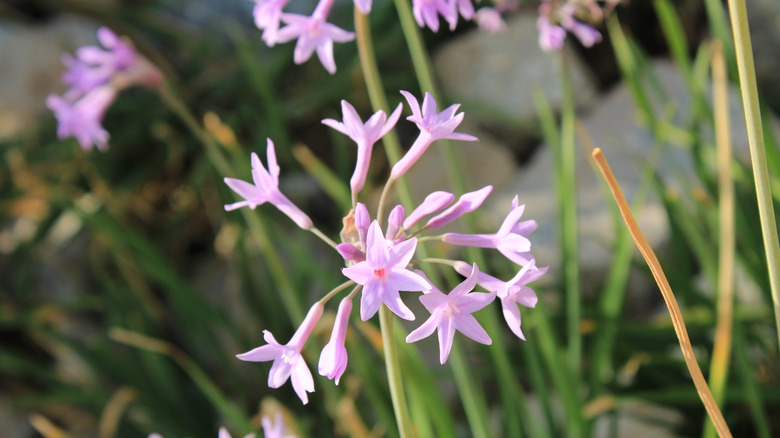
Also known as society garlic, pink agapanthus (Tulbaghia violacea) is one of the more effective natural snake repellents. This is largely due to its overwhelming odor, which many people find pleasant, but snakes tend to hate. As a bonus, when planted throughout gardens, in beds, and around perimeters (but not in waterlogged areas, as it is prone to root rot), pink agapanthus will not only keep snakes away, but it also attract beneficial pollinators to your yard and garden.
Mint
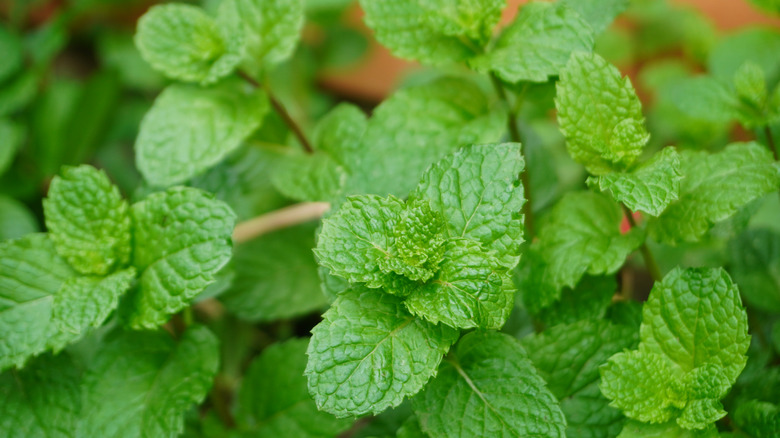
The menthol in various types of mint (Mentha spp.) yields itself to a variety of health benefits for humans. However, that same minty fresh scent may be irritating to snakes. As a result, placing potted mint in gardens and along borders, or containers of mint near entryways could be a good way to ward off snakes, though some gardeners find it ineffective. Keep mint contained, as it can spread quickly.
Catnip
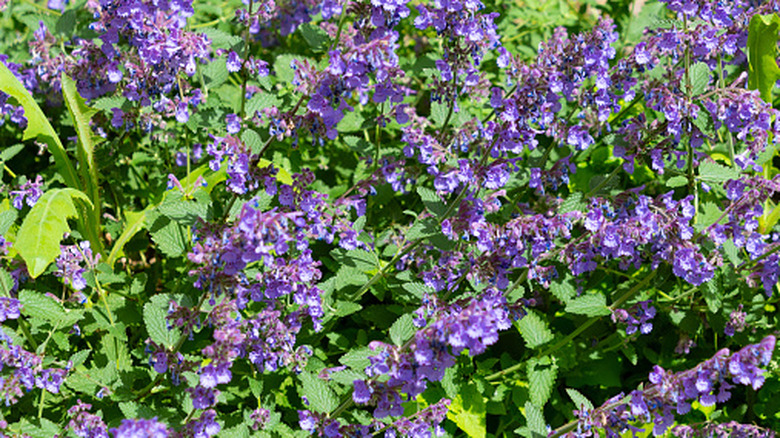
Catnip (Nepeta cataria) is yet another strong-scented plant snakes find repulsive. Catnip is relatively easy to grow and once established, emits the scent which cats find appealing, but will keep snakes out of your yard. To repel snakes, grow catnip along the outer edges of your garden, the perimeter of your yard, or in containers placed throughout your outdoor spaces.
Nasturtiums
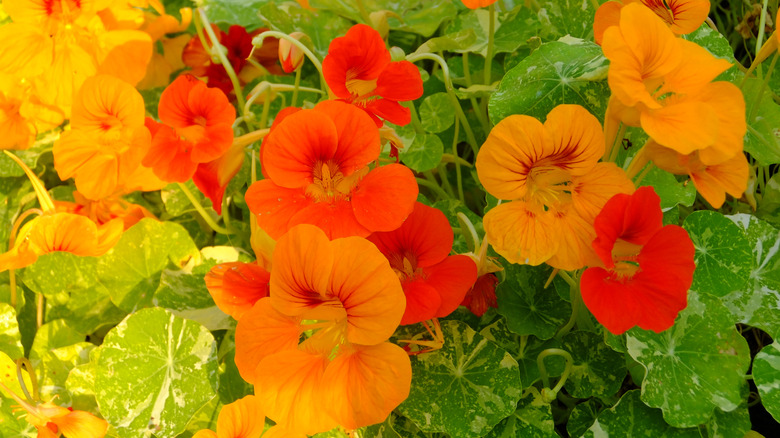
There are around 80 different species of nasturtiums (Tropaeolum spp.), each of which produces colorful, pollinator-attracting blooms. Their strong, snake-repelling fragrance makes them an ideal option for those looking to landscape with plants that will help keep snakes out of their yard. They can also serve as a trap crop, drawing aphids and whiteflies away from other plants in your garden.
Mugwort
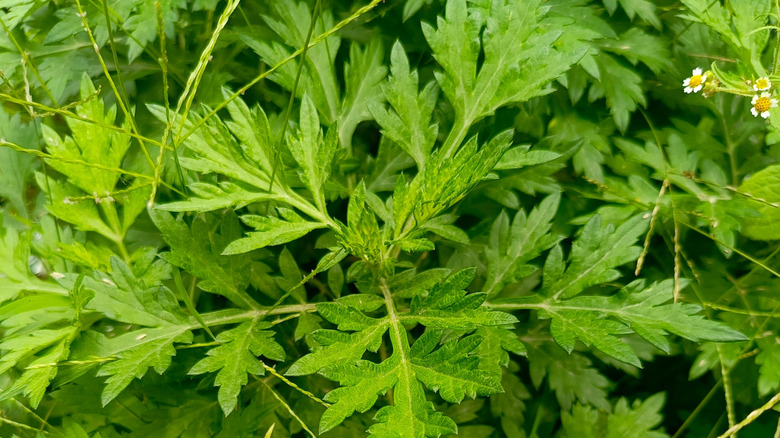
Like wormwood, mugwort (Artemisia vulgaris L.) relies on its bitterness as much as its scent to keep snakes away. Ironically, these same flavonoids and terpenoids have lent mugwort to many medicinal uses. However, snakes perceive no such benefits and will typically stay away from areas where mugwort is grown. Unlike many plants on this list, mugwort can reach a few feet high and wide. So, it is best treated as a small shrub when planting.
White snakeroot
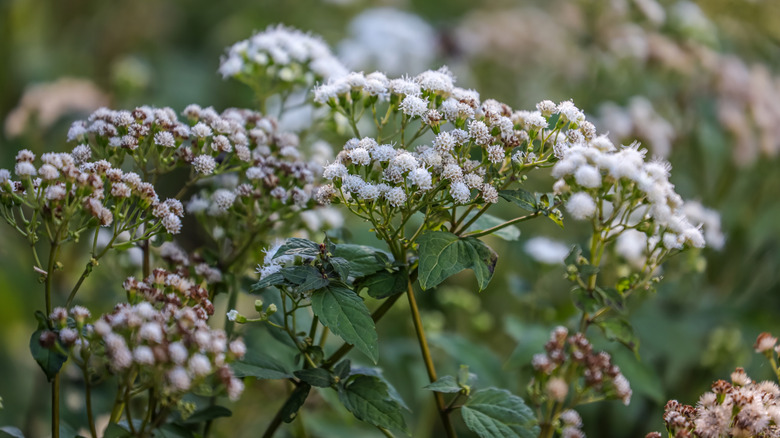
White snakeroot (Ageratina altissima) is another plant of which snakes are not fans, despite its name. In the case of white snakeroot, it has tremetone, a substance reportedly toxic to serpents. White snakeroot, a perennial, is among the tallest of the plants on this list, capable of reaching 5 feet in height. It works well to repel snakes when planted around perimeters.
Clove basil
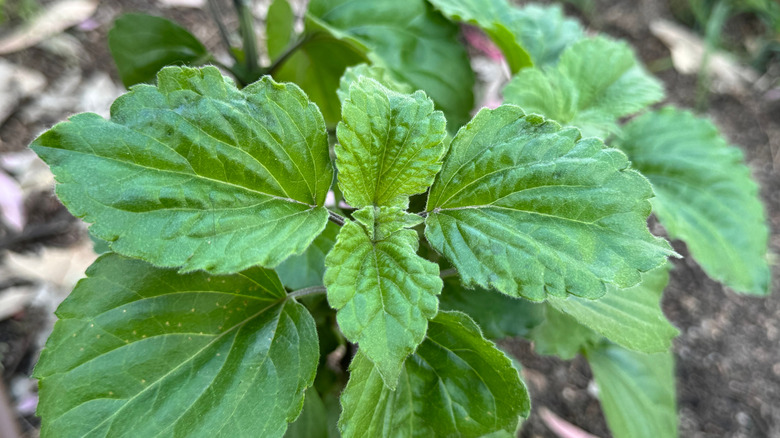
Basil is known for its sweet aromatics and its peppery, pungent flavor. Clove basil (Ocimum gratissimum) takes it up another level, as it packs the punch of basil coupled with a clove-like smell — hence the name (it's also known as African blue basil). This combination makes it an effective snake repellent. Planting clove basil throughout your garden and beds or around perimeters will usually do the trick. Although clove basil can grow as tall as 6 feet high, it can be trimmed back to resemble a small hedge.
Sage
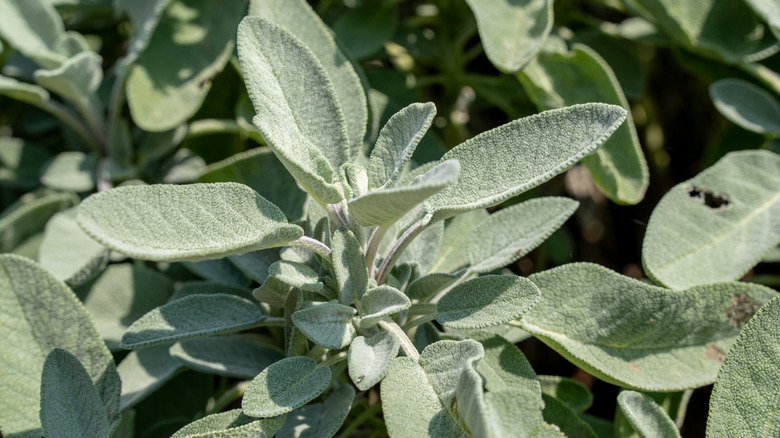
Sage (Salvia officinalis) is a perennial shrub in the same family as mint. Like mint, it is very aromatic. That aroma, which many people find soothing, is not nearly as pleasant for snakes, as well as other pests, including mice. As a result, planting sage in your yard and garden is a two-for-one: You not only get a direct deterrent to keep snakes away, but it helps reduce the potential prey for snakes in your yard.