

This Ancient Technique Is A Stylish Way To Protect Your Owl Nesting Boxes
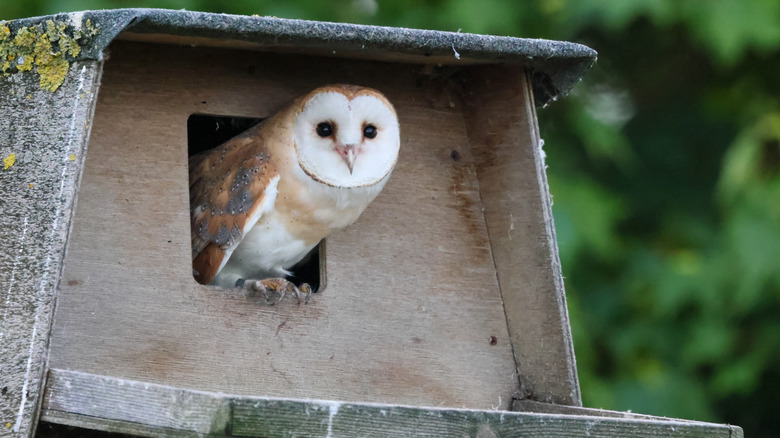
Homemade owl-nesting boxes are one option for attracting owls to your yard for a closer view and to control pests. In fact, a nesting space that attracts owls probably works better than using decoy owls to keep rodents away from your garden. For the safety of your new neighbors and their young, it's best to use only untreated and unpainted lumber such as cedar or pine when building a nest box. One method for making an untreated owl box last longer is by employing shou sugi ban: A Japanese technique of controlled burning that, at first, might seem counterintuitive. This method of charring wood, called either shou sugi ban or yakisugi, dates back to the 1700s or earlier, where it was initially used in Japan to preserve building exteriors and fences. Charring the outside of a finished nest box gives it a darkened, elegantly rustic finish that preserves the wood to some degree, making it less prone to insect problems, rot, and weathering.
Yakisugi-treated wood is more fire- and insect-resistant than a plain piece of the same wood, as the char creates an almost charcoal-like finish. Since charring the wood also burns away the surface cellulose that termites find tasty, they are less likely to munch on the boxes. And it's not weird to the owls to cook up their box's exterior. Owls have been observed nesting in burnt trees following a forest fire, so a nest box with a charred exterior isn't that different from conditions that might be found in nature.
How to use yakisugi on an owl nesting box
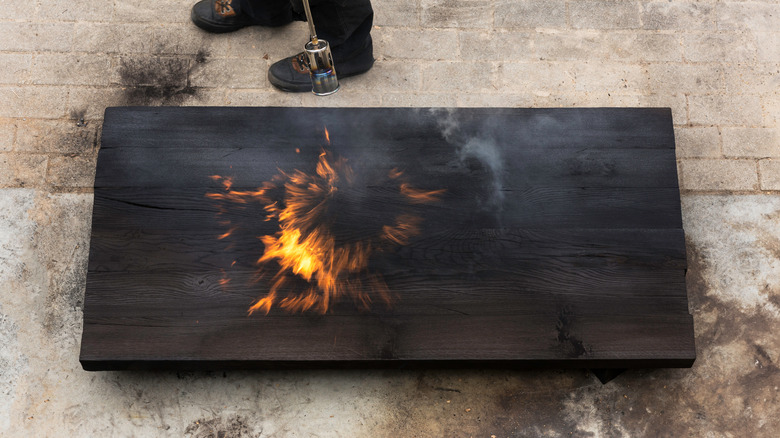
Shou sugi ban or yakisugi was initially performed on cedar, (both words mean "charred cedar") but the technique works just as well on woods such as pine, oak, or maple, too. In fact, a similar process is used to char the inside of oak barrels that store bourbon and other whiskey. The most important part is that the wood should be untreated. It's a material you always avoid when building any kind of birdhouse, but especially important if you're going to set it on fire: Burning finished wood can potentially produce toxic fumes.
To give the wood its protective charred coating, it may be easier to work with the boards before you assemble the nest box, but it's not a necessity. If you're building your owl box from scratch, NestWatch has plans for different designs to encourage specific owl species. There are a number of shou sugi ban birdhouse tutorials online to help guide you in the process.
Work outside, setting the boards on a flame-proof surface, and have a fire extinguisher and wet towels close at hand. Use a blow torch with the flame held about 1 to 1.5 feet away from the wood, moving the torch so the flame goes back and forth over the wood, with the grain, in slightly overlapping rows. It's almost as if you're spraypainting it. Work lightly to avoid catching the wood on fire, and let the wood cool completely before touching it. Brush off any loose bits. Only char the exterior portions of what will be the nest box. Though some people use linseed oil to protect shou sugi ban wood, it's best to leave an owl box without any coating.