

Black Ice: What Is It And How To Effectively Remove It From Your Driveway
We may receive a commission on purchases made from links.
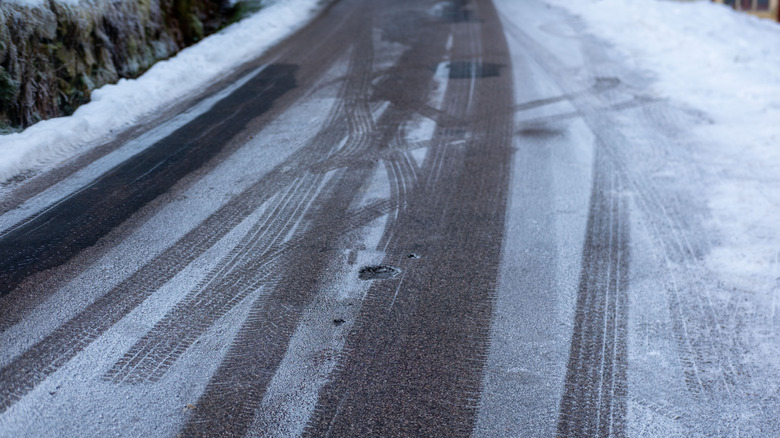
A layer of snow over the ground can make the world feel fresh and new. A layer of ice, however, can be hazardous. You can remove ice dams from your roof with a bit of effort, but what about the ice you may not be aware of? Black ice is a thin layer of ice that, despite the name, is not actually black. Instead, it's completely clear, and frequently forms on roads and other paved surfaces, including your driveway. The black of the ice is actually the color of the asphalt showing through the ice, making this super-slippery glaze of ice nearly invisible. This is what makes it particularly dangerous, as you may not be able to avoid it in time.
While black ice on wintry roads can be deadly, black ice on your driveway isn't exactly safe either. It can be a slipping hazard or cause you to lose control when entering or leaving. The reason black ice is transparent, and the reason it tends to form on paved surfaces, lies in how it is formed. Paved surfaces hold heat for longer, so snow is likely to melt on them. After it melts, a layer of water is left behind that can refreeze and becomes a smooth sheet of ice. Black ice can also form from rain or fog if the temperature drops low enough while the road is still damp. Since it takes so little moisture to form, black ice can be very thin, making it even harder to spot before you hit it.
Getting rid of black ice on your driveway
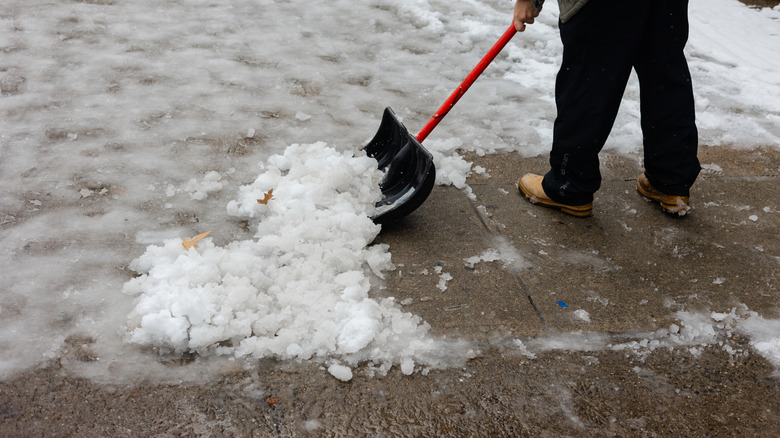
If you're expecting snow, you have time to prep your driveway, deciding between sand or rock salt, or a gritty substance like kitty litter that will provide extra traction. If snow and ice has already fallen or formed, start by removing as much snow as you can first. It's easier to melt a small amount of ice than a thick layer of snow. Since black ice is generally very thin, your physical work may be done here. If the weather is sunny and you don't need to go anywhere urgently, You can either rely on the sun to evaporate the ice or apply that sand or kitty litter for traction.
If the sun isn't cooperating (or it's all going to re-freeze in the evening), you'll want to melt black ice yourself rather than get surprised by it the next day. Use a snow shovel or something like the Snow Joe ice chopper to scrape or break up ice into smaller chunks. If you decide to use a deicer, be aware that some, particularly those using chloride salts, can be harmful for the environment or your pavement. Choose the best ice melt for your home and follow the instructions carefully to avoid overuse. You can also use a natural ice melt like vinegar on your driveway to get rid of the rest of the black ice and any other ice build-up.