

Embrace Imperfection With This Low-Maintenance Landscaping Technique

Gardens are usually intended to be relaxing, but that can be hard if you have a perfectionist streak. You can use plants to turn your backyard into a resort, but if your love of aesthetics and design principles is starting to wear you down, then it may be time to consider wabi-sabi. Wabi-sabi is a Japanese philosophy that involves embracing imperfections and finding the beauty in things that are not carefully curated or manicured. Looking at the old, simple, rustic, mundane, or broken world around you and finding contentment, wisdom, and beauty in it is the essence of wabi-sabi. It's similar to the comfort and charm of an old, favorite T-shirt or a child's handmade art piece.
This lack of perfection is also what makes wabi-sabi gardening lower-maintenance. Instead of working tirelessly to maintain a neat landscape, you can let go of some control and let parts of your garden age and change naturally. Wabi-sabi landscaping may be intuitive for some gardeners and more difficult for others, depending on your aesthetic preferences and temperament. You may even look into your garden and find elements of wabi-sabi already there. Is your garden furniture gaining a pleasing patina as it weathers? Do you have a mossy rock or old tree stump among your plants? That's all there is to it, really! However, if you want to be more intentional about it or are still a bit confused by the concept, here are a few ways you can easily incorporate wabi-sabi into your garden.
Designing a garden with wabi-sabi in mind
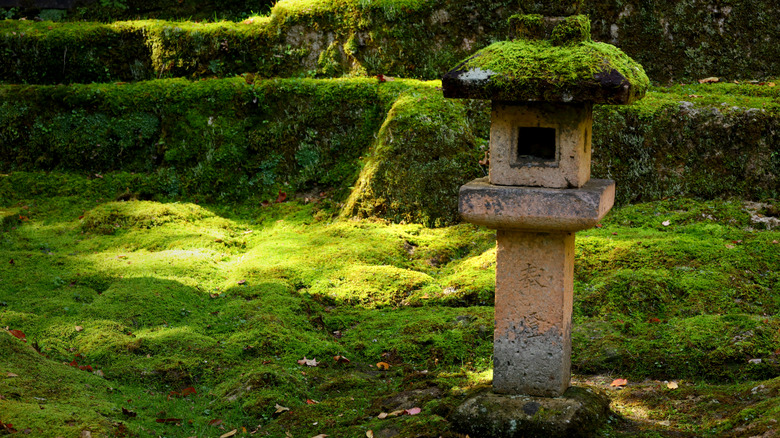
To design a garden with wabi-sabi in mind, it helps to take a step back from your plans for a moment. Wabi-sabi is more of a philosophy than an aesthetic, so the design actually starts in you. Start by sitting in your garden, or thinking about the garden you'd like to create, and try to let go of the idea that it needs to be perfect. Elements of asymmetry, signs of aging, and letting nature do what it wants are all parts of wabi-sabi landscaping, as is the idea that nothing lasts forever, especially our efforts to keep things perfect.
Look for areas of your garden where you can give up some control. Plant self-seeding flowers and let the paint on your patio furniture fade in the sun. You could prune trees only for their health rather than to perfectly shape them, or let moss grow over your garden cobblestone path. If your furniture or fence is old but still functional, consider waiting to replace it. Repair your fence or furniture as needed, and don't stress about hiding the repairs. The goal isn't to be lazy or sloppy, it's to find and encourage beauty in change, decay, imperfection, and natural processes.
Of course, for some gardeners this may be easier said than done! If taking a step back doesn't work for you, consider adding an element you can practice with. DIY a natural bird feeder to hang in your garden, and try to find the beauty in the uneven lines or decorating mishaps that come with being handmade.