

The Iconic Southwestern Plant That's Doing More Harm Than Good
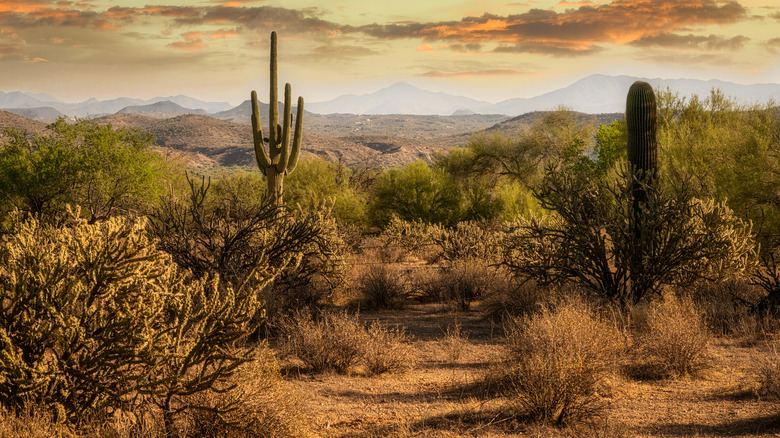
When you think of the Southwestern U.S., you might think of national parks like the Grand Canyon and sweeping landscapes of sand and stone, or the desert landscape near Sierra Vista, the hummingbird capital of the United States. You might also think of tumbleweeds, a plant so iconic it's become a sort of shorthand in visual media. If you want your audience to know the scene takes place in the Southwest, add a tumbleweed rolling past! Despite their strong association, most of the plants we call tumbleweeds are actually not native to North America. Unlike newly detected invasive mealybugs, however, invasive tumbleweeds have had a long time to cause problems in the U.S.
One of the most common tumbleweed species is Russian thistle (Salsola tragus). As the name implies, this plant is native to Europe and Russia. Introduced to the U.S. through the western spread of large-scale agriculture in the 1880s, it reproduces and spreads rapidly, outcompeting native plants and damaging the landscape. Where it takes root, other native plants aren't able to thrive. As the thistle matures and stiffens (called senescence) throughout a growing season, the stems break, and the whole plant tumbles away, dispersing its seeds and leaving behind a mostly barren patch of earth. This soil is then more vulnerable to erosion, and the dried husks pile up when they hit an obstacle, breaking down very slowly. They are also quite flammable at this point, so piles of them are a huge risk that should be cleared.
Getting rid of tumbleweeds
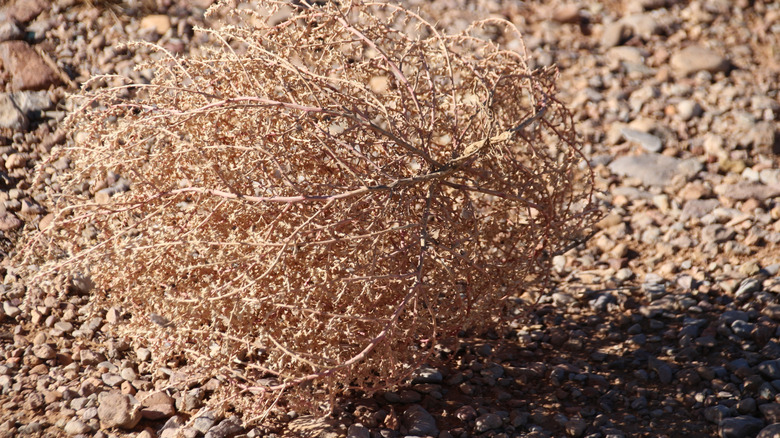
If you have dry tumbleweeds blowing across your yard, there's not much you can do except physically remove them and keep an eye out over the coming year in case tumbleweed seeds start sprouting. The younger they are when you spot them, the easier they are to control (they're soft when young and the taproot is not well established). Wear gloves when handling it, as Russian thistles have thorns. Tumbleweeds typically grow in empty patches of loose or disturbed soil, so be sure the area is covered in mulch or in hardy drought-tolerant flowers and plants.
If there are established tumbleweed plants in your yard, you have a few options depending on how many plants there are and how much time and effort you can put into controlling them. The most sure-fire way to eradicate them is to pull or dig them up before they bloom or produce seeds. Once uprooted, they can be bagged and thrown away or burned, depending on the local laws in your area regarding disposal of invasive plants (don't compost them, as they may seed again). If you aren't able to dig them up, you can try mowing over them or cutting them back to the ground before they go to seed. Dispose of the cut material and watch carefully for new growth. While not a perfect solution, it's a better option than simply leaving them in place.
While there are some native species of tumbleweed, it can be difficult to tell the difference between them and the invasive species at first glance. If you decide to rid your yard of invasive tumbleweeds, you may end up destroying native ones as well. While this is unfortunate, the harm caused by the more common, invasive Russian thistle makes it worth the risk.