

The Beautiful Late-Summer Blooming Flower You Should Prune In Late January
We may receive a commission on purchases made from links.
Clematis (Clematis spp.) are commonly used to add color to boring backyard fences or add shade to pergolas. They are ideally suited for these tasks thanks to their climbing nature and colorful, showy blooms. With almost 400 species and countless hybrids available, there is a great variance available in the size and shape of the blooms. There is also a difference in the care they require and the timing of required tasks such as pruning. Depending on the type of clematis you have, pruning them in late January can help avoid a massive amount of entanglement, encourage good growth, and provide bountiful late-summer blooms.
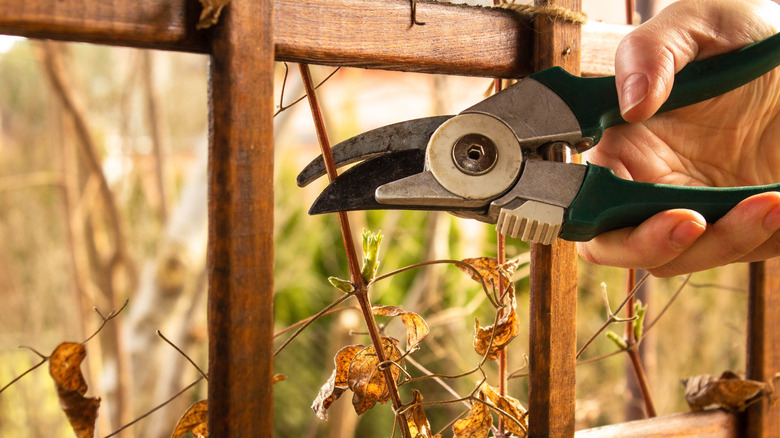
However, before you grab your Fiskar's bypass pruning shears and start lopping off your clematis, it is important to know what type you have. That is because some species and hybrids are not to be pruned during winter months. Of the 3 groups of clematis, only Group 3 plants should be pruned in late winter. Group 3 clematis are those which bloom in late summer. These include cultivars such as 'Jackman', 'Princess Diana', 'Rouge Cardinal' (works as Group 2 or 3), and Sweet Autumn (native to Japan and considered invasive in some parts of the U.S.). If you don't know the group your clematis falls into, you can either look it up by name or determine the group based on when it blooms. If it blooms in late summer or early fall, it is Group 3 and can benefit from a late winter pruning. If you get the type wrong, there's good news: If you prune at the wrong time of the year for your type, the plant will be fine. It just won't bloom well, and you'll want to shift your pruning cycle before the following growing cycle.
Proper pruning encourages good growth
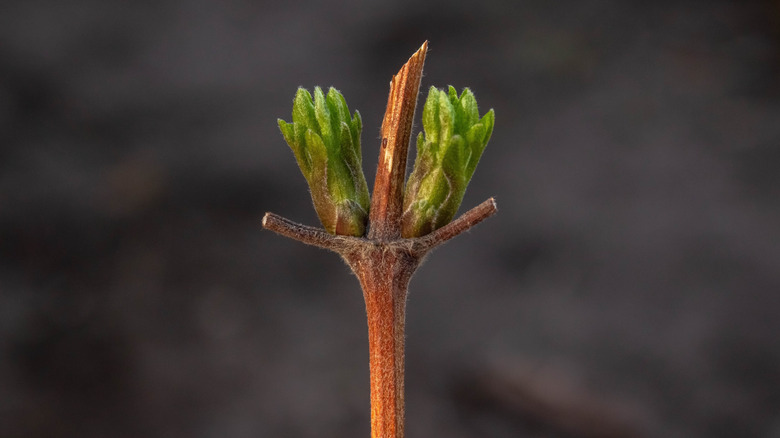
When it comes to proper pruning for Group 3 clematis, timing is everything. Ideally, you want to prune these flowering vines just prior to them emerging from dormancy. This is important because Group 3 clematis bud and flower from new growth. Pruning just prior to the plants coming out of their dormant stage ensures you will only cut non-producing old growth. It also allows the plant to fully focus on new growth once the spring growing season begins.
To that end, pruning Group 3 clematis is a pretty aggressive operation. Regardless of how tall your vines have climbed, you will essentially take them back to only a foot or so above the ground. This is necessary to ensure you have blooms along the entire plant and not just at the top, where new growth would occur without such a drastic pruning. The best way to determine where you should cut is to look for a noticeable change in color on the stem. This is a demarcation between seasonal growth. Once you've determined where last year's growth began, snip the vine just a few inches above that point. Cutting at that spot allows the plant to retain some of the previous year's growth while still encouraging good new growth.
To ensure your Group 3 clematis comes out of the late winter pruning healthy and ready to rapidly grow, always use clean, freshly sharpened garden shears. After the pruning is complete, mulch around the base of the plant, apply a slow-release fertilizer, and water on a regular basis. You will also need to make sure the plant's support structure (trellis, fence, railing) is in good shape and within easy reach, so it can grab on and begin to climb as soon as new growth starts.