

Keep Your Back Safe When Shoveling Snow With The Help Of These Smart Tips And Tools
We may receive a commission on purchases made from links.
Winter weather can mean the surprise of fresh, deep snow. If you usually go straight for the shovel in a shovel vs. snow blower debate, remember that heavy snow can put heavy strain on your back, too. The average weight of snow scooped by your shovel is anywhere from 5 pounds for fluffy snow to around 25 or 30 pounds for the wettest snow, according to Witte Physical Therapy. There's not much you can do about the snow's weight, how much fell, or the length of your driveway. But there are ways to make that wintry excavating much less stressful on your back. Using a shovel designed to push snow, rather than scooping to throw it, is one way to greatly reduce back strain. For instance, shoppers praise this 36-inch snow-pusher sold at Costco, saying it clears more area in less time. You essentially just push the shovel along the driveway at a steady, low angle, letting your body weight do the pushing rather than your back.
Working smarter, not harder, is another helpful tactic. Using the right shovel for the snow at hand can cut down on back strain on those days when you absolutely have to clear that snow. Back injuries the only risk when shoveling snow. Making things easier and more manageable can also help protect your heart, as the increased physical stress of shoveling could lead to increased risk of a heart attack, according to the American Heart Association.
How to work smarter while shoveling snow
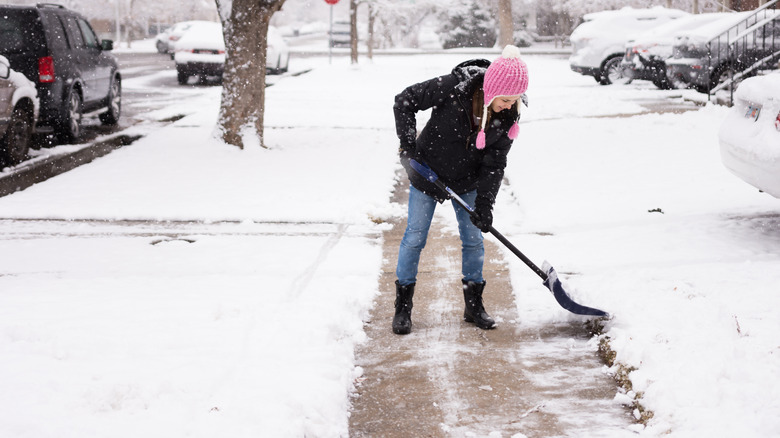
One trick to avoiding an angry back while shoveling snow is to shovel while the snow is still falling, clearing it when, say, only 2 inches are on the ground instead of 4 or 5. It may sound tedious to put on all your winter outerwear more than once in a day to tackle the task at hand, but less effort is required with a little snow than a lot, so it should go quickly, and there's less chance of injuring your back. It shouldn't take much time each time if it's a breeze to just push that snow off a sidewalk or driveway. Protect your back and limbs even more by doing some stretches before you shovel. Stretch your legs, arms, and back a bit, and squat down a few times if that helps you limber up.
If the snow is already deep or you're dealing with snowdrifts, scoop it off in layers rather than trying to get to the bottom with each push of the shovel. It's a lot easier to deal with this layer-cake method, removing snow little by little, rather than trying to get whole a load of wet, heavy snow with each scoop. Even so, use your knees, hips, and arms to bear the load, not your back. Squat down a bit, scoop a layer of snow, then walk it over to a nearby spot to create a pile. Don't attempt throwing snow any distance, or twisting and tossing it; either type of movement could work all sorts of muscles in ways you don't think about until you've strained or torn something.
Using the right shovel for each snowy situation
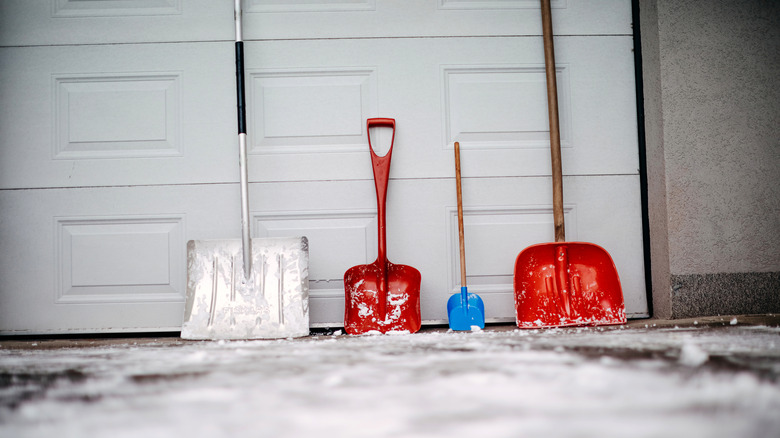
Your back will also thank you if you use the right shovel for the job. For instance, if you're in an area where you need to scoop snow to remove it, choosing plastic over metal shovels helps because they're lighter. A narrower blade may not clear as much at once, but it also means you won't scoop as much, resulting in less weight to deal with each time. An ergonomic shovel with a curved handle also makes things easier on your back. Even so, it's best to try shovels out in the store, before buying, to make sure the fit is comfortable for you. Use the snow pusher when you can, and a light, narrow shovel to clear areas such as a curved path of pavers leading from your driveway to your front door. If you often get loads of heavy snow, a snow pusher on wheels makes snow removal a bit easier. Think of it like a push mower. The design makes it easier to evenly clear a wide path.
If the bottom layer of snow turns hard and icy before you get to shovel, it's time to get creative. A pitchfork makes it easier to clear an icy driveway when you slide the tines just above the pavement. If it comes off in sheets or blocks, you can push them away, or use a lightweight shovel to gently lift and deposit the chunks elsewhere. A flat-bladed chopper, such as the Walensee metal snow shovel also makes light work of those ice sheets forming from compacted snow. You can either chop and break the ice up, or slide it beneath the ice and snow pack to free them from the pavement. Use a shovel or snow pusher to move the freed debris out of your way.