

Should You Water Your Plants During Winter? Here's What We Know
We may receive a commission on purchases made from links.
As winter weather settles across the country, you may be wondering if you should continued to water your plants during the winter season. The short answer is yes, but with contingencies. This pertains to plants that are green and growing, as well as those that have gone dormant and brown. With a few exceptions, this applies to both indoor and outdoor plants. However, you will need to adjust your watering routine from what you followed during the peak growing months. You'll also need to take care to avoid some common plant watering mistakes.
There are a number of reasons to water your plants during winter. For one, dry winter air tends to cause soil to dry out quicker. The root systems of both evergreens and plants that go dormant in winter still need to stay hydrated. This helps the roots stay healthy during winter and can ensure good growth in spring once those dormant plants — including lawn grasses — awaken come warmer weather. Winter watering also helps those plants, shrubs, and trees that do stay green all year long replace the moisture lost from their leaves and avoid what is known as winter desiccation.
Watering is also one of the best ways to help protect the plants and trees in your yard from frost and freezing temperatures. This is because the moist soil acts as an insulating layer, as it retains heat, whereas dry soil actually has air pockets that allow cold air to penetrate to the roots. The moisture in the soil also helps relieve stress on the plant during this time, by allowing it easy access to much-needed moisture. Finally, winter watering can help perennials and newly planted plants establish a strong root structure and healthy root balls.
Adjust your watering routine during winter
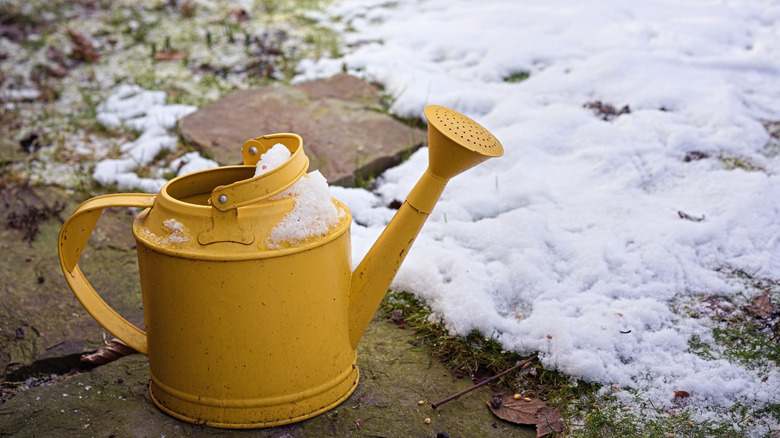
While most of your plants should be watered throughout winter, you will want to make adjustments to your routine. Additionally, there are some caveats that call for not watering outdoor plants at all. To that end, never water outdoor plants when there is a covering of snow on the ground or the ground is frozen solid. It is also a good idea to avoid watering if either the air or soil temperature falls below 40 degrees for an extended period of time. Unlike summer, you'll want to water mid-day when temperatures are warmest, to allow maximum soaking before the thermometer drops for the evening. And remember to prepare your dahlia tubers for very cold weather by bringing them indoors if necessary.
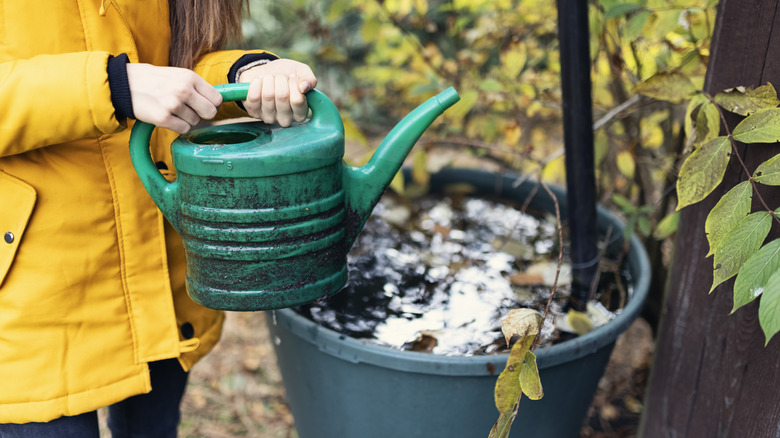
Aside from those exceptions, plan on regular watering. However, reduce the amount and the frequency of your waterings during winter, especially if it's a wet season where you live. The main idea for winter watering is to keep the ground moist, but not saturated. Typically, a good, deep watering a few times a month is ample. A Green Mount watering wand or similar device can come in handy, held low to the ground to better deliver the water. Apply water to the root areas of all your trees and plants, even those that appear to be just a bunch of dead sticks, like hydrangeas prepared for winter. And remember to disconnect your hose and protect outdoor faucets between waterings if a freeze is expected.