

Keep Algae Out Of Your Birdbath By Using This Durable Material
We may receive a commission on purchases made from links.
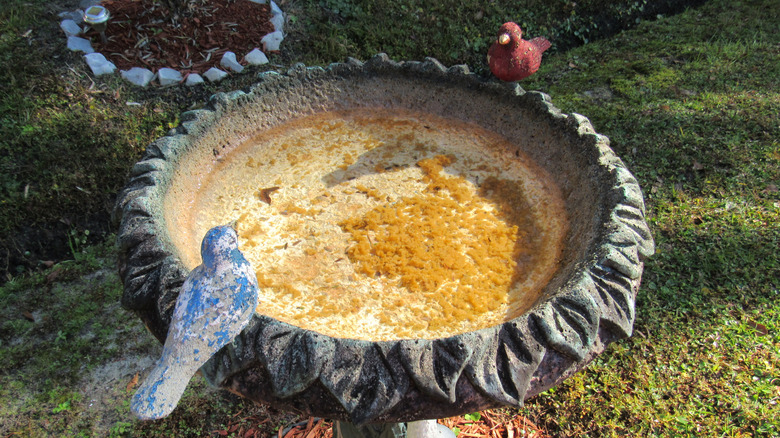
When it comes to still water in a birdbath, daylight plus warm weather sometimes equals algae. A birdbath, particularly one that's been frequently visited, is exactly the kind of environment where algae wants to grow, which is one reason you should think twice before putting a birdbath in direct sunlight. It's also one of the reasons a concrete birdbath may not be the best option: Its rough surface seems to encourage more algal growth. If you don't feel like scrubbing that birdbath on practically a daily basis, one way to avoid it is by choosing a birdbath that's made of a naturally algae-inhibiting material — copper. This metal is durable, it won't crack in winter, and it looks nice, too. As far as reducing algae's potential, copper binds to the proteins in algae and other organisms, preventing the photosynthesis needed for growth. It also destroys the algae's cell walls and damages its DNA.
Copper works so well as an antimicrobial material that ancient cultures even used copper vessels to store water. It's one reason doorknobs and bar tops are often traditionally made from copper. It kills all sorts of harmful pathogens such as e. coli, and viruses like influenza besides algae.
A copper birdbath essentially is a vessel that holds water, too, and the material's special properties make it worth the potential extra expense compared to birdbaths made of other materials. For instance, the Monarch Abode hand-hammered copper birdbath costs about $80 on Amazon, while more elaborate models could cost significantly more. Though copper is great at it's anti-algae job, it's worth noting that even a copper birdbath's water could develop algae if it's left to sit long enough.
Caring for a copper birdbath
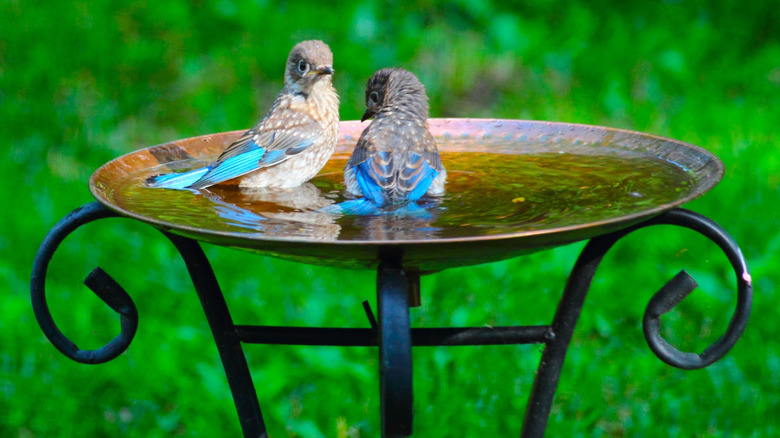
Even though a copper birdbath potentially harbors fewer pathogens than a birdbath made of other materials, it's not a self-cleaning device. Birds still sometimes leave droppings and feathers in the water, tree debris ends up in the birdbath, and the birds themselves can sometimes spread diseases to one another if a sick bird contaminates the birdbath water. In many cases, every few days is how often you should be cleaning your birdbath, even if it's made of copper. You may not have to clean it to the same degree as other birdbaths since there will likely be less algae buildup, but copper still needs cleaning. Dump the old water, use a hose to flush out any debris or caked-on matter, then clean the copper basin with mild soap and water. Never use abrasive cleaning tools or harsh chemicals, like bleach, as these could harm the finish as well as the birds and other wildlife that enjoy your birdbath. After several years, you may notice mineral buildup from hard water. This is not microbial but chemical, and is easily cleaned with a diluted solution of vinegar or lemon juice and water. Rinse thoroughly before refilling.
Don't want to get rid of your old ceramic, plastic, or concrete birdbaths, but still want the benefits of copper? You can add a couple of pennies to your birdbath to slow algal growth. And if your copper basin is too smooth, it might feel slippery or unsafe to the birds using it. Add footholds to your birdbath to make birds more comfortable. This could be as simple as dropping in a few stones or a piece of wood to stand on in the water. Just make sure and wash them thoroughly from time to time also.