

The Best Method For Storing A Lawn Mower Without A Garage Or Shed
We may receive a commission on purchases made from links.
It is obviously important to choose the right lawn mower for your lawn, but proper storage of that mower is just as critical. For many, the obvious answer is to keep it in a garage or shed, but not everyone has those options. The best method for storing a lawn mower without a garage or shed is to securely cover it with a heavy-duty waterproof tarp, which works better than a simple mower cover.
Although a tarp is not as secure as a shed, it can certainly help extend the life of your mower if you do not have an indoor storage option. This is because, while lawn mowers are meant to work outside, they are not designed to be subject to the forces of nature 24/7. Constant exposure to harsh sun, wind, rain, snow, dust, and other natural elements can cause even the most reliable lawn mowers to malfunction and deteriorate. A waterproof tarp, such as the Guard Shield Heavy Duty Waterproof Tarp, is a relatively inexpensive yet effective way to create a barrier between your mower and these potentially destructive elements.
How to use a tarp for lawn mower storage
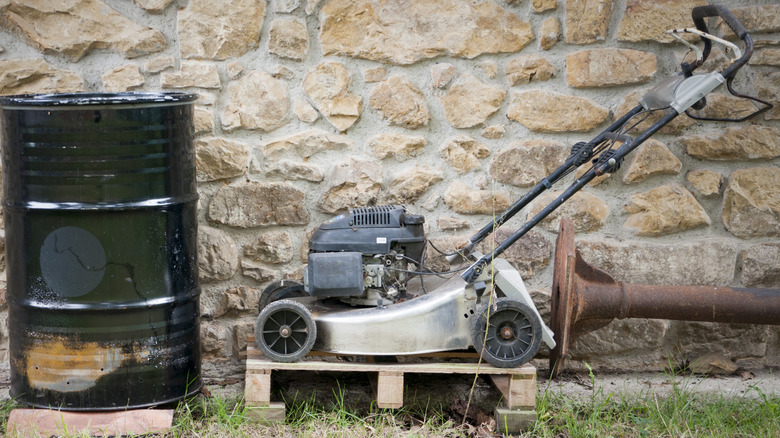
The first step in using a tarp for lawn mower storage is picking and preparing a suitable spot. It's best to have the mower elevated to improve air circulation as well as keep the tires and other parts from sinking into the ground. If you have any sort of area made of brick, concrete, or pavers, such as the corner of a patio or a bit of unused sidewalk, that is ideal. If not, you can place bricks, stepping stones, or wood under the mower to accomplish this task. It is also helpful to have a spot that is somewhat protected from the wind, such as behind a wall or fence.
After the mower is in place, cover it completely with the tarp. Make sure all parts of the mower, including the tires and mower deck, are completely under the tarp. Then, use either bungee cords or rope to secure the tarp tightly around the mower. You can then place heavy objects, such as large stones or bricks, on the corners to hold them down if necessary. Make sure that air is able to pass through between the corners in order to prevent condensation, which can lead to mold, mildew, and rust.
Ideally, you should cover your mower between every mowing session. However, it is absolutely necessary to do so when preparing your mower for storage during winter or other long periods of inactivity. When storing the mower for an elongated period of time, it is necessary to regularly check to ensure the tarp is secure and hasn't developed any holes or rips. From time to time, it is also a good idea to check and make sure no insects or rodents have taken up residence in your mower.